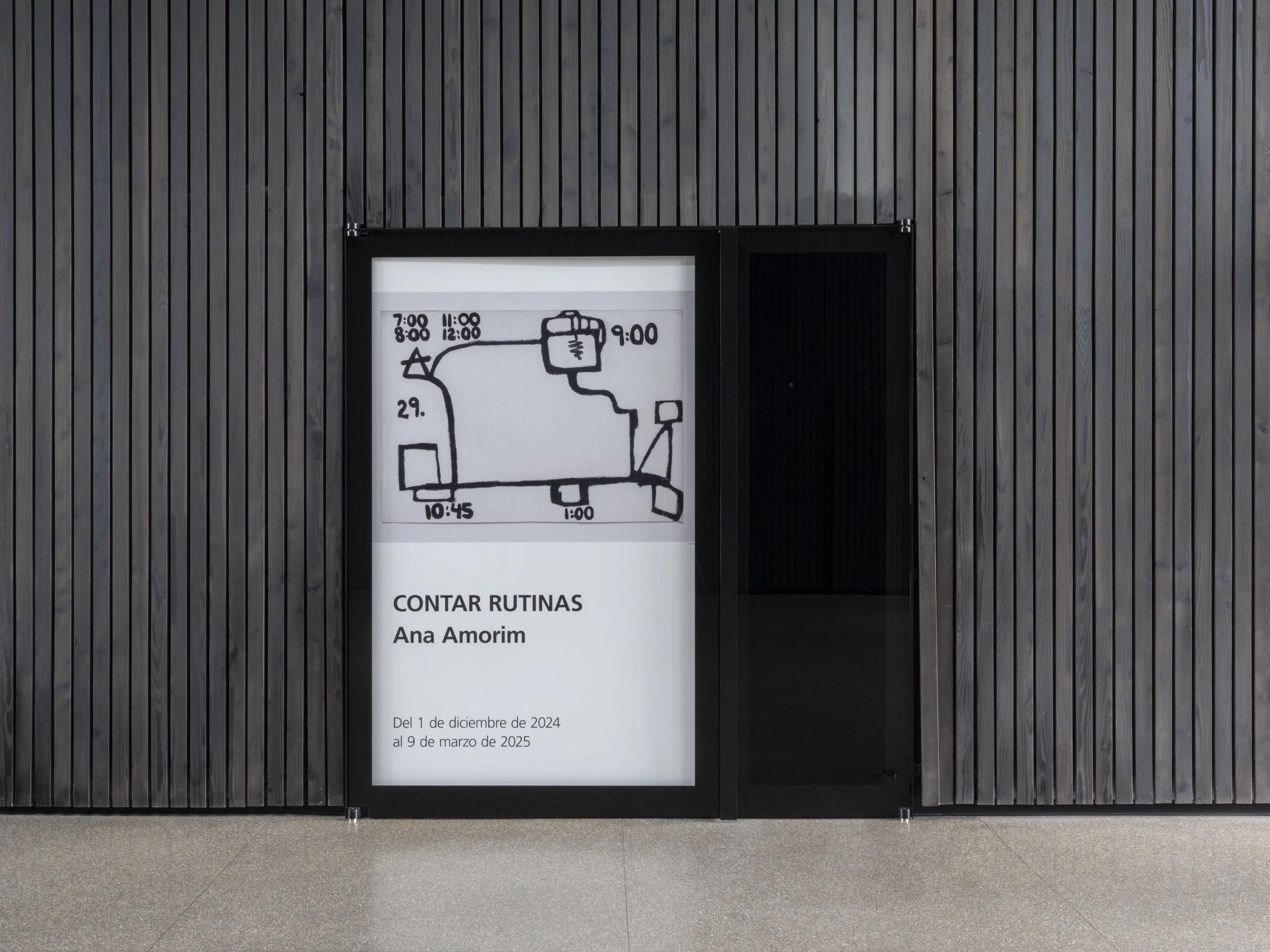
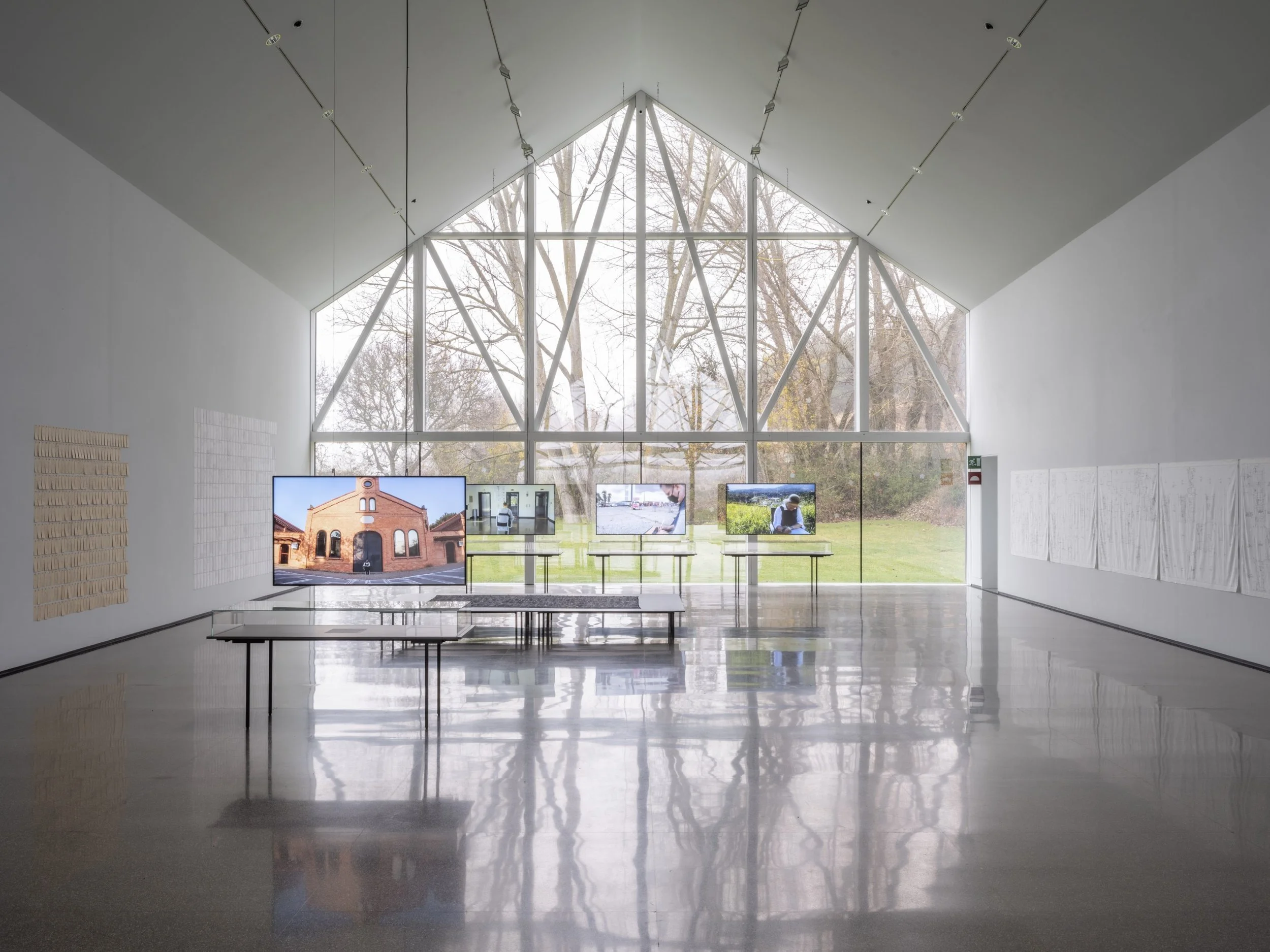
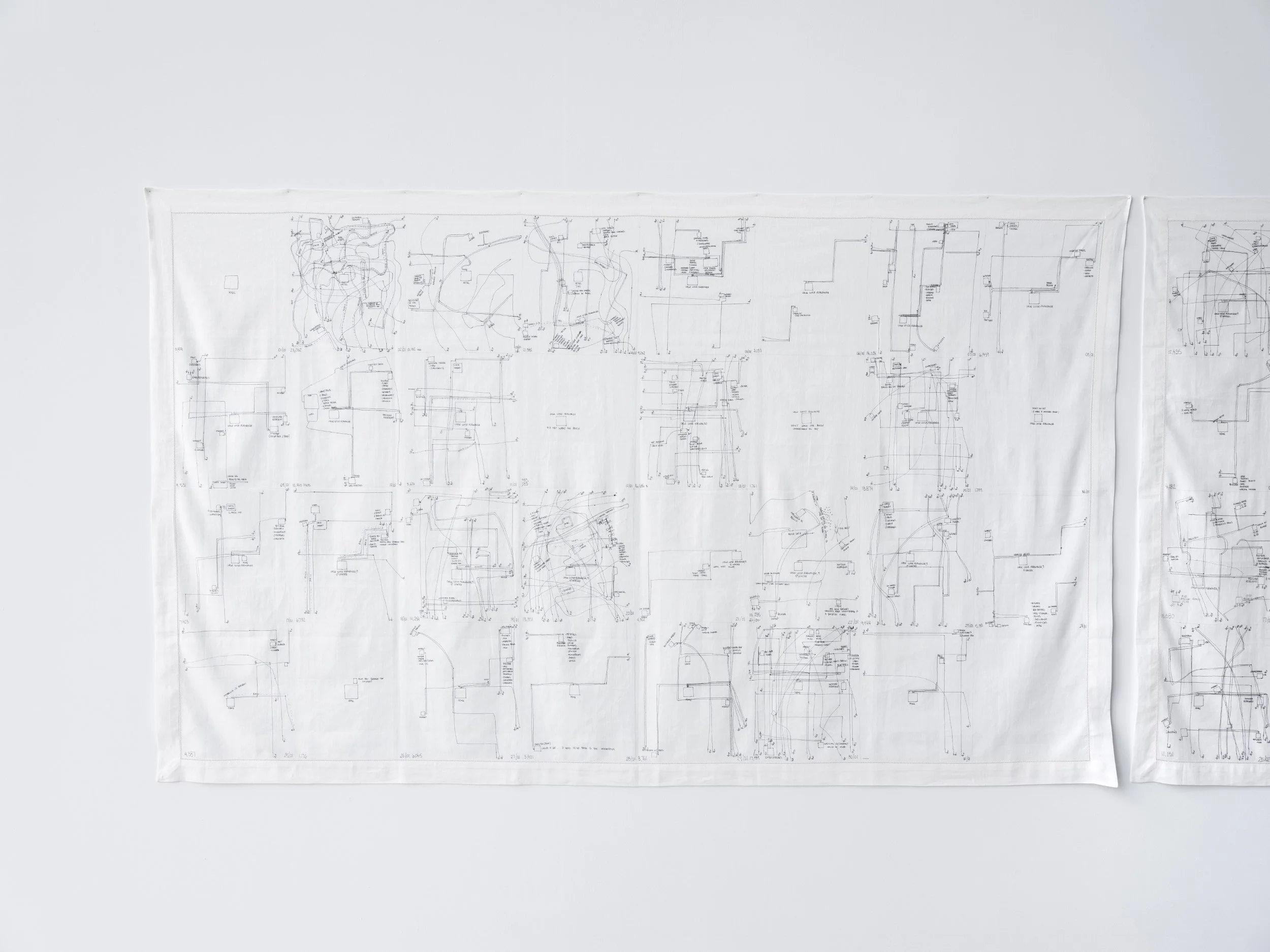
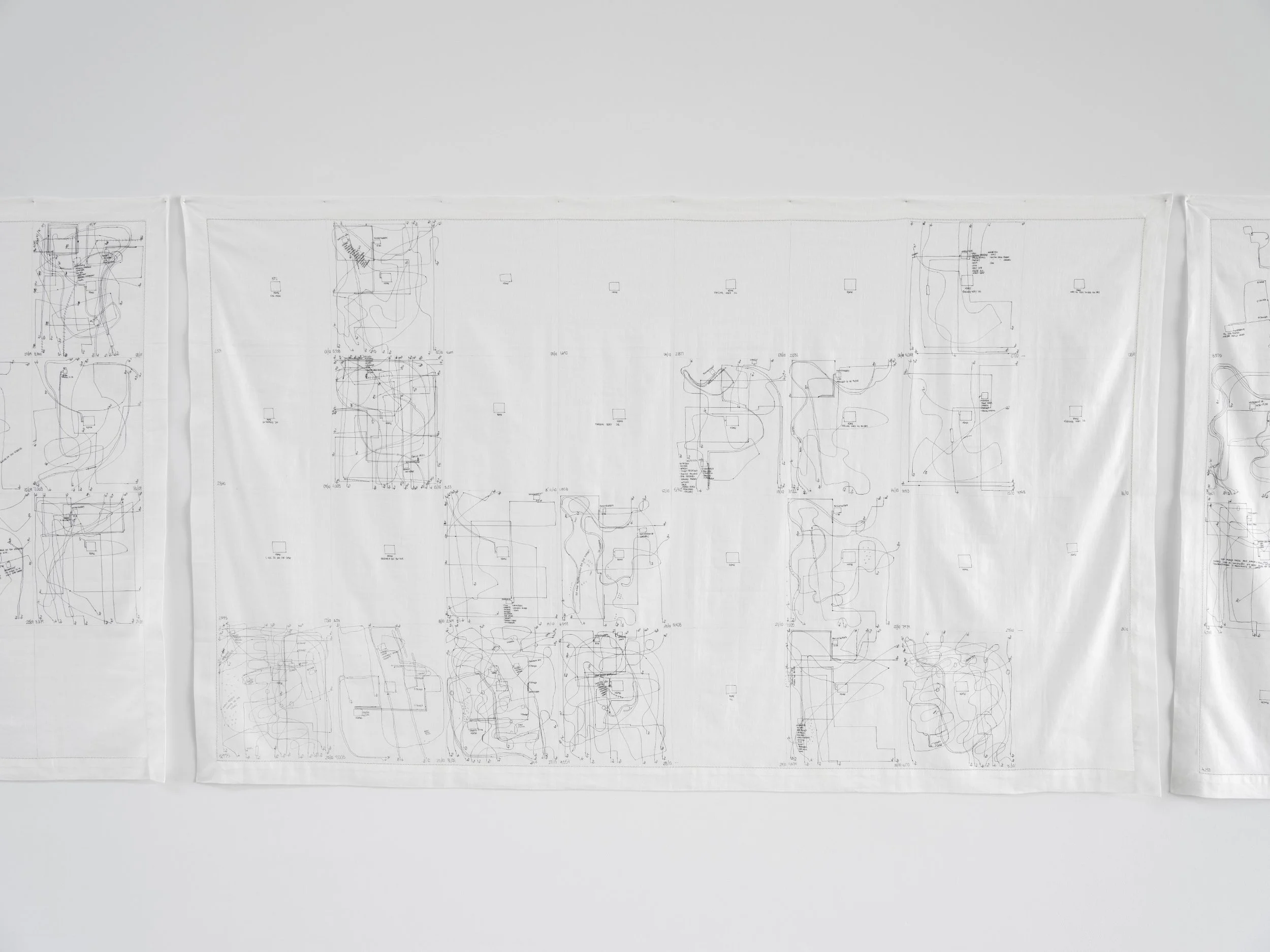
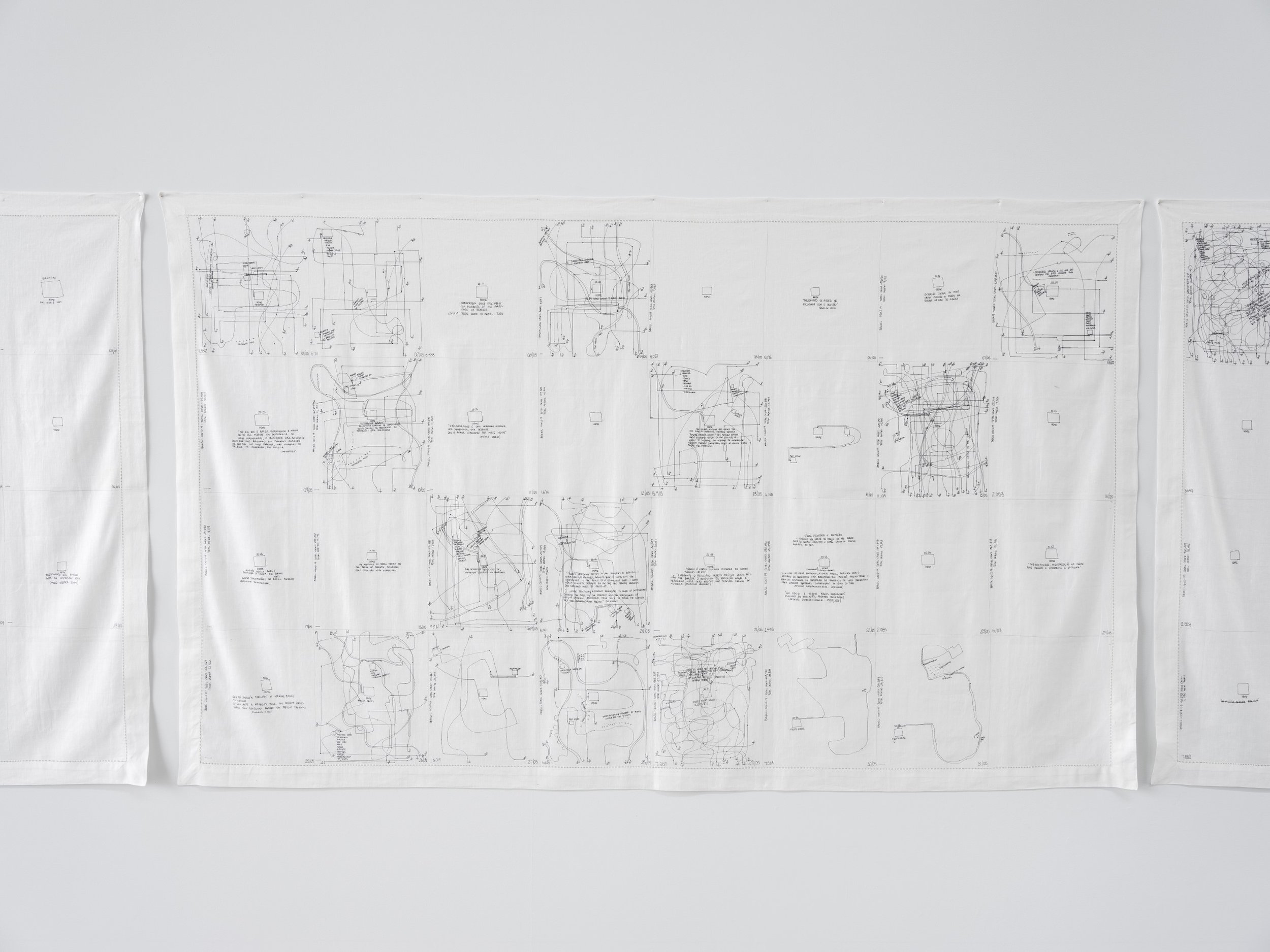
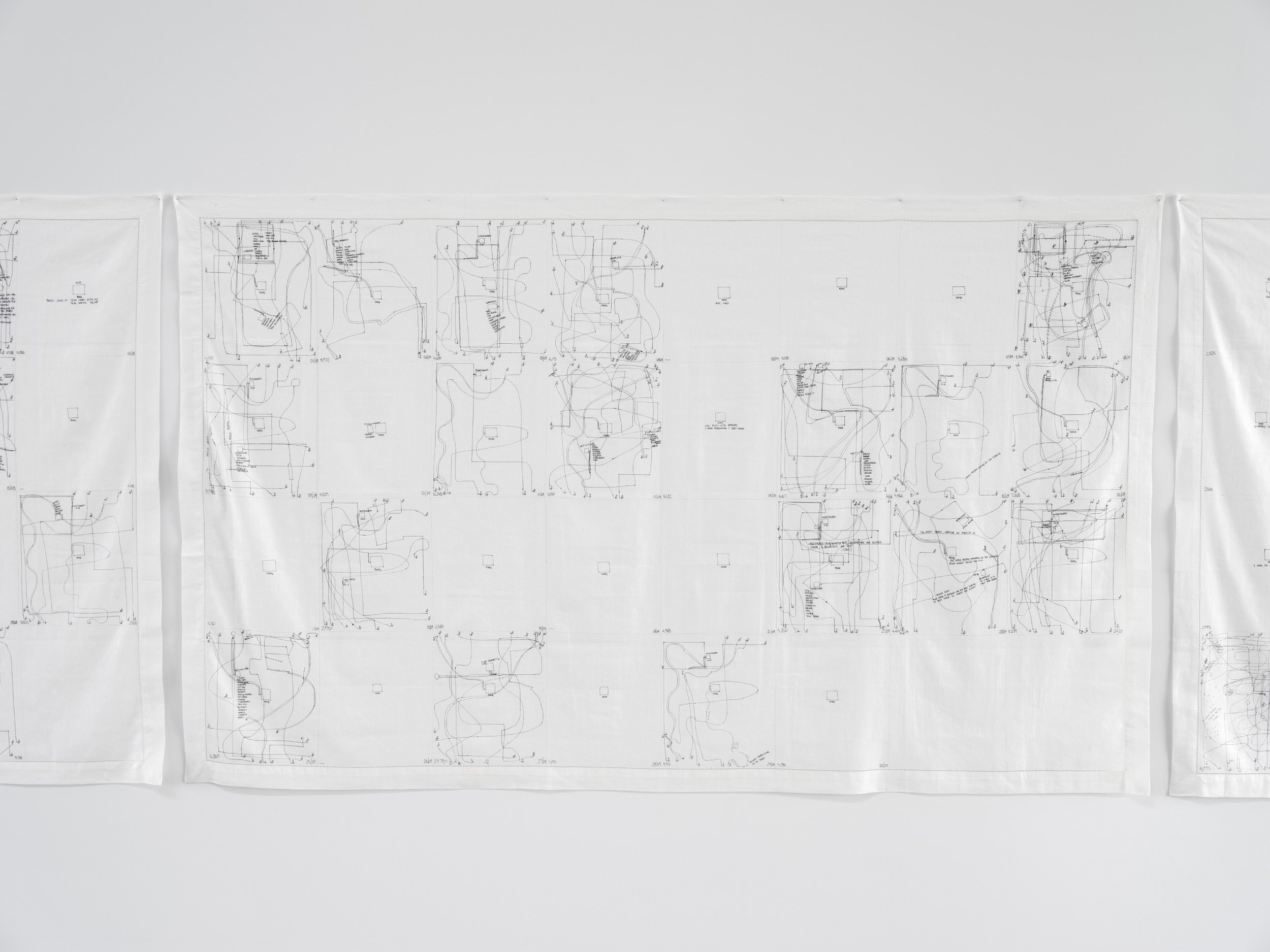
Counting Routines. Ana Amorim
Fundación Cerezales Antonino y Cinia 2024
The adventure of telling time is such that we don't even know when the first prototype of the modern clock was built, although there is no doubt that the mechanical clock was a reality by 1300. We know that once it was placed in a tower, it changed the lives of peasants, merchants, workers, etc. We moved from “natural” time to mechanically measured time. The daily routine could be counted in a meticulous and precise manner.
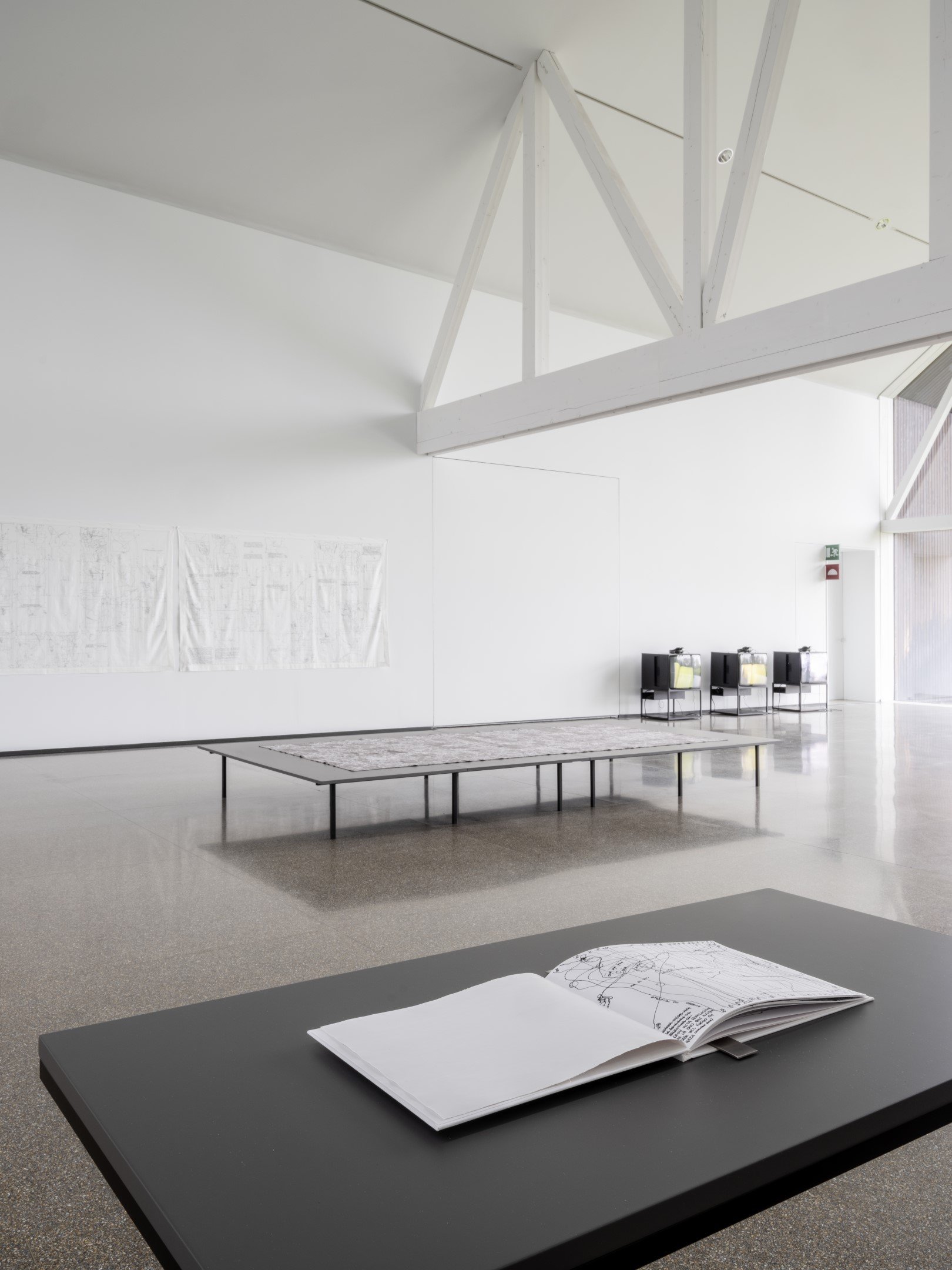
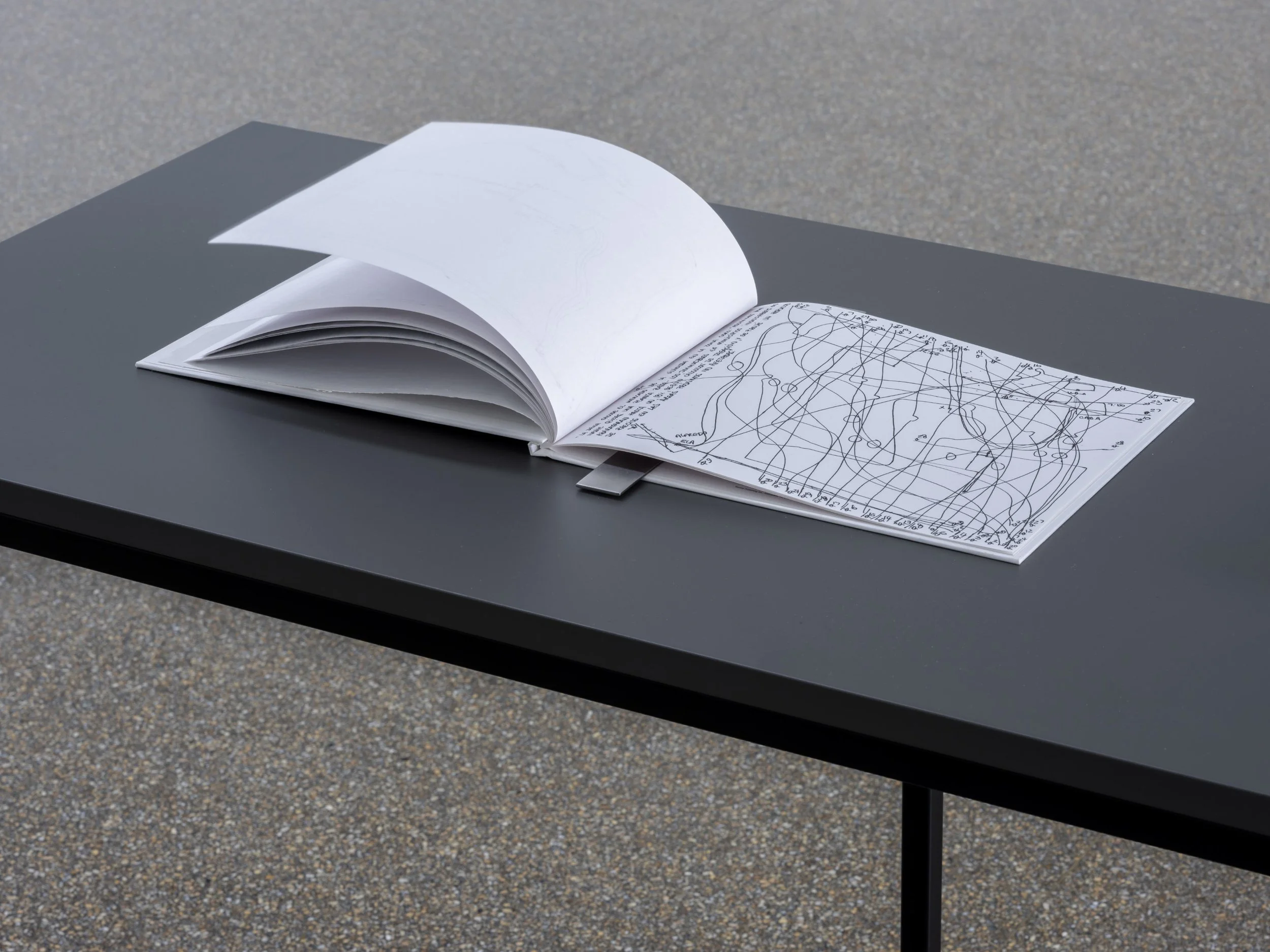
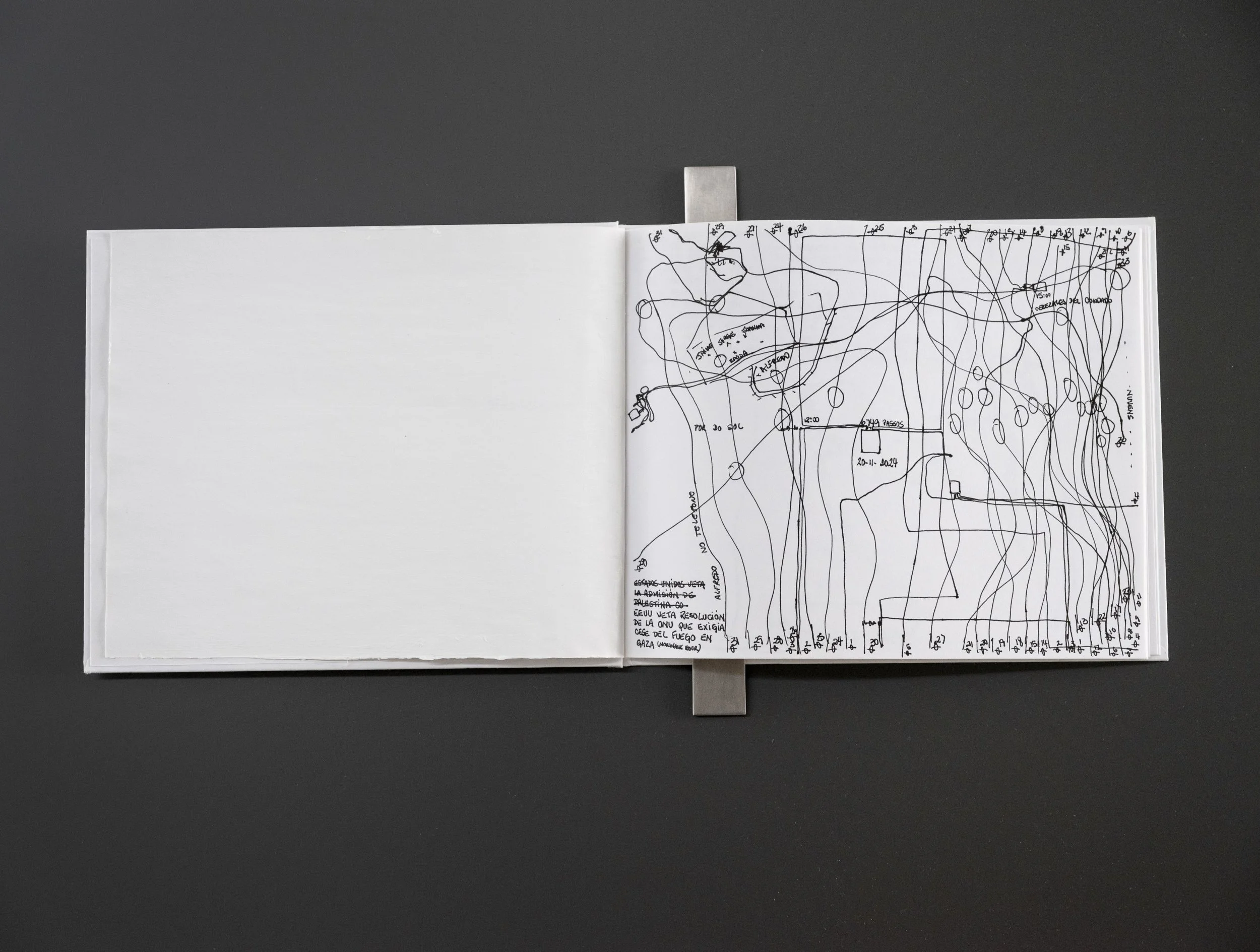
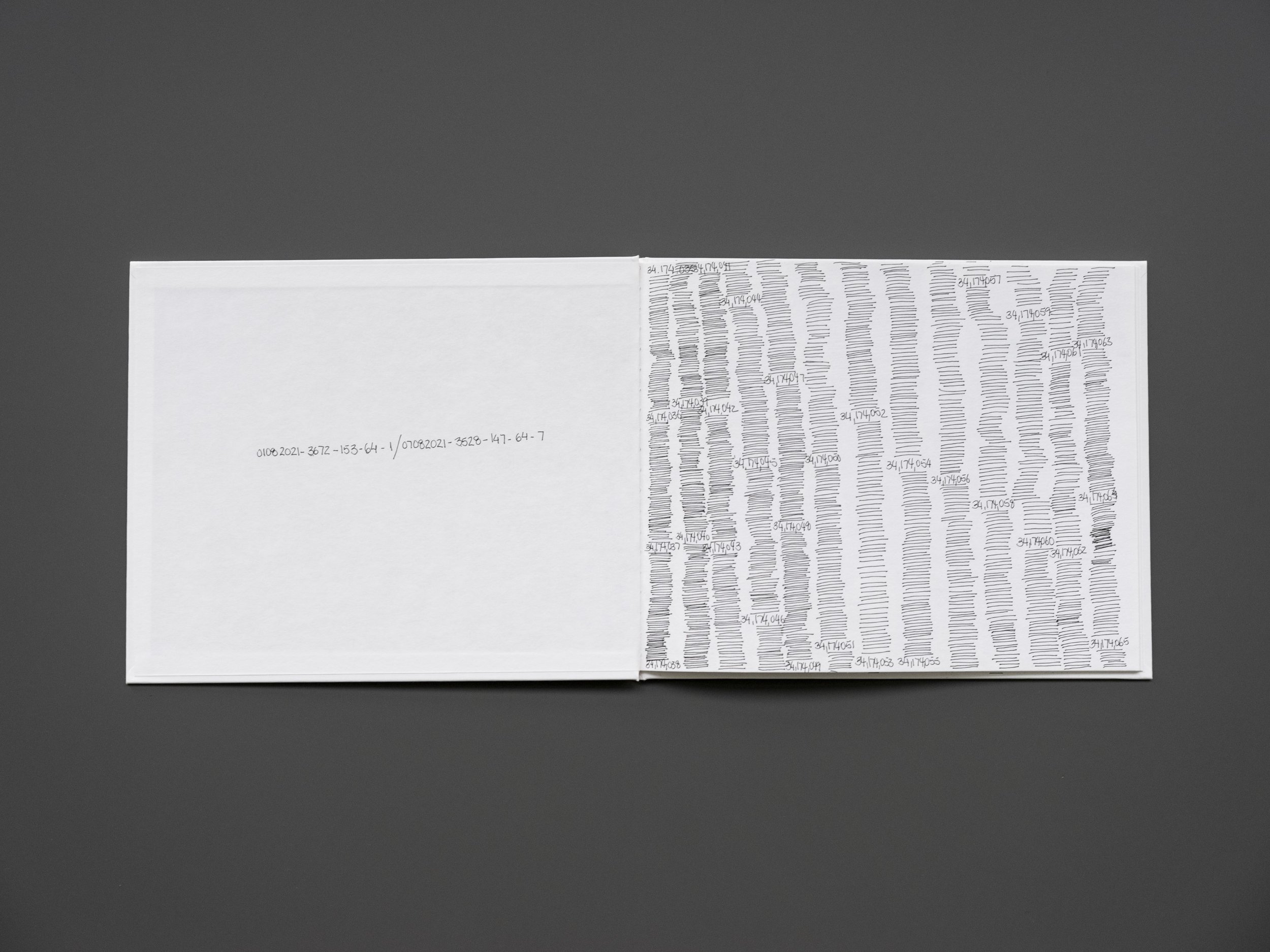
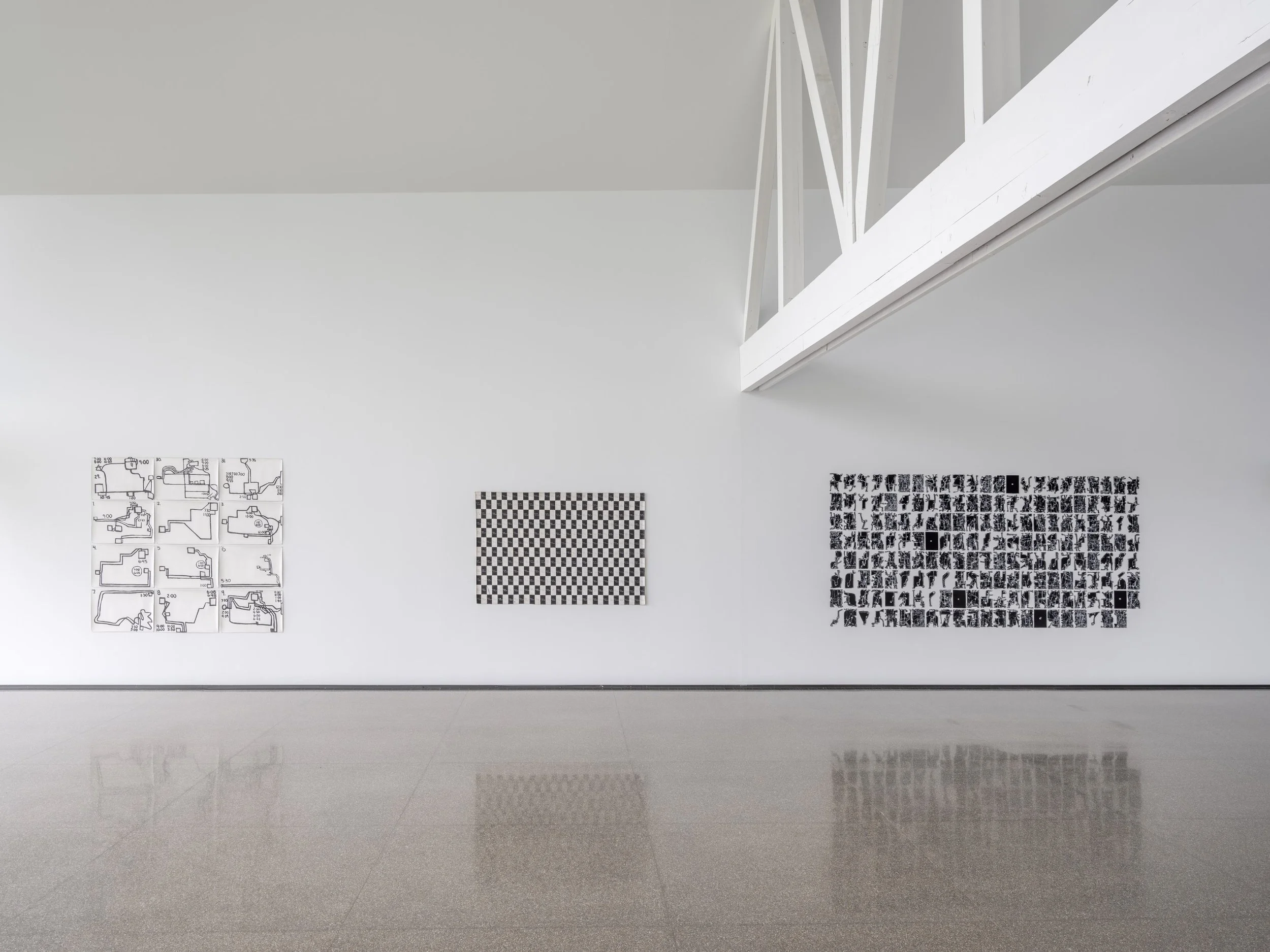
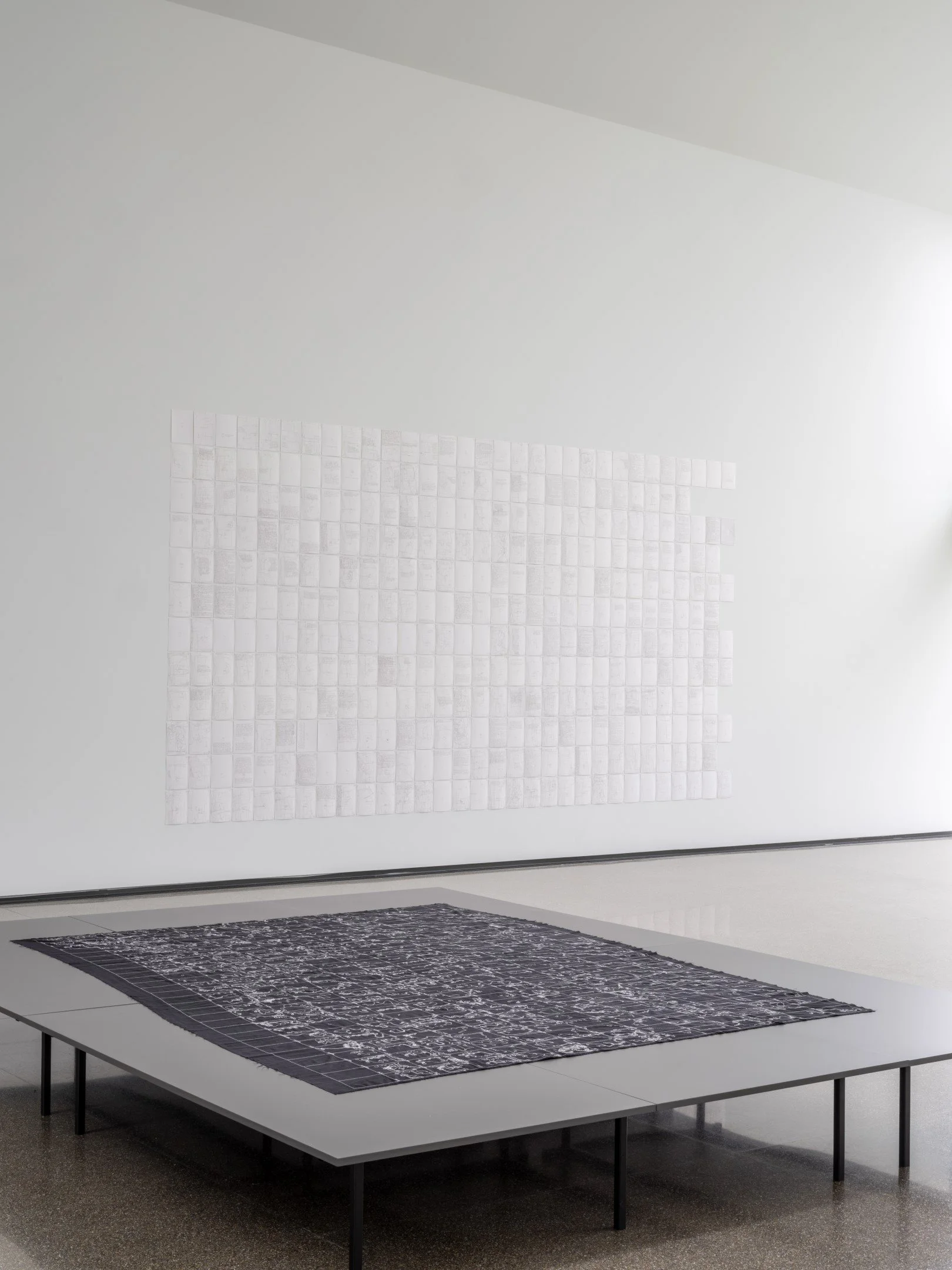
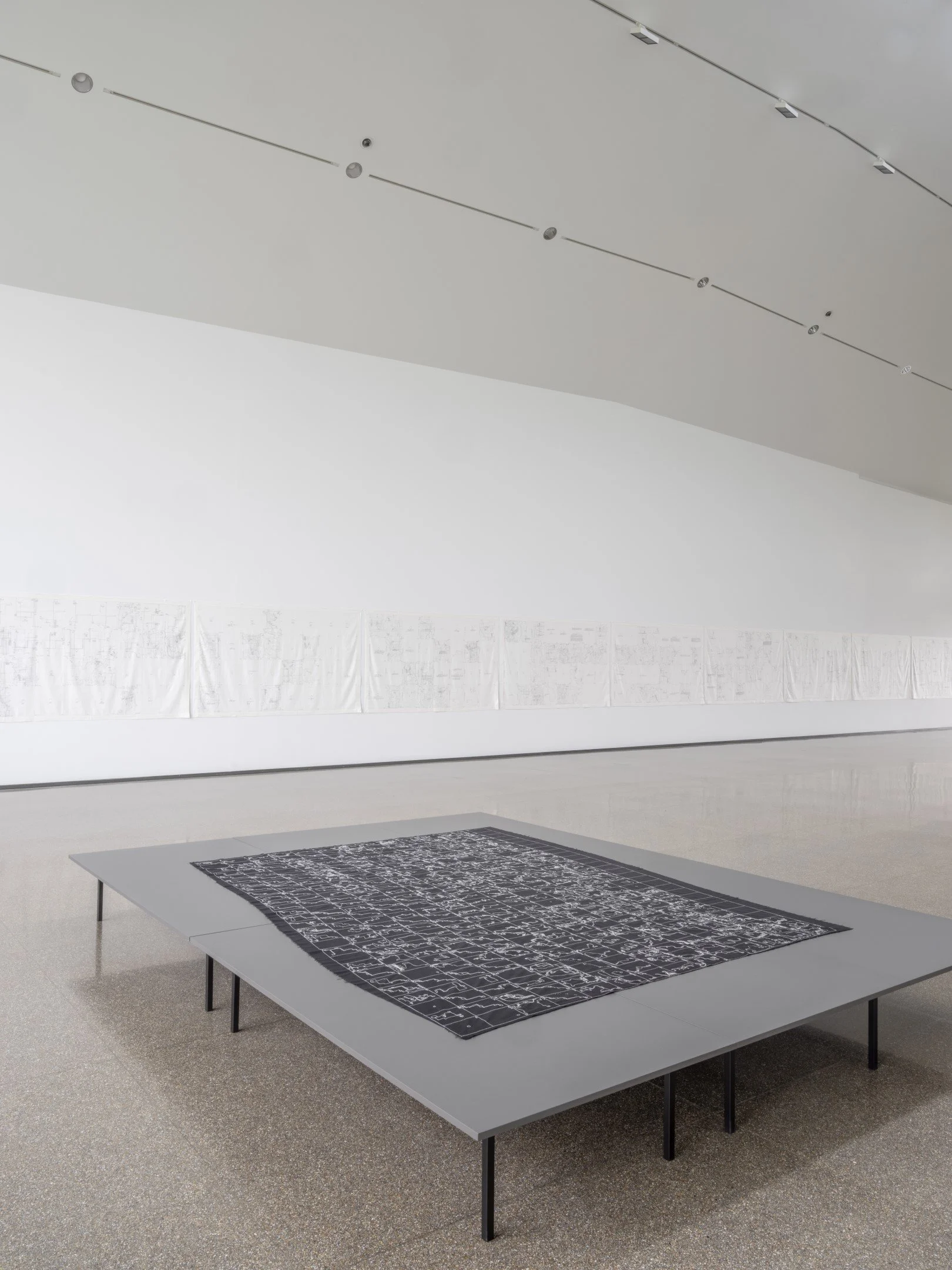
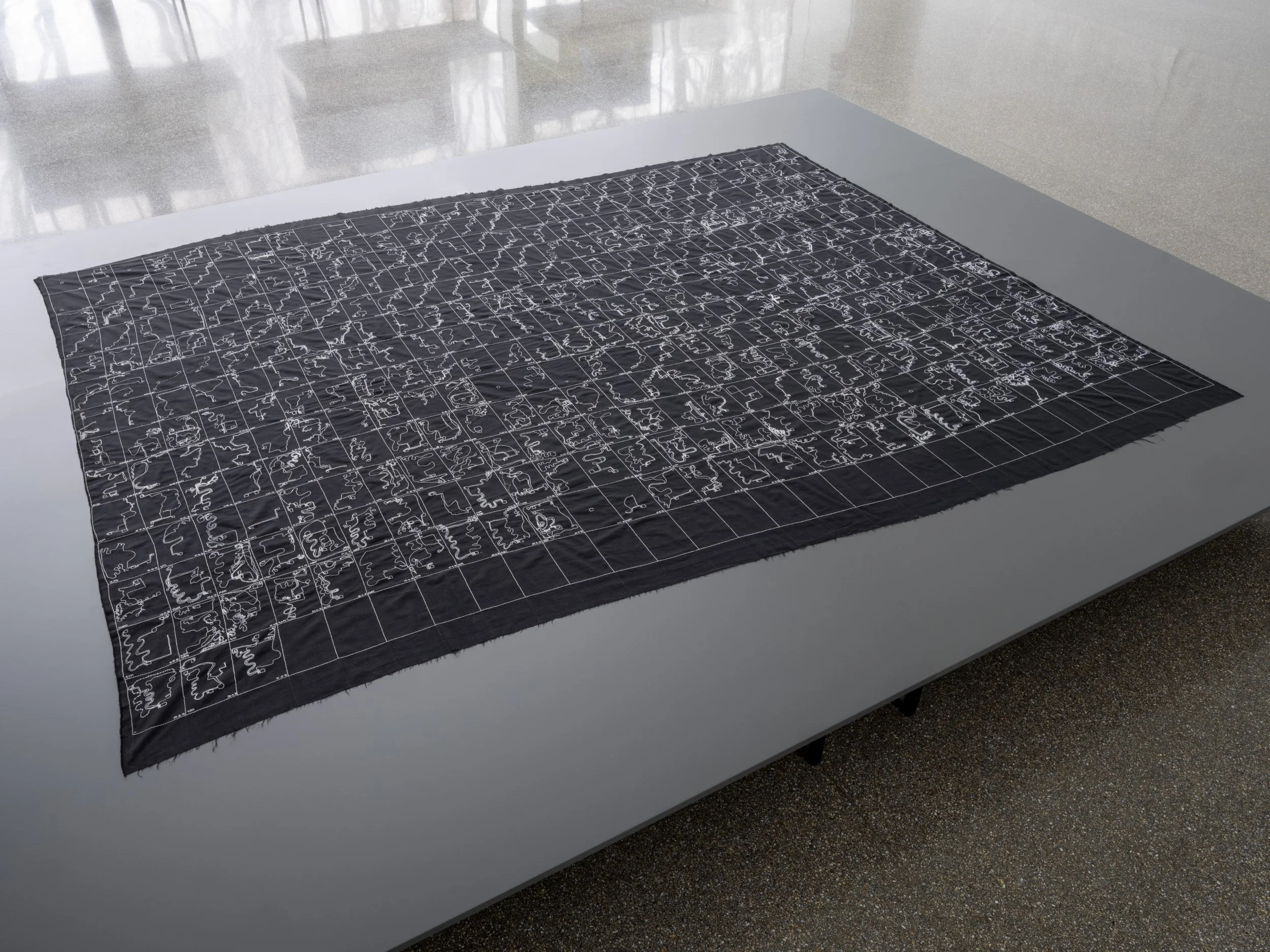
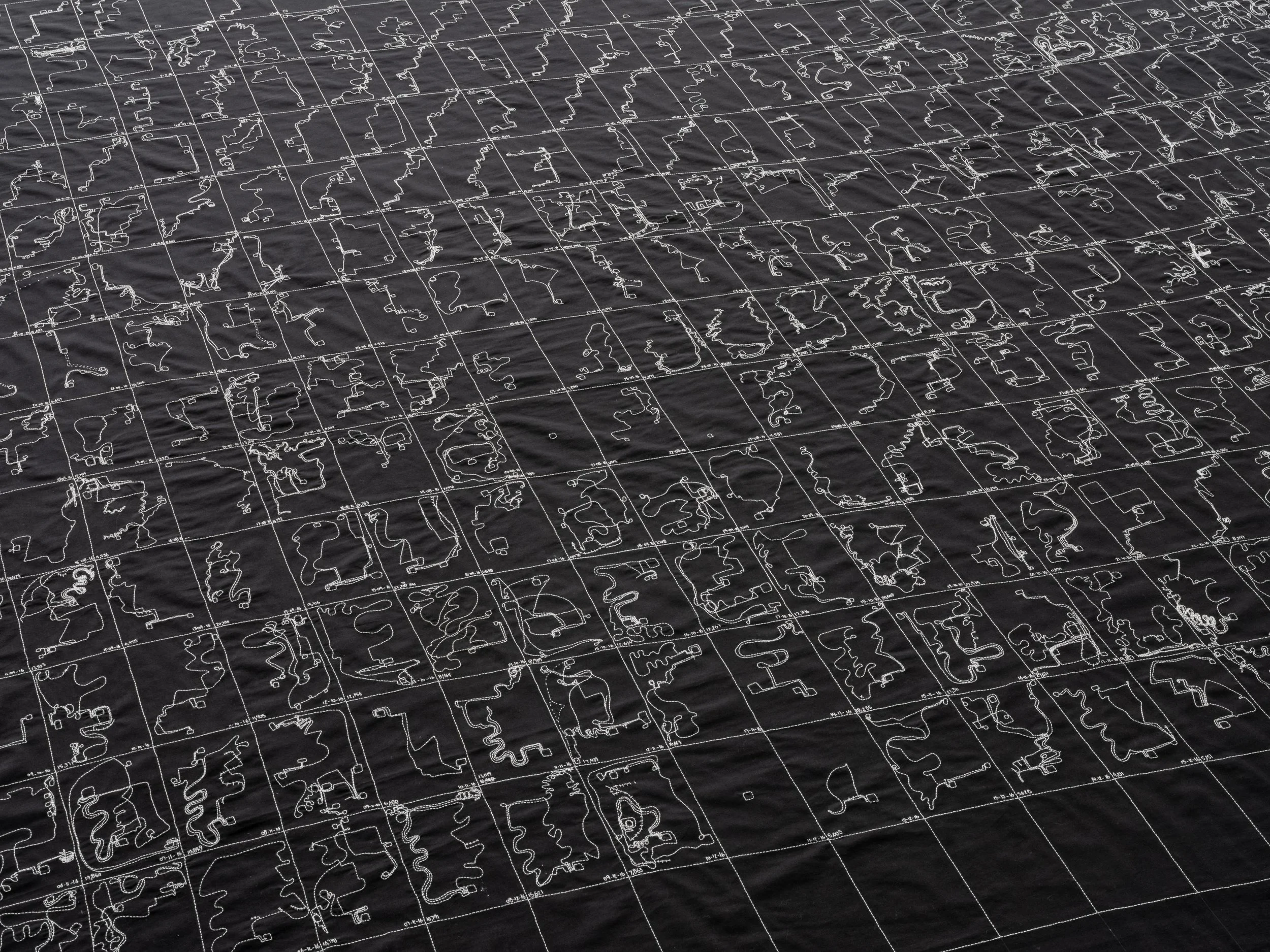
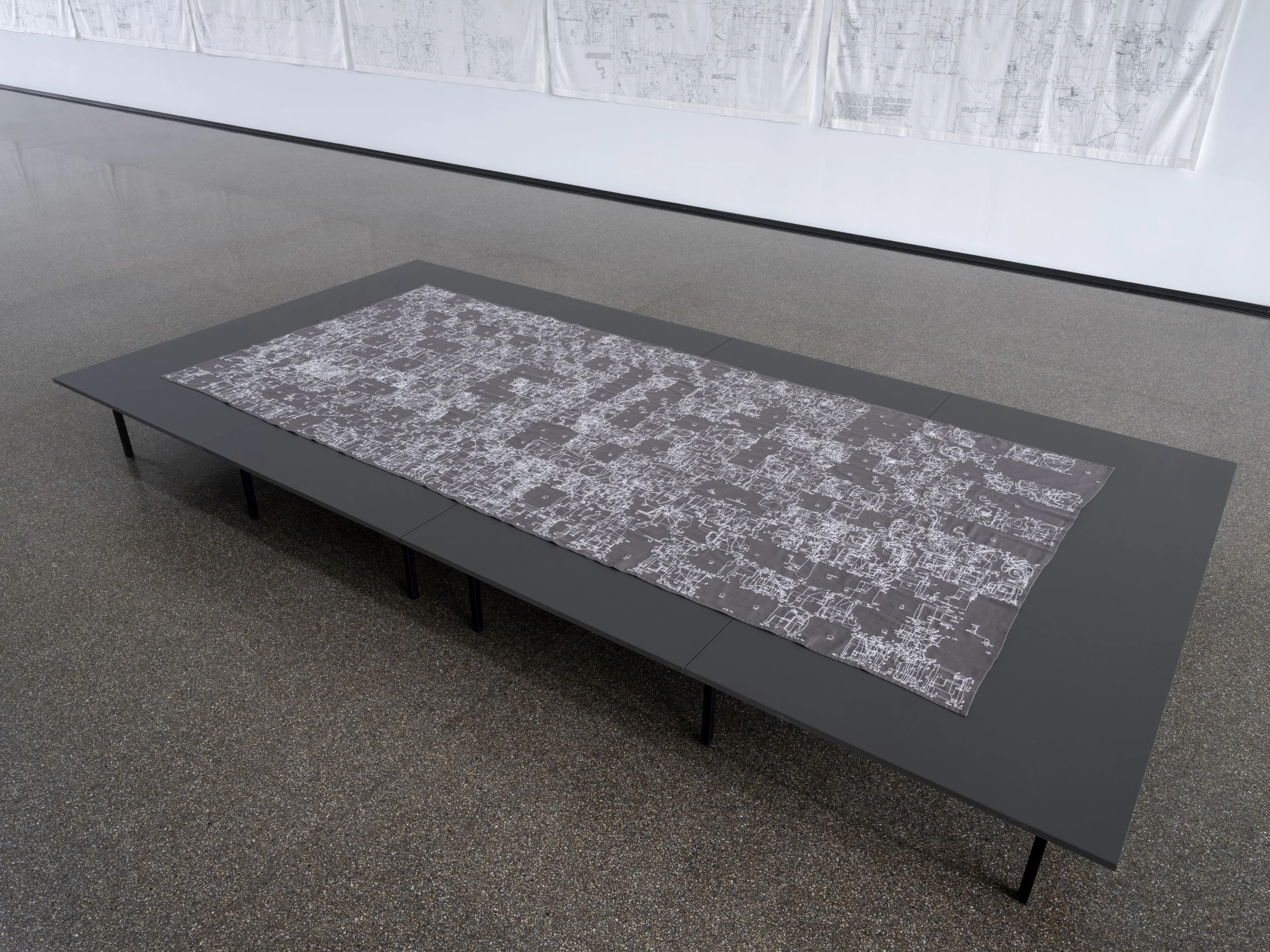
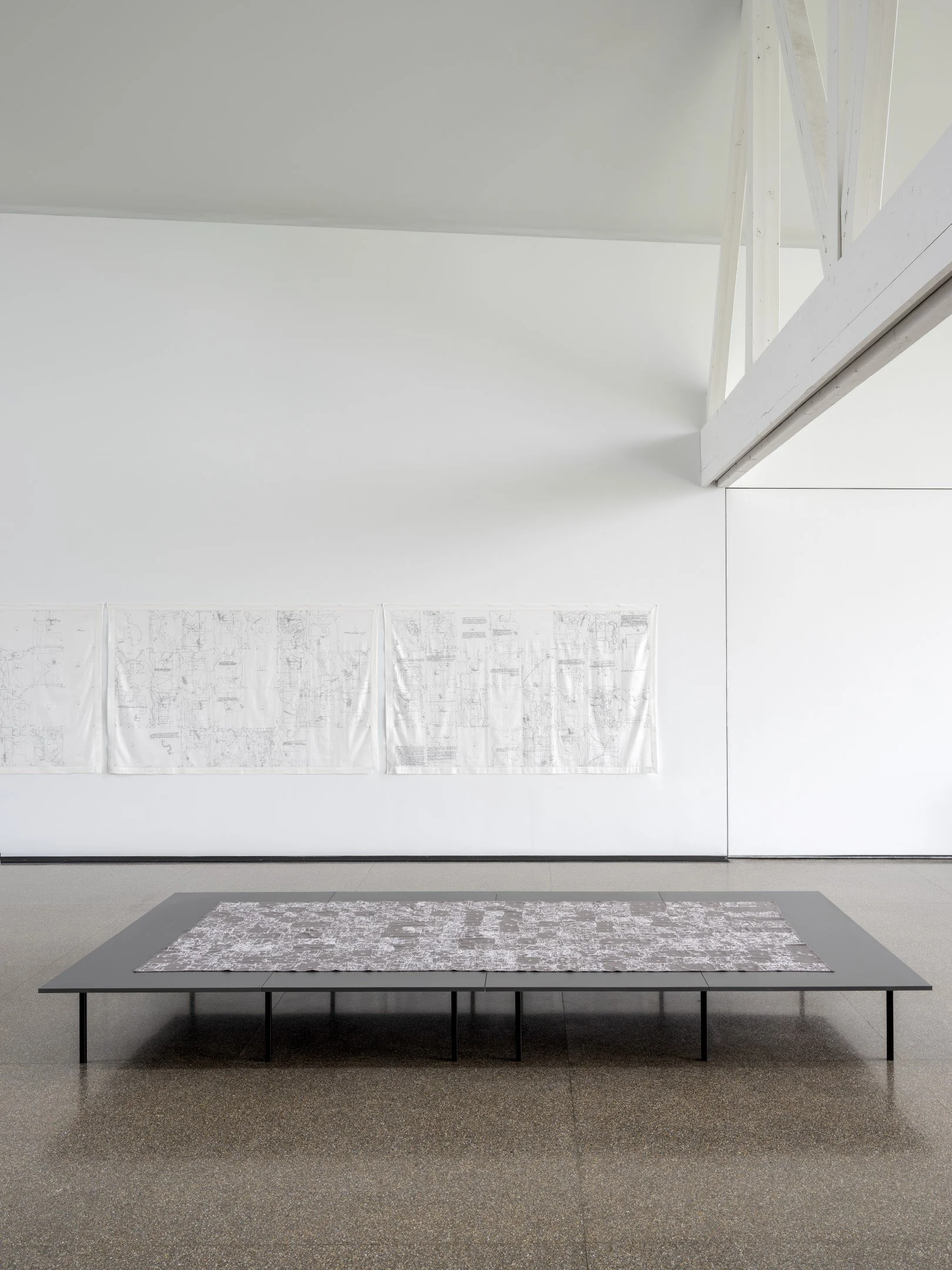
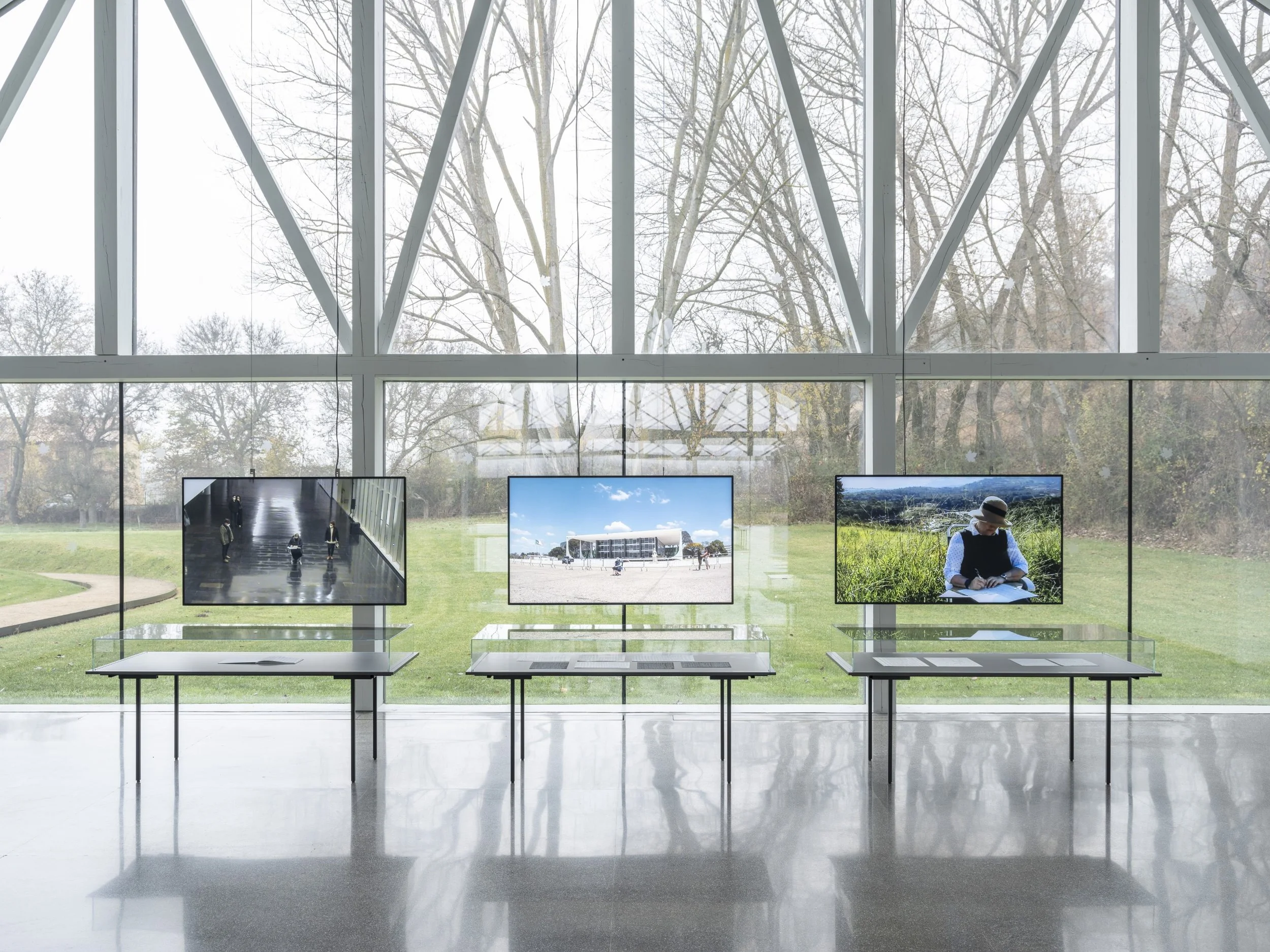
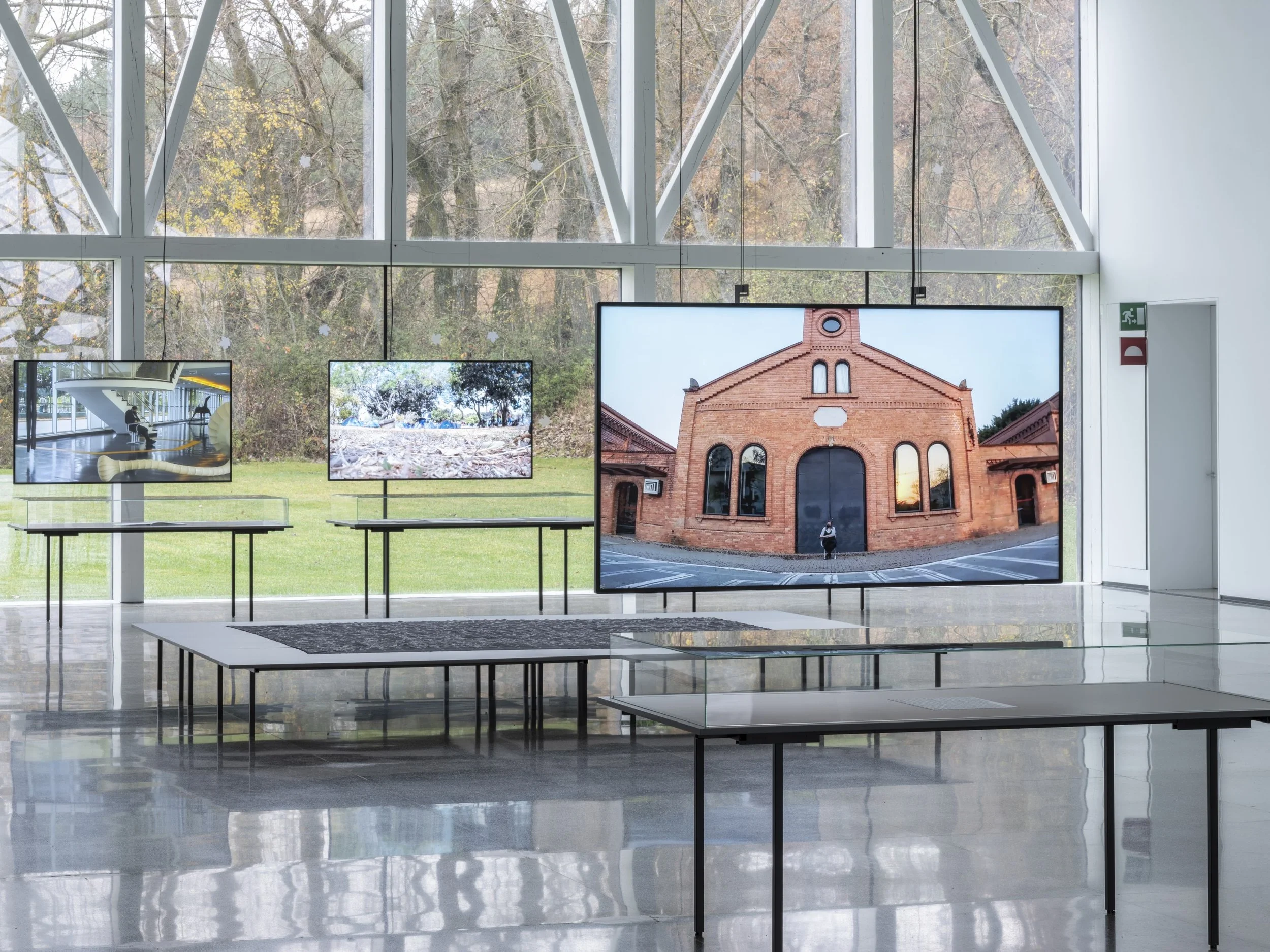
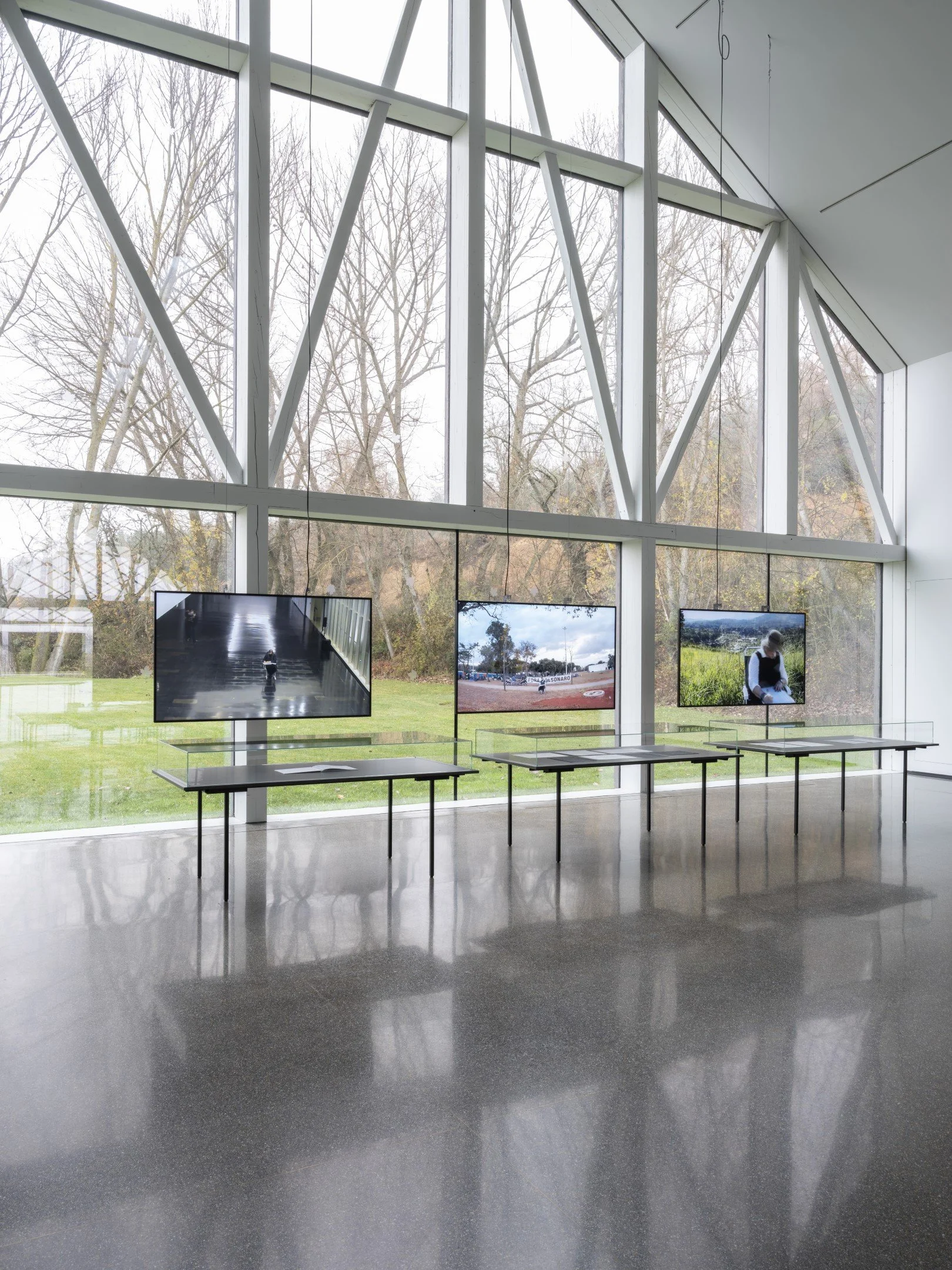
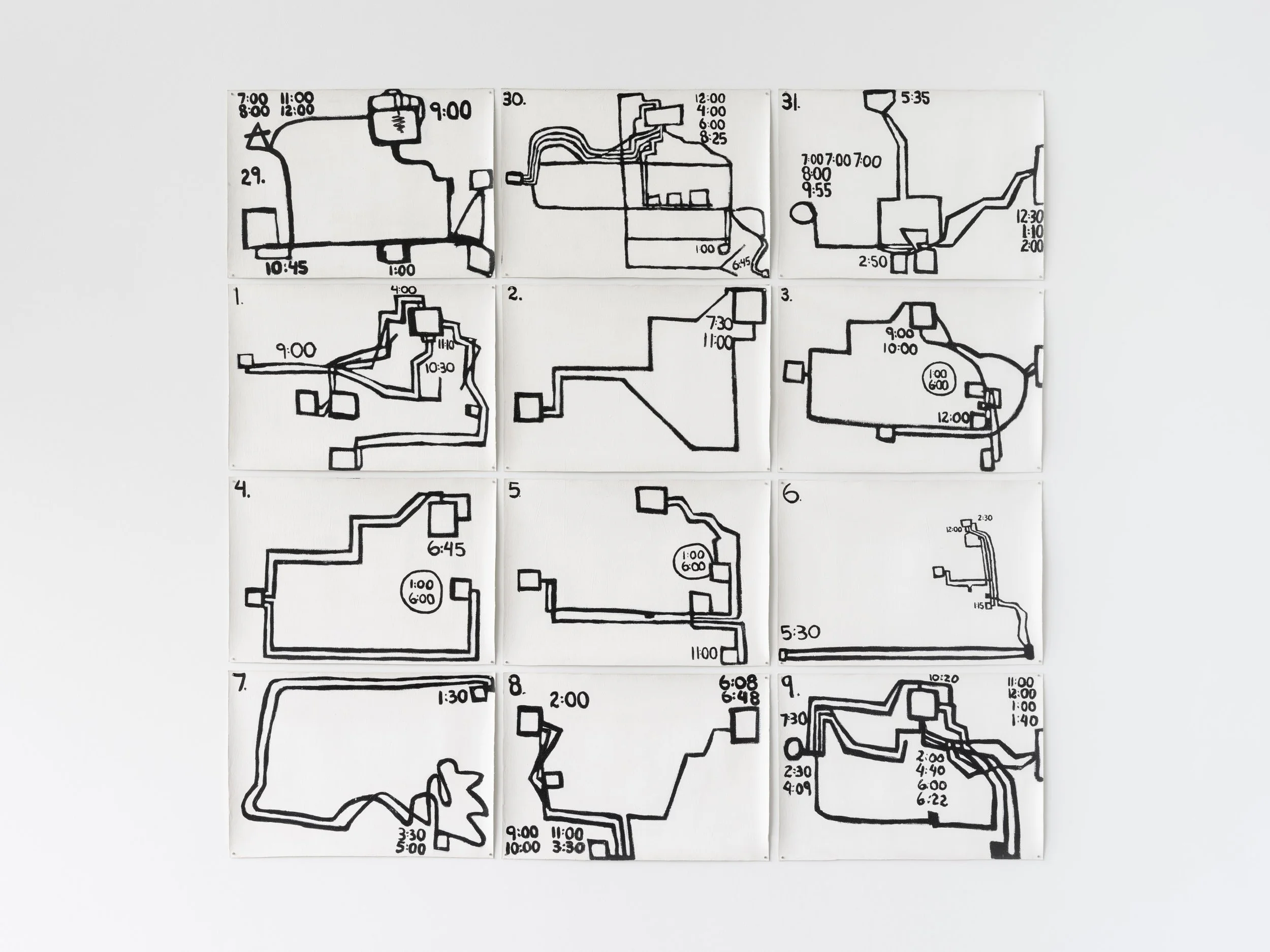
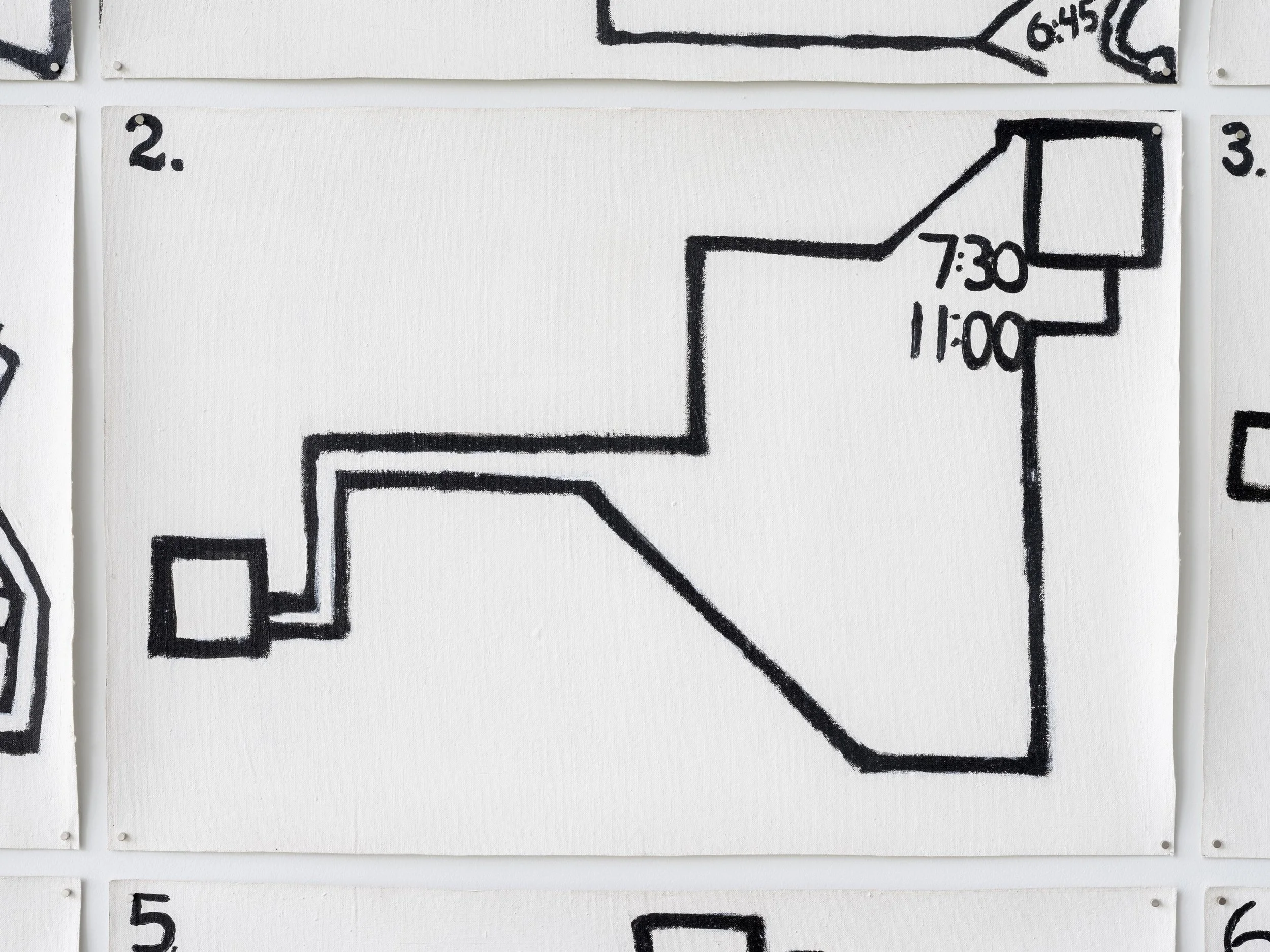
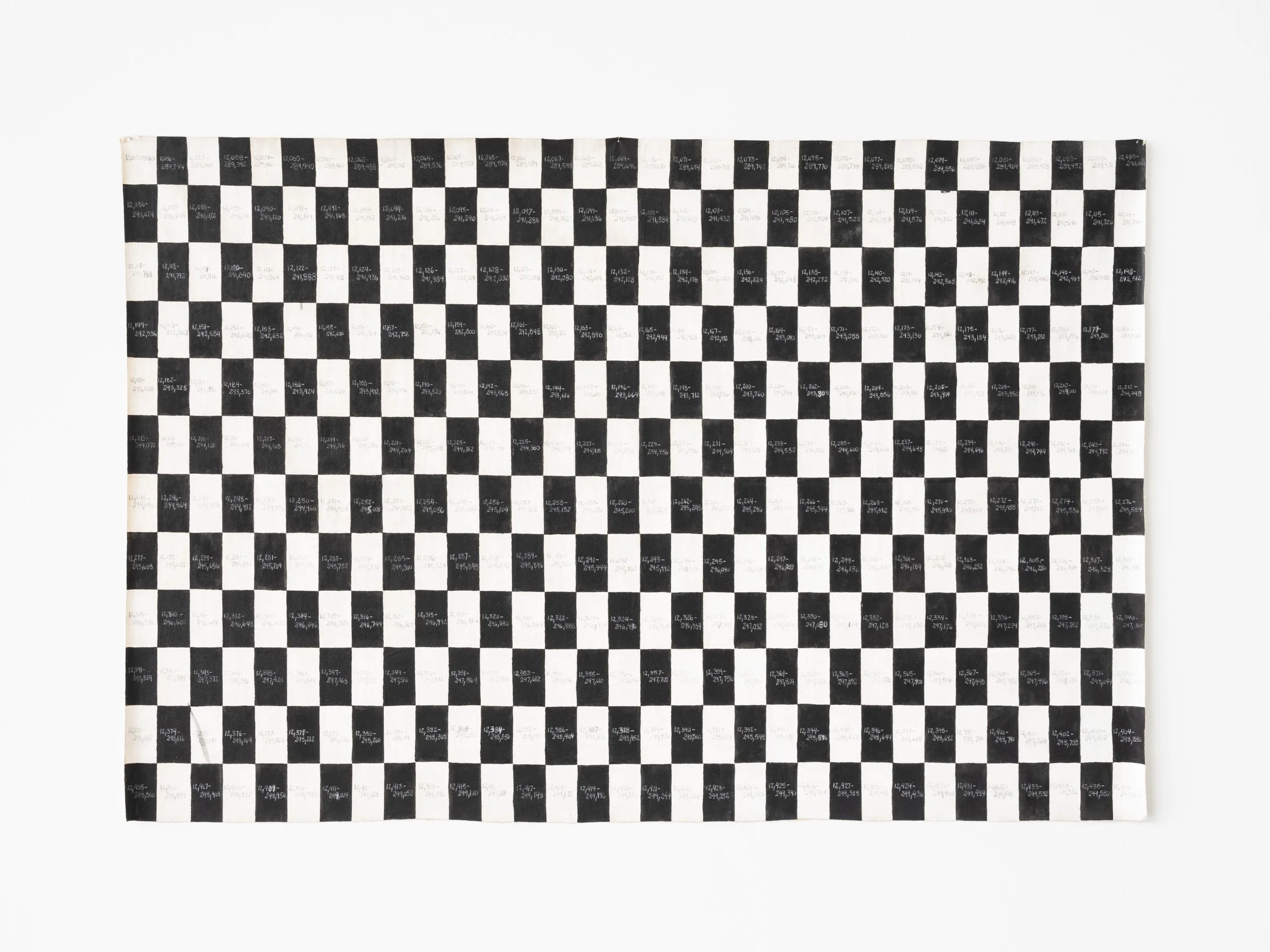
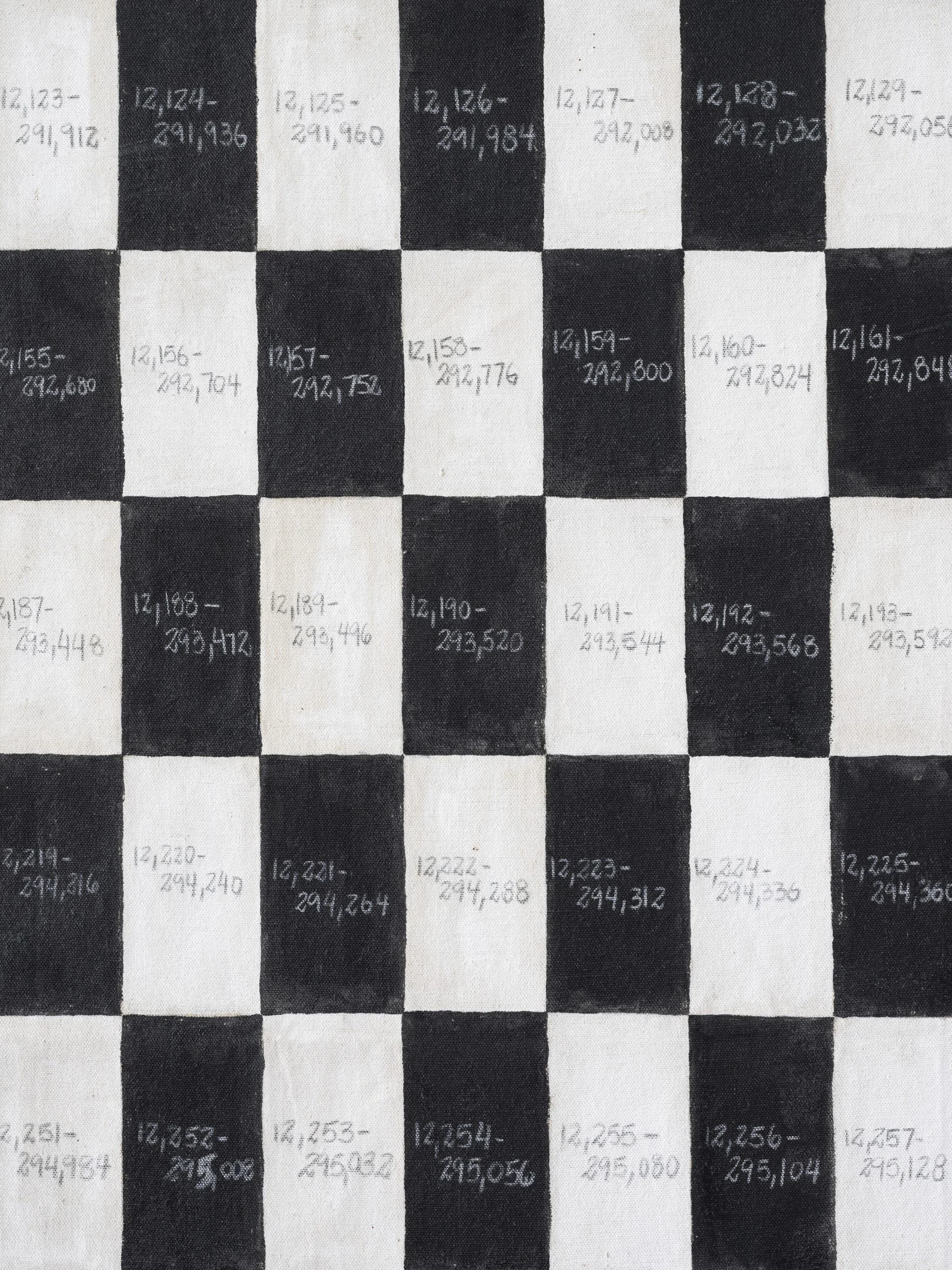
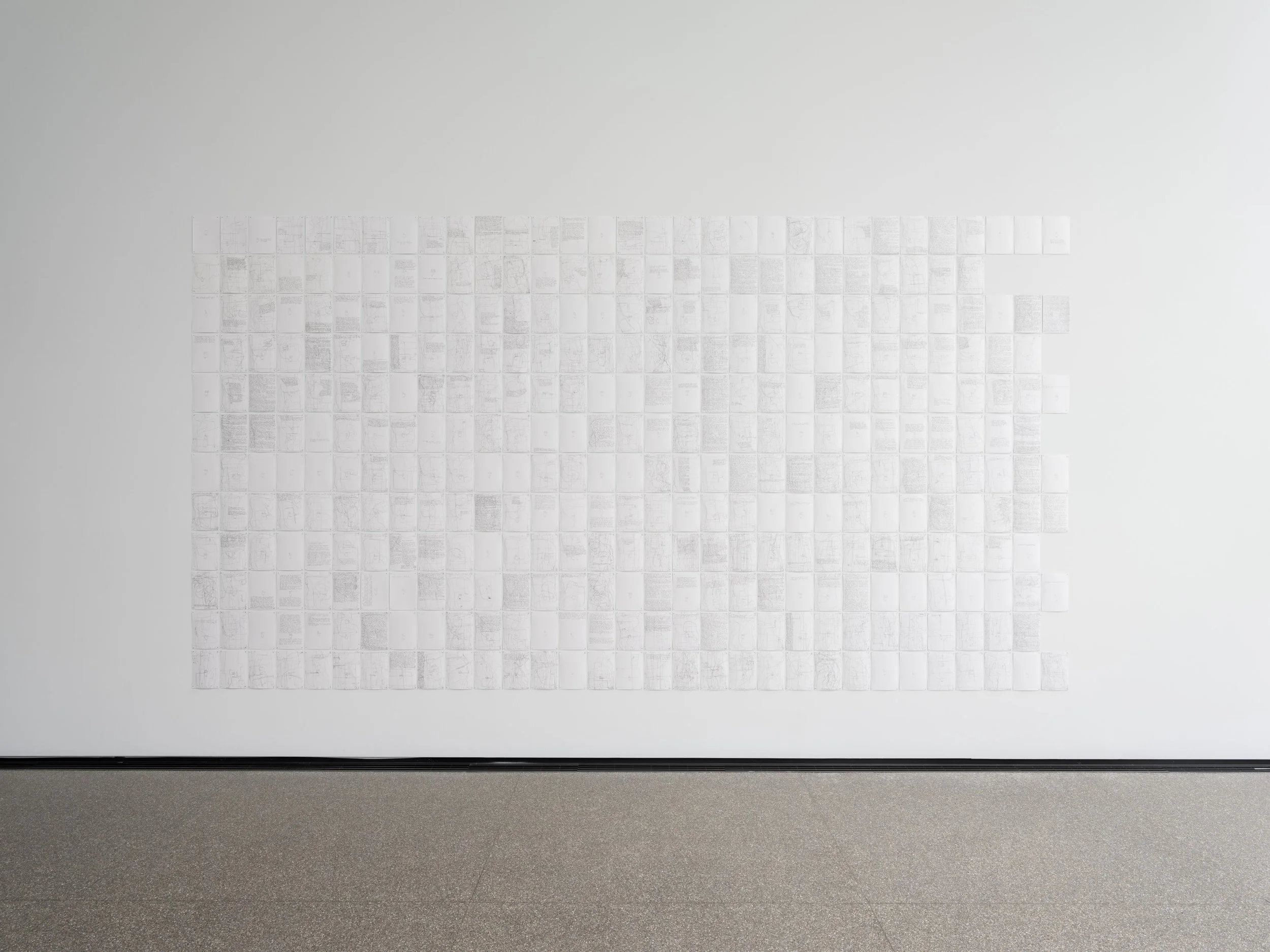
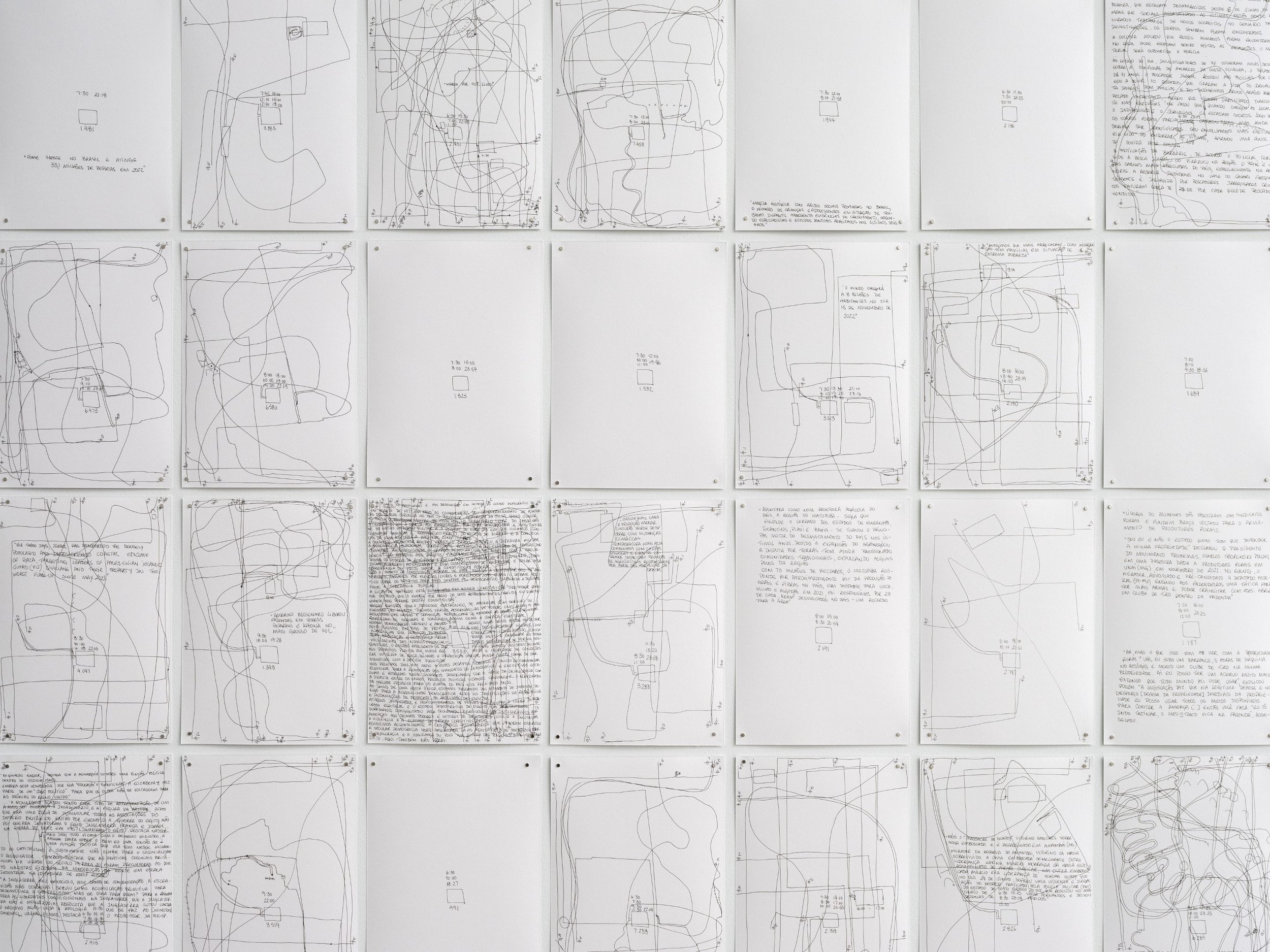
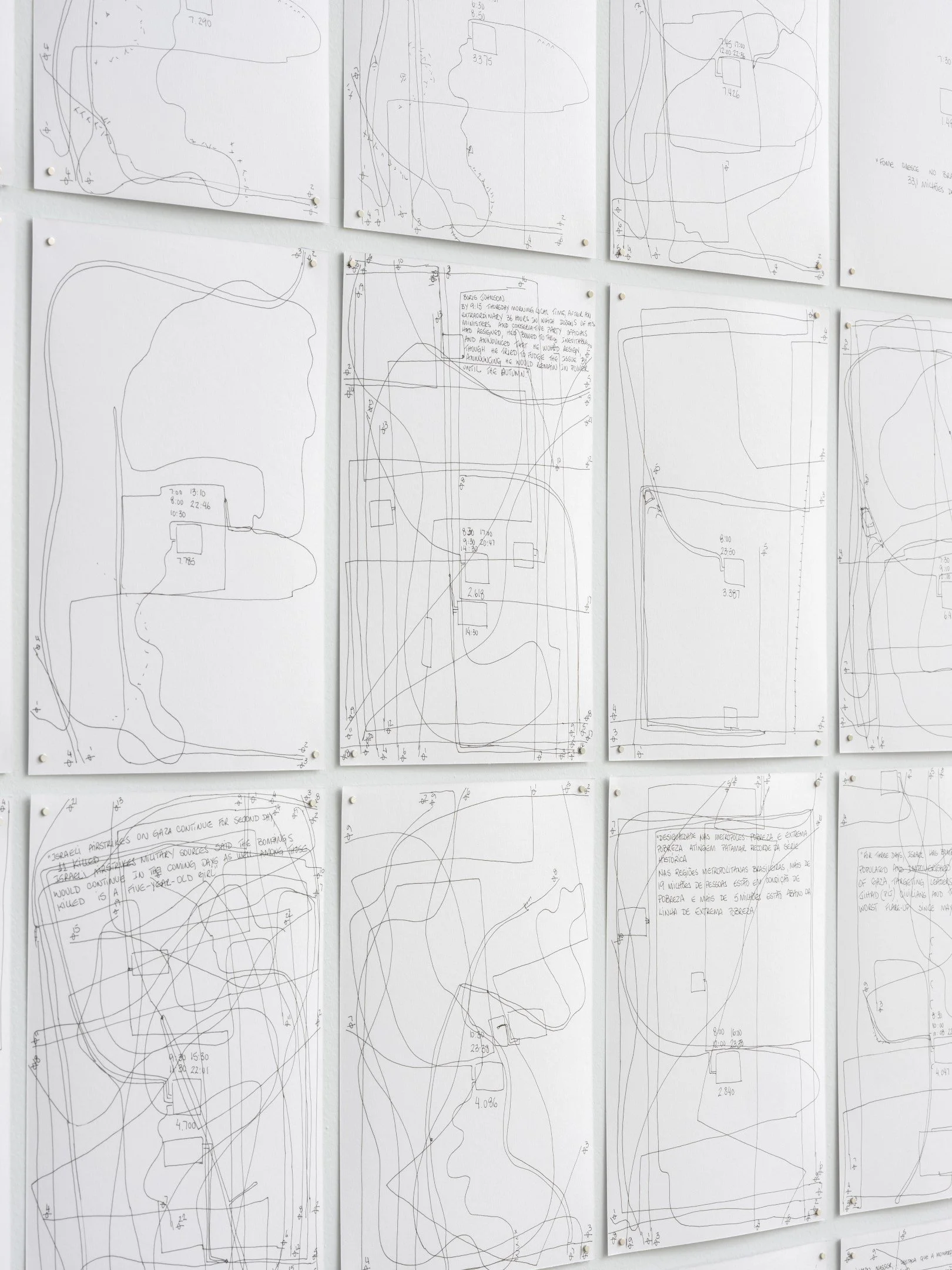
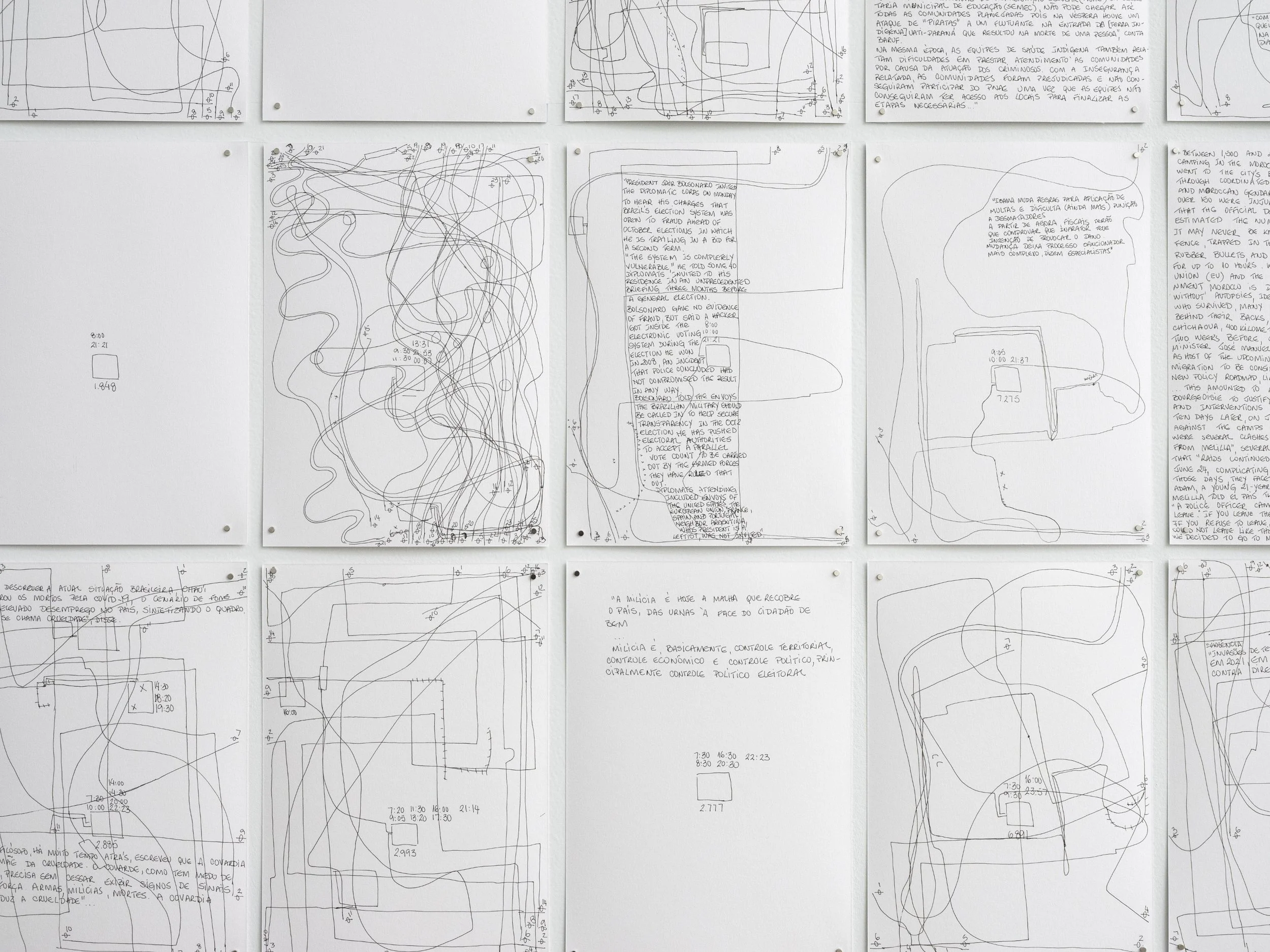
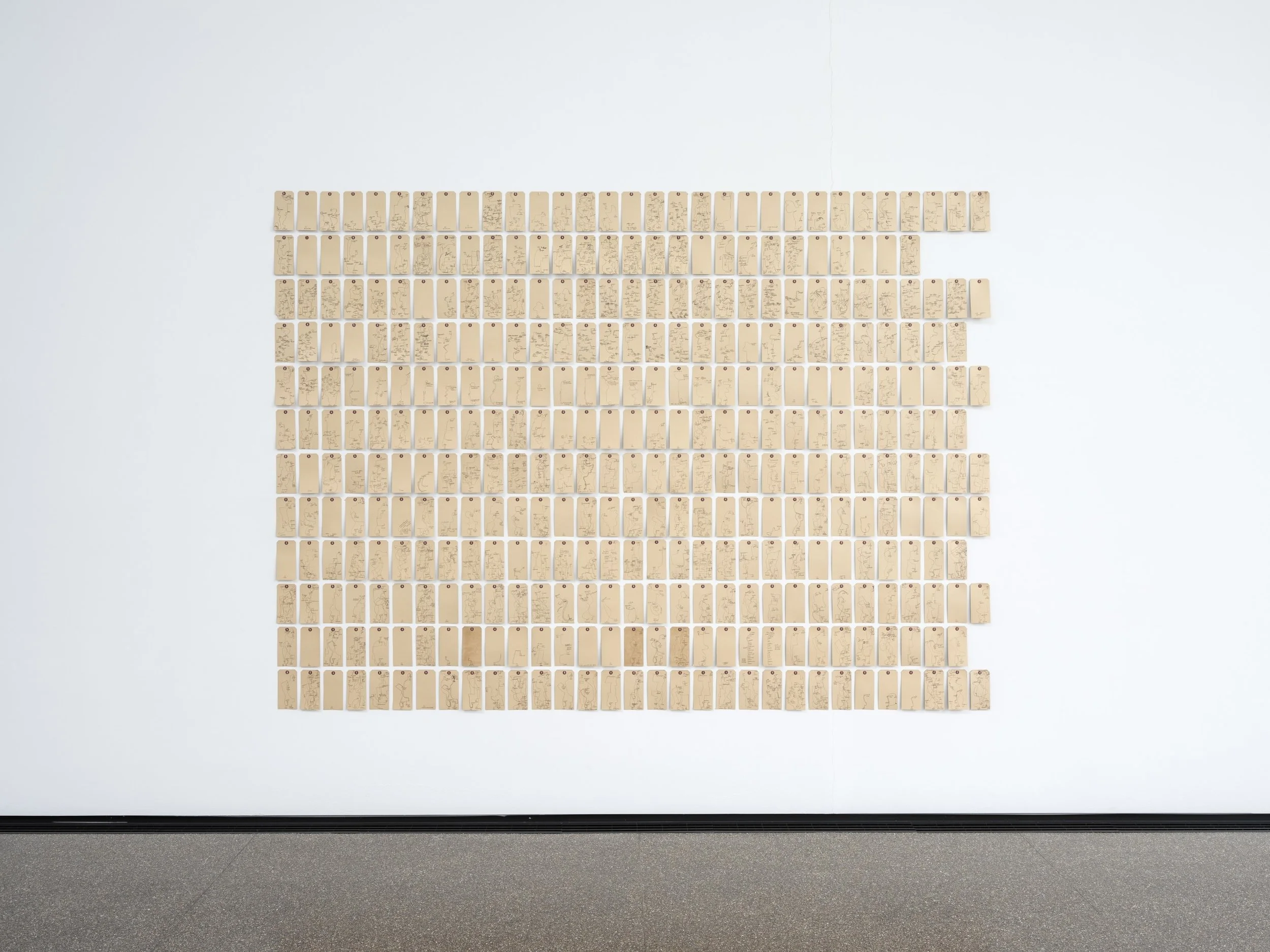
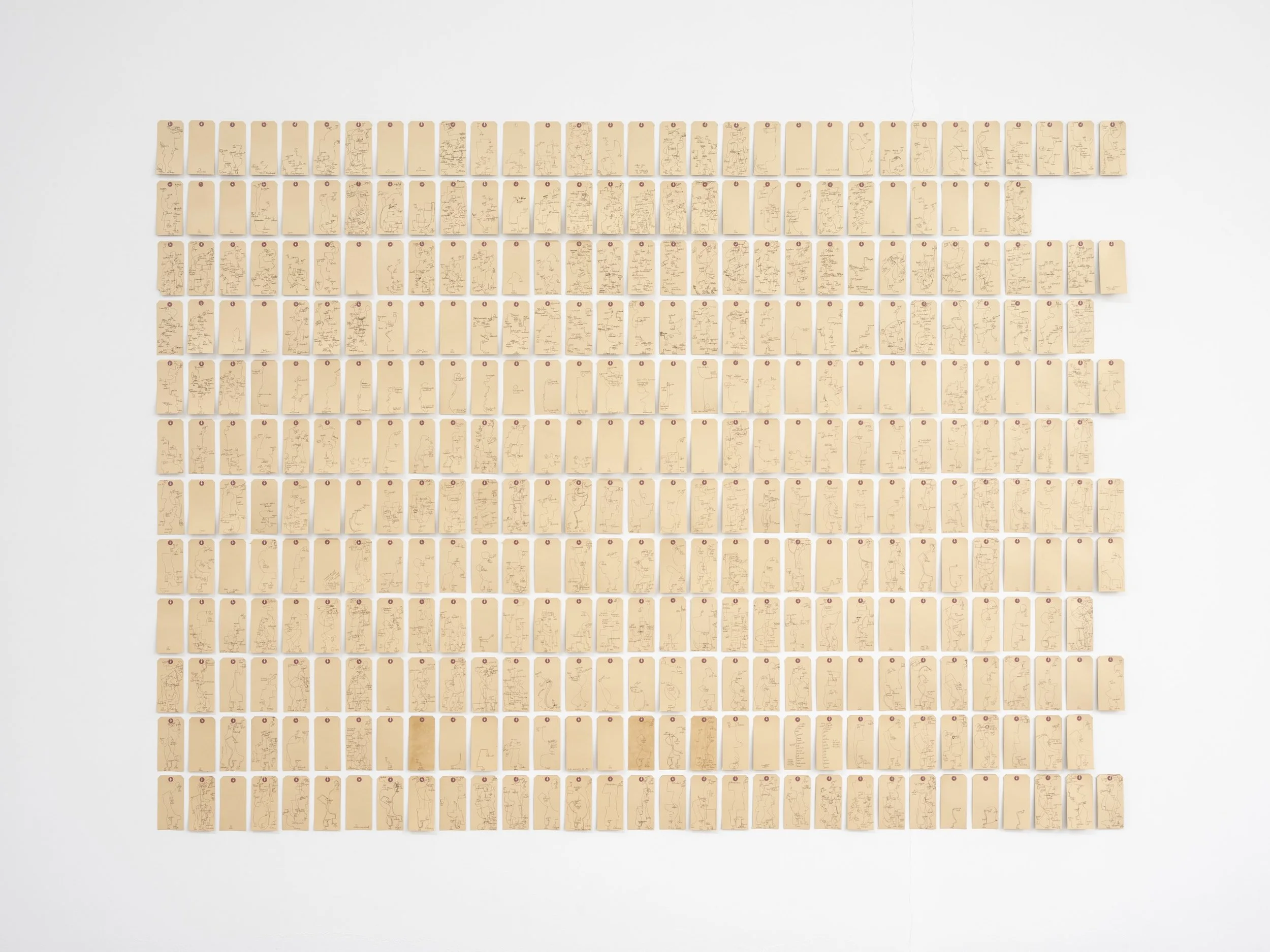
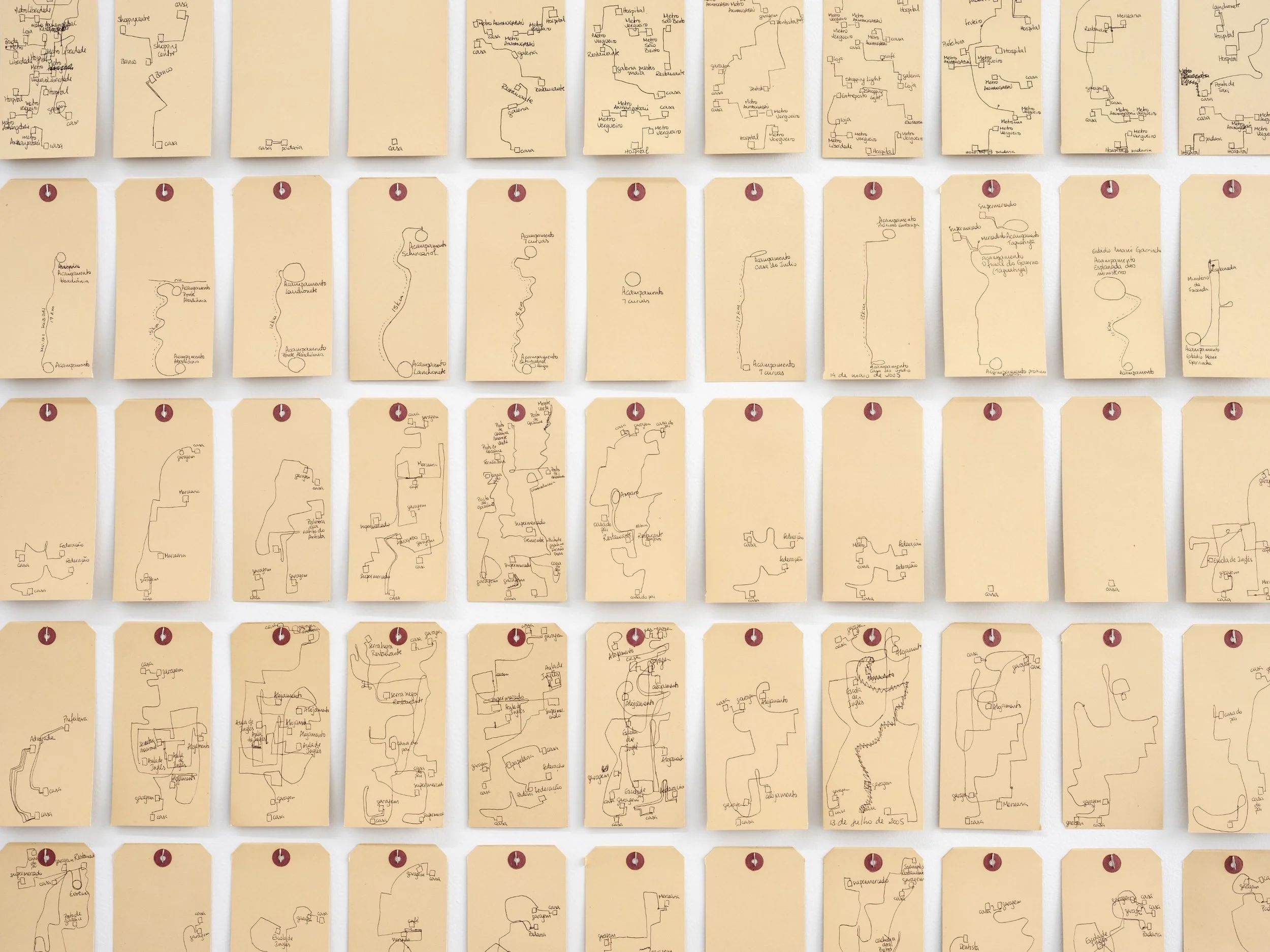
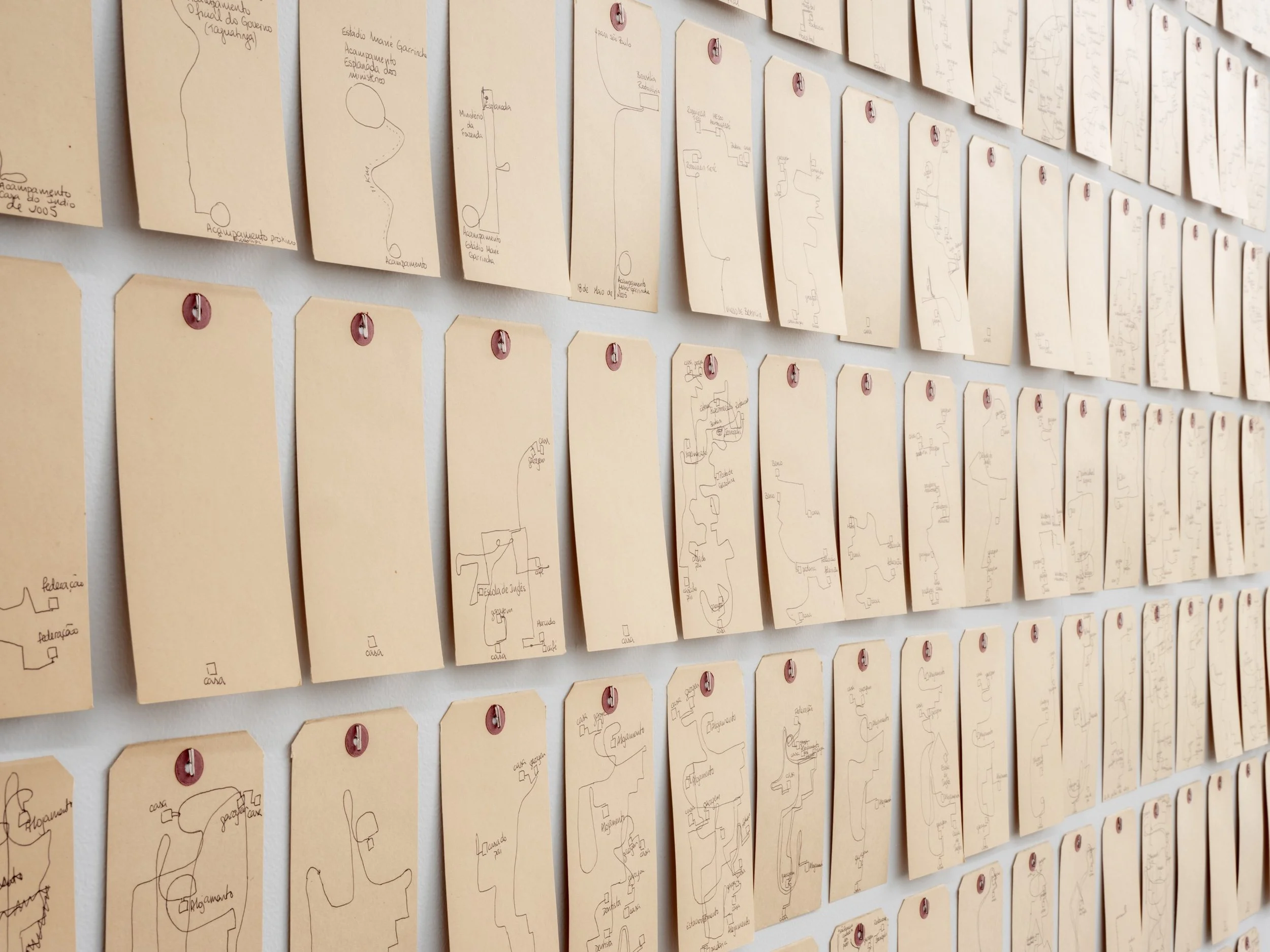
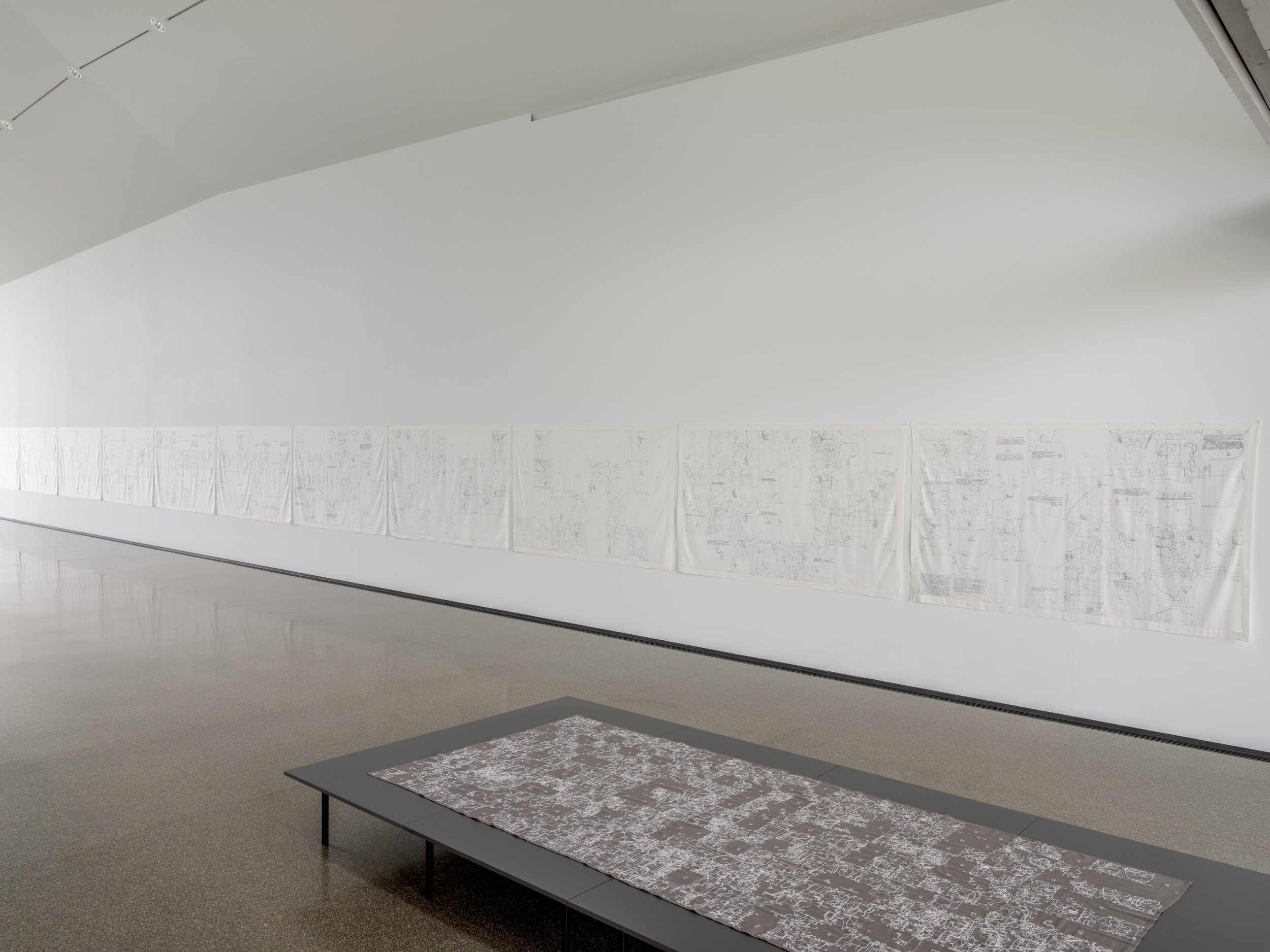
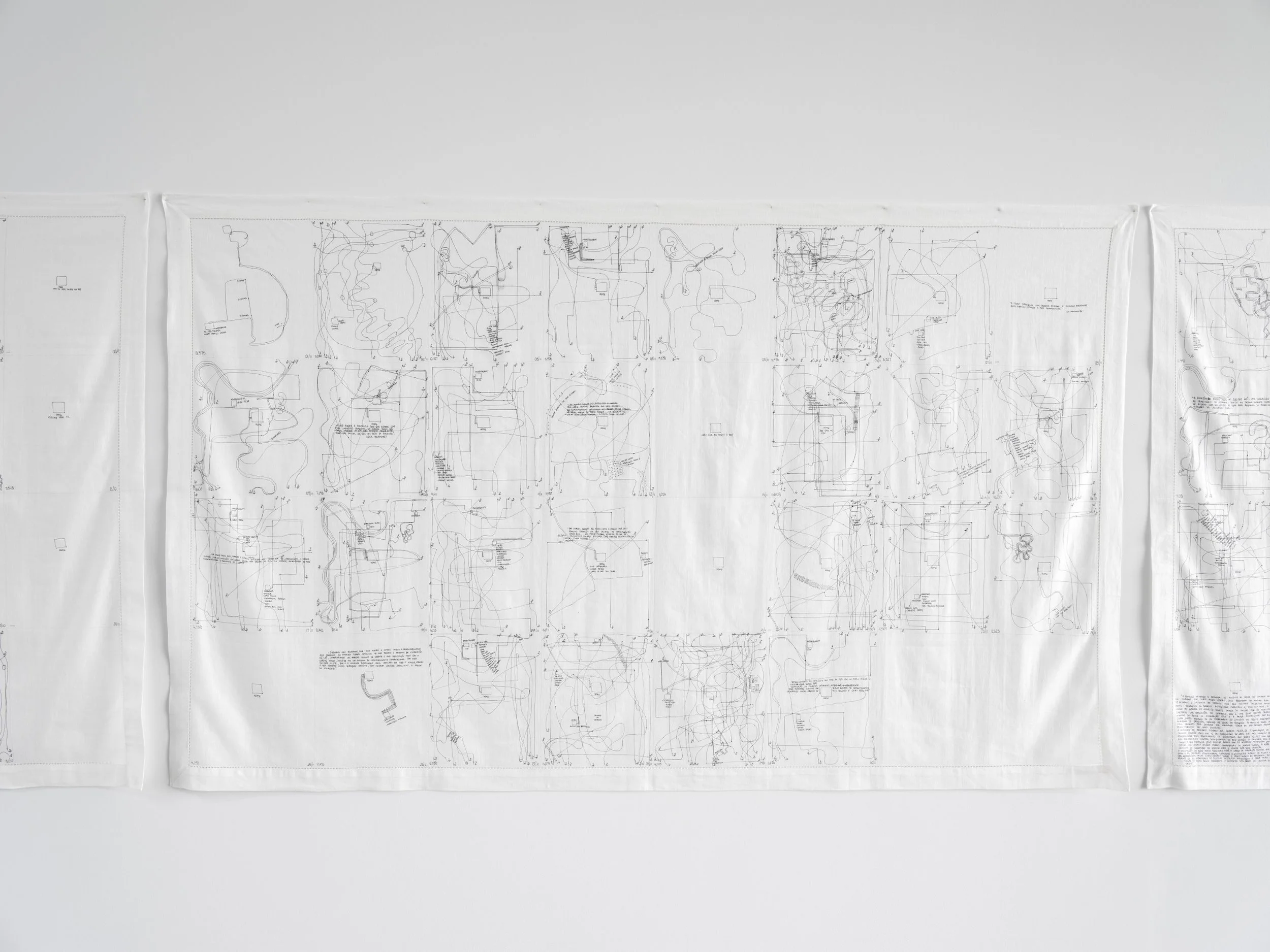
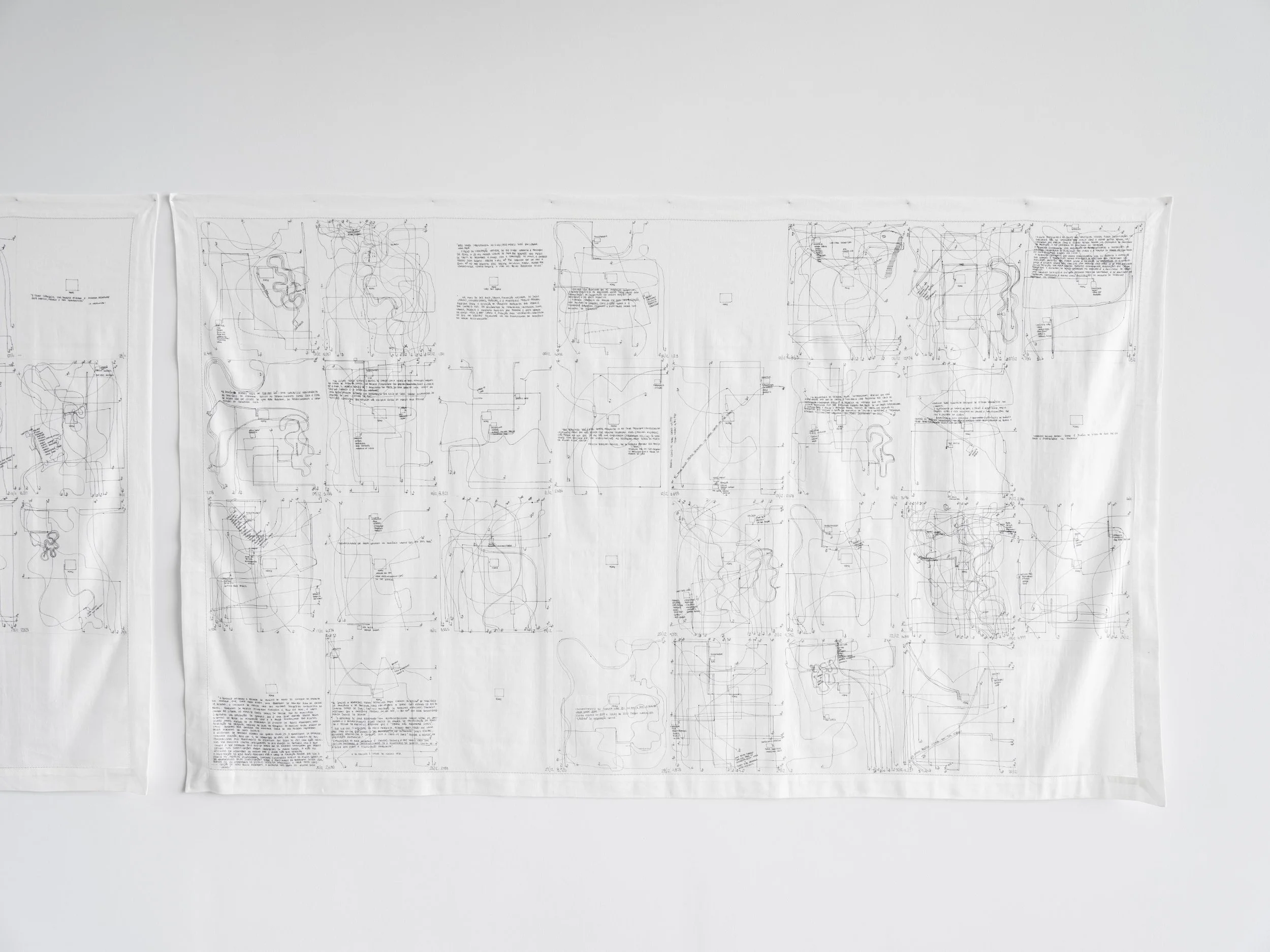
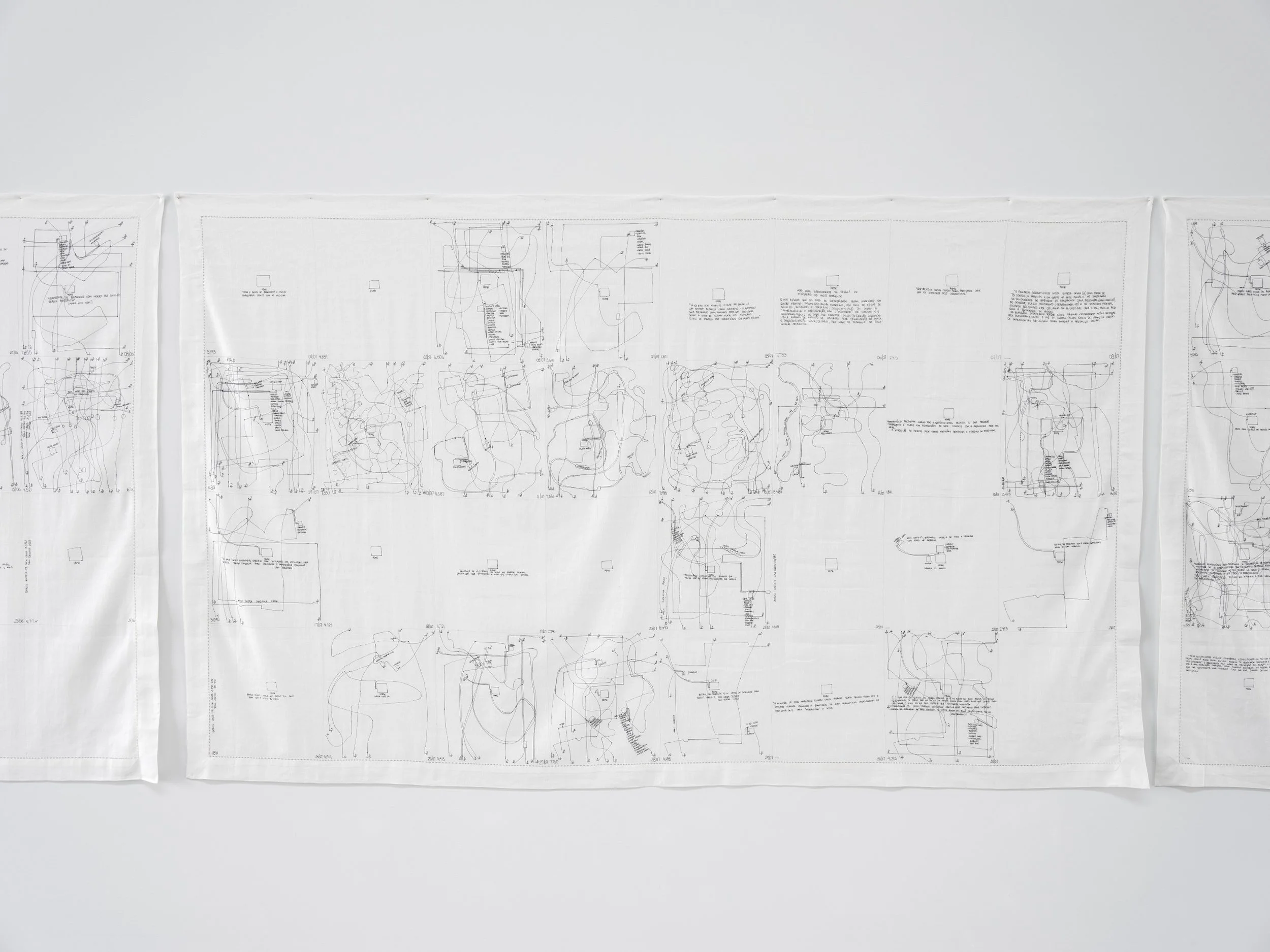
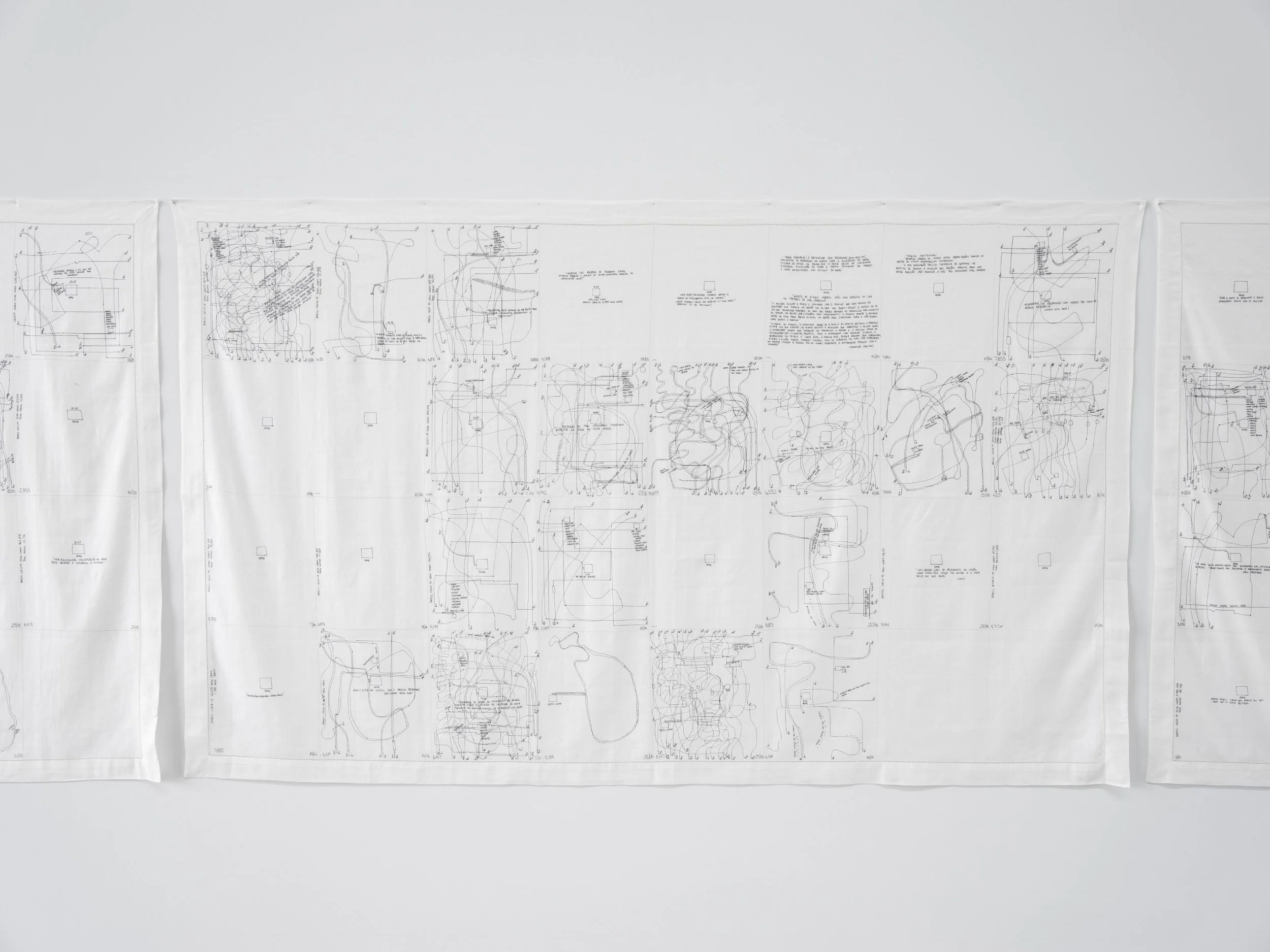
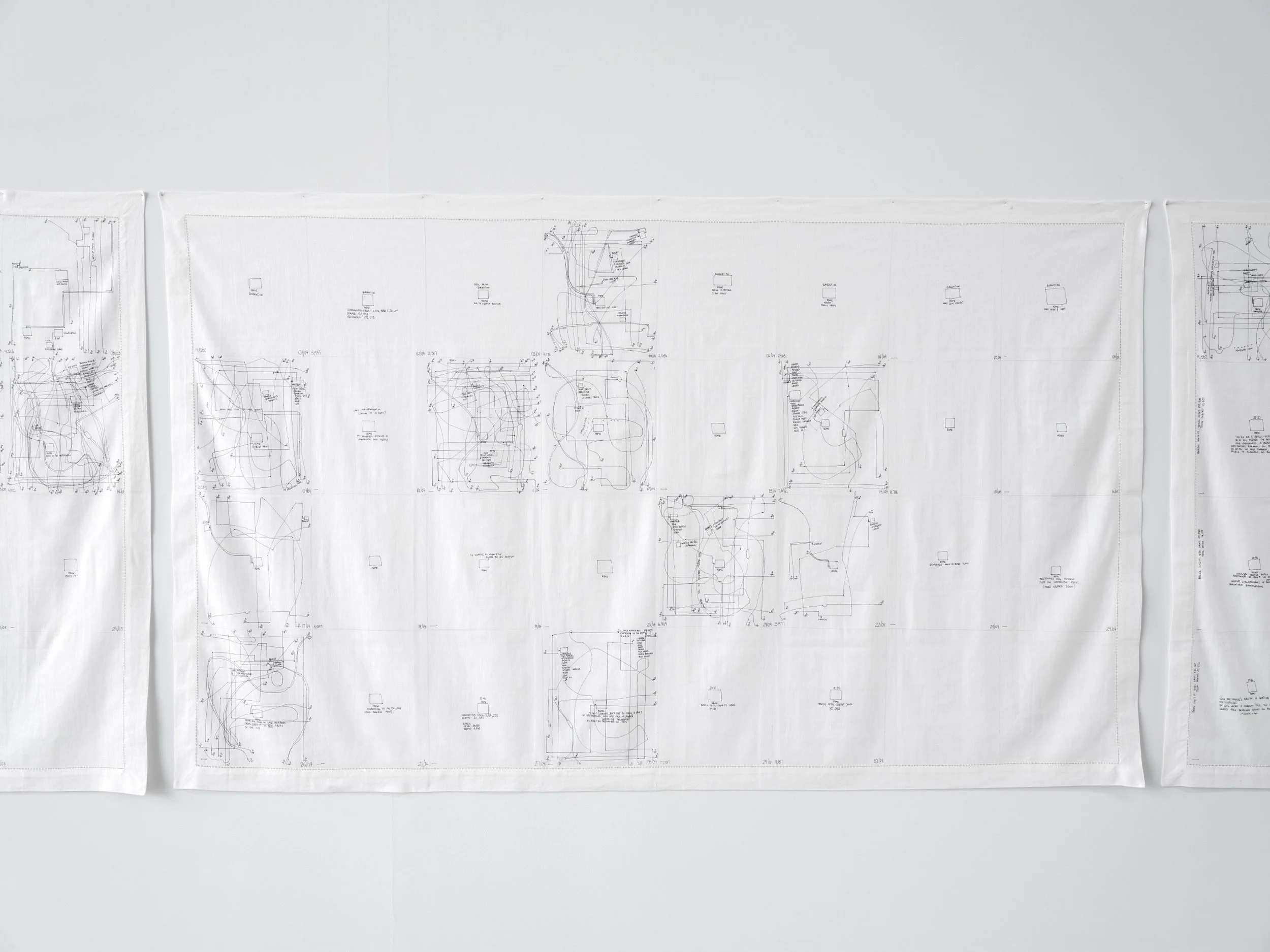
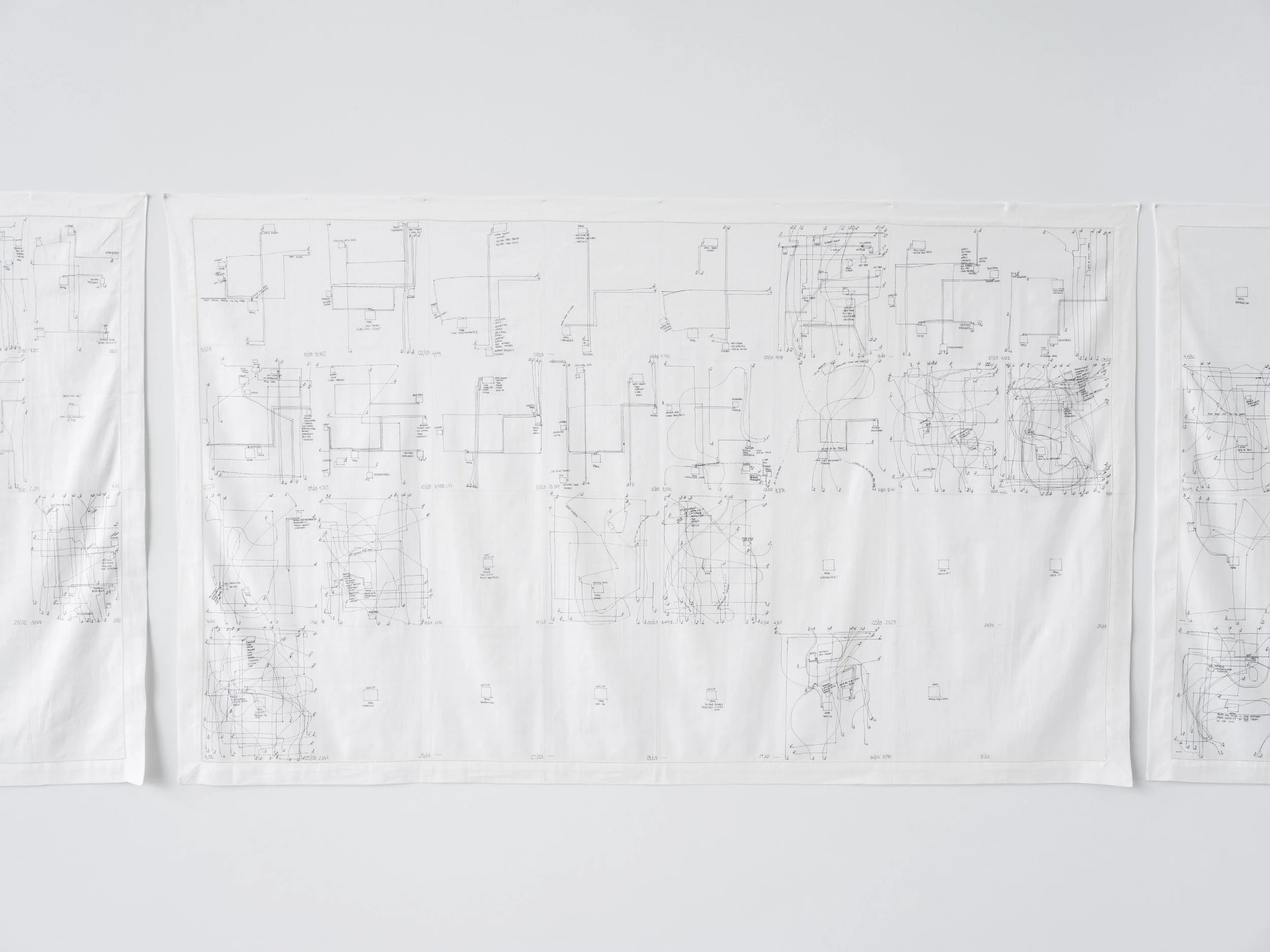
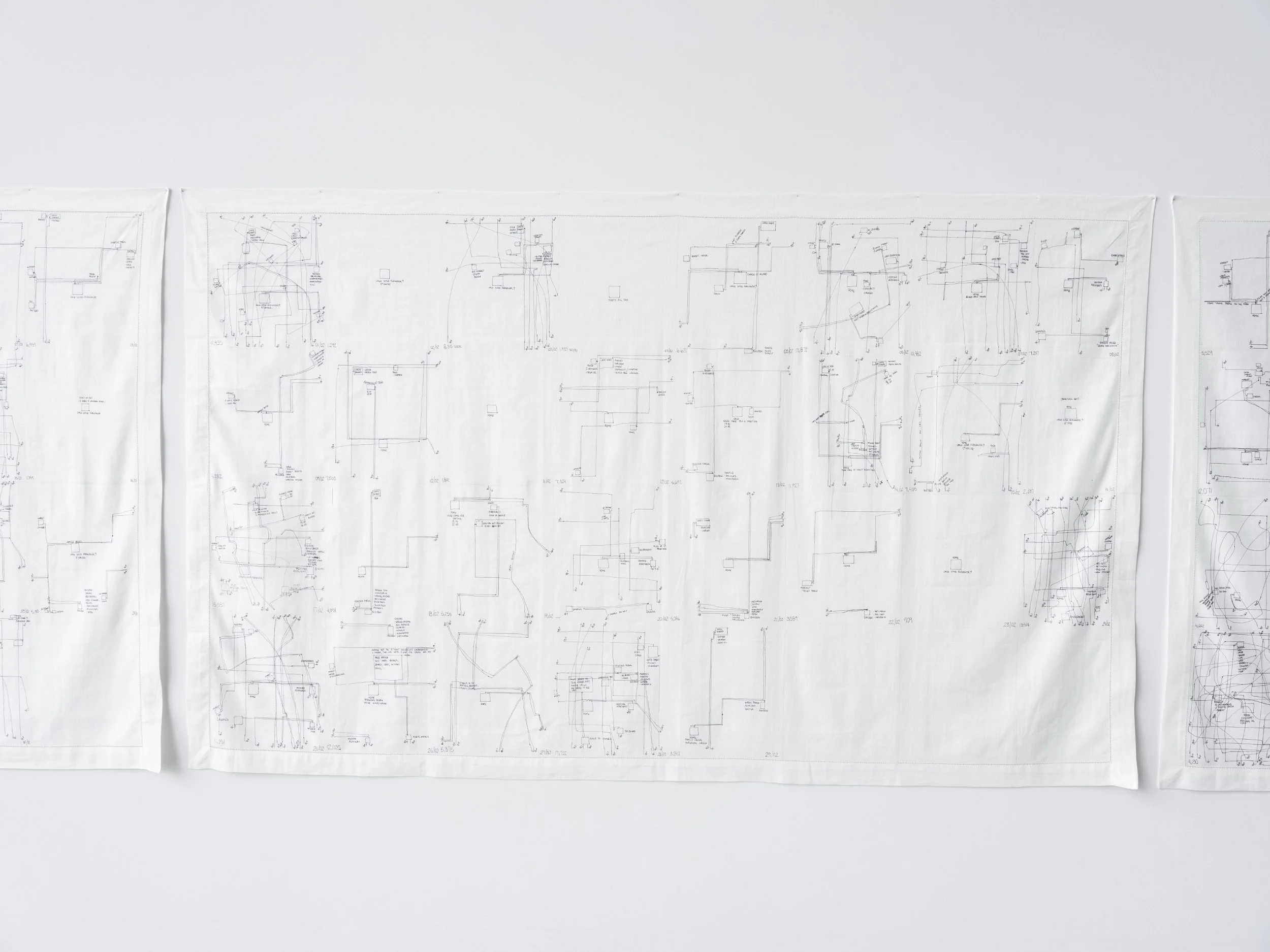
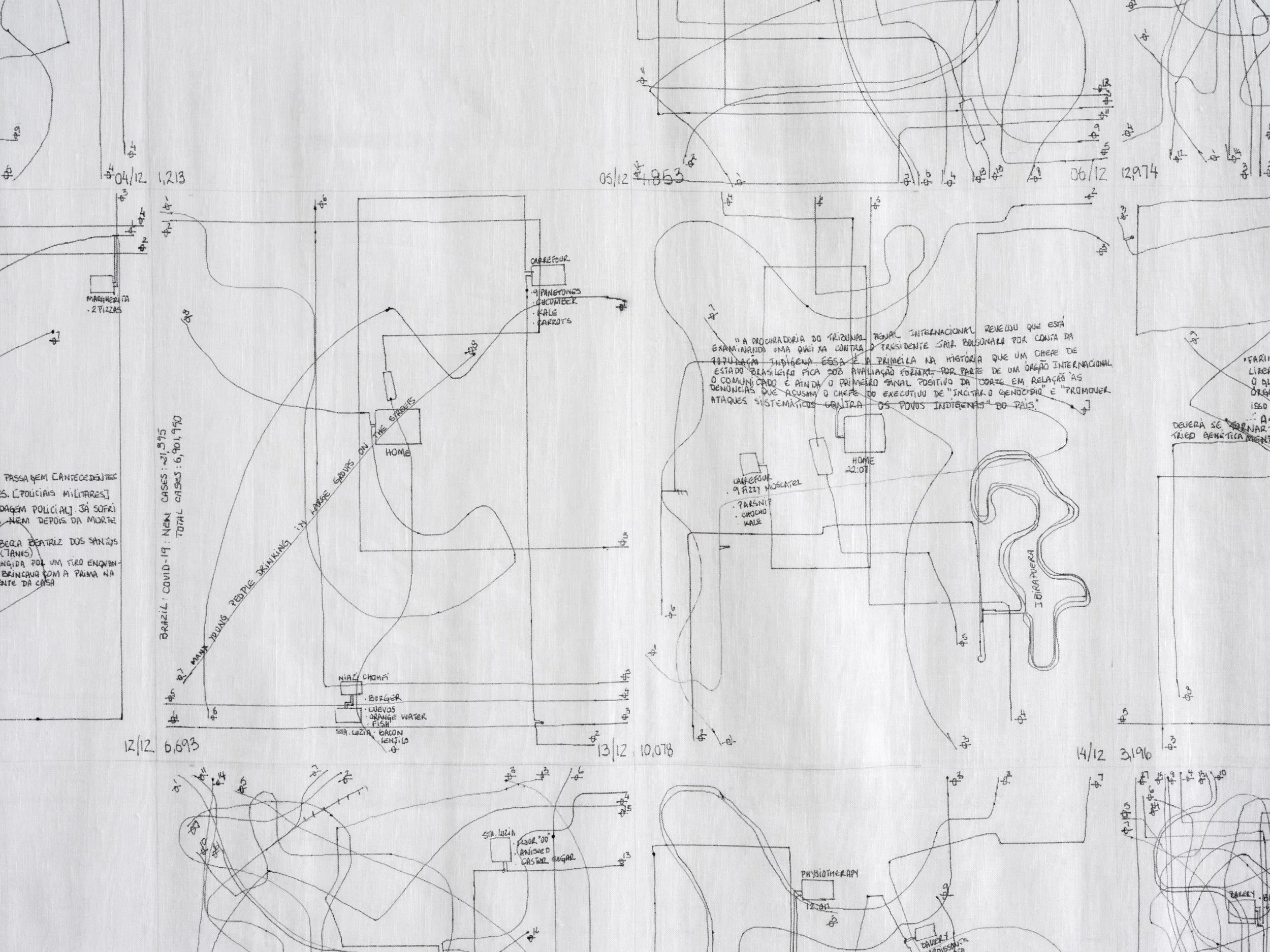
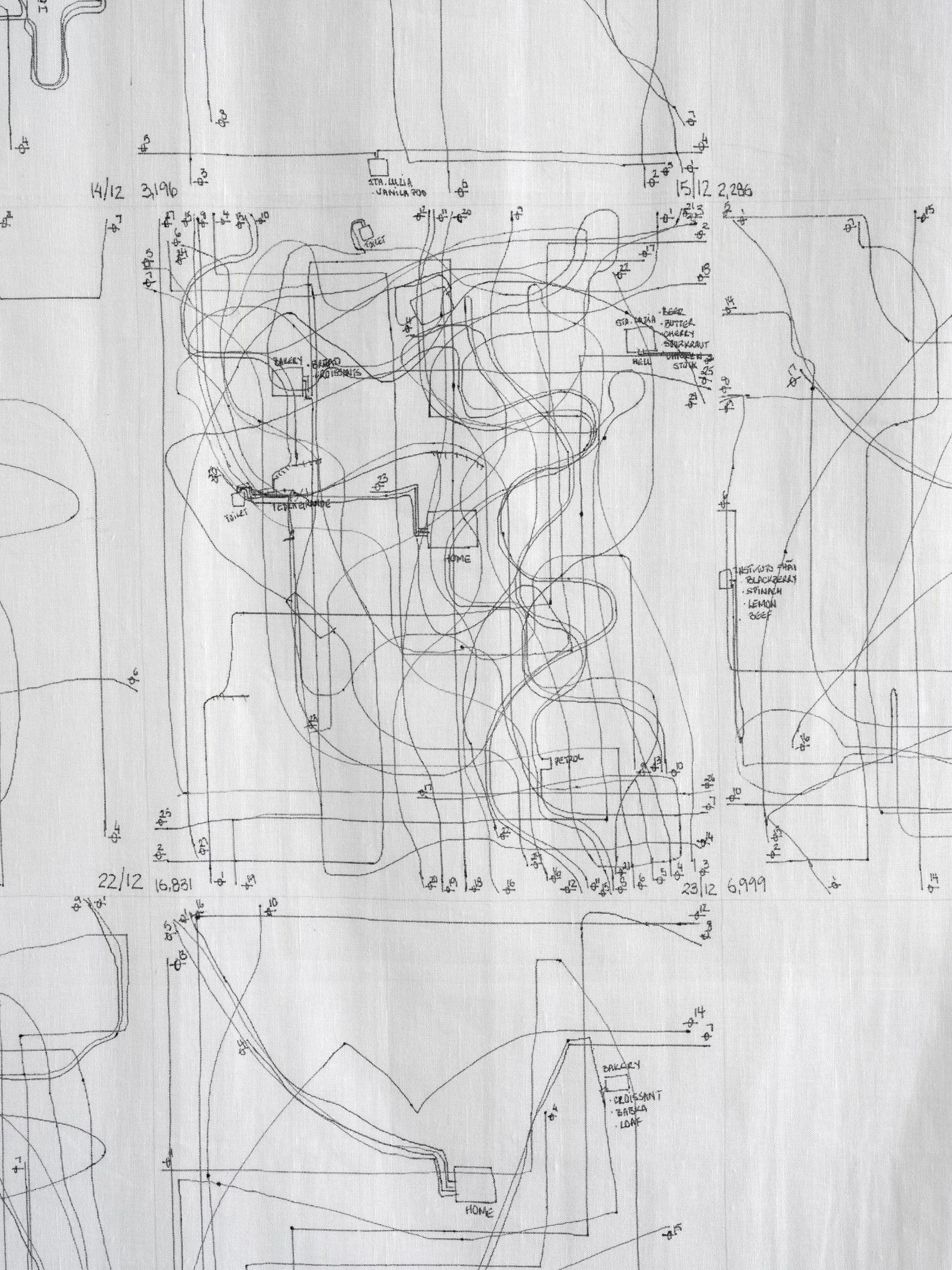
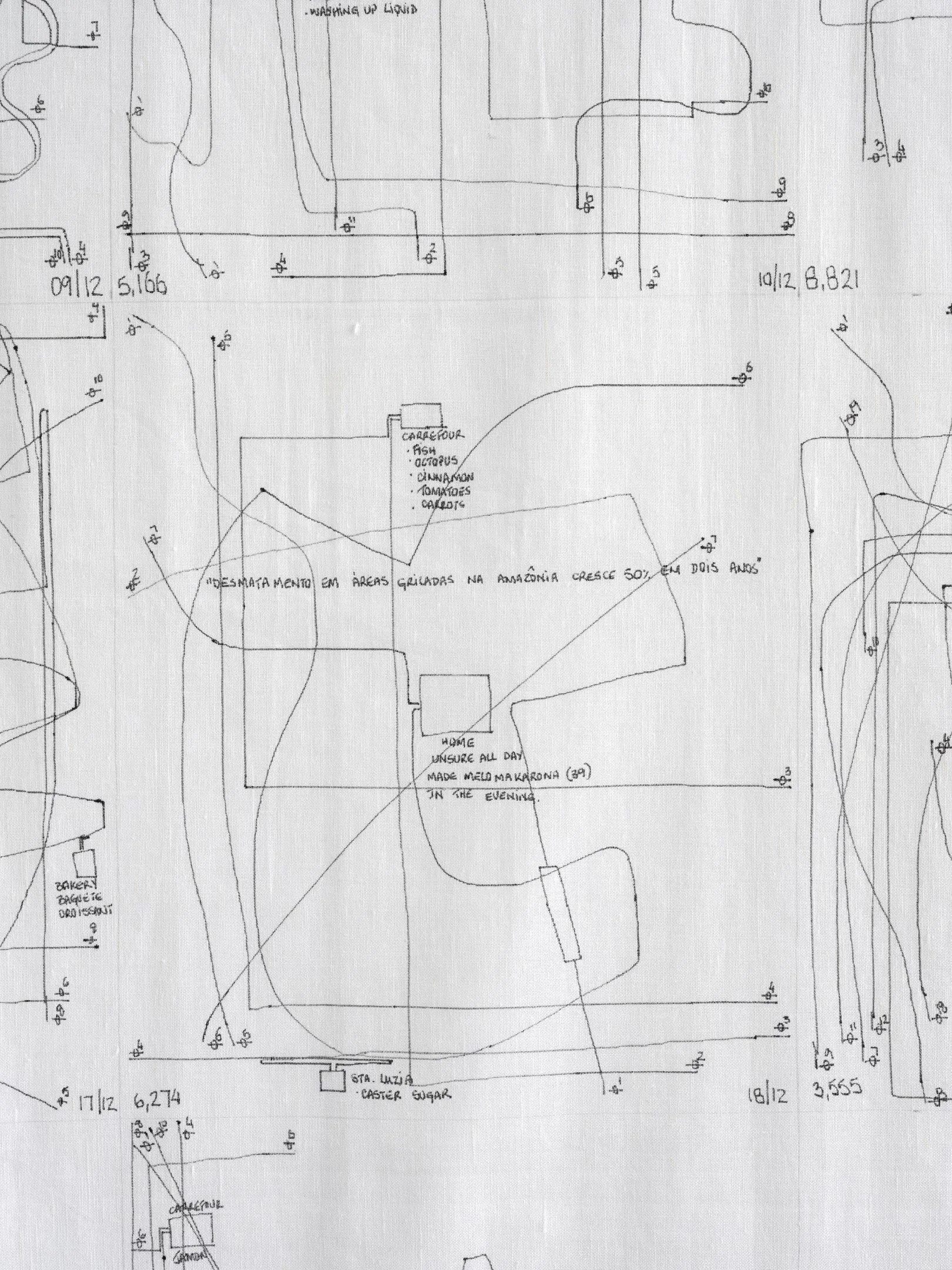
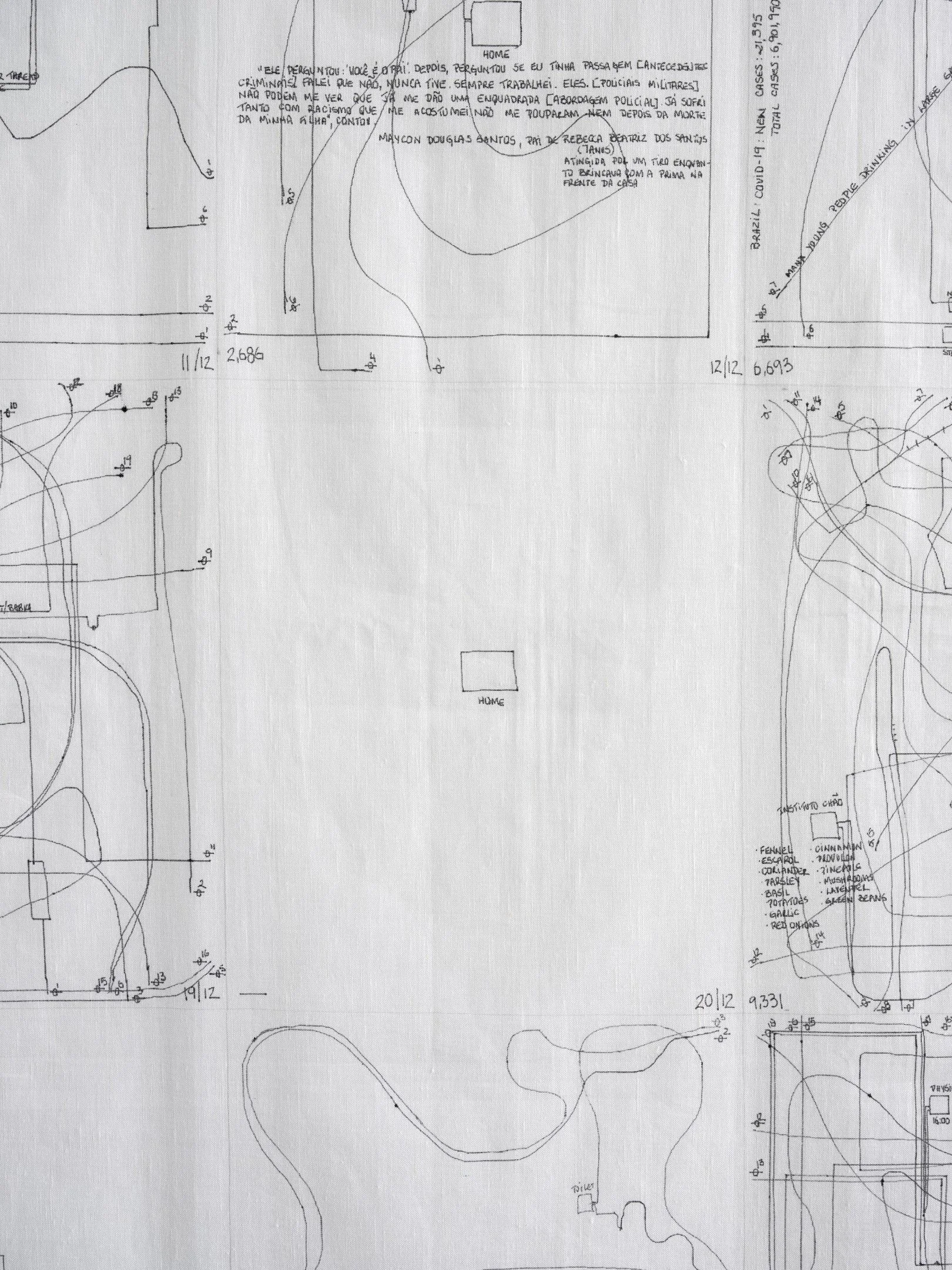
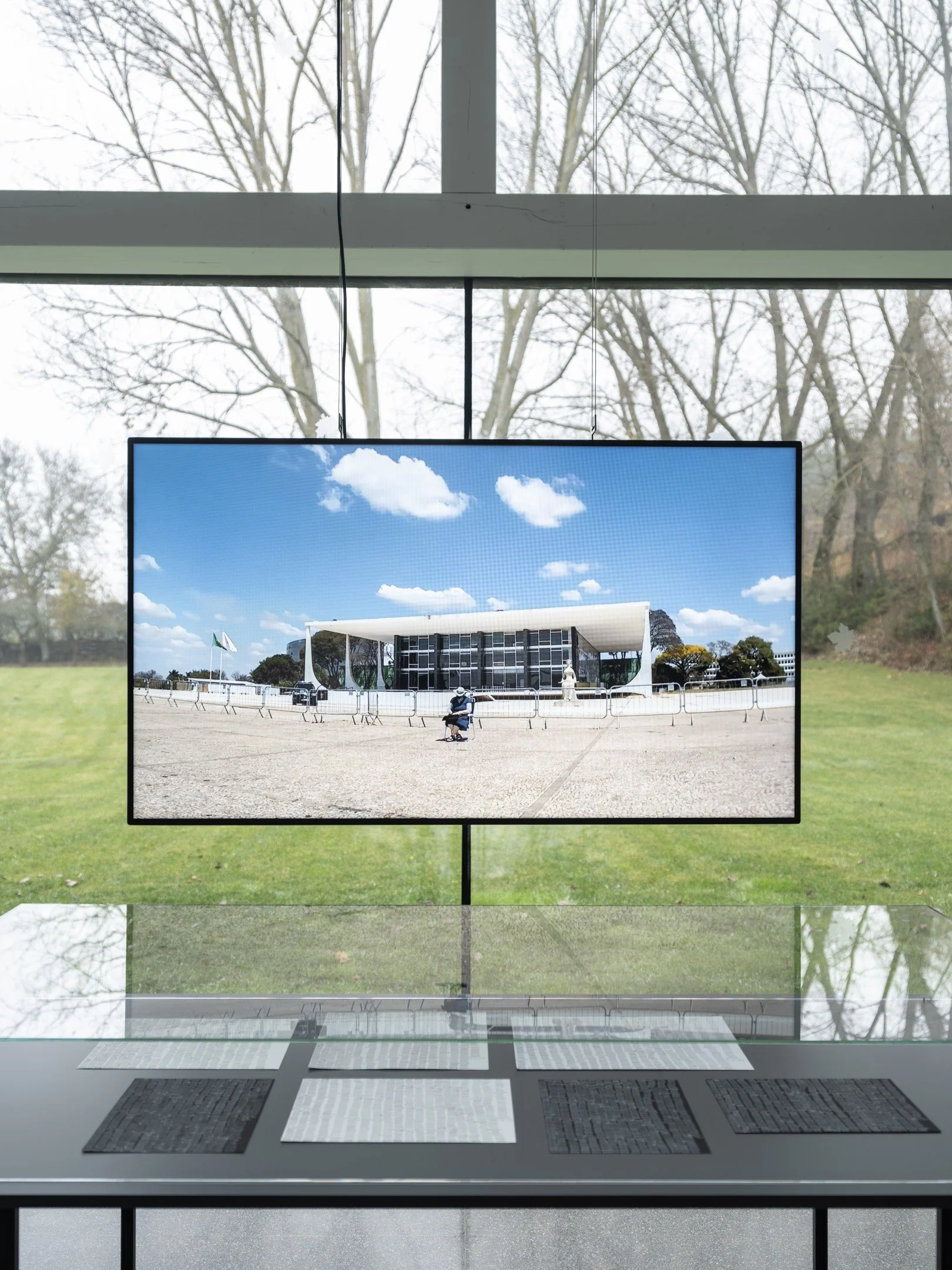
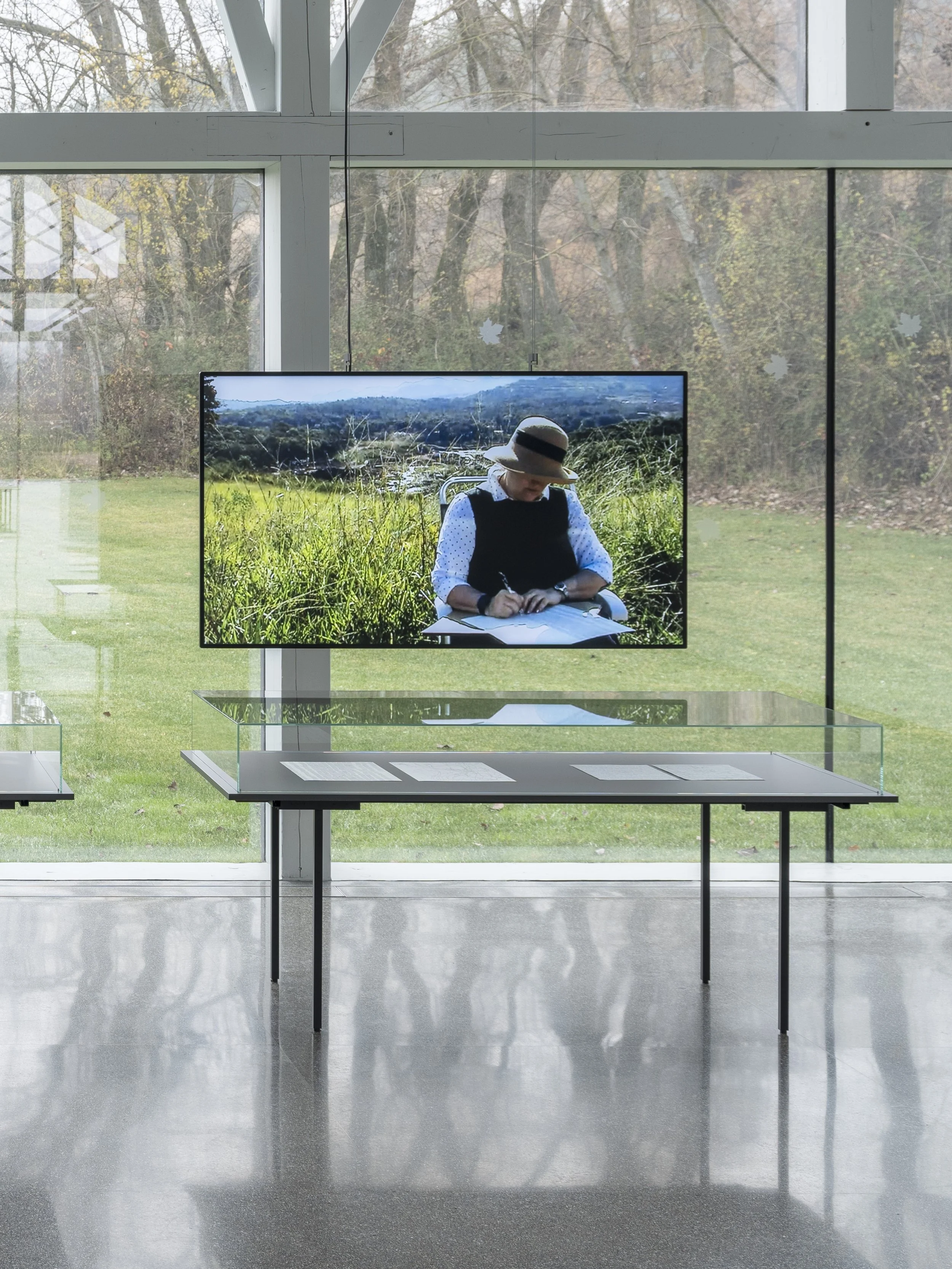
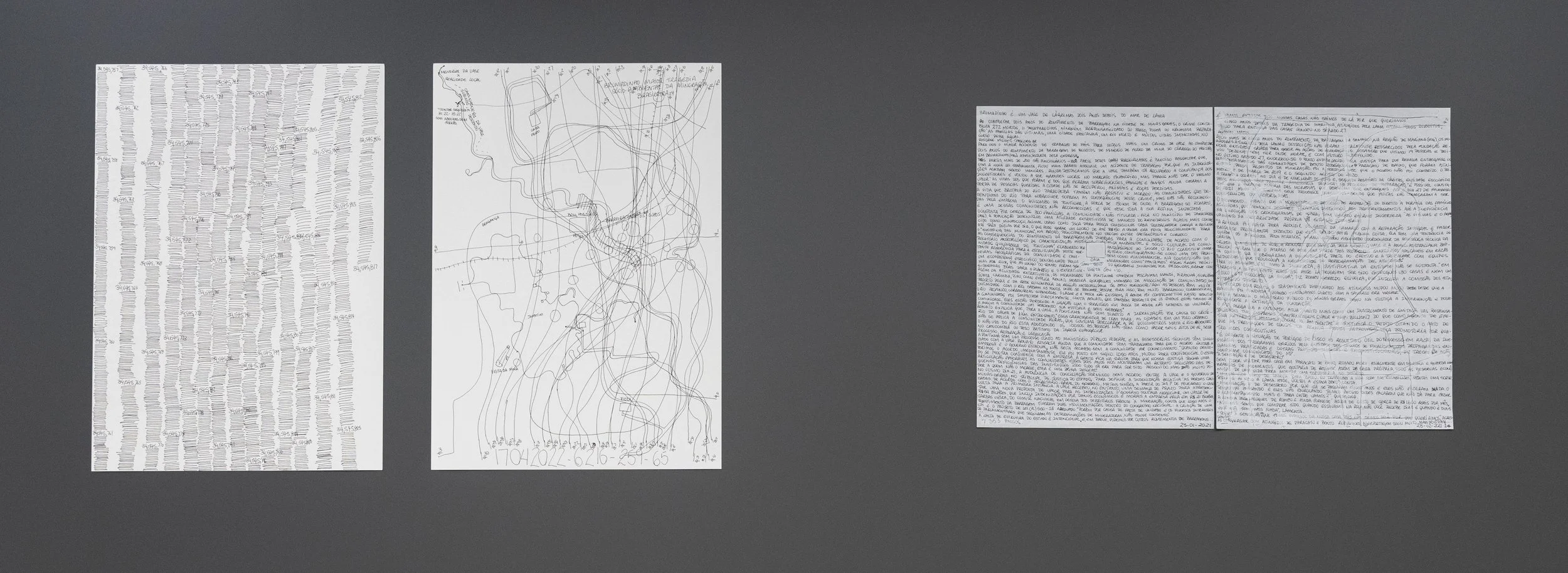
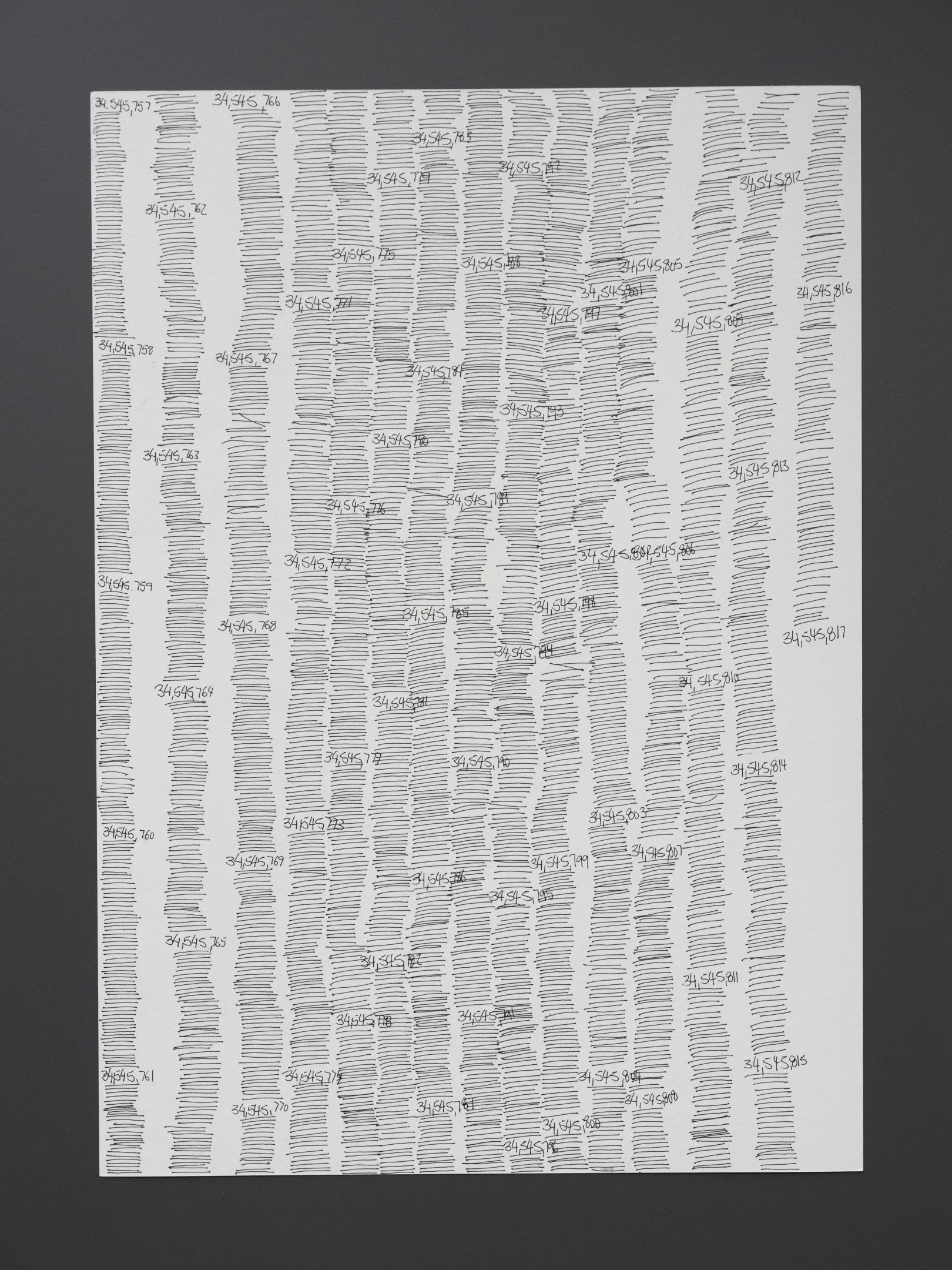
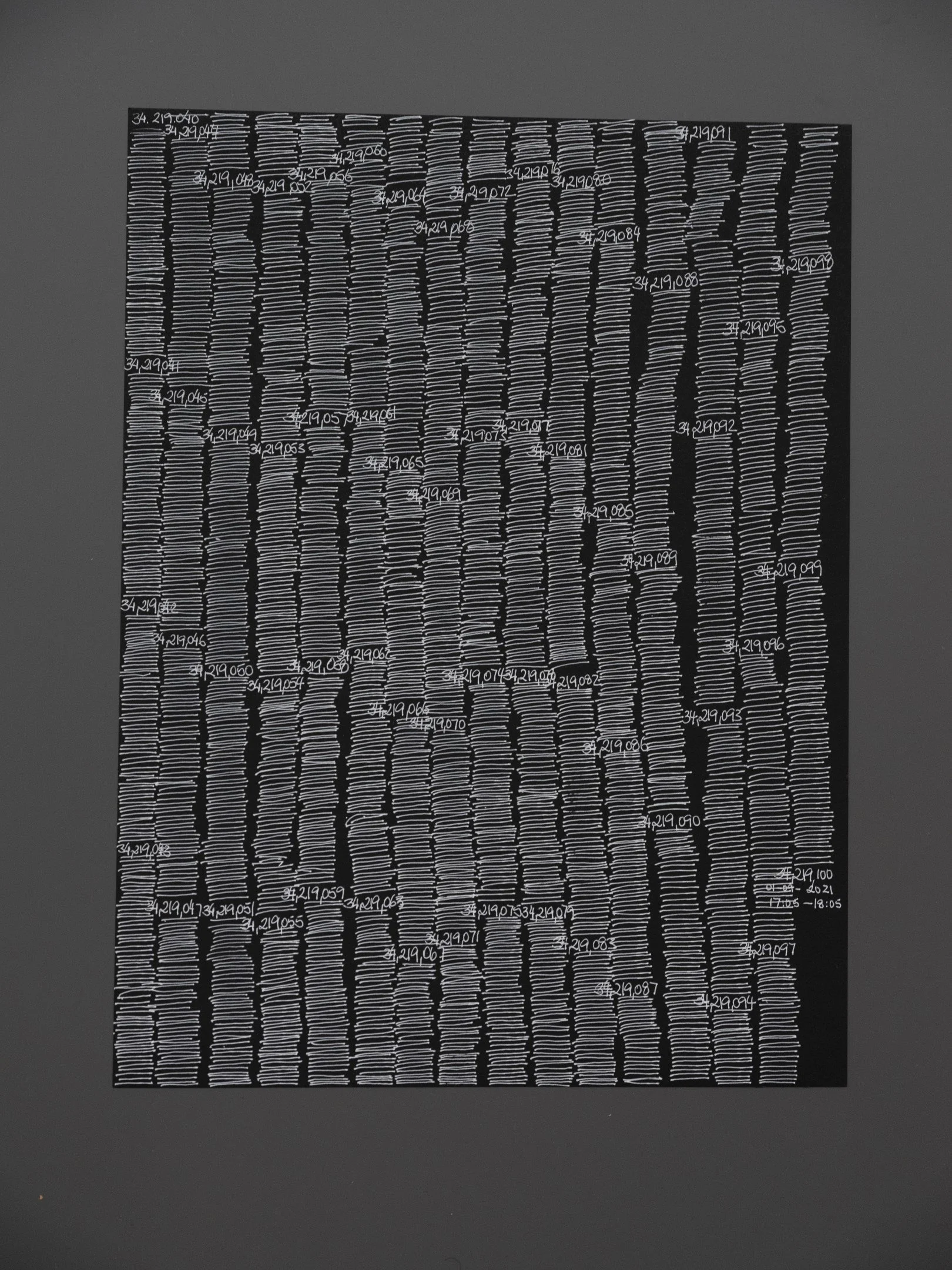
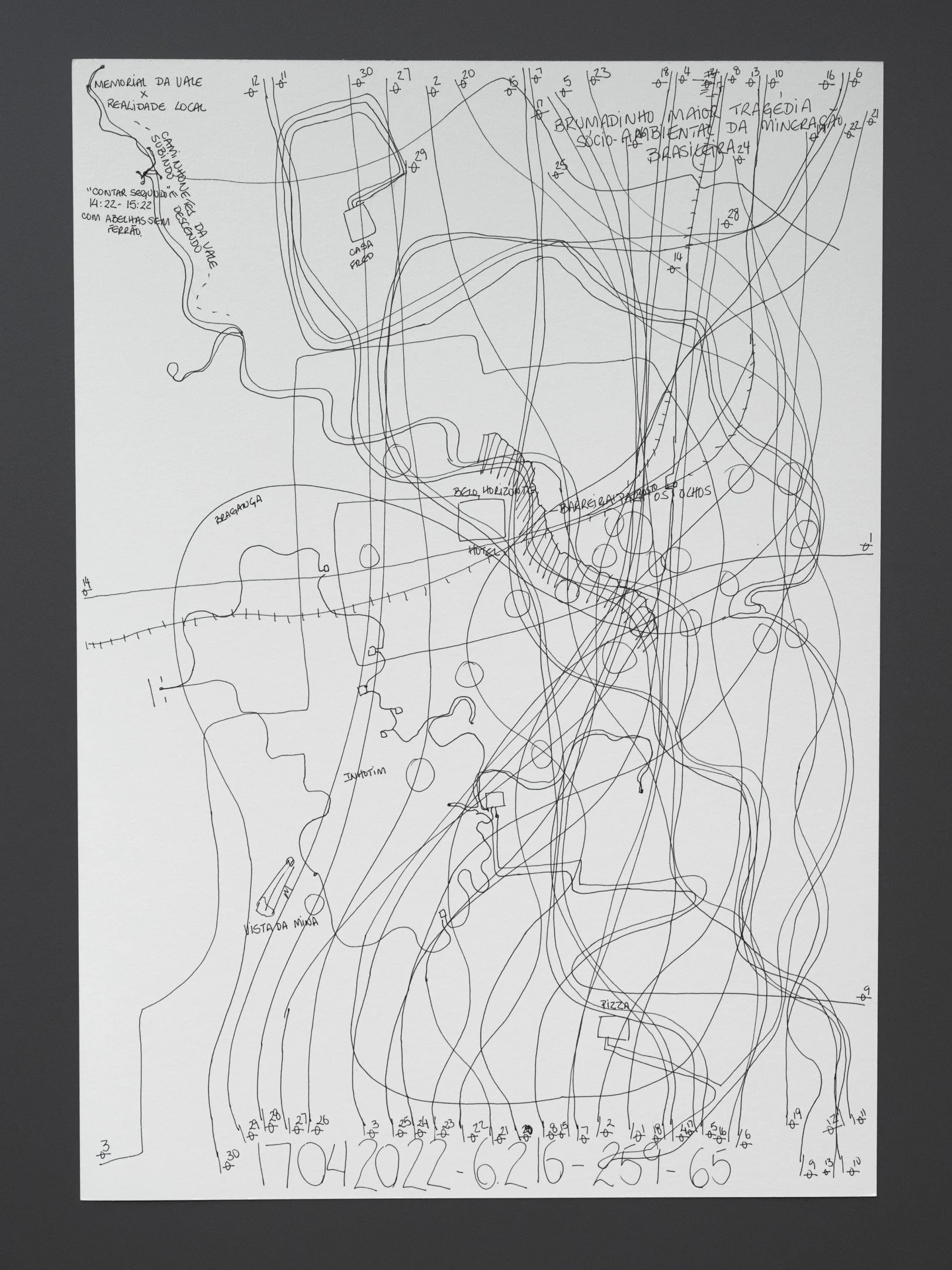
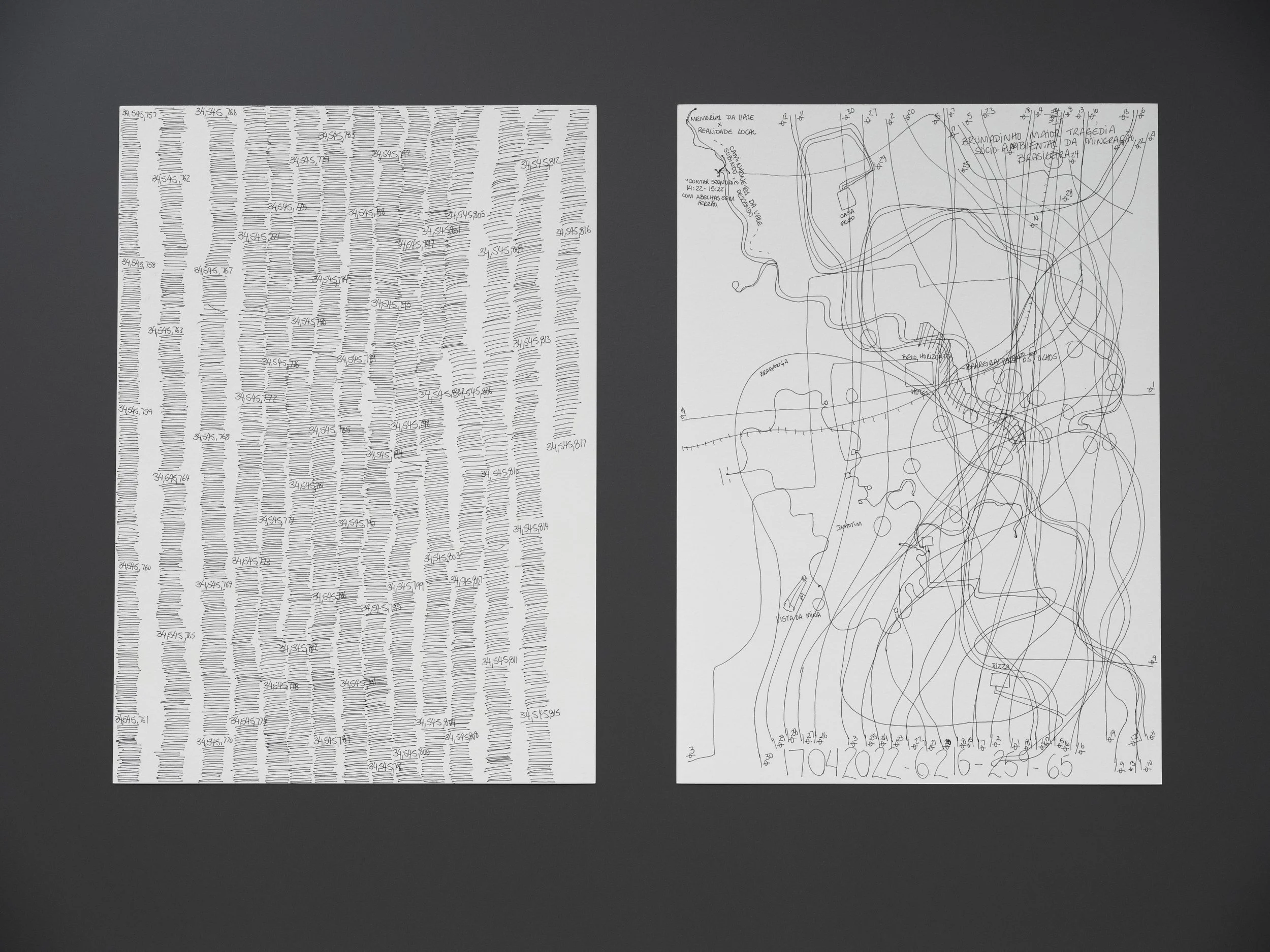
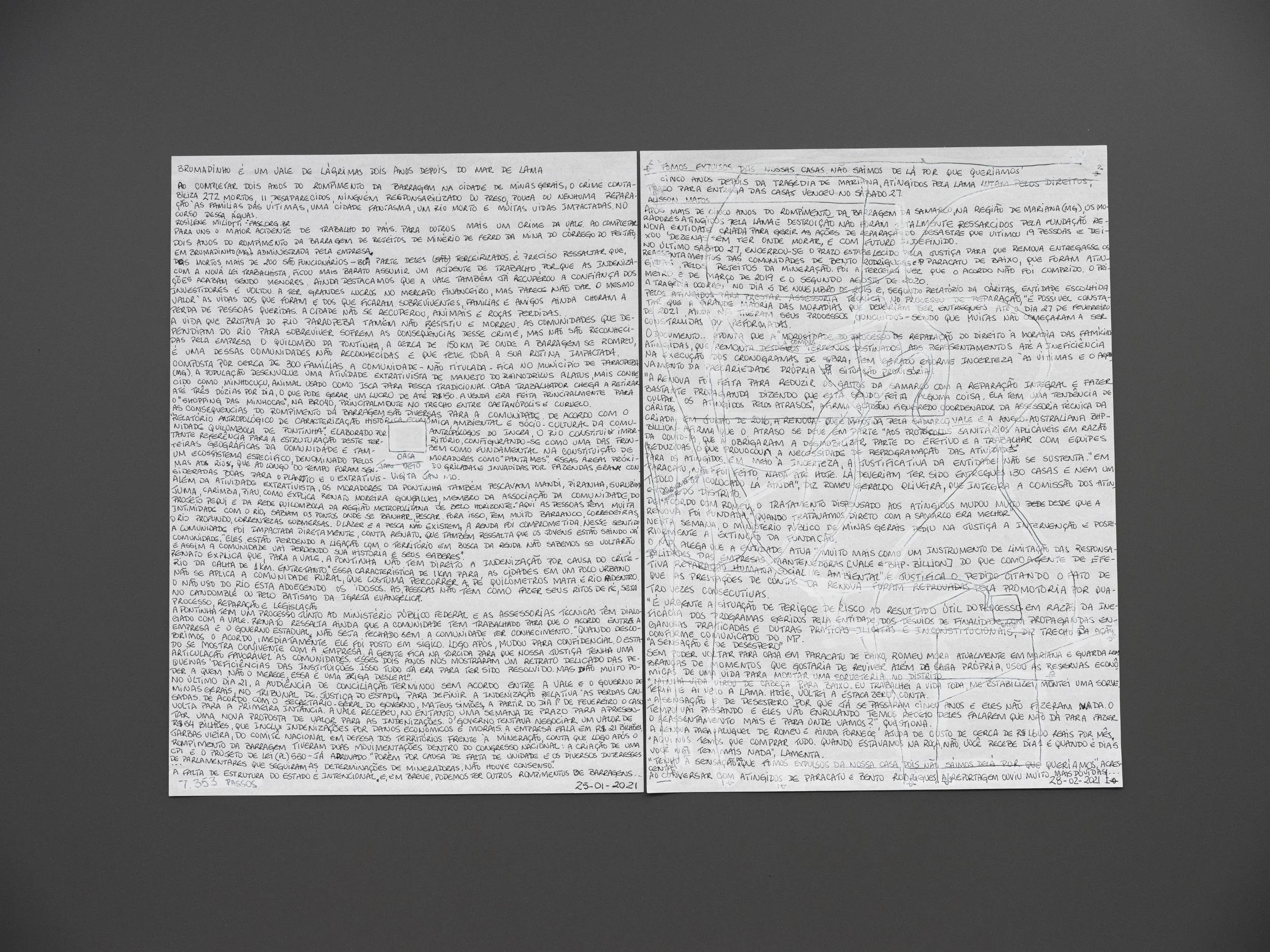
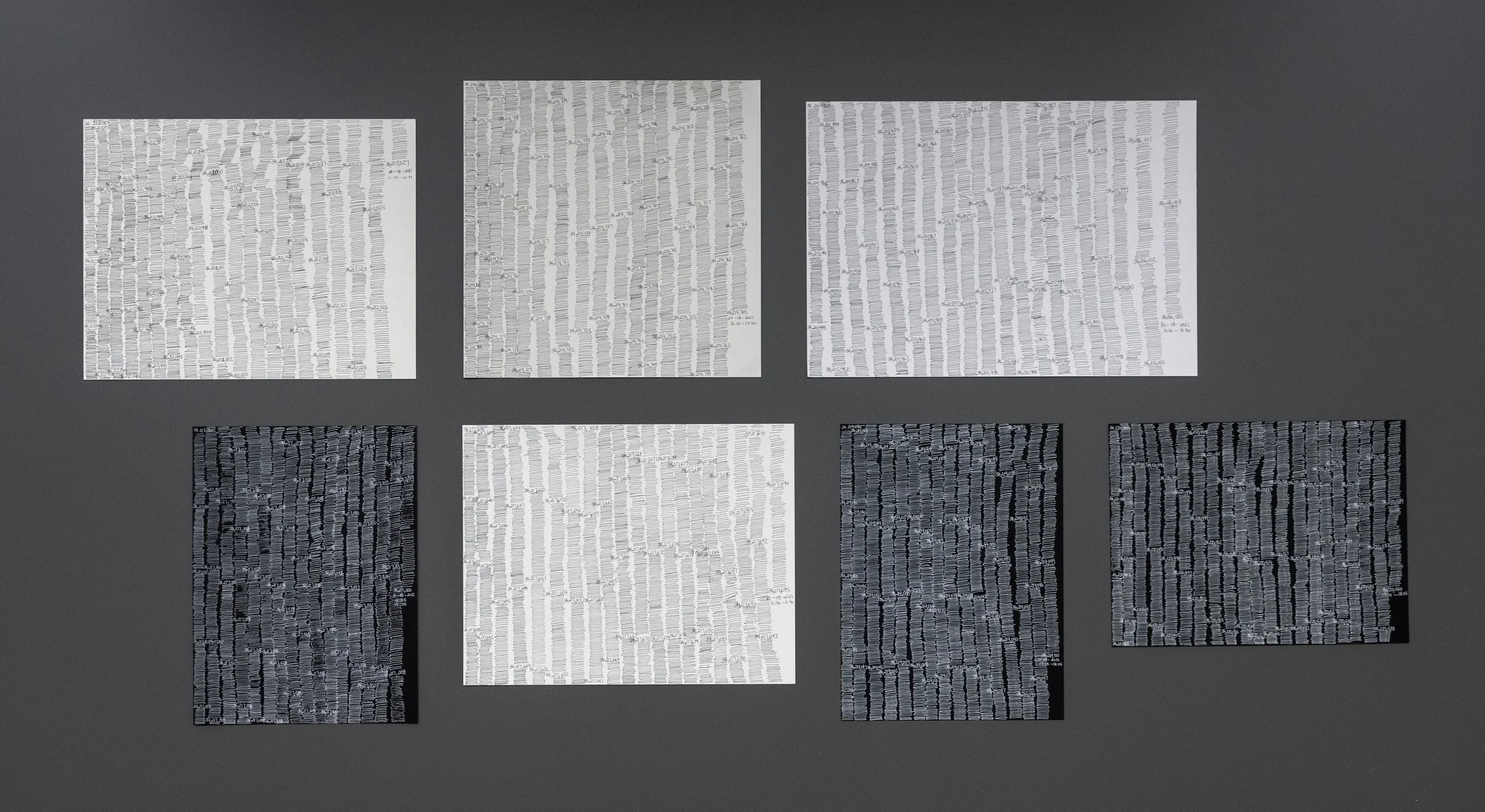
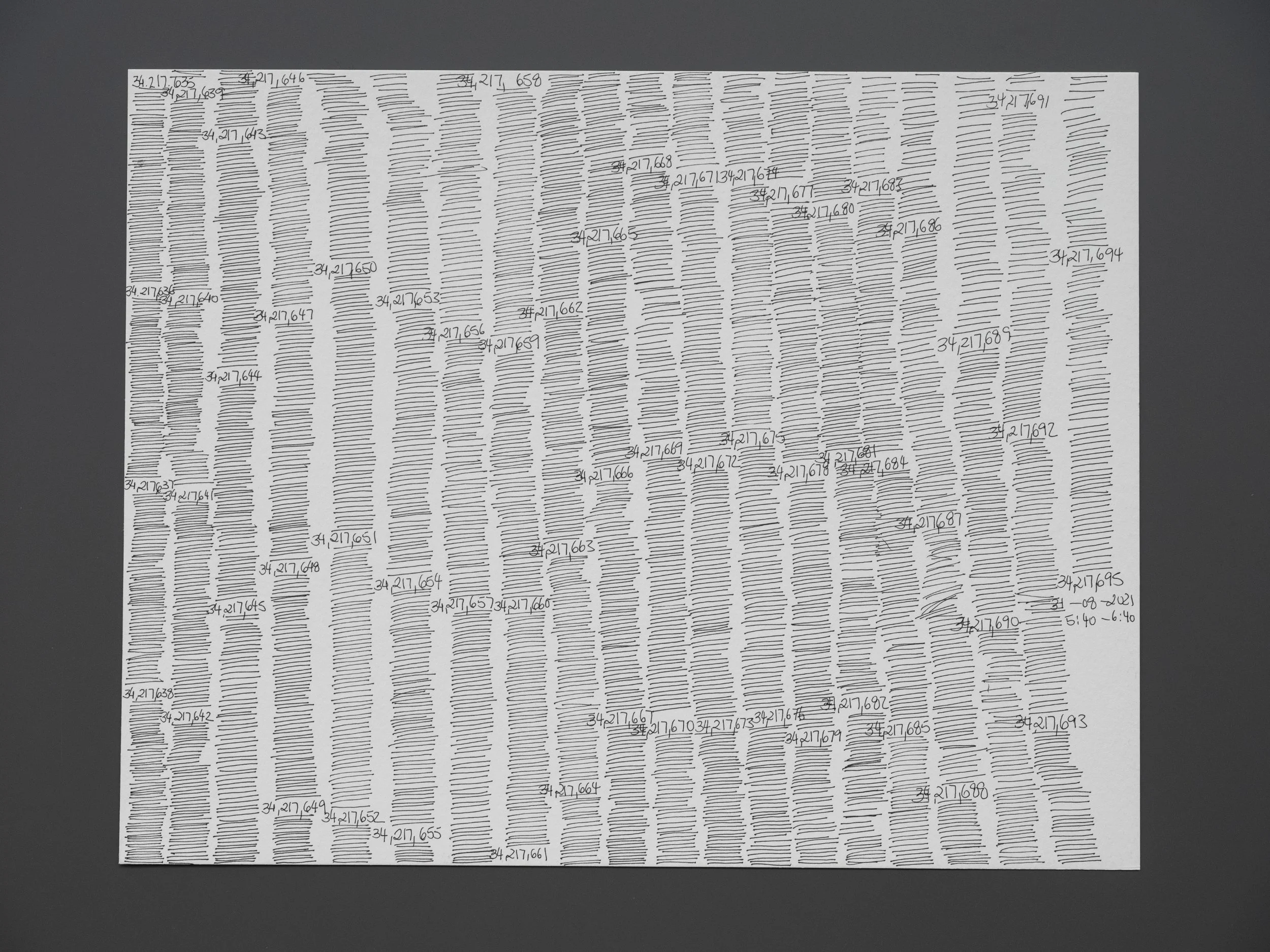
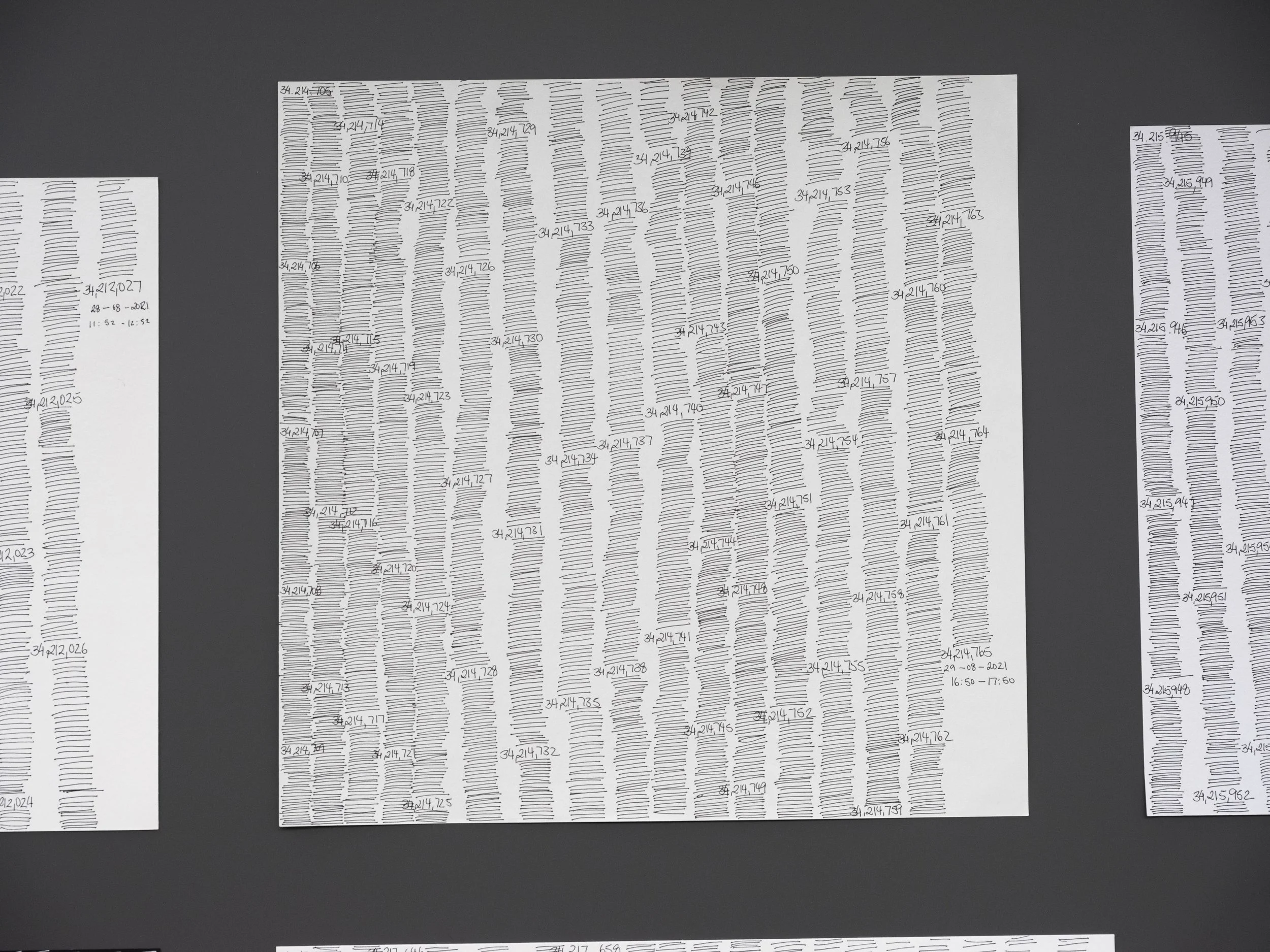
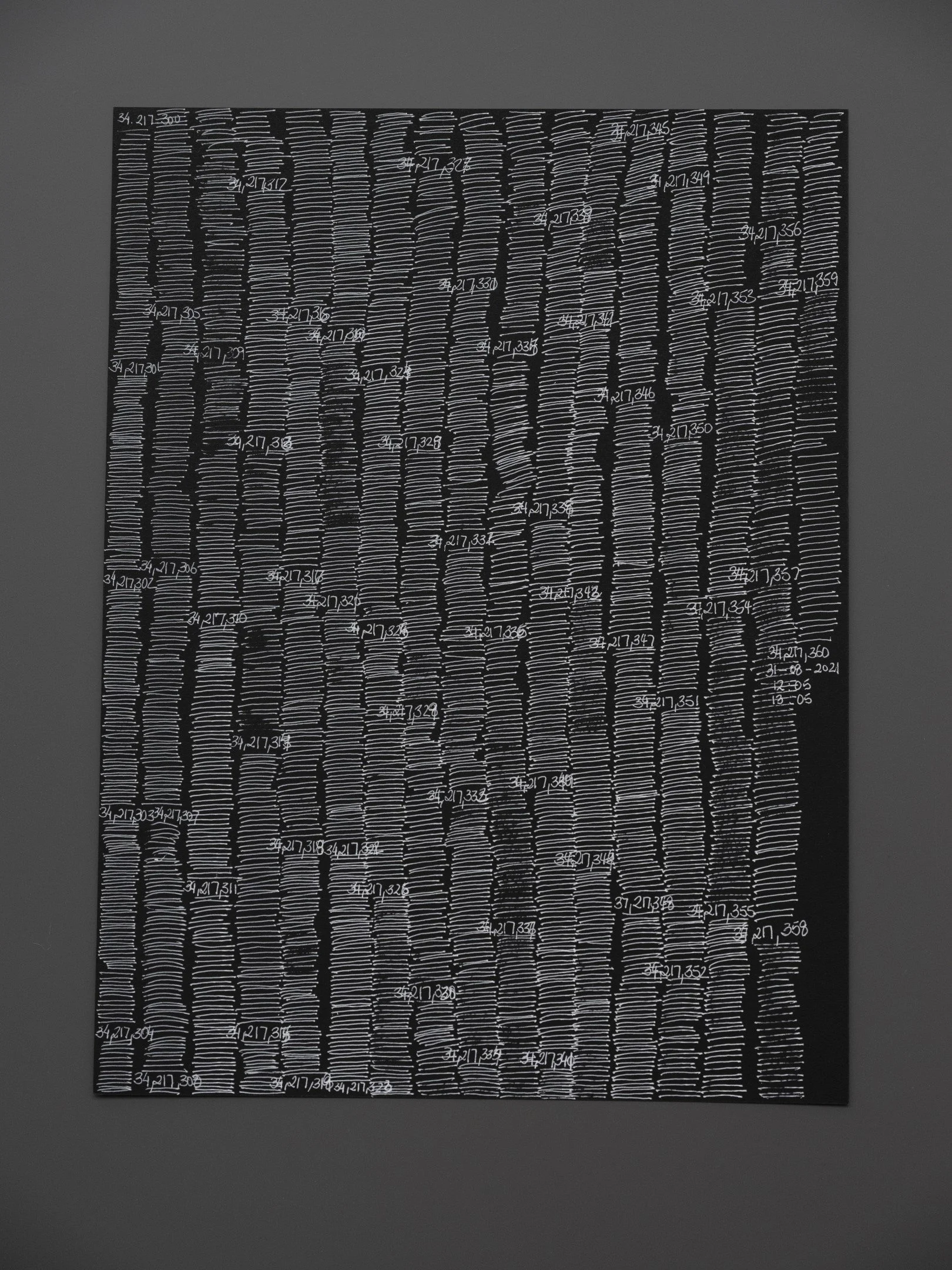
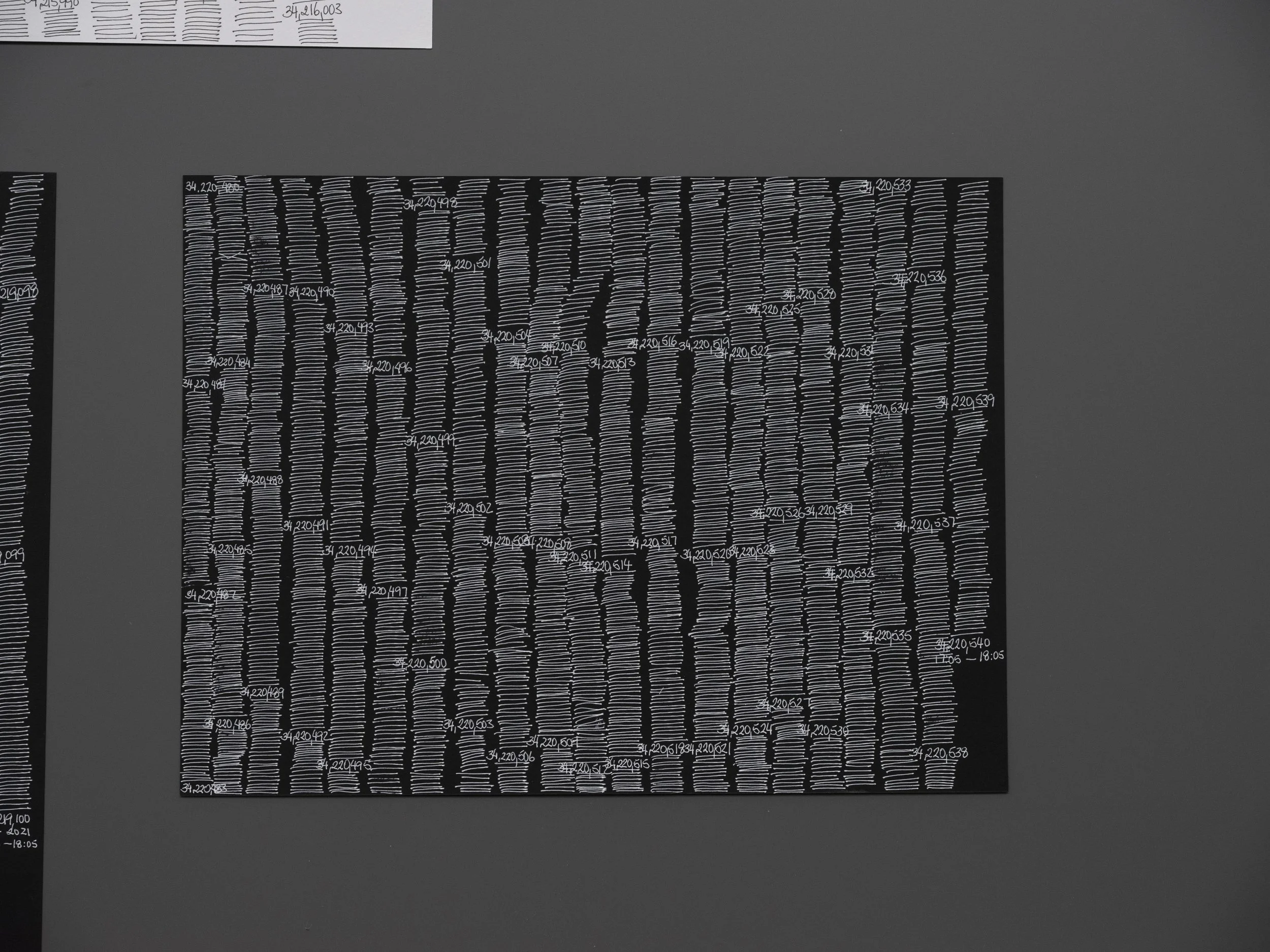
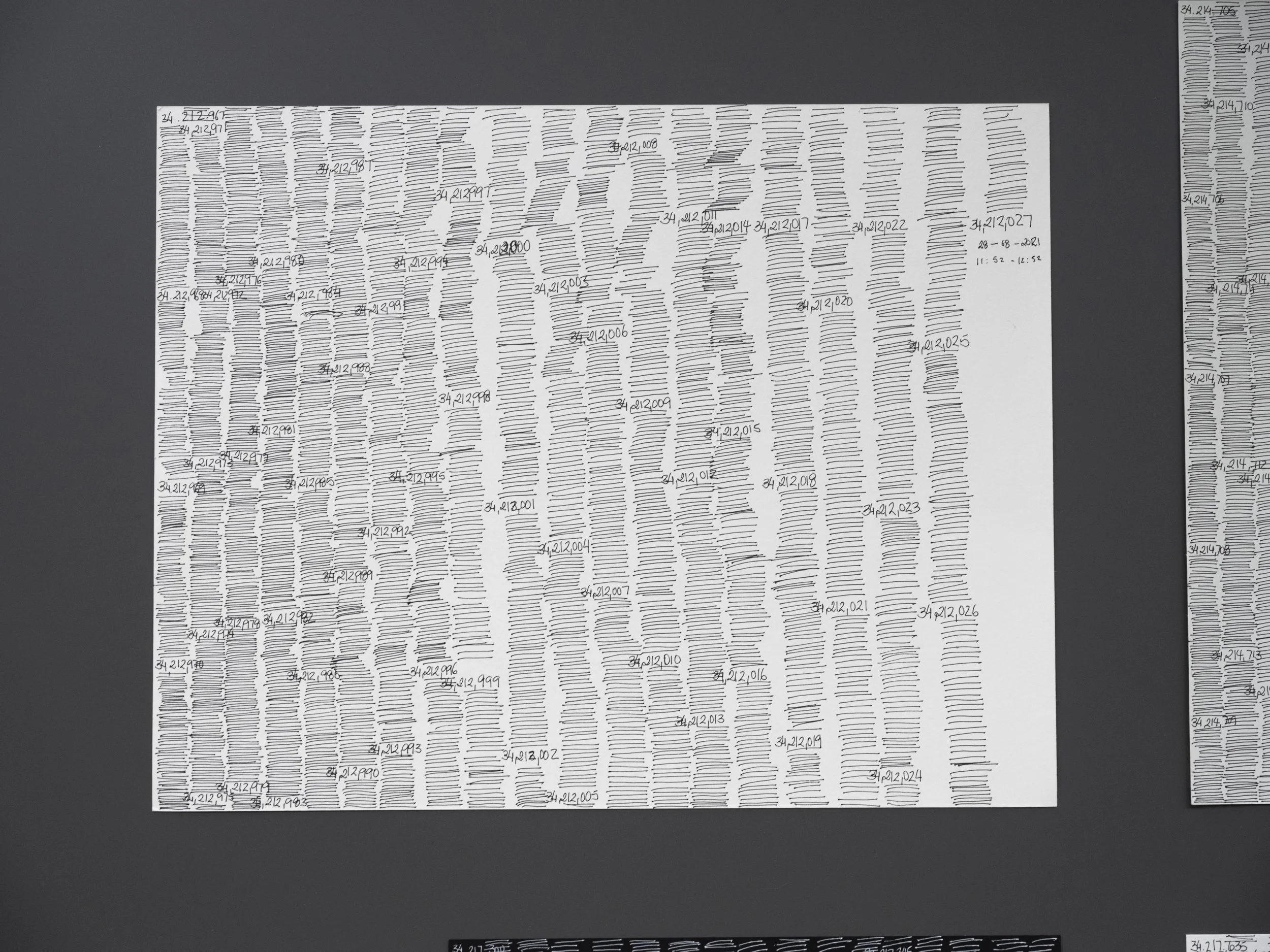
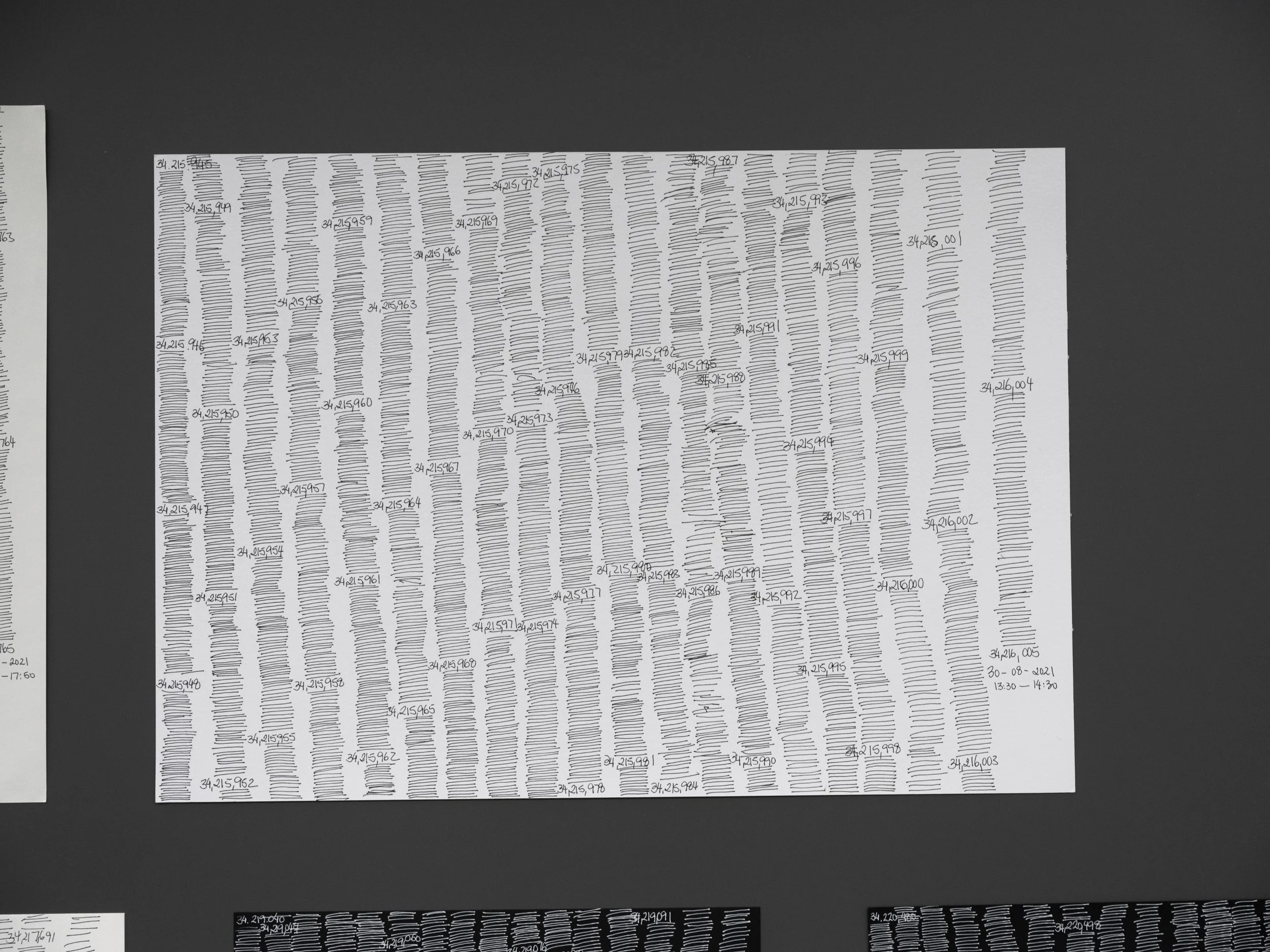
Ana Amorim counts seconds, drawing horizontal lines in notebooks and on sheets of paper. This is not the romantic poetry of a prisoner who does the same on the wall, counting the days. It is the politics of submitting to the rebellious routine of counting for the sake of counting, in the face of an era that counts for the sake of producing. It is the rebellion of counting as a routine and of the routine of counting that Amorim also practices in her Mental Maps with the number 365/366 as a reference for what she must produce in a year, day by day.
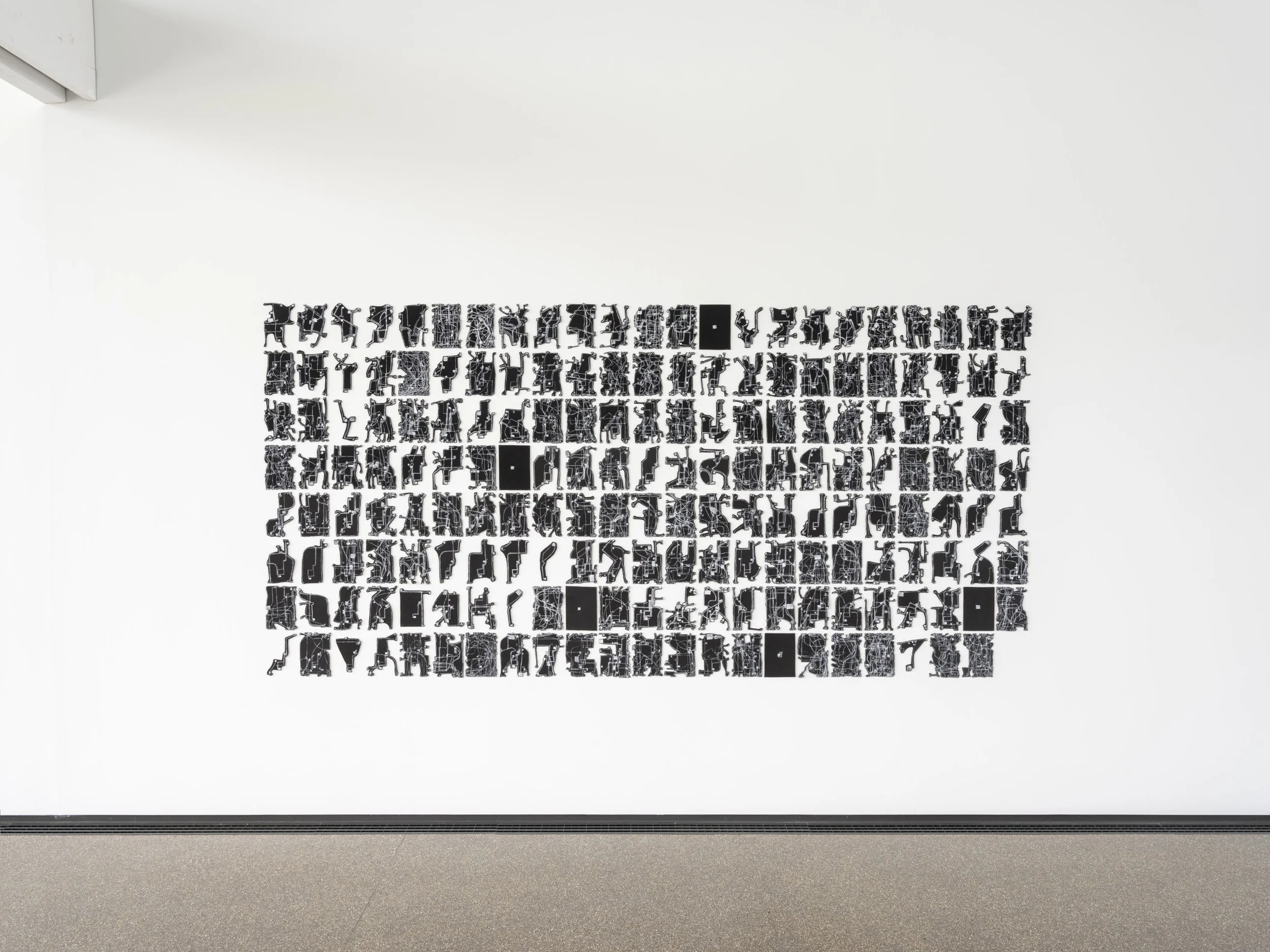
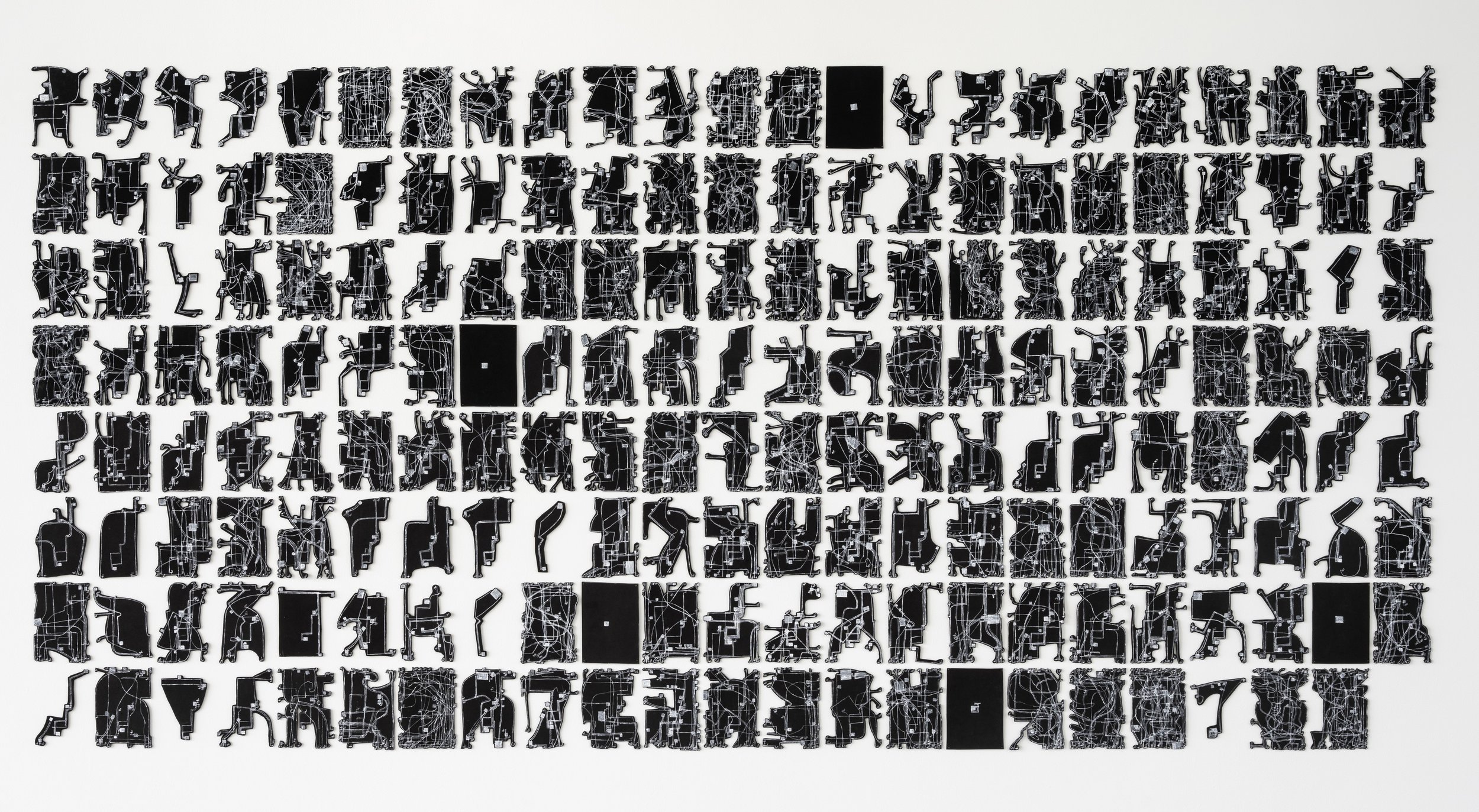
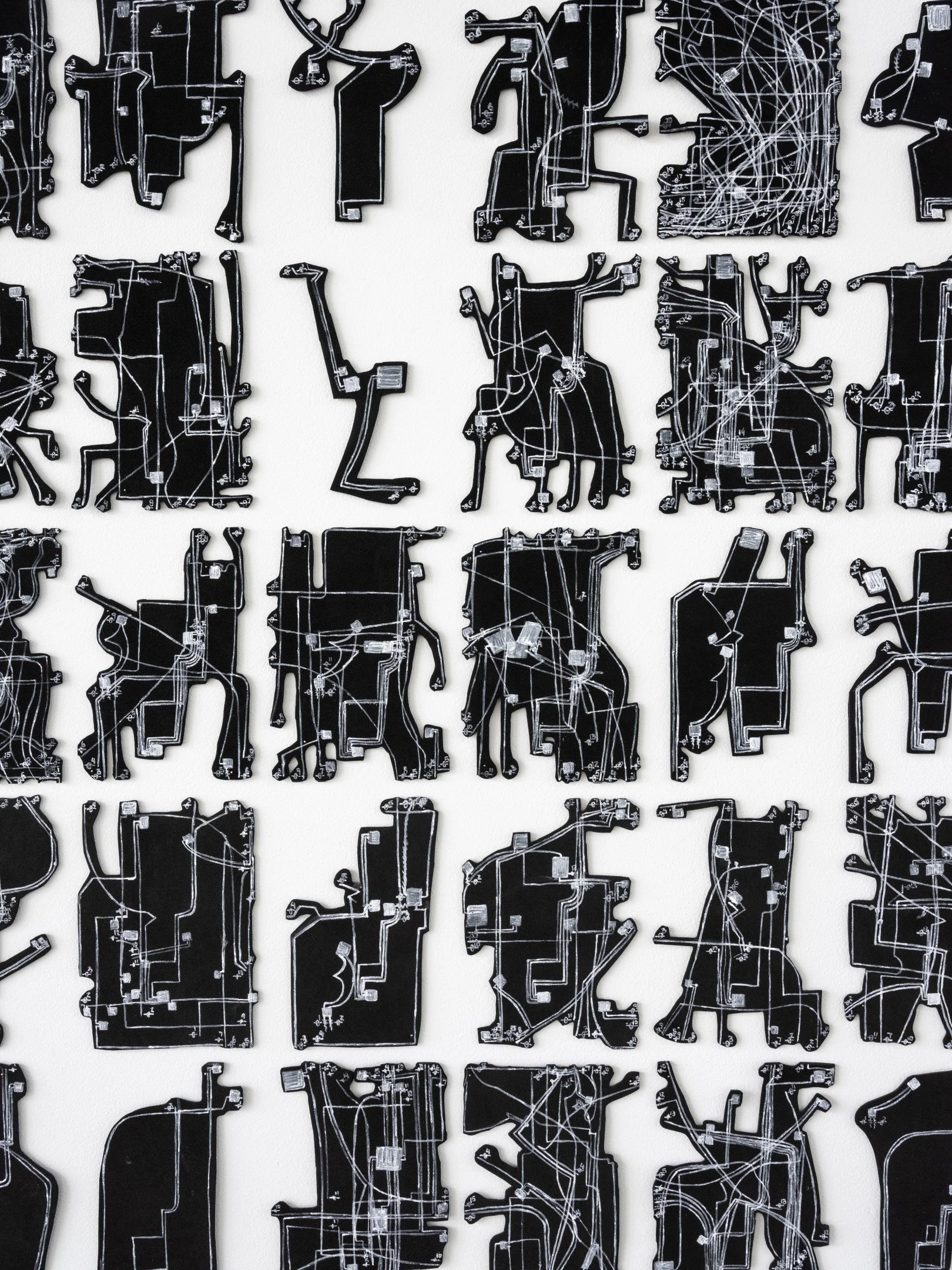
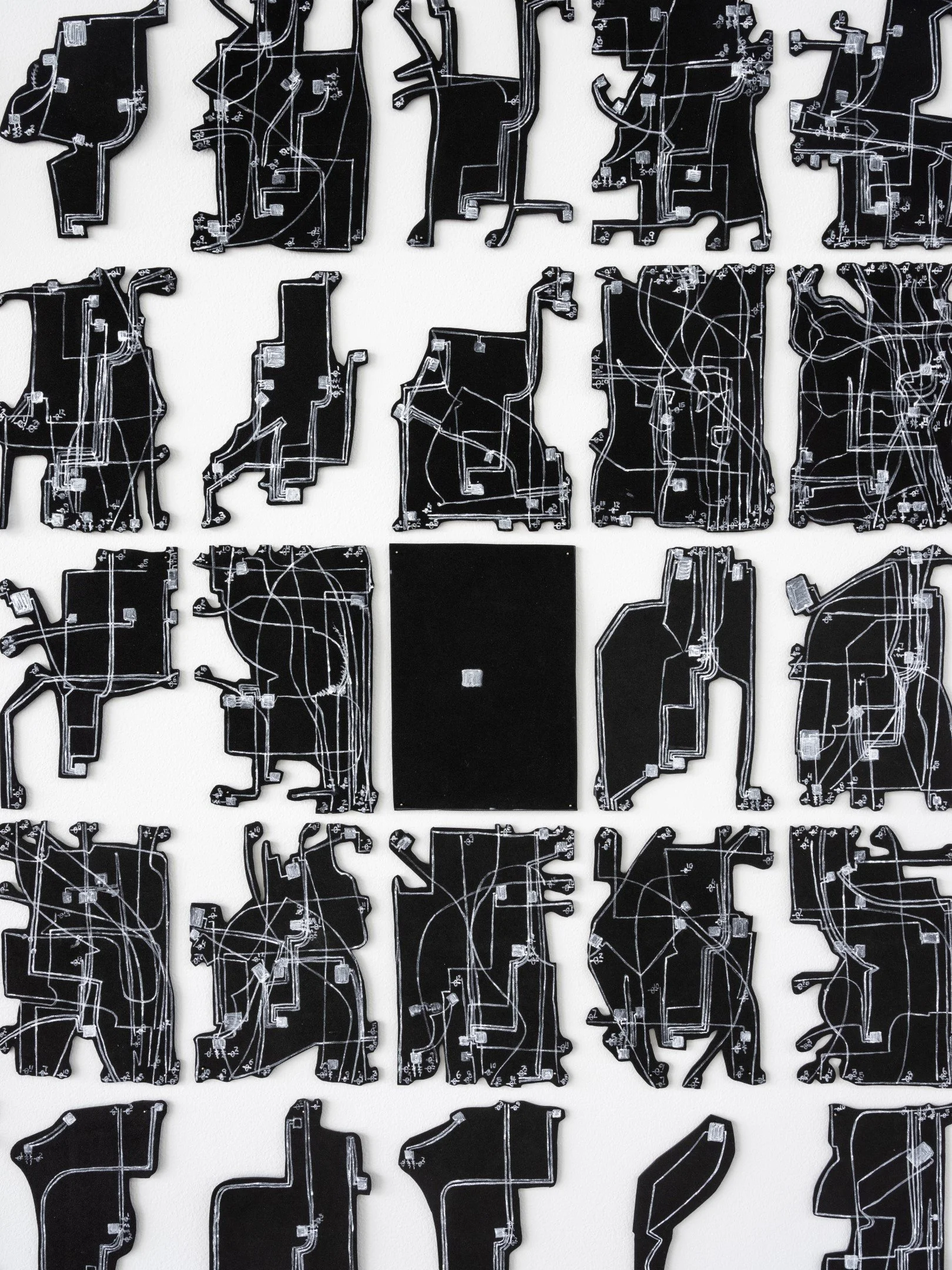
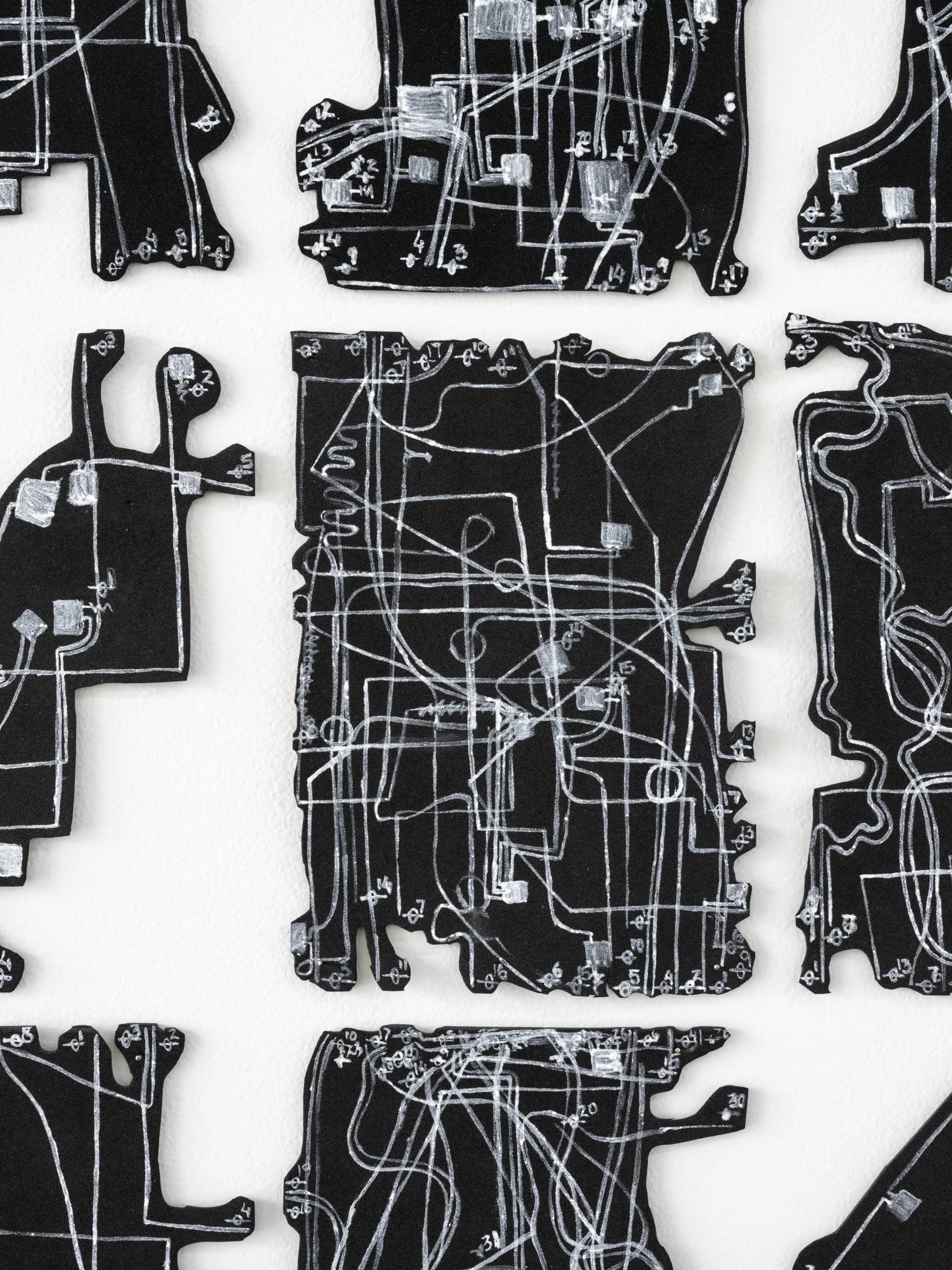
The maps of Africa are drawn with a colonial set square and protractor. The map of Palestine shrinks with decades and blood. Ana Amorim's maps are stubbornly sinuous and routinely, exorcising with every stroke the misuse that the West has made, and continues to make, of maps, turning them into records of the everyday, of simple human life, rather than traces of great deeds.
Ana Amorim's books and sheets of Counting Seconds benefit from the evolution of the codex and its rituals, as well as from the torrent of changes it has “suffered” throughout its history, leading to the notebook and the book and, of course, to the personal diary, in which she participates.
The routine creation and silent copying of these codices should not be forgotten. The books and sheets that concern us here are created routinely and with the author in silence, in a kind of ritual in which time is the subject, the protagonist and at the same time a veiled reference to the unfortunate global reality surrounding the counting.
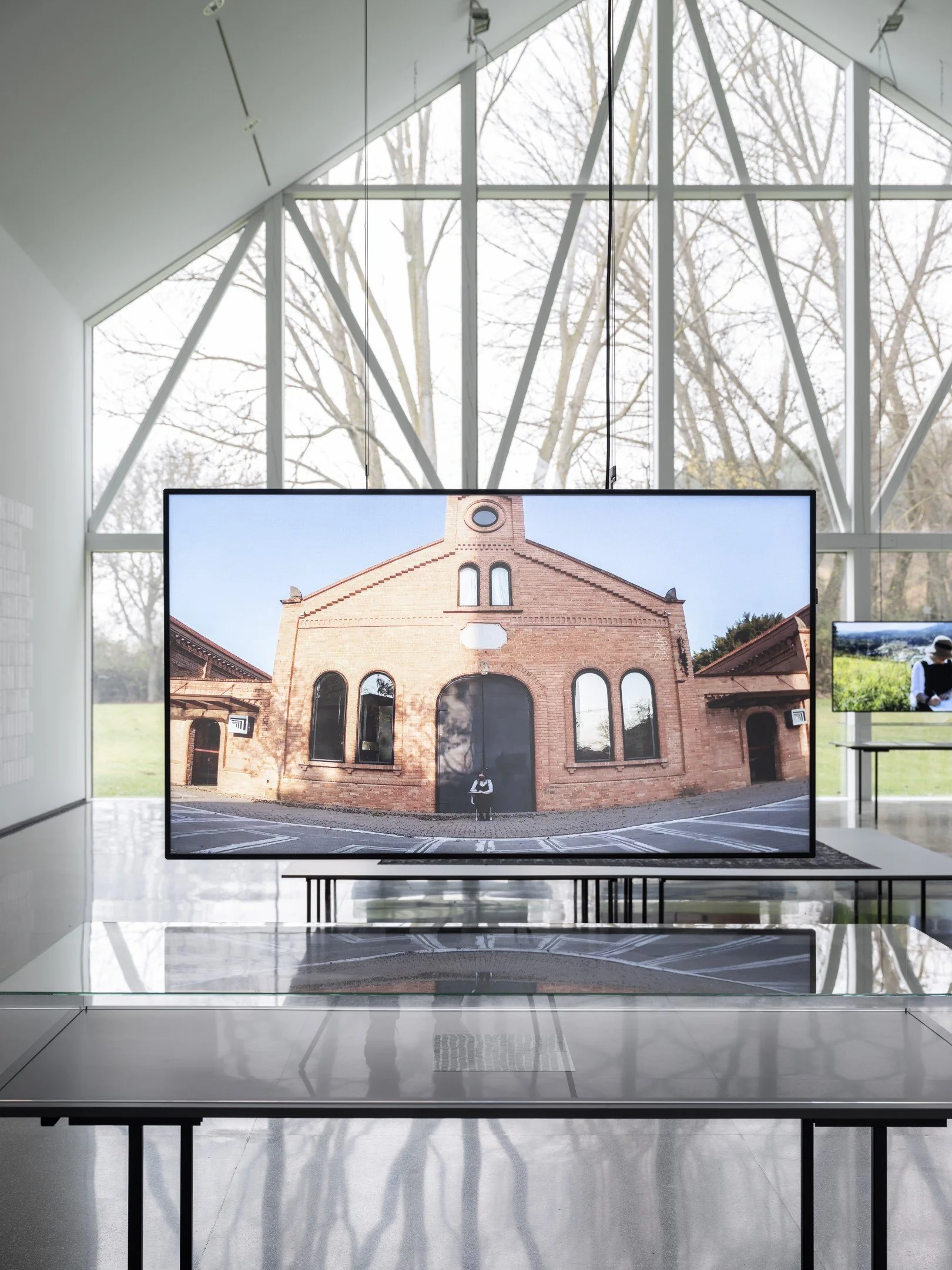
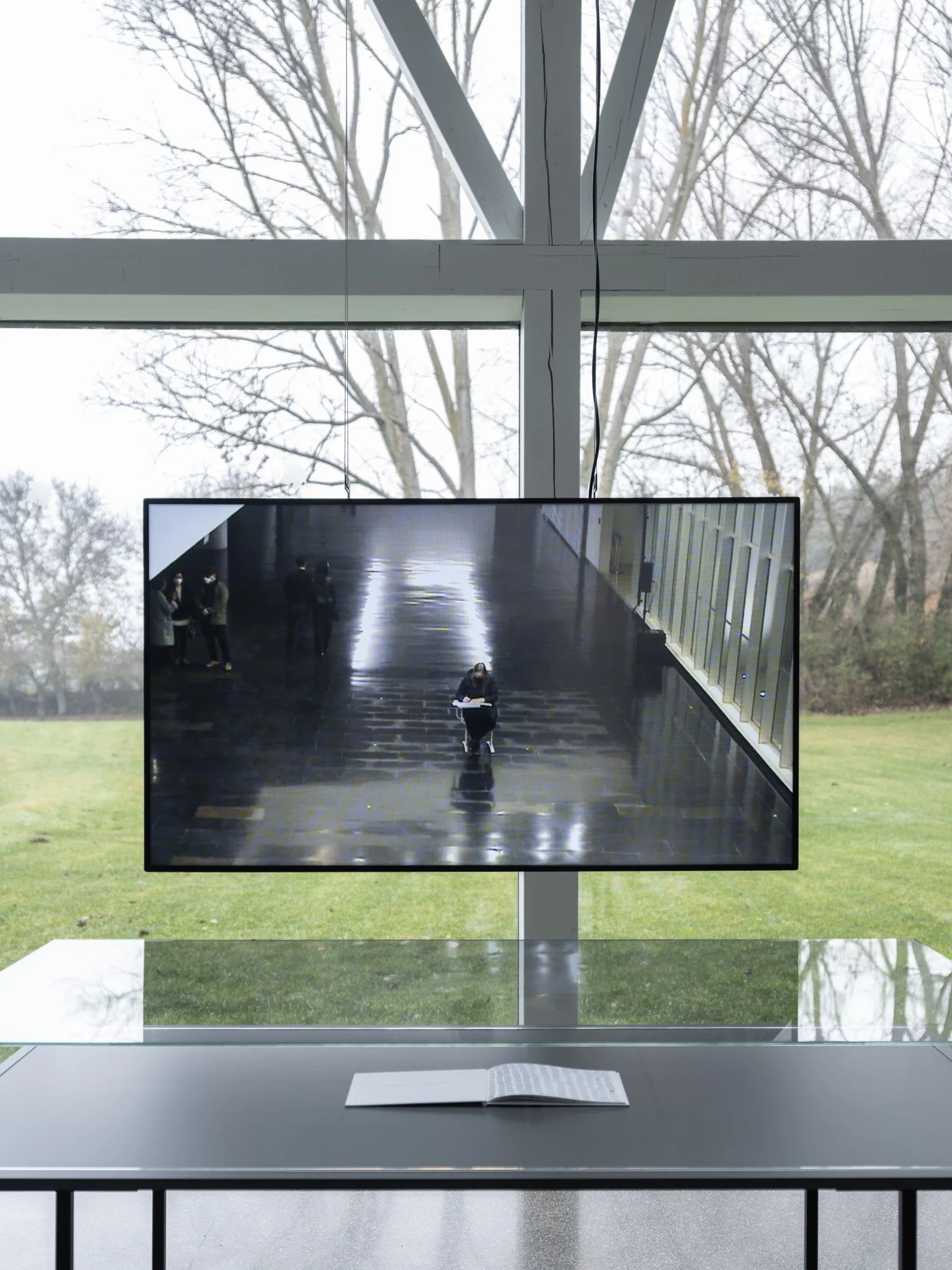
She doesn't count the minutes just anywhere; she often chooses places with strong semantic and symbolic significance, where something relevant is happening or has happened, or privately in her home as part of her routine.
Voluntary routines are somewhat of an escape from the horrible. Sidney Smith advised his beloved Georgiana in his list of things to improve her depressed life: “No one has suffered more low points than I have, so I know how you feel. These are my prescriptions.” Among many others, he highlights: “Don't expect too much from life; in the end, it's just an unfortunate episode.”
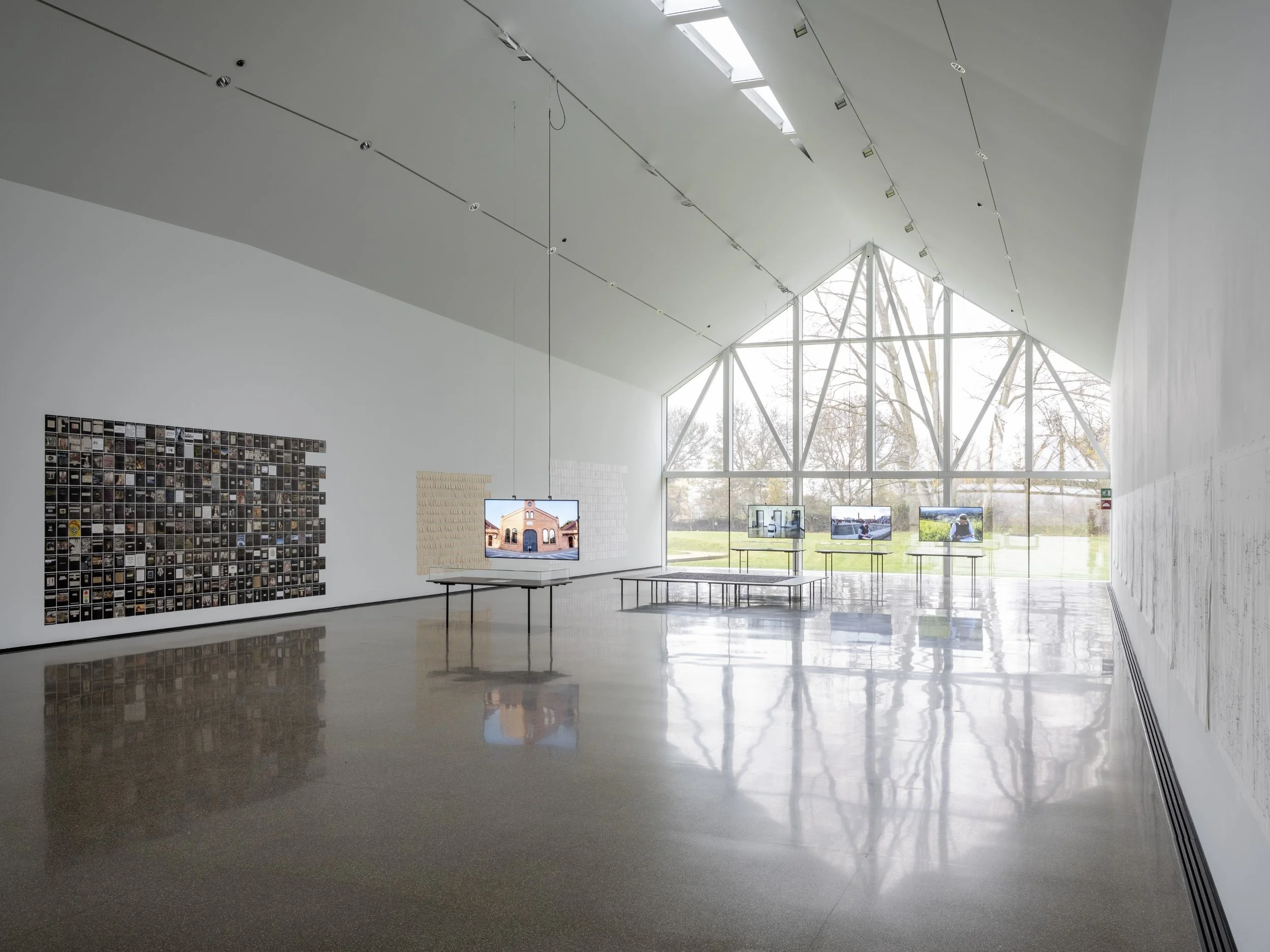
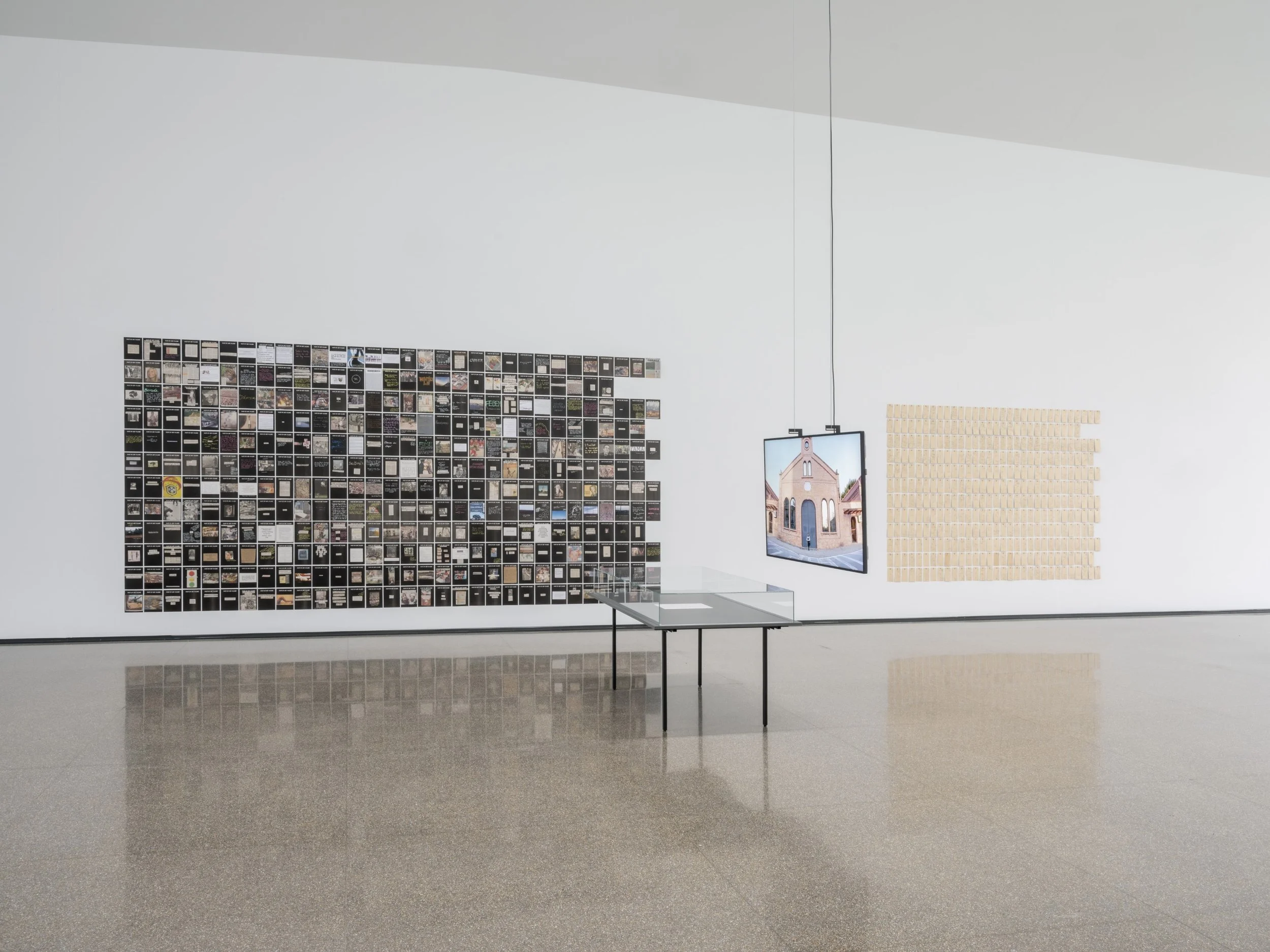
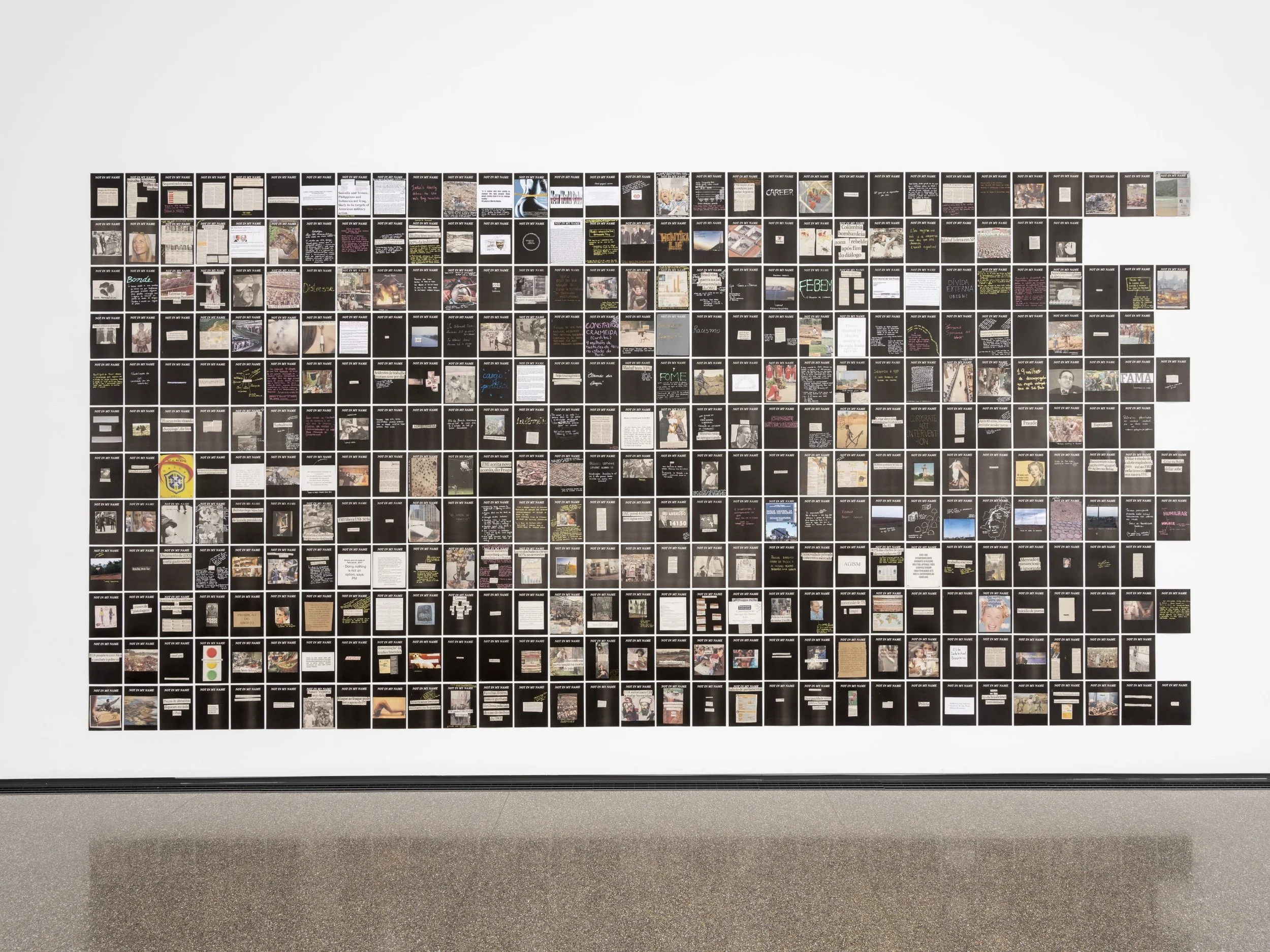
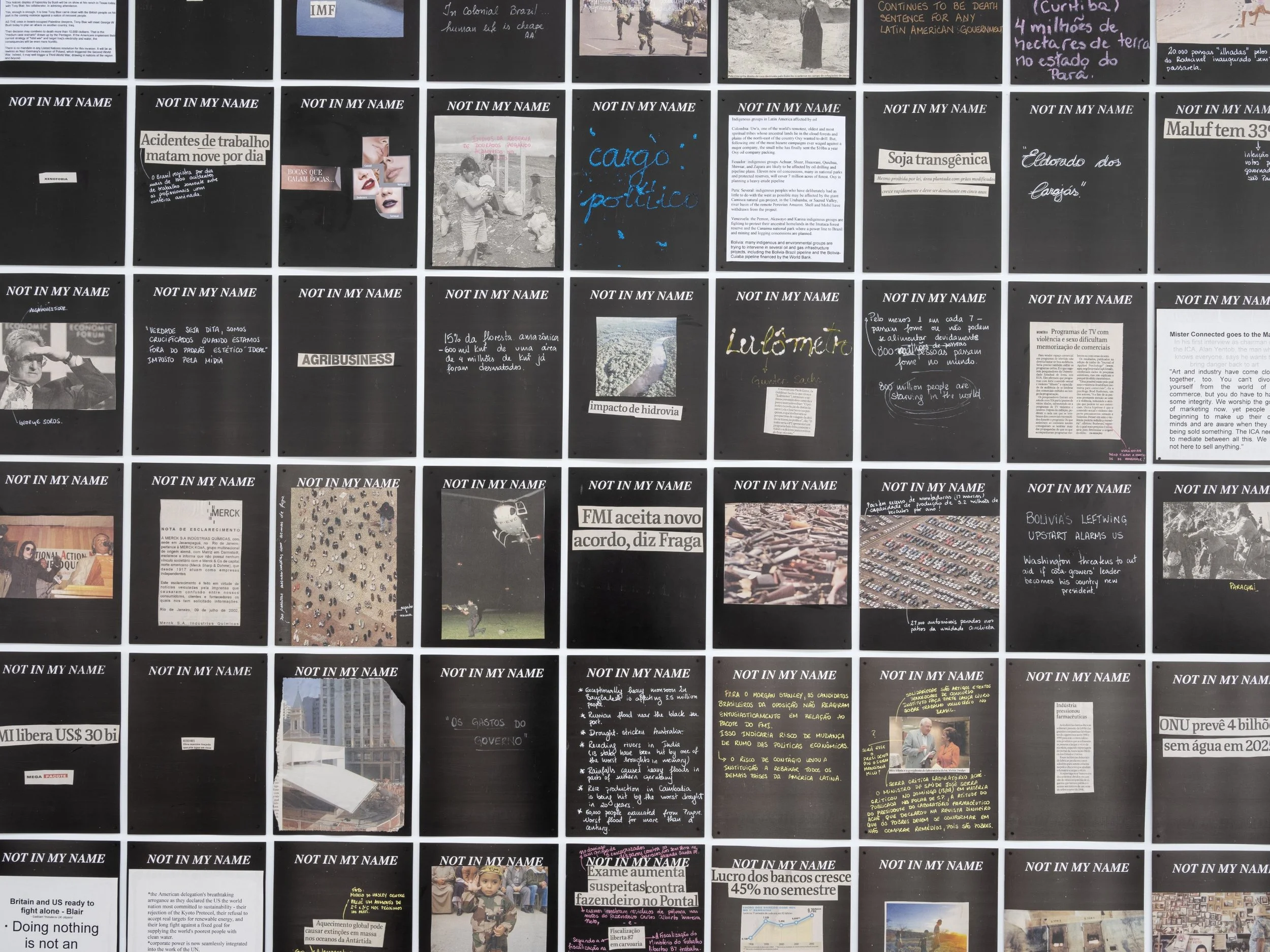
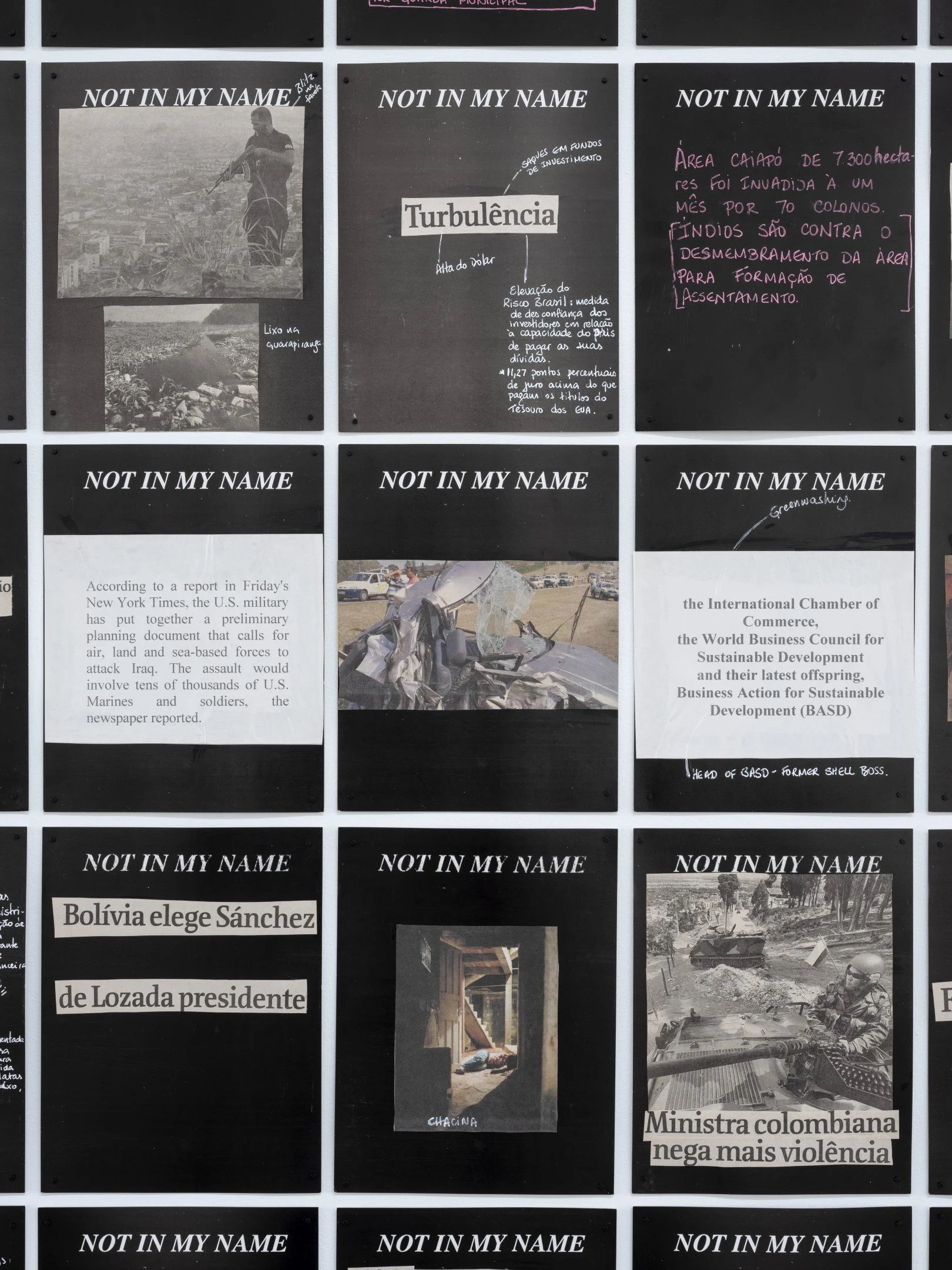
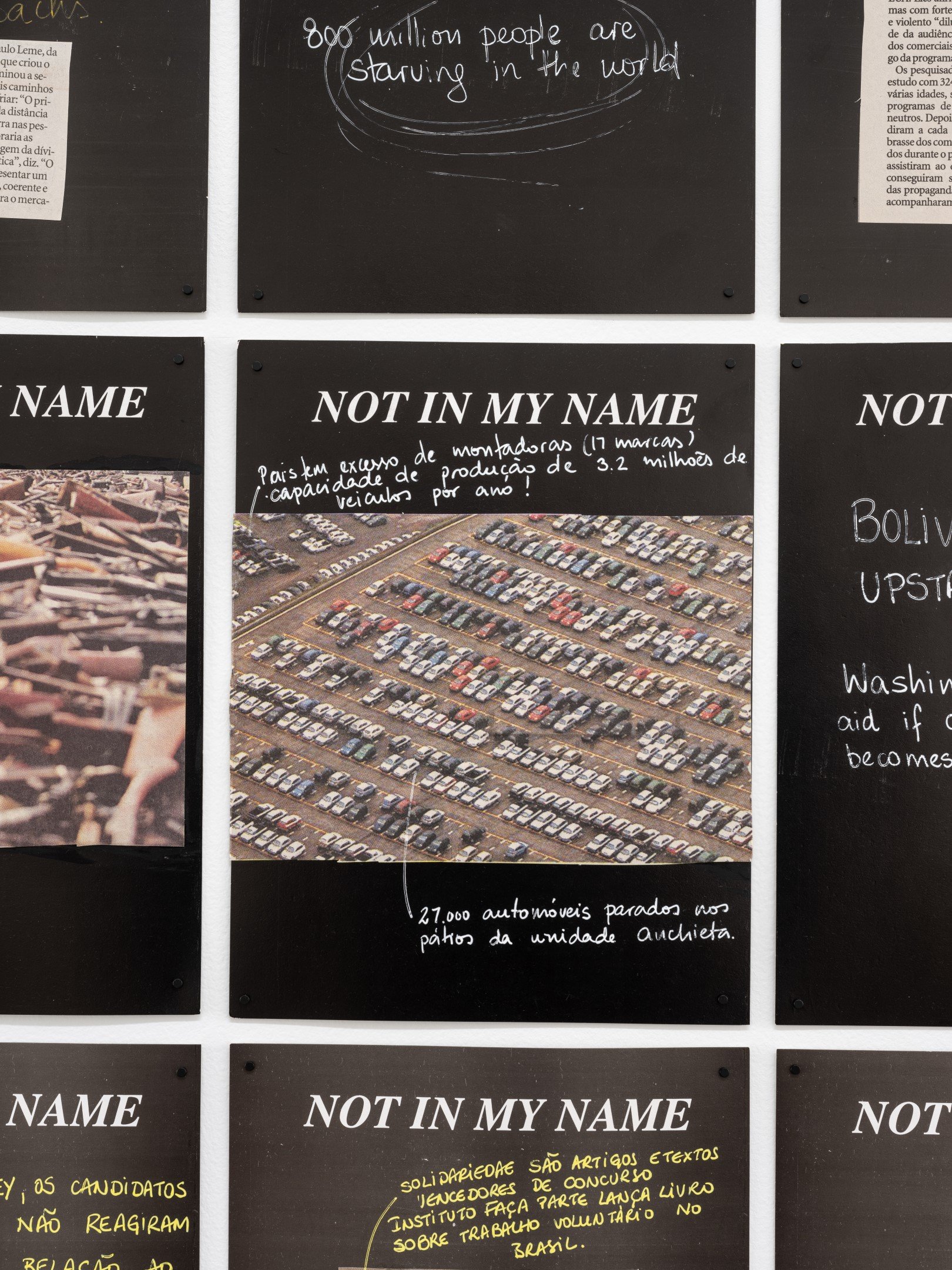
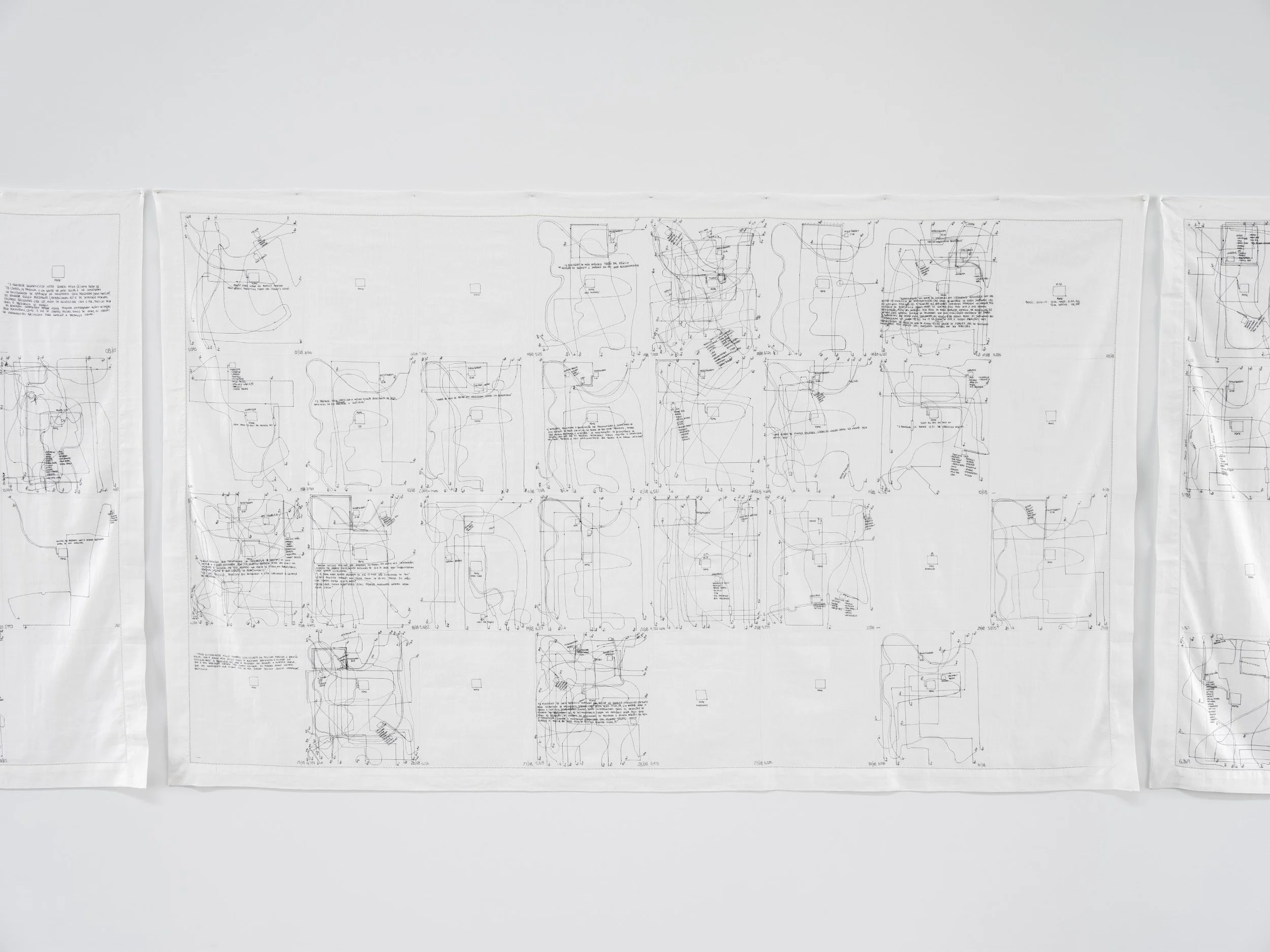
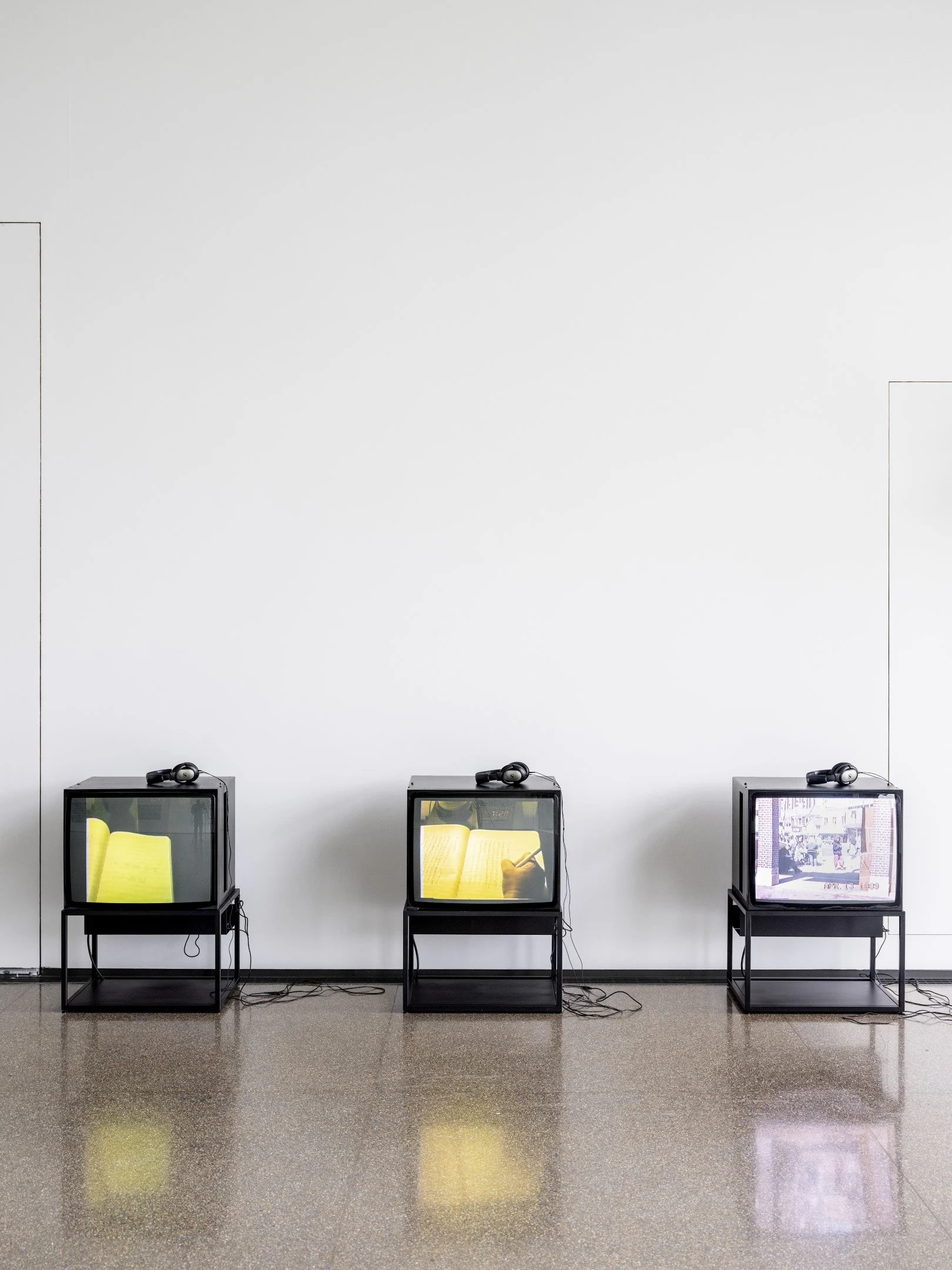
In Ana Amorim's work, and in conversations with her, this “unfortunate episode” often appears, but not in an existentialist way, rather in a way marked by the amount of information that brings us up to date on the pitiful international situation that causes anger and helplessness. This is evidenced by routines such as in Not in My Name, 2020-3, and Narratives, where the artist writes about what makes her uncomfortable and what she cannot do anything about. In these three routines, she develops everything she seems to be running away from by counting time in her books, which, far from being meditative exercises, point with her action to what weighs heavily, to the inevitable.
Umberto Eco proposed the following: “... the other form of representation we are talking about suggests infinity almost physically, because in fact it does not end, it does not finish in form. We shall call this modality a list, an inventory, or a catalog.” Eco also dedicated a section to visual lists and specifically – something far from obvious in this age of archive culture – refers to paintings of battles and still lifes, which always tend to extend virtually beyond the frame.
Are Ana Amorim’s works maps, sheets or books, or are they in fact lists? Both are possible, but it is tempting to think of her work as a routine composition of these elements, whose items take the form of pages with vertical lines and Mental Maps composed of fragments.
It is difficult to categorize Ana Amorim's works precisely because they extend beyond that framework, as they are essentially endless accounts that, although they pause at a certain moment, tend to infinity.
In the chapter devoted to these lists, Umberto Eco cites the principle of enumeration that can be found in arts other than painting: “the obsessive rhythm of Ravel's Bolero suggests that this work could continue indefinitely...”
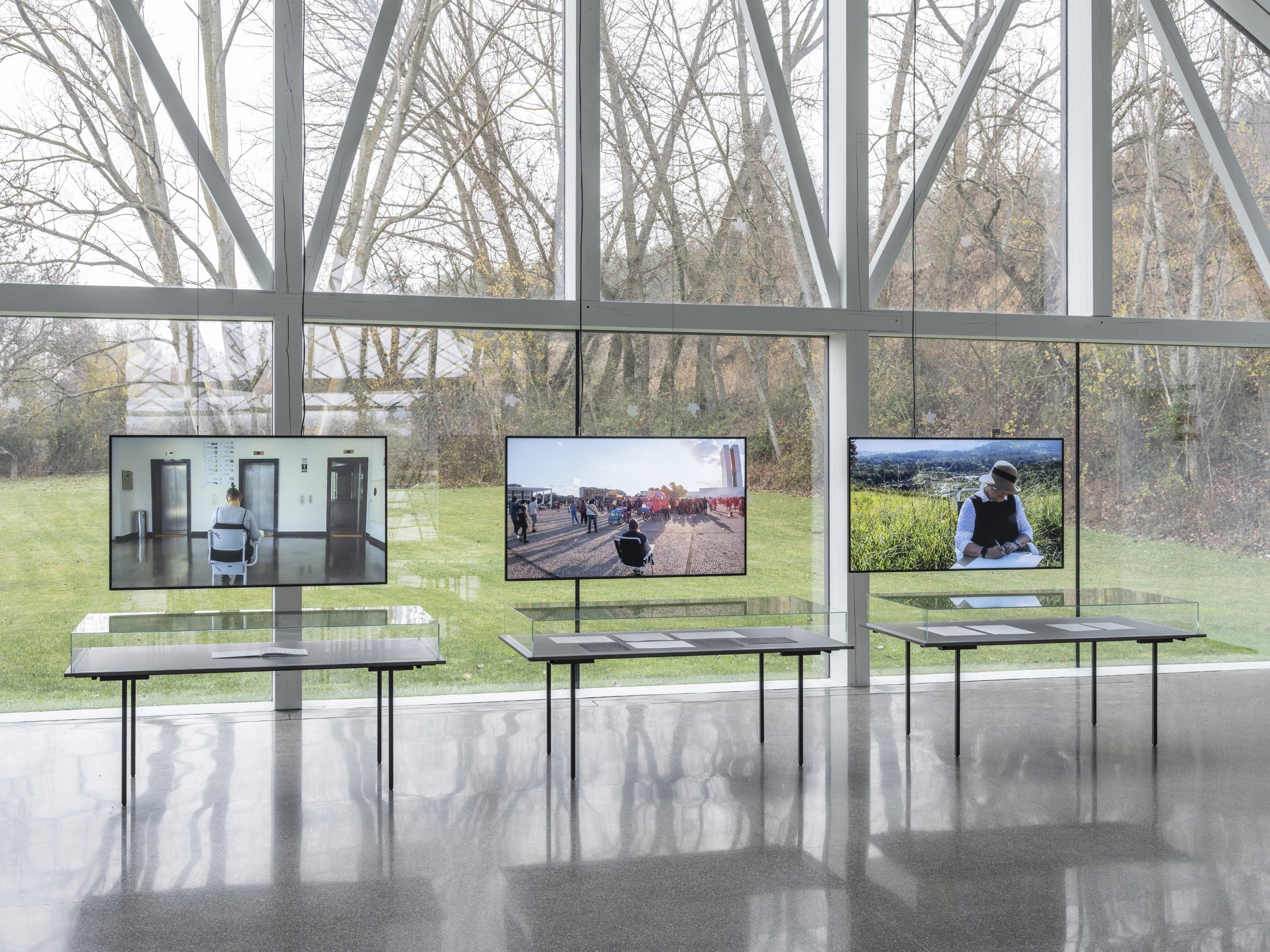
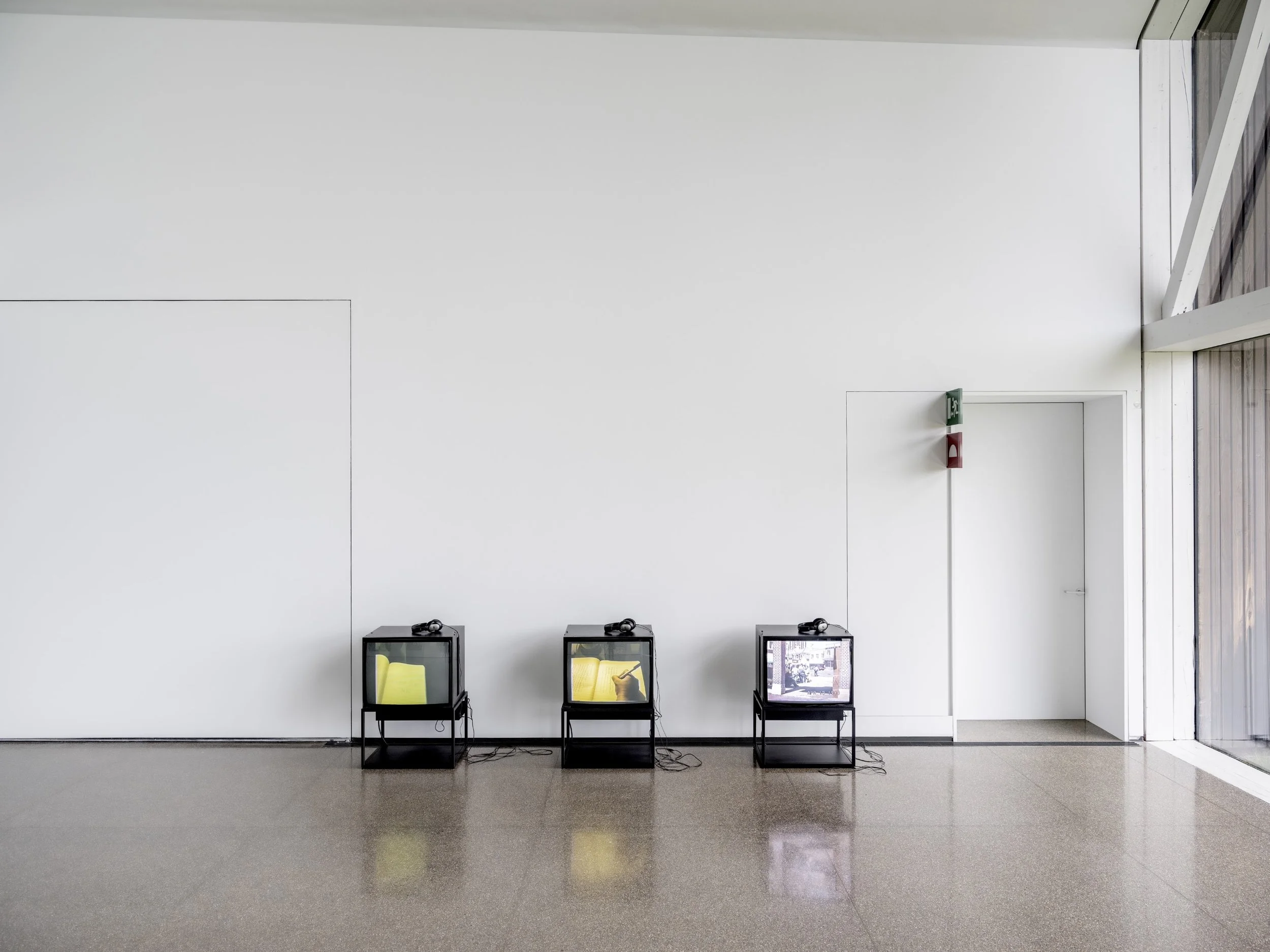
Can the books in Counting Seconds be considered “artist’s books”? Definitely not. They are not consumable objects, they are the results of a performative activity with its own stage. They are mediators that are also displayed on the wall or in a showcase. In the words of Diana Taylor, they are at the intersection of collaboration between the archive and the repertoire, between what is written and what the body stores through the repetition of its gestures. And that collaboration is inseparable.
The artist's maps inevitably recall earlier maps, yet hers are made in an age of overwhelming hyperwriting.
Bedolina's map of Valcamonica, 2500 BC, bears a striking resemblance to some of those drawn by Ana Amorim, but we lack the full context that the artist provides us as a historian of herself and with different codes.
We must not forget her Counting Seconds performances recorded on video, nor the evolution from an intimate or museographic space to one where two things occur: a conflicted reality and Ana Amorim counting seconds unperturbed.
The history of diarists has unfolded in the privacy of their lack of right to express themselves. The “diaries” referred to here are written in public (Counting Seconds) and reading them could well be like listening to a monotonous cry.
Between the gentle flow of Ana Amorim's Large Canvases there are cracks where ghosts slip through, as seen in the large and denial-filled collection Not In My Name, which was inspired by a sign held by the parents of a victim of the attack on the Twin Towers with the phrase “Not in Our Son's Name,” which later spread in the form of “Not in Our Name” in different cities after 9/11 and in response to plans to attack Afghanistan.
Ultimately, none of Ana Amorim's pleasant works are free from stifled protests and subtle sobs concealed by her routine approach, which requires the viewer to read between the lines, except when, as in the last piece discussed, the powerlessness explodes.
Jorge Blasco Gallardo
Text originally published for the exhibition Counting Routines. Ana Amorim, at the Fundación Cerezales Antonino y Cinia (December 1, 2024, to March 9, 2025), in Leon, Spain.
https://fundacioncerezalesantoninoycinia.org/en/activity/tell-routines-ana-amorim/