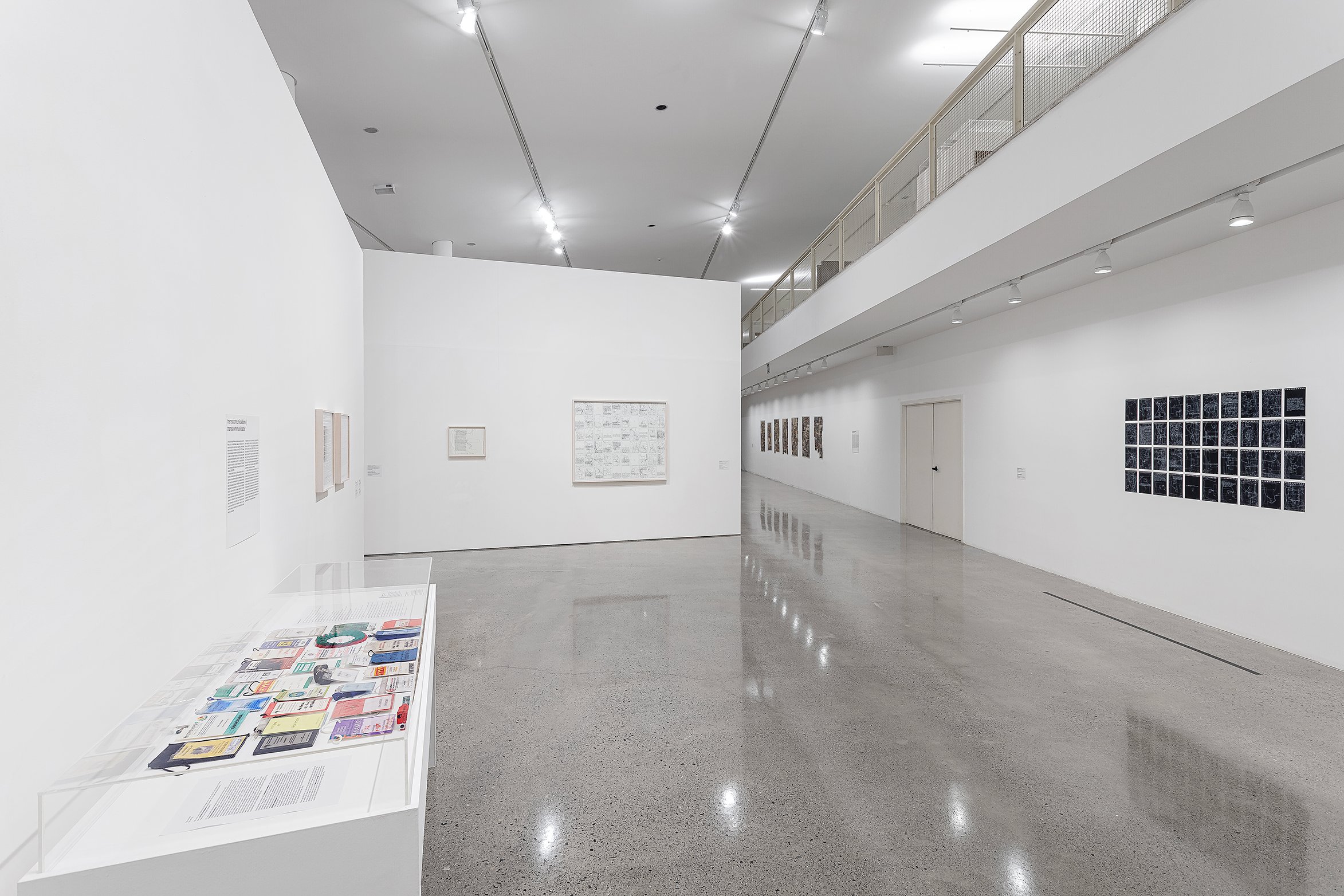
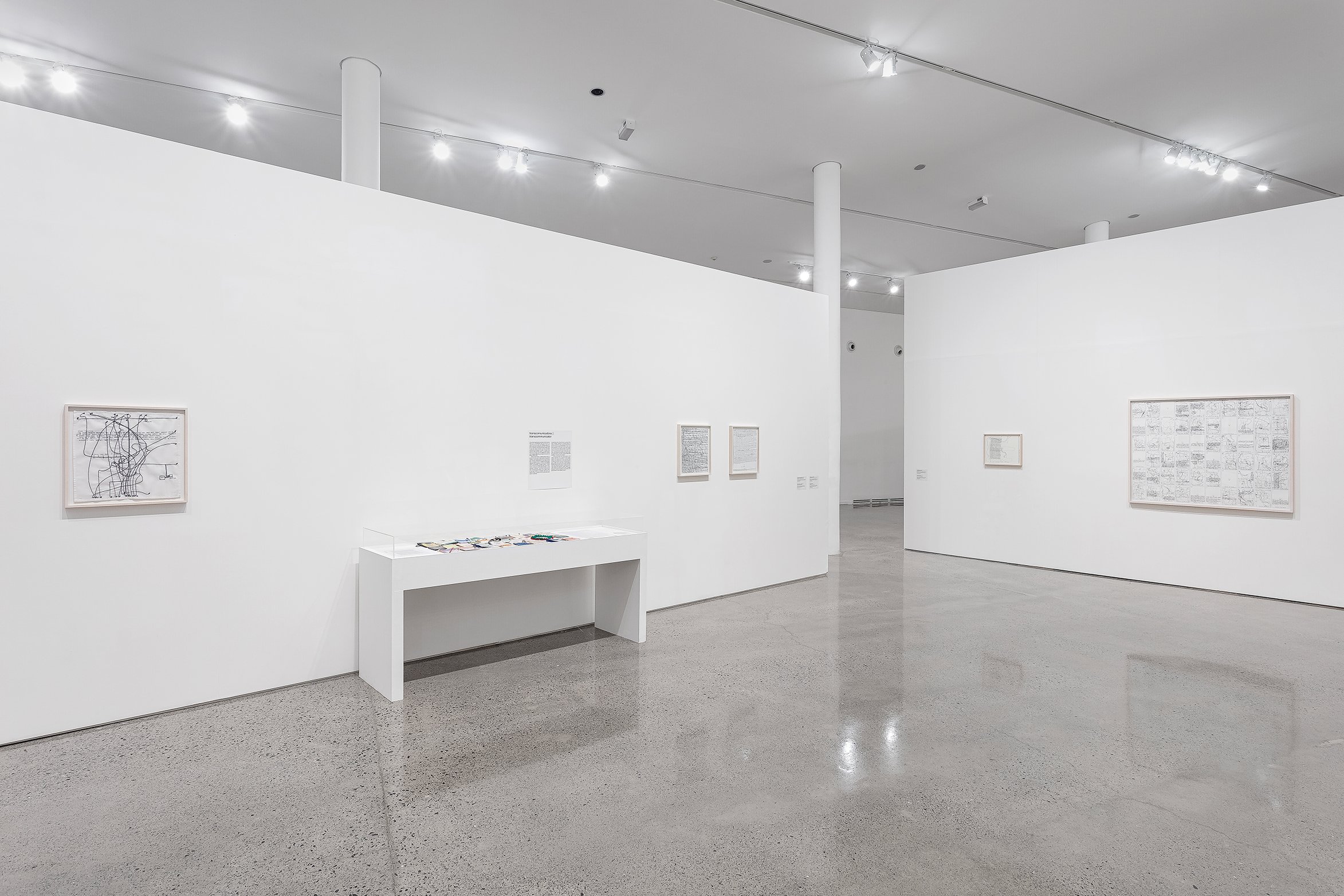
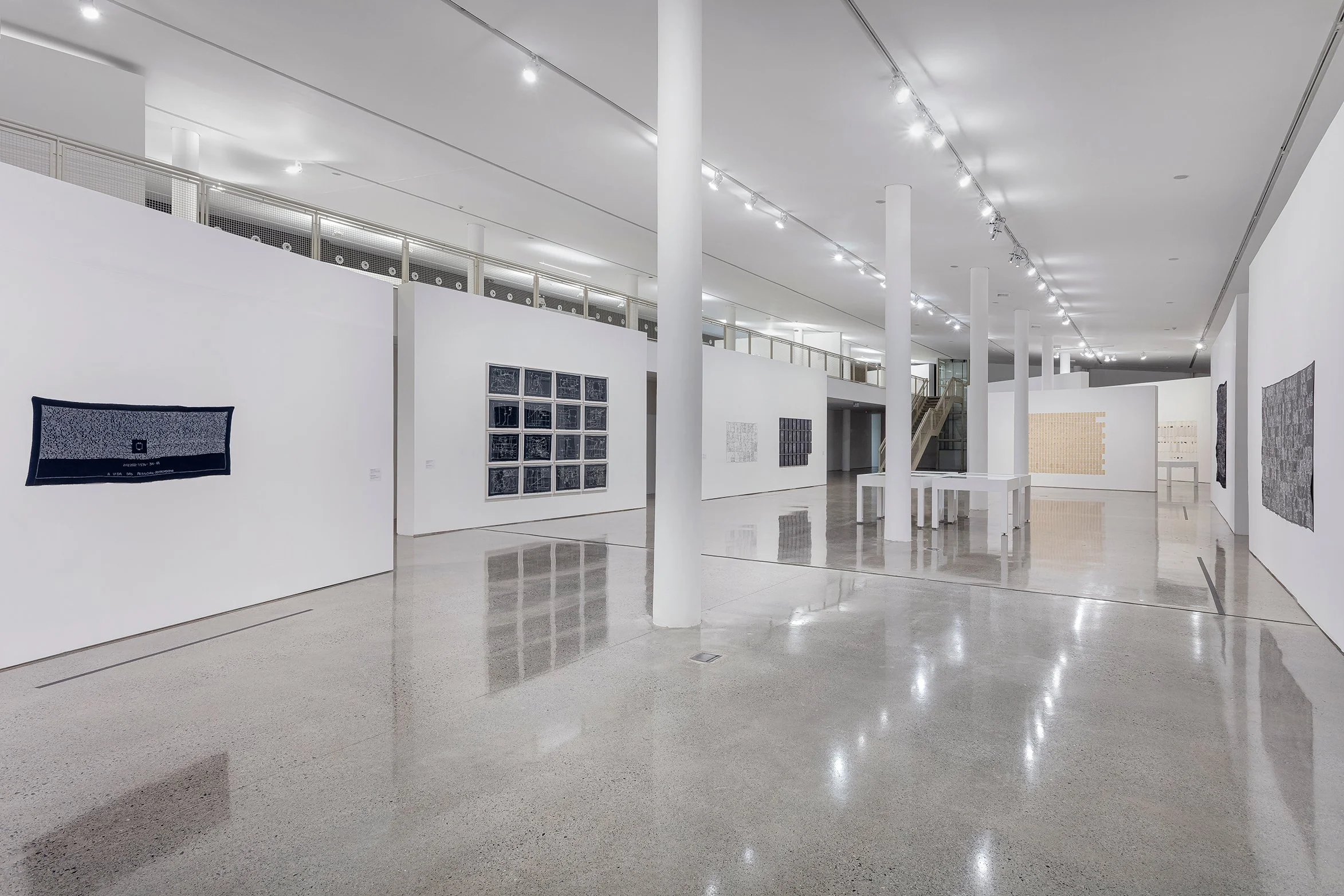
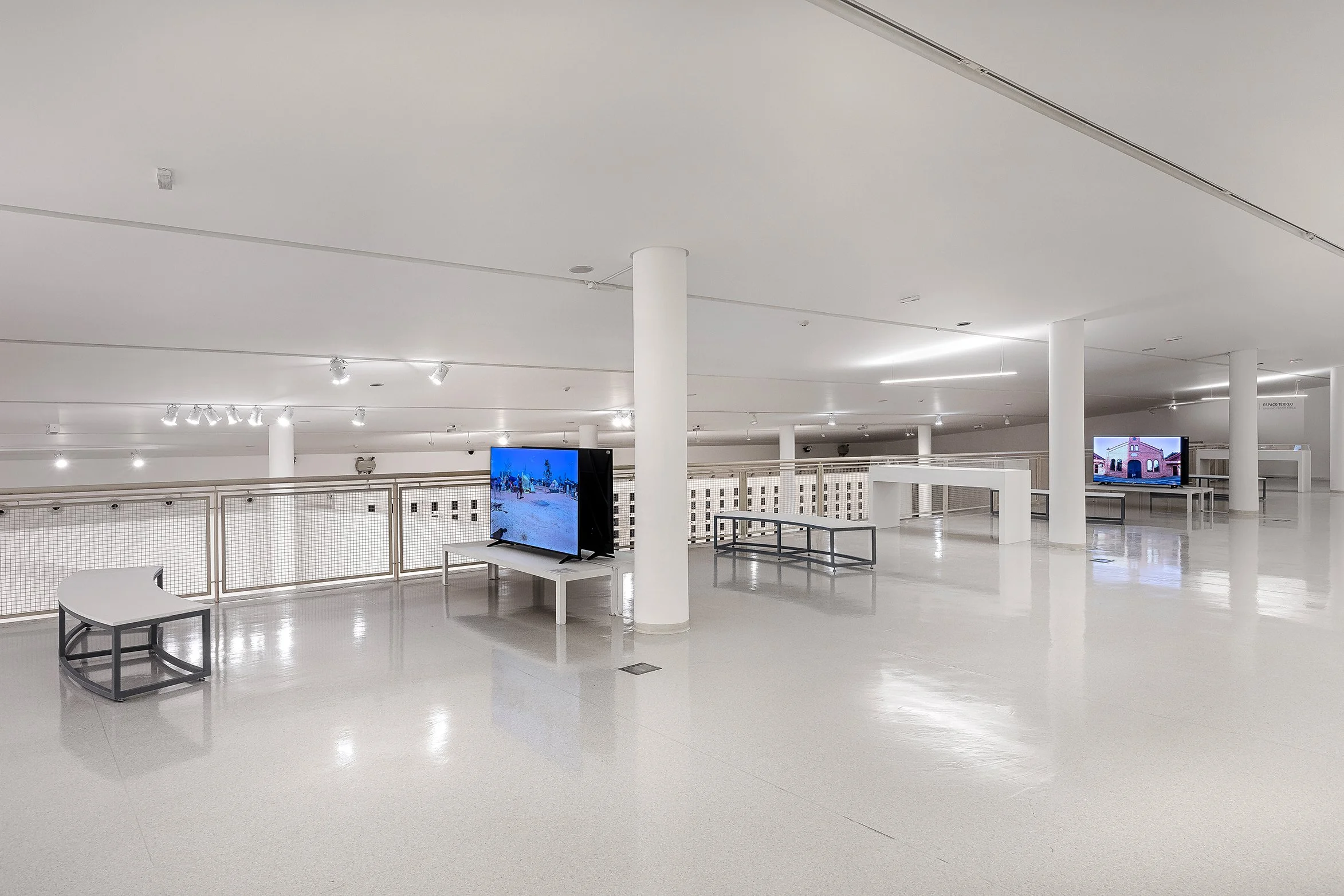
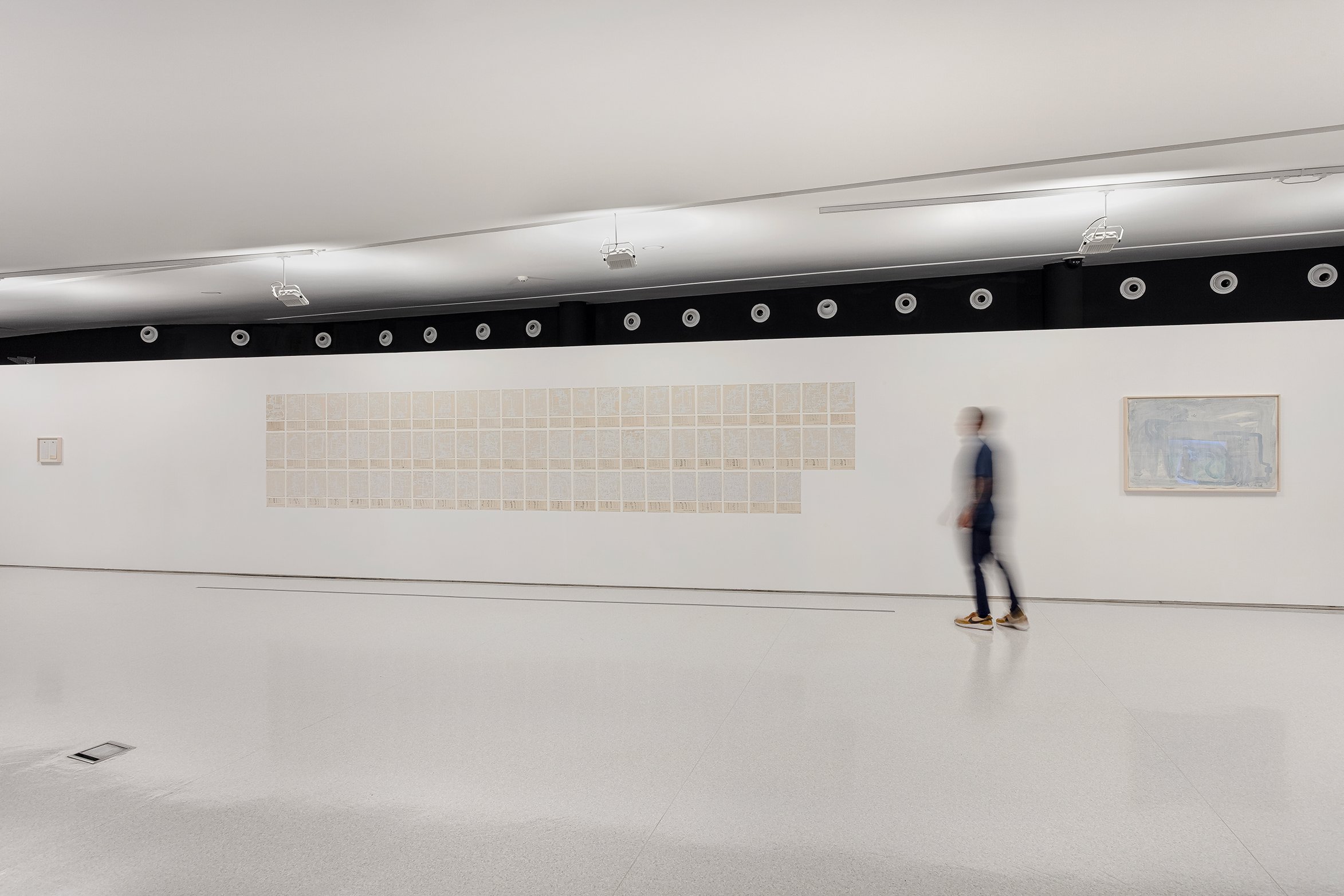
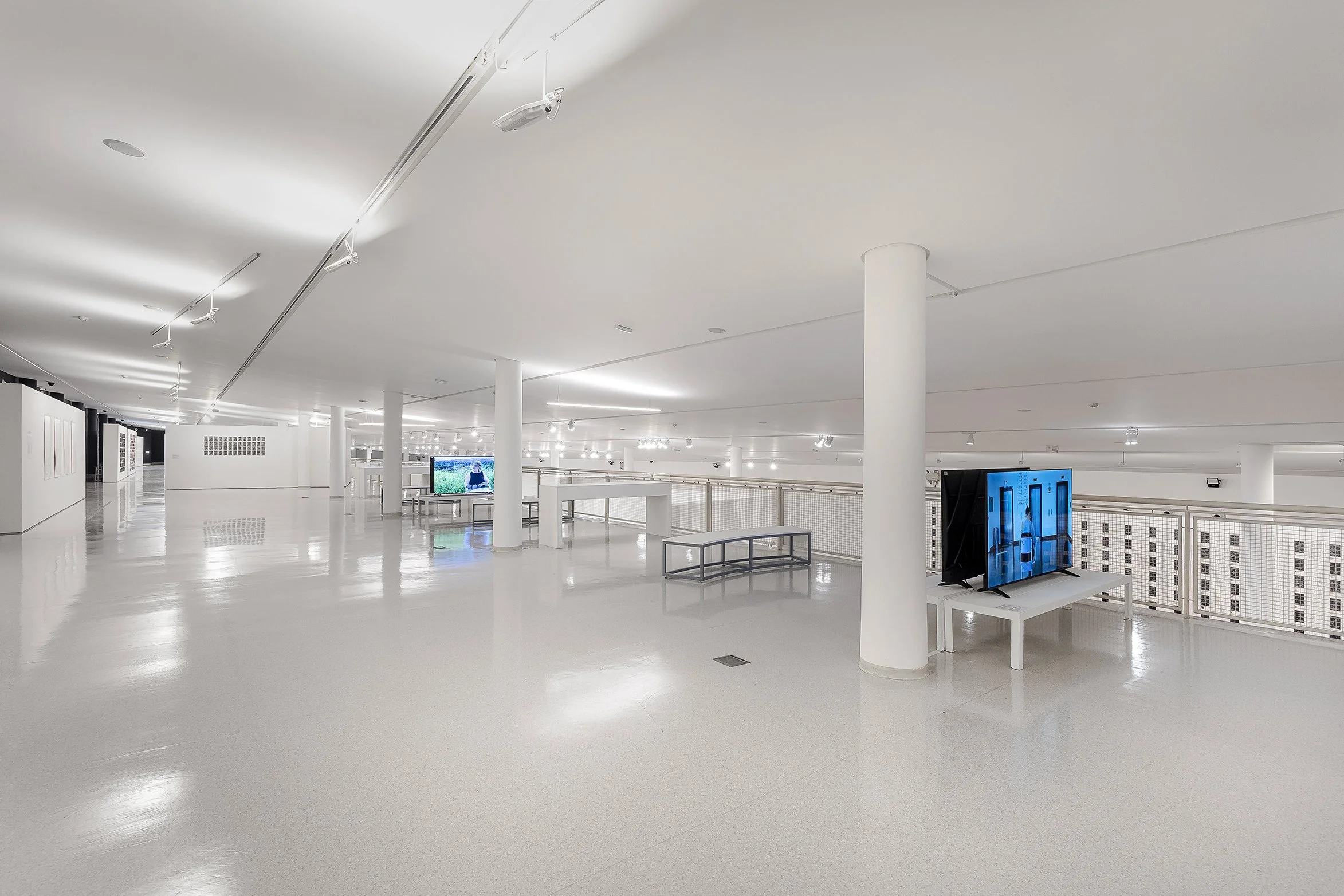
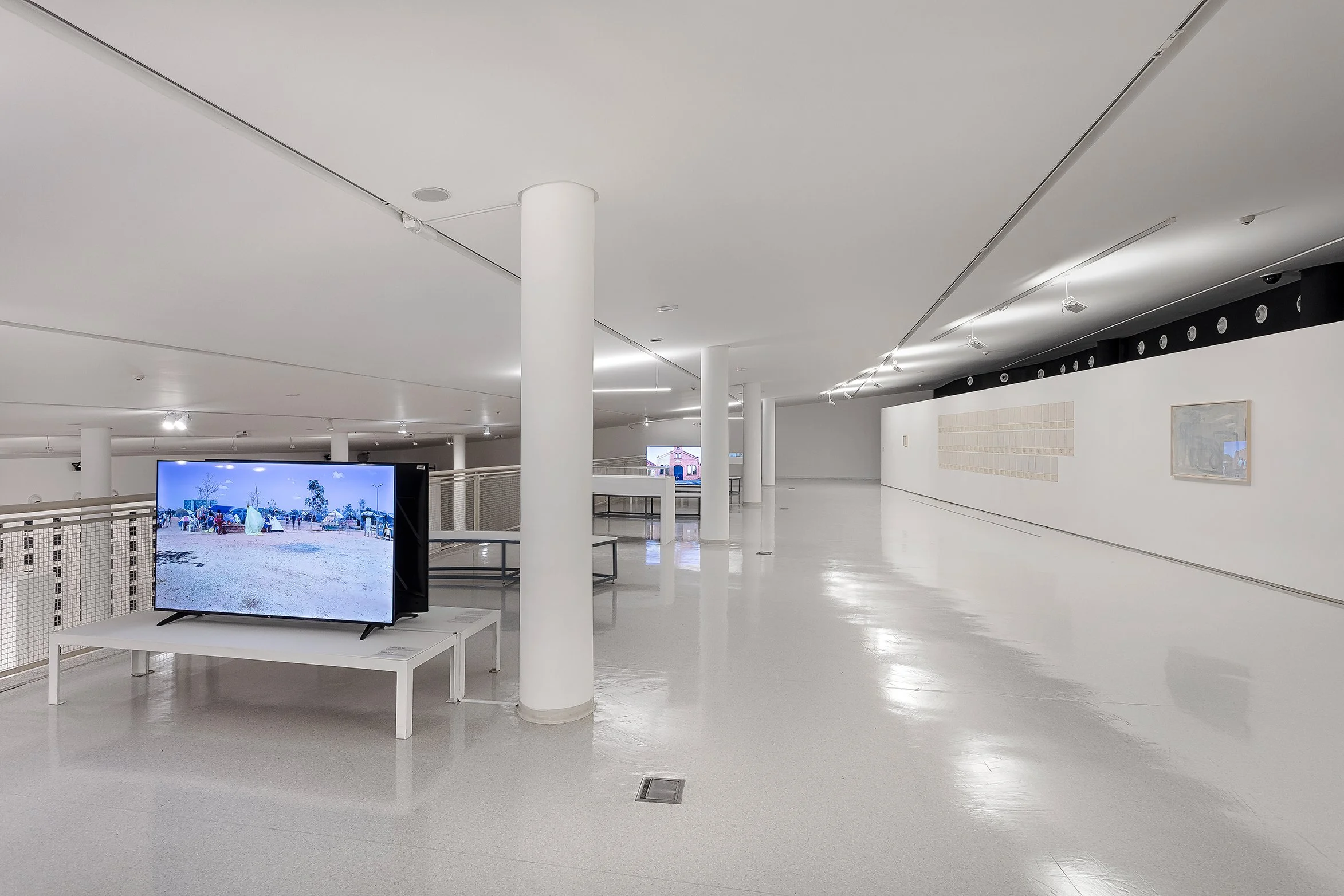
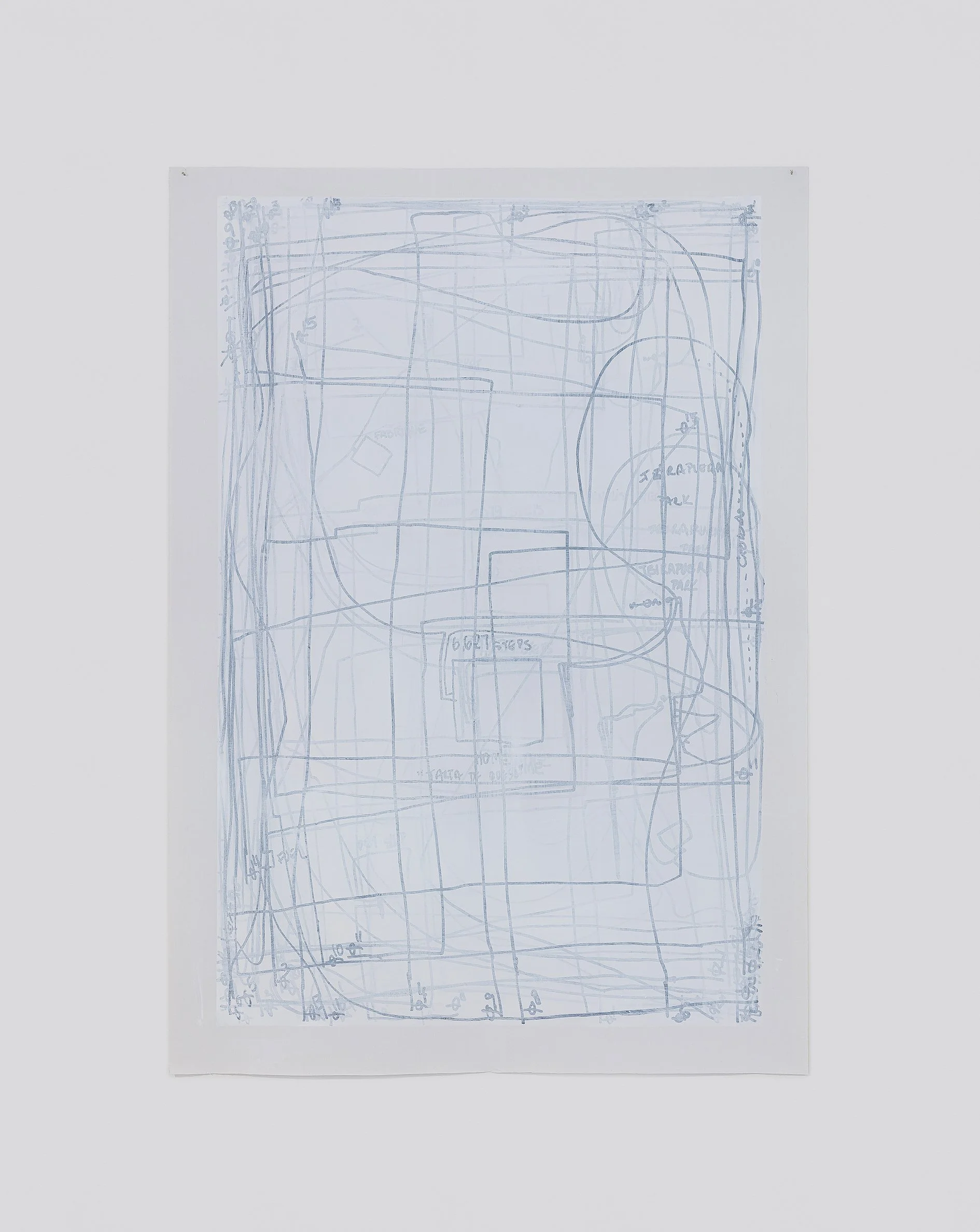
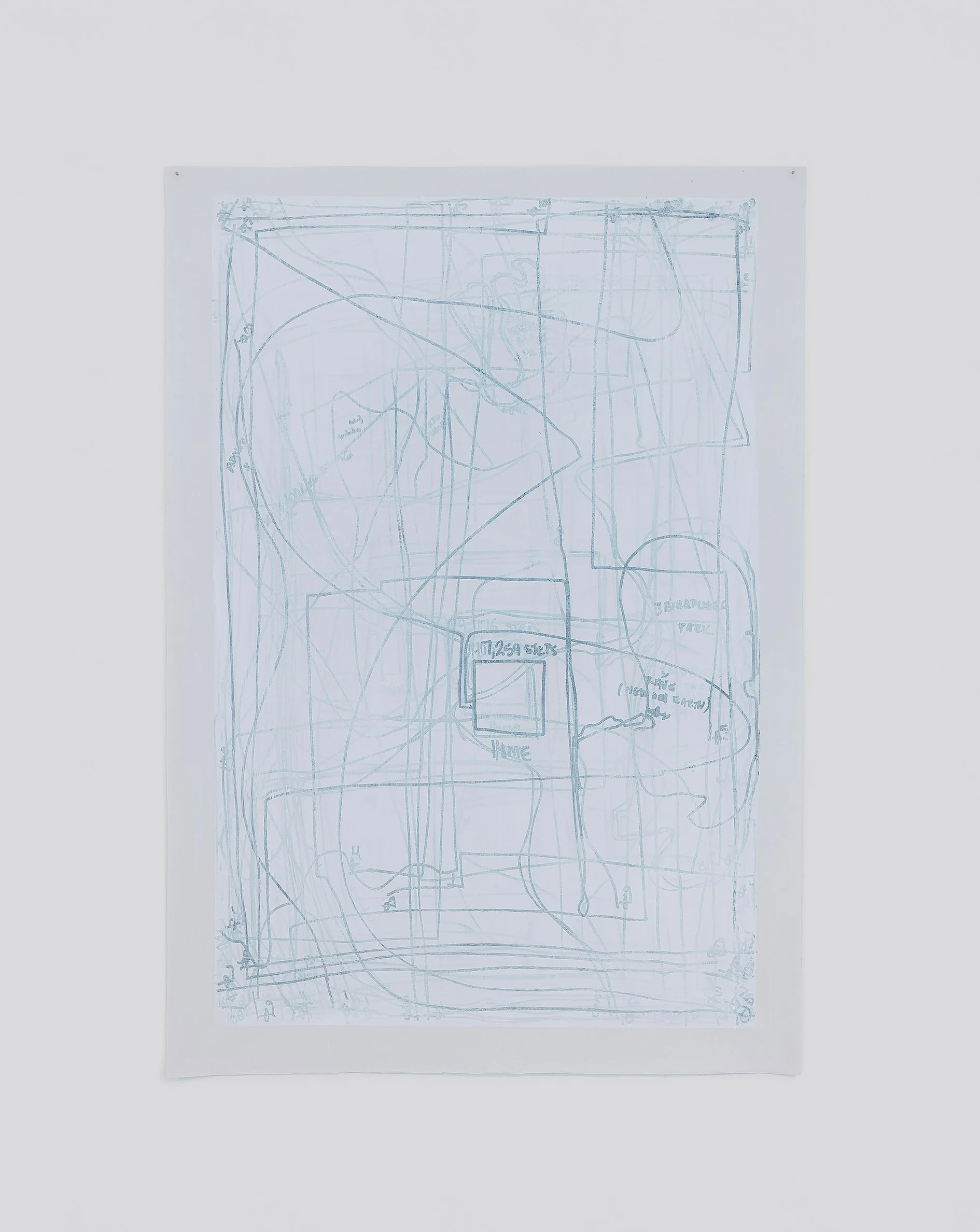
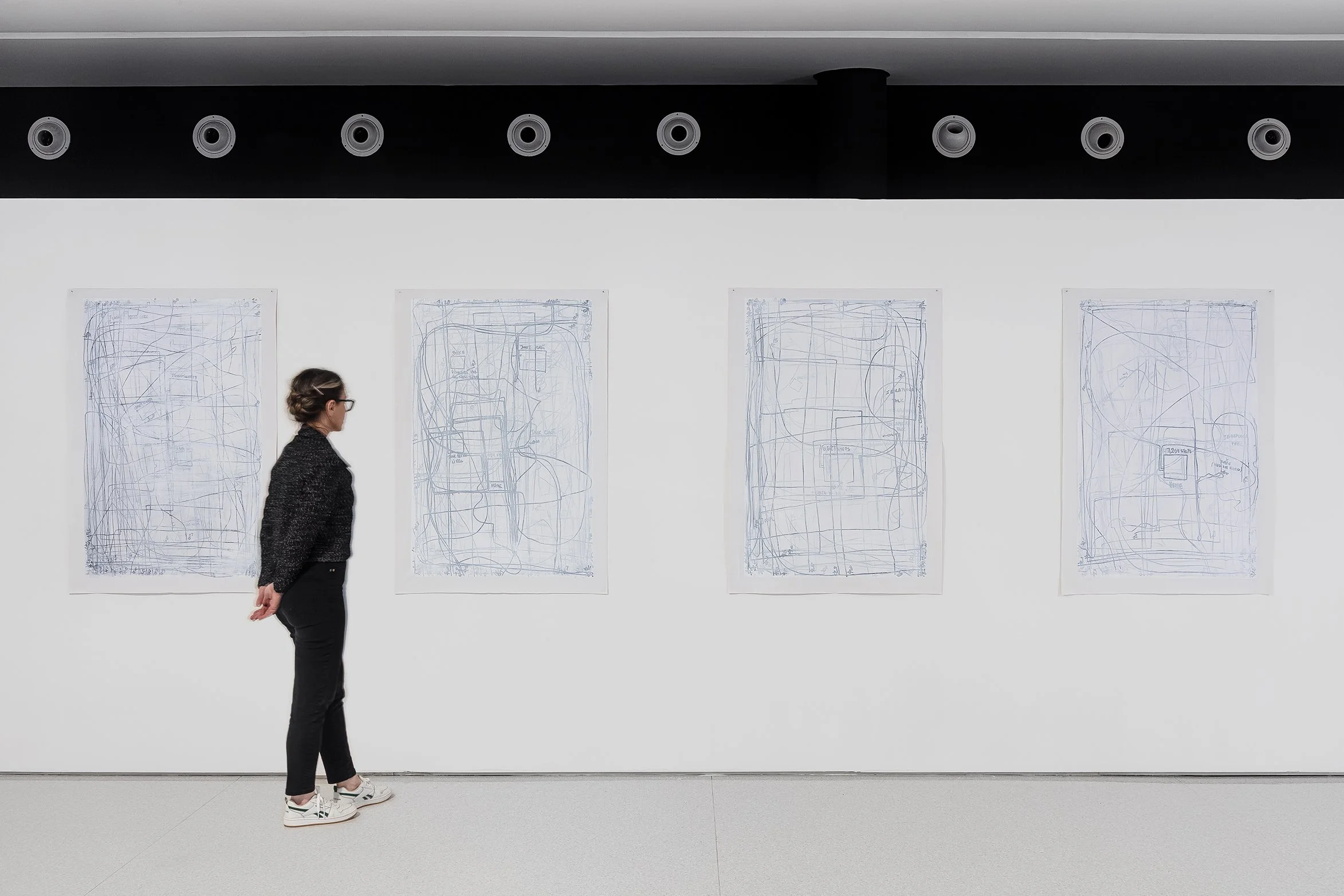
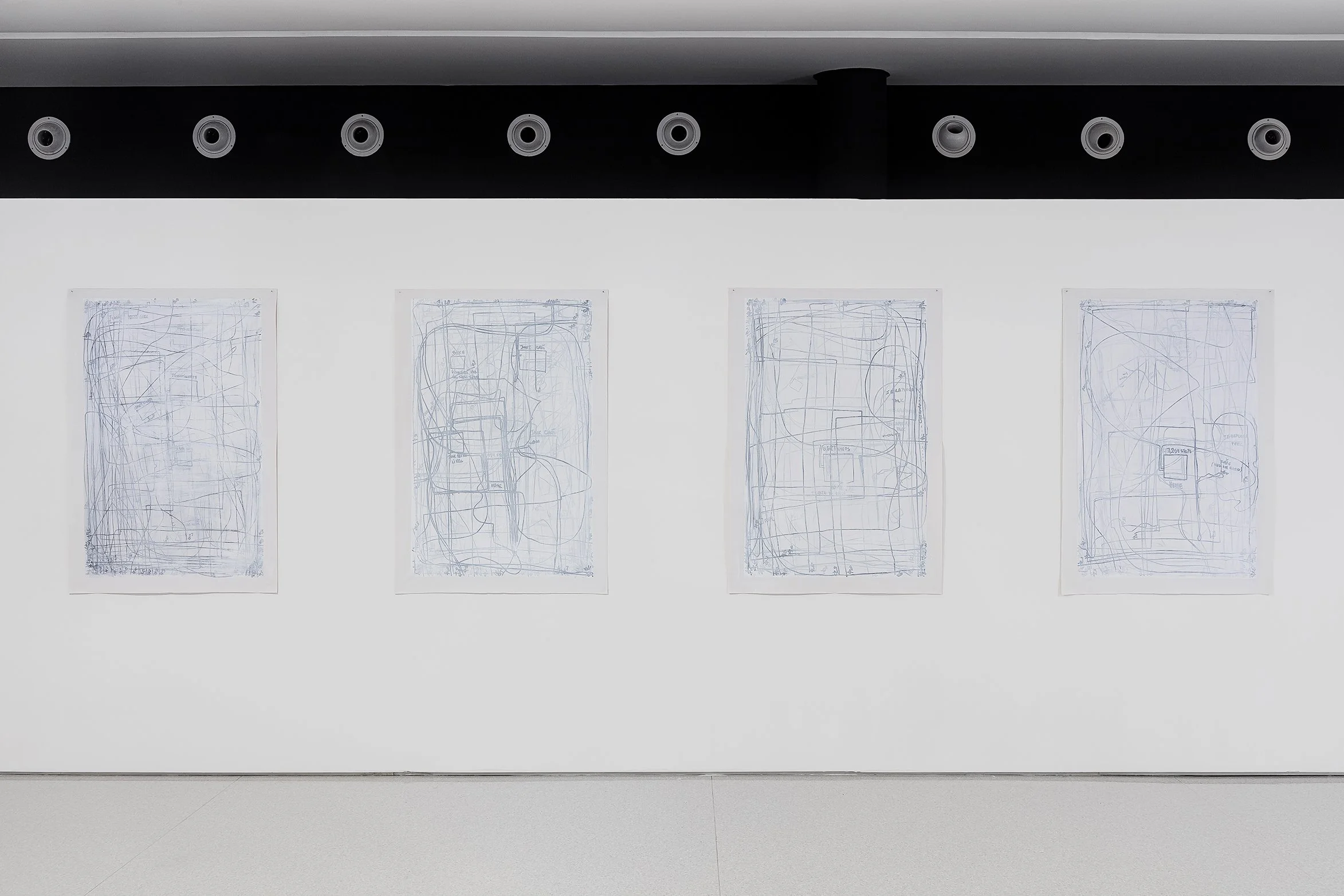
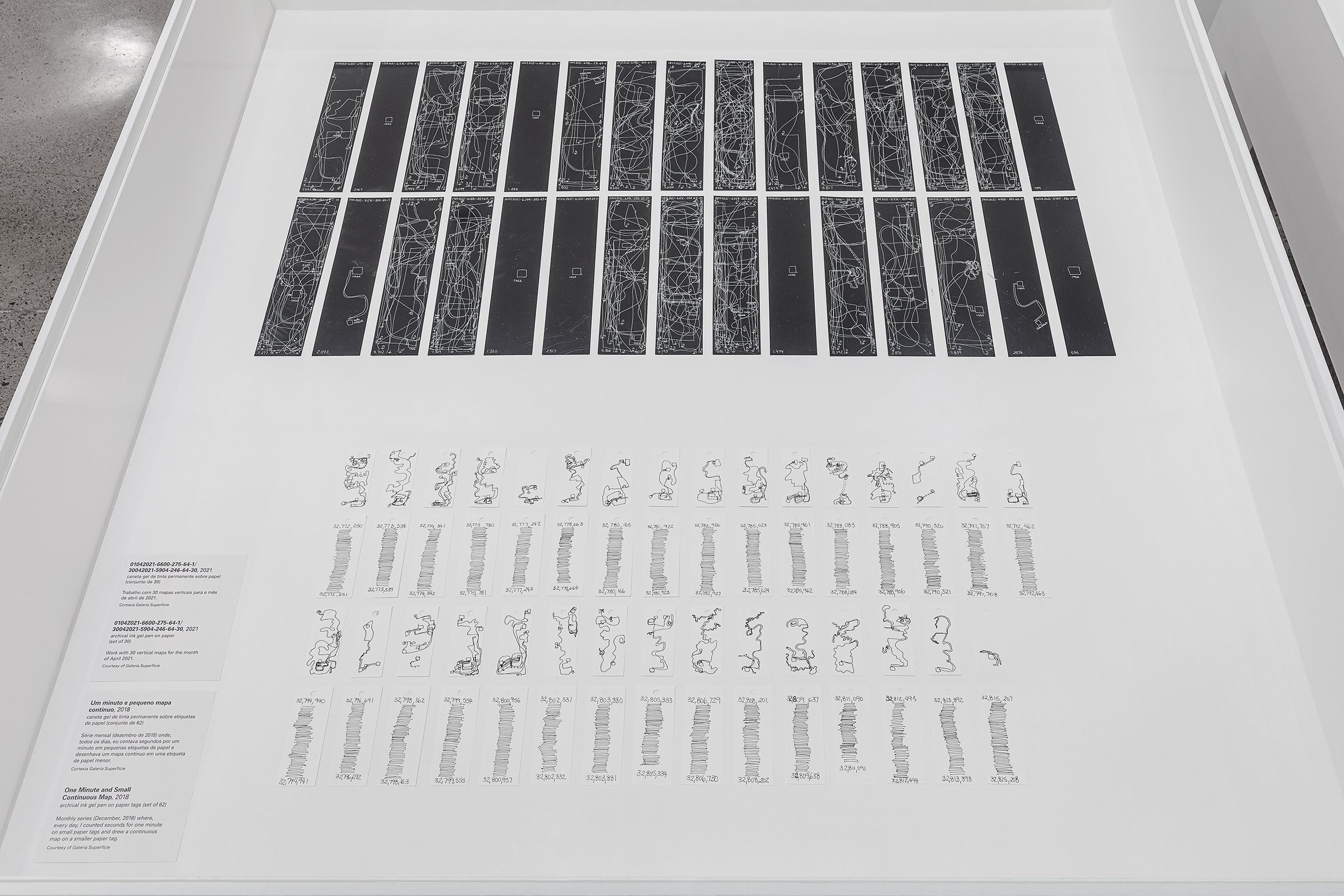
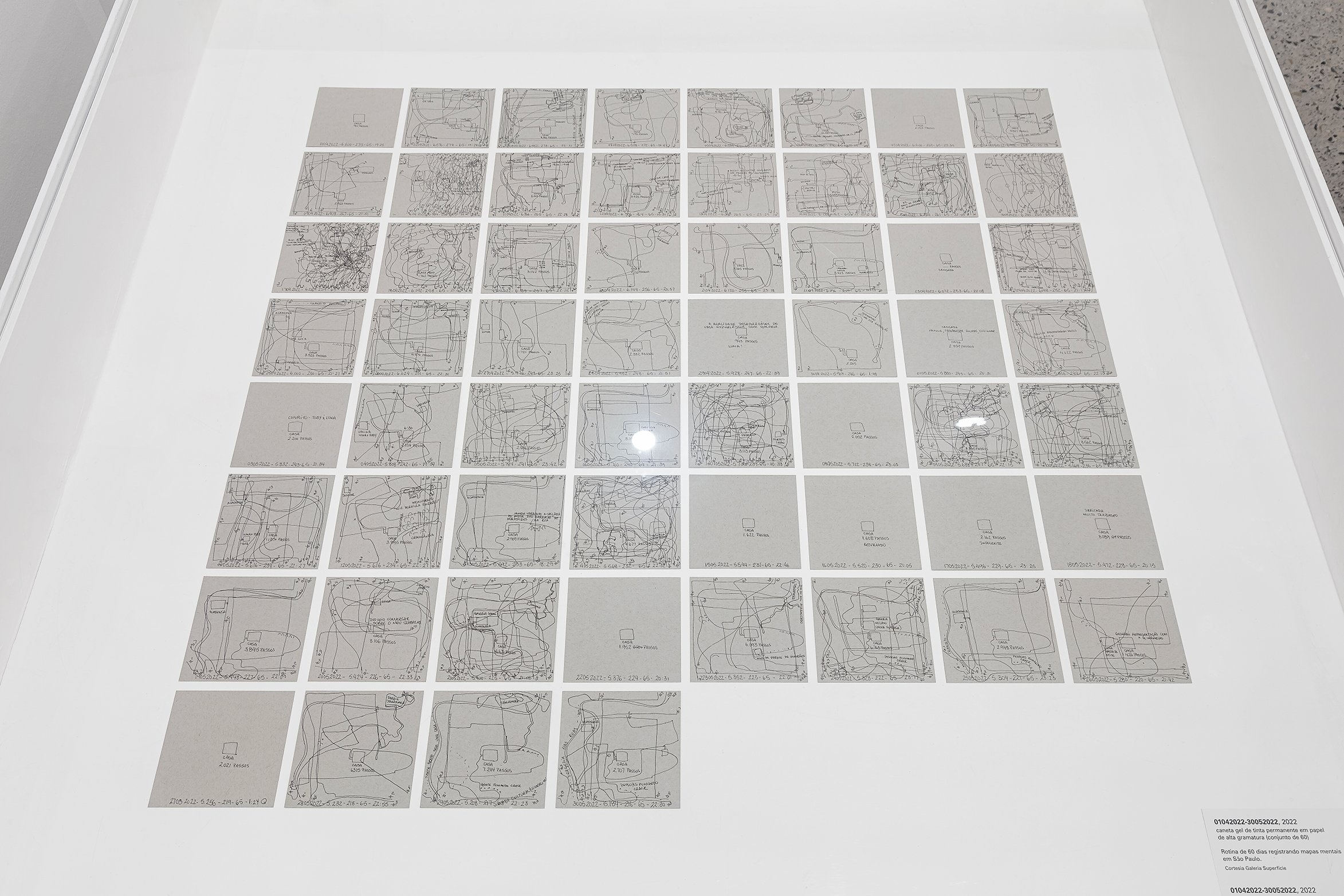
Ana Amorim | Mental Maps
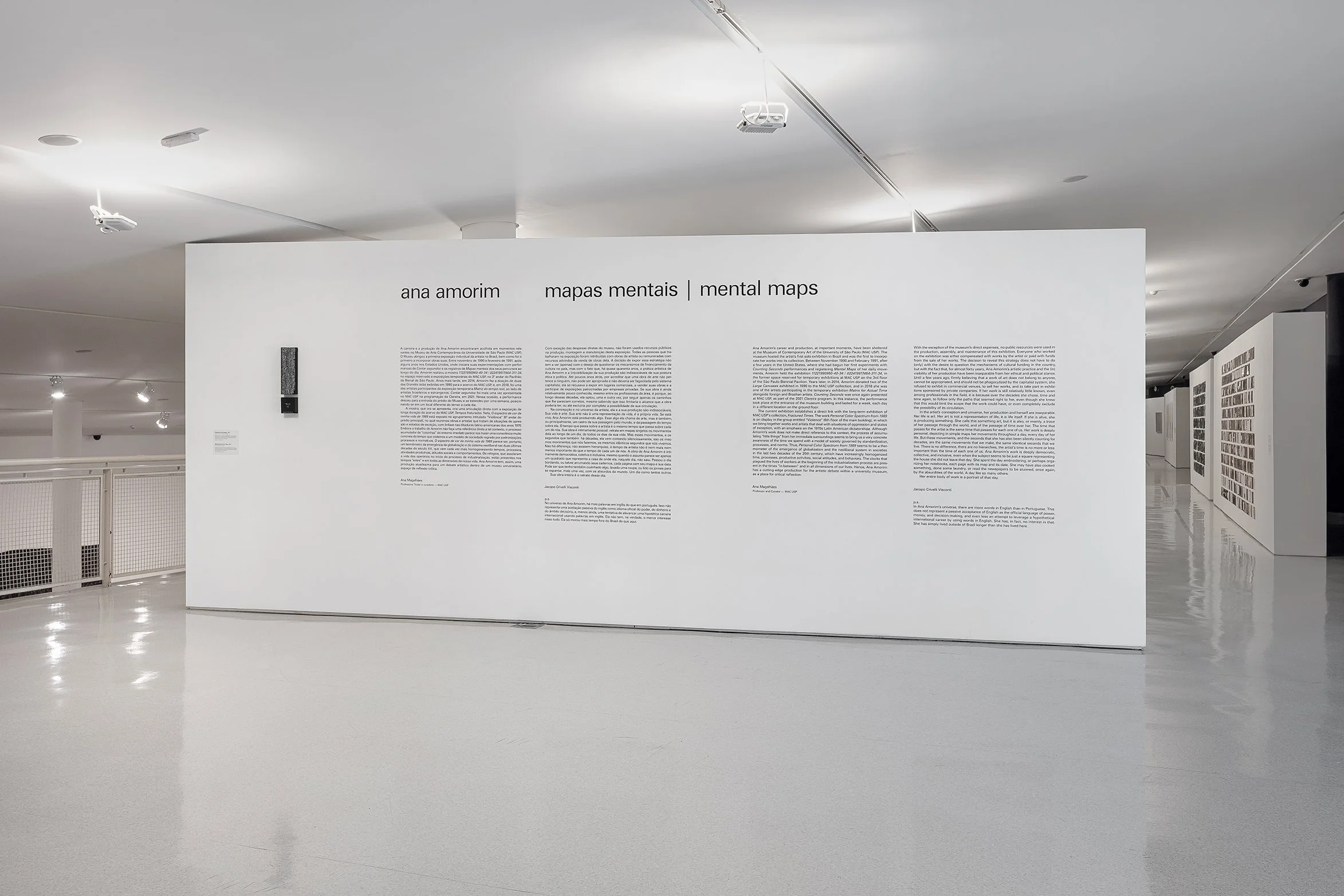
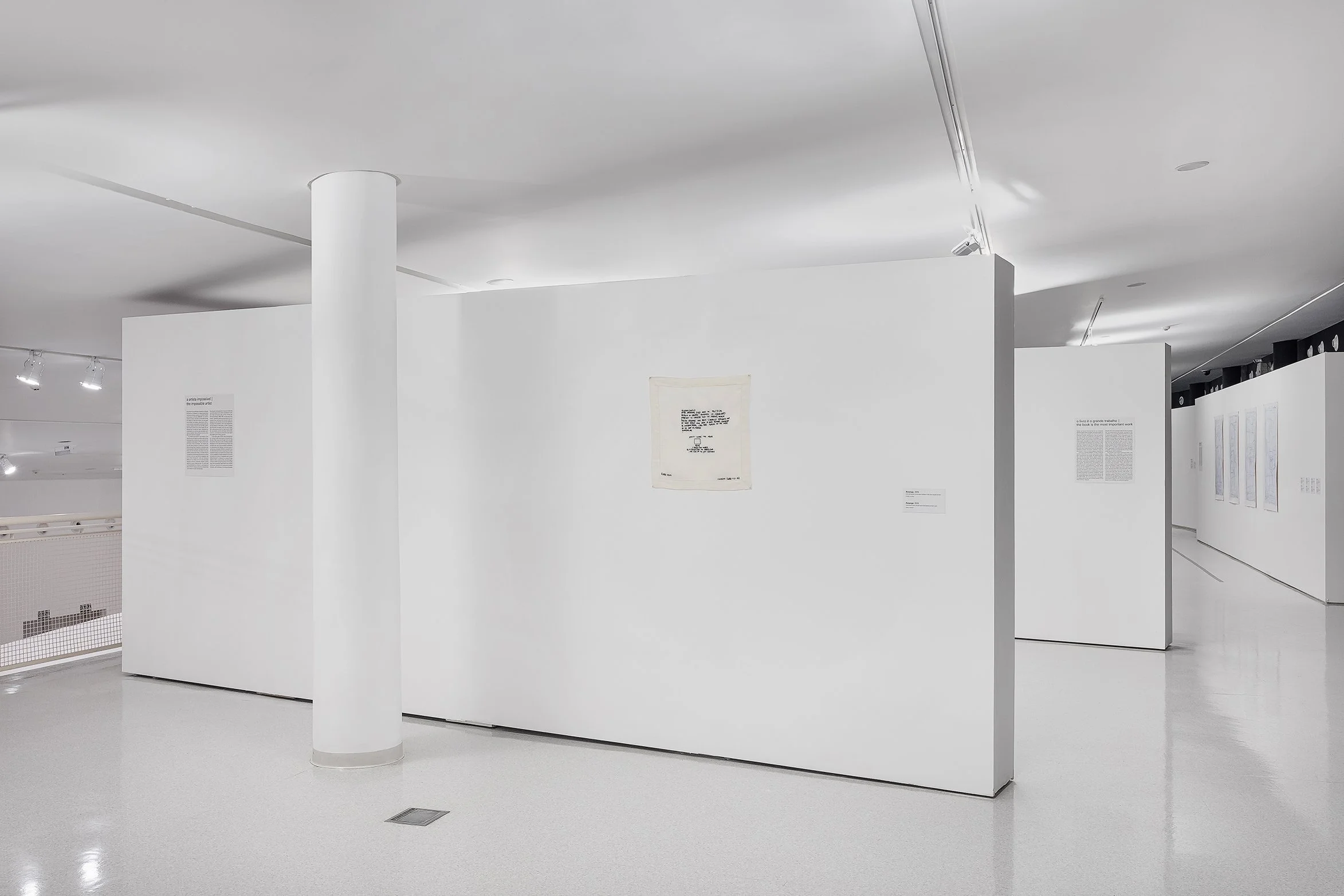
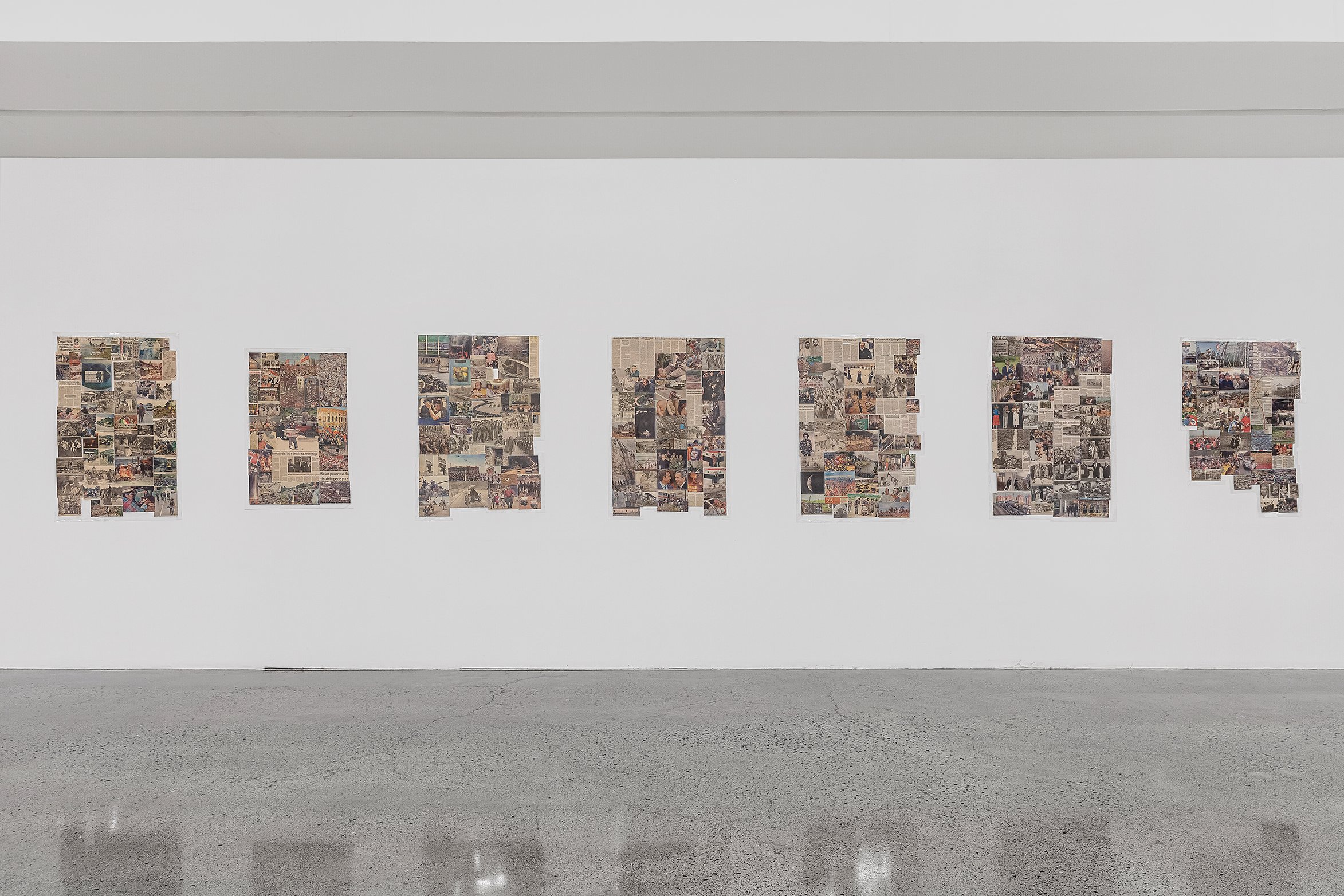
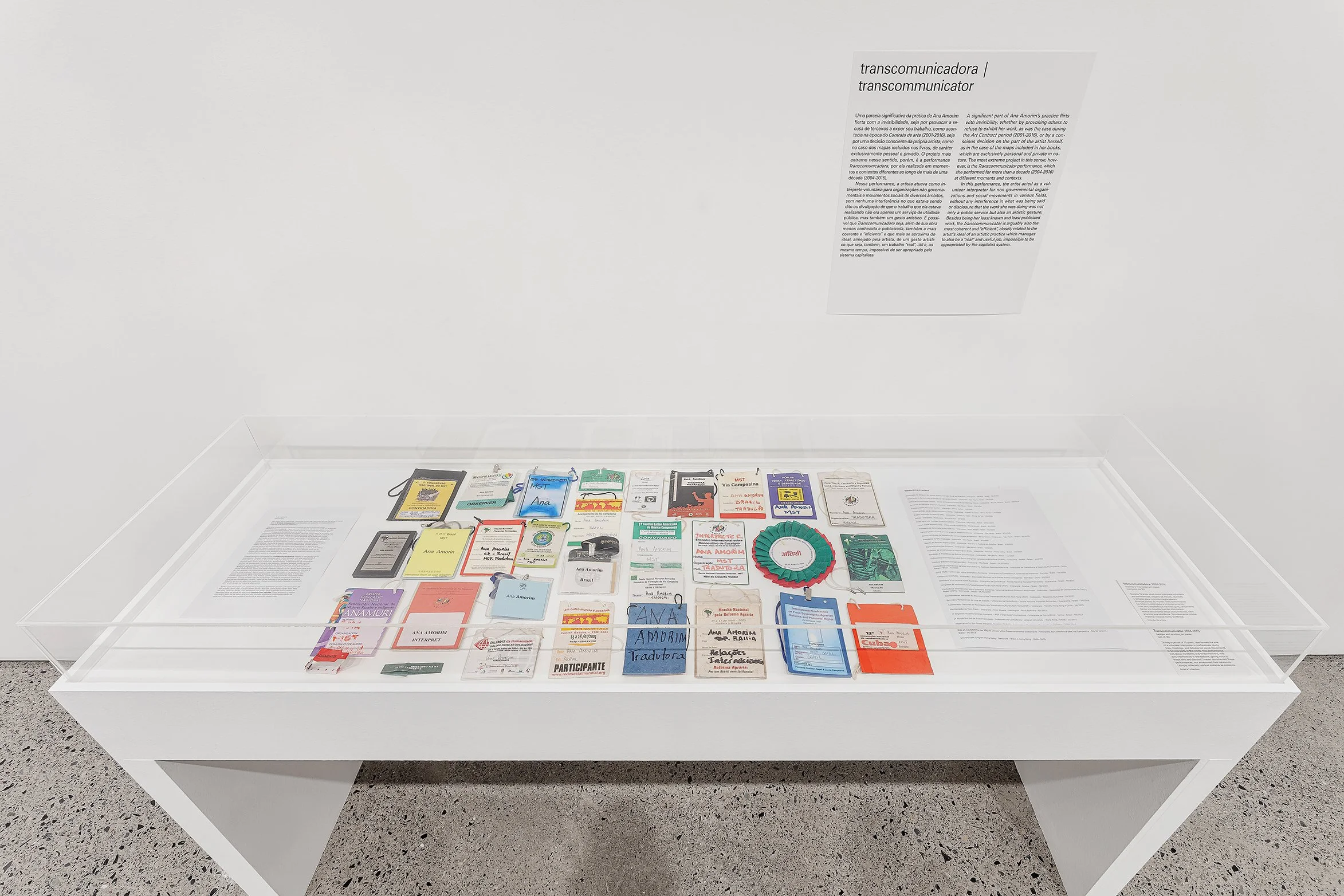
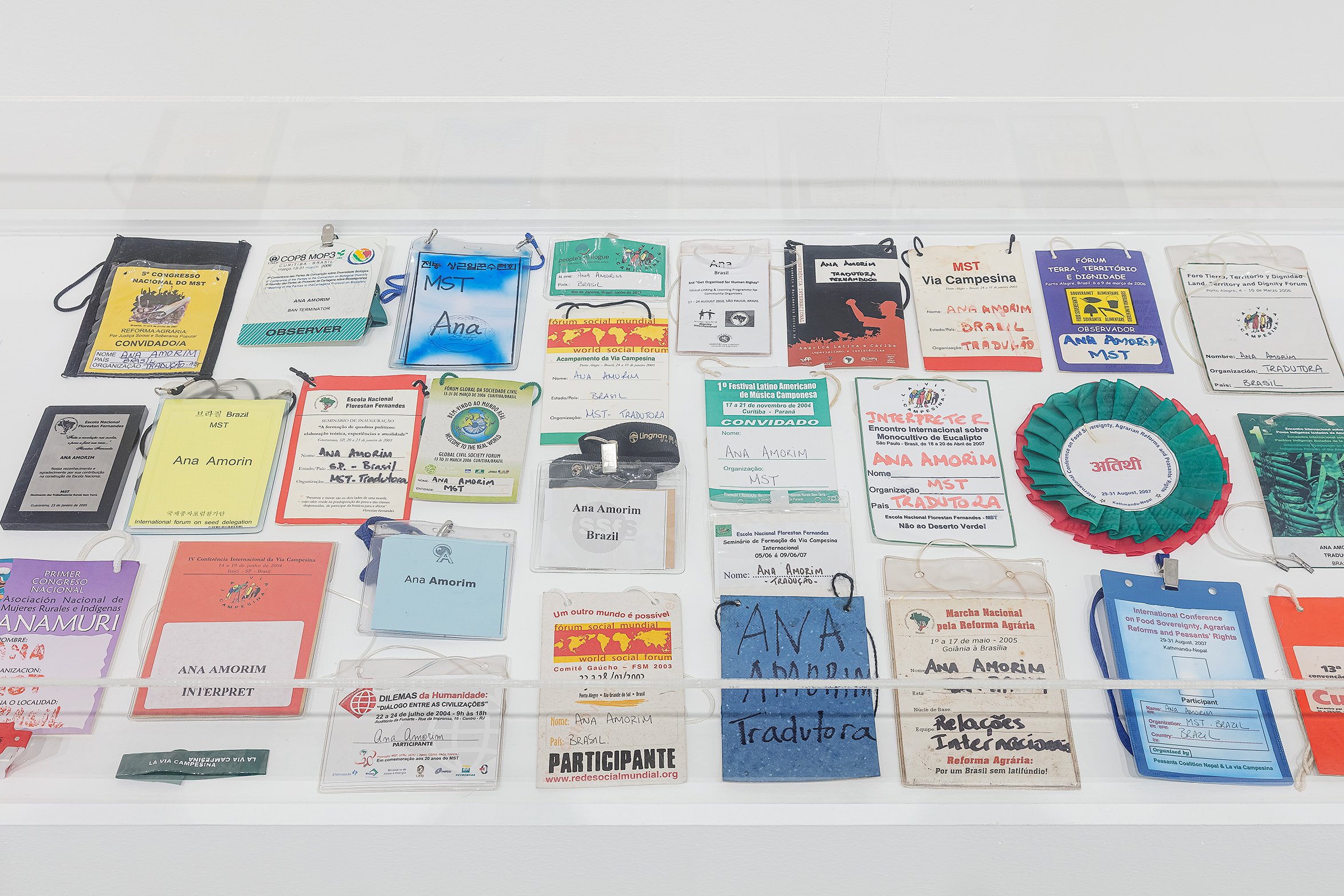
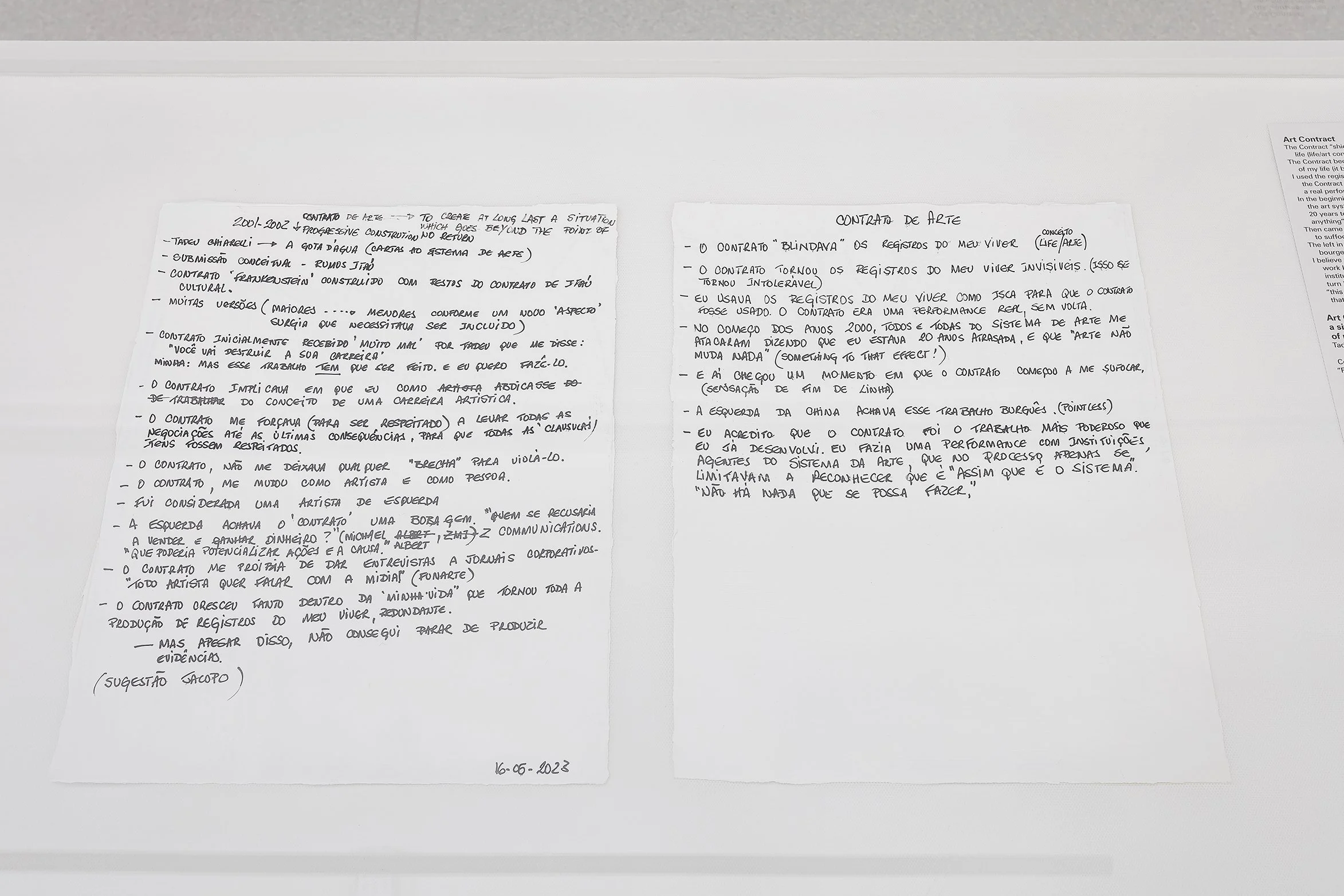
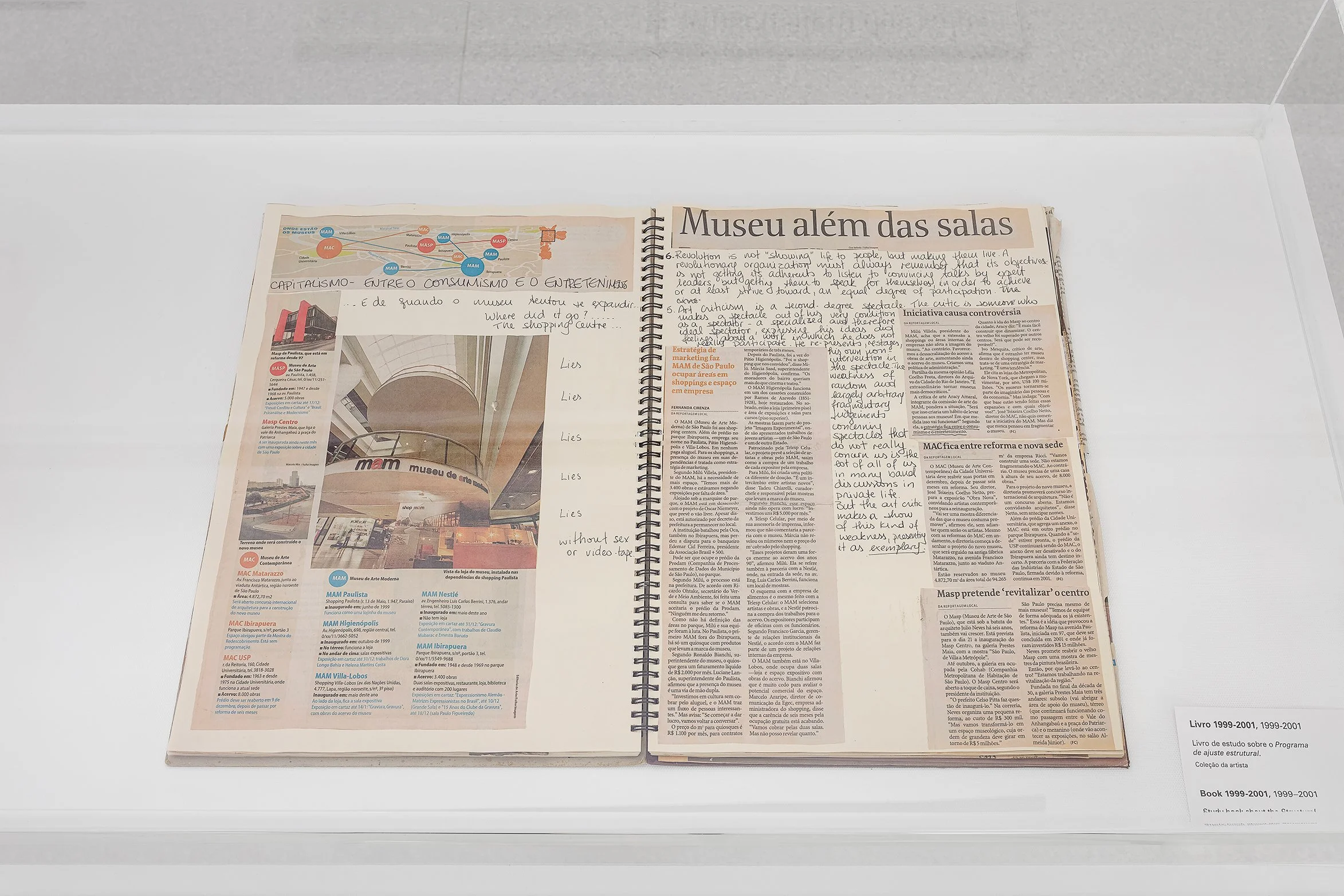
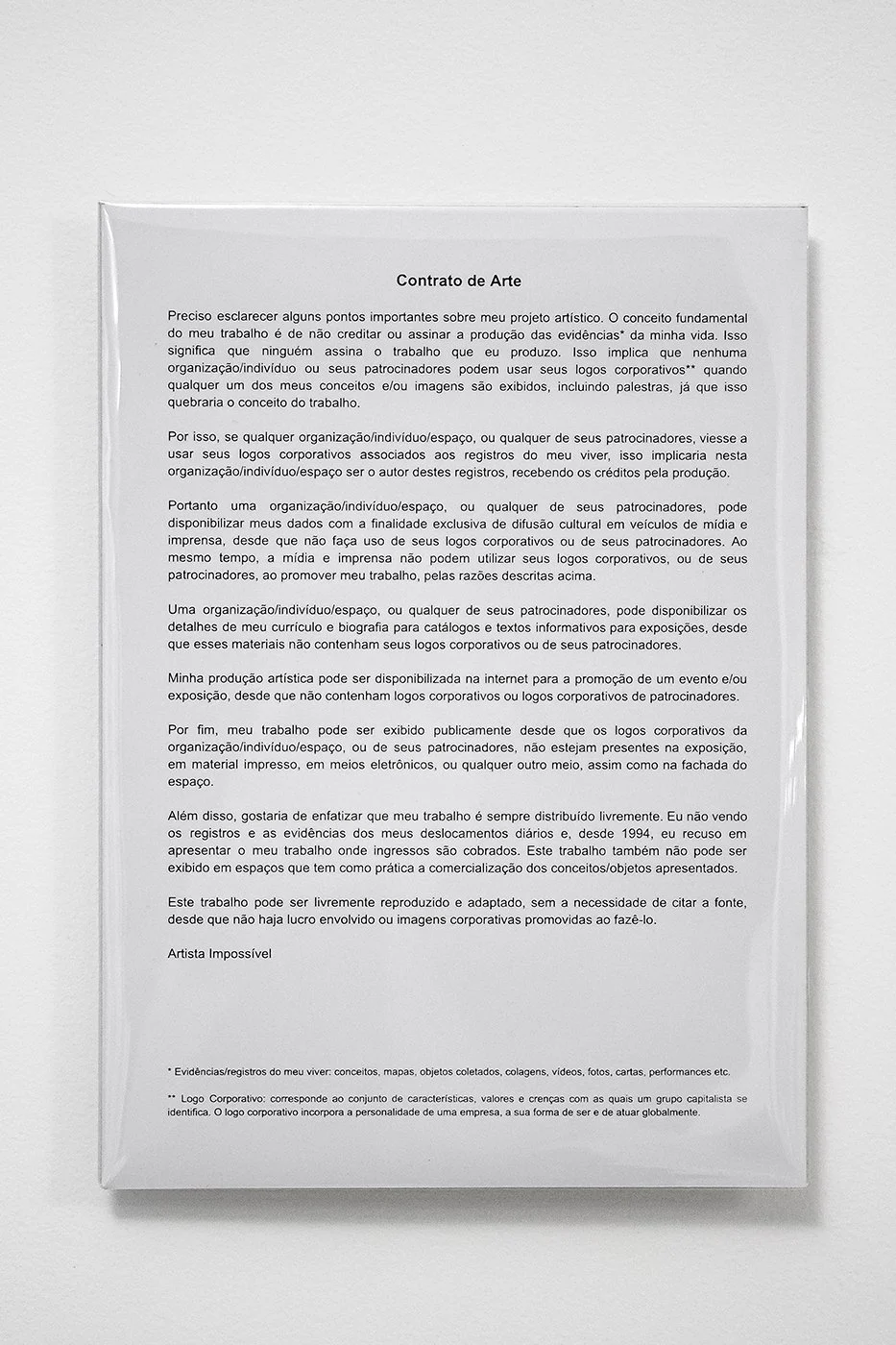
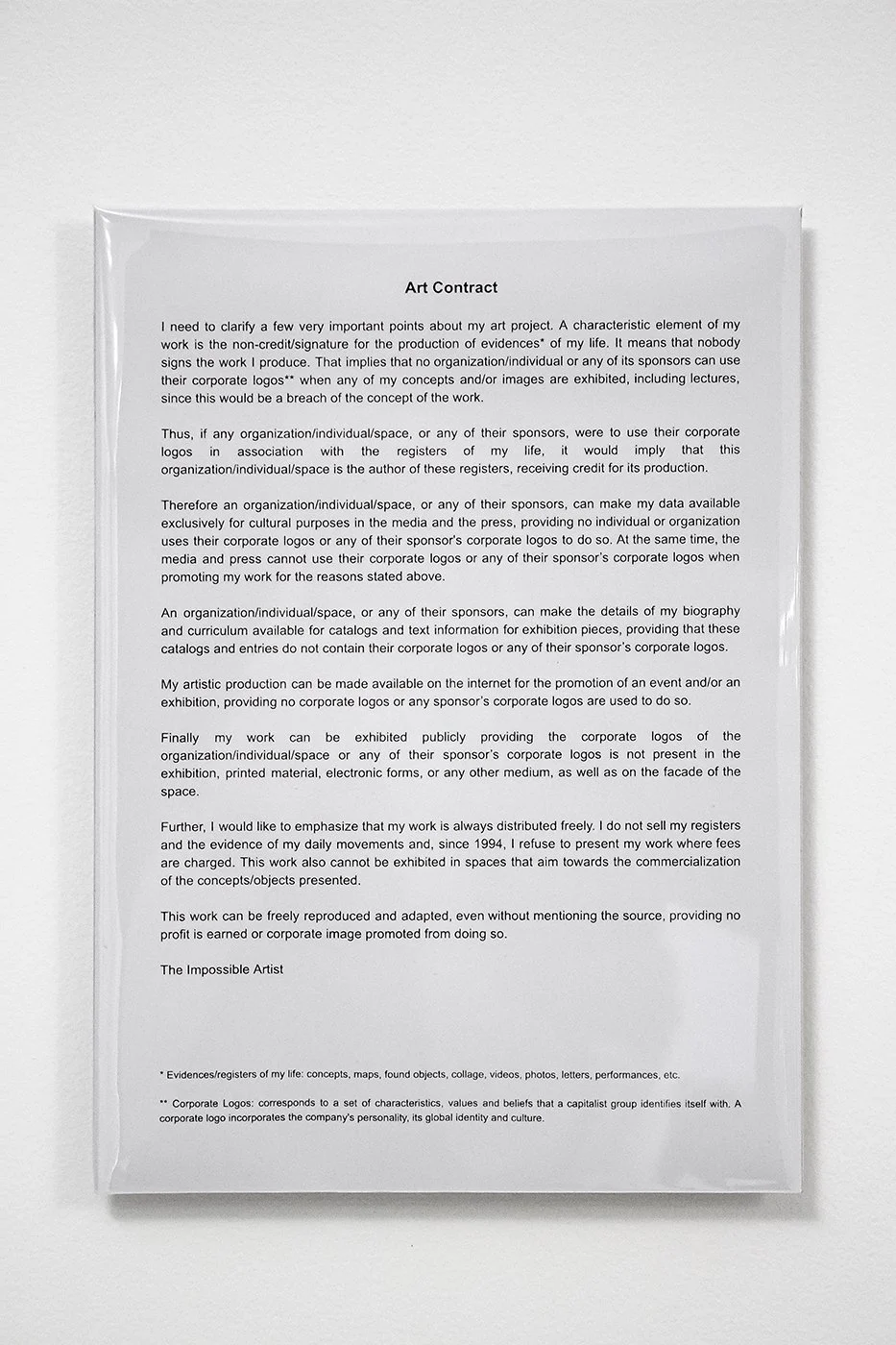
With the exception of the museum's direct expenses, no public resources were used in the production, assembly and maintenance of this exhibition. Everyone who worked on the exhibition was either compensated with works by the artist or paid with funds from the sale of her works. The decision to reveal this strategy does not have to do (only) with the desire to question the mechanisms of cultural funding in the country, but with the fact that, for almost forty years, Ana Amorim's artistic practice and the (in)visibility of her production have been inseparable from her ethical and political stance. Until a few years ago, she refused to exhibit in commercial venues, to sell her works, or to take part in exhibitions sponsored by private companies, because she believed that a work of art does not belong to anyone, cannot be appropriated and should not be phagocytized by the capitalist system. If her work is still relatively little known, even among professionals in the field, it is because over the decades she chose, time and time again, to follow only the paths that seemed right to her, even though she knew that this would limit the scope that the work could have, or even completely exclude the possibility of its circulation.
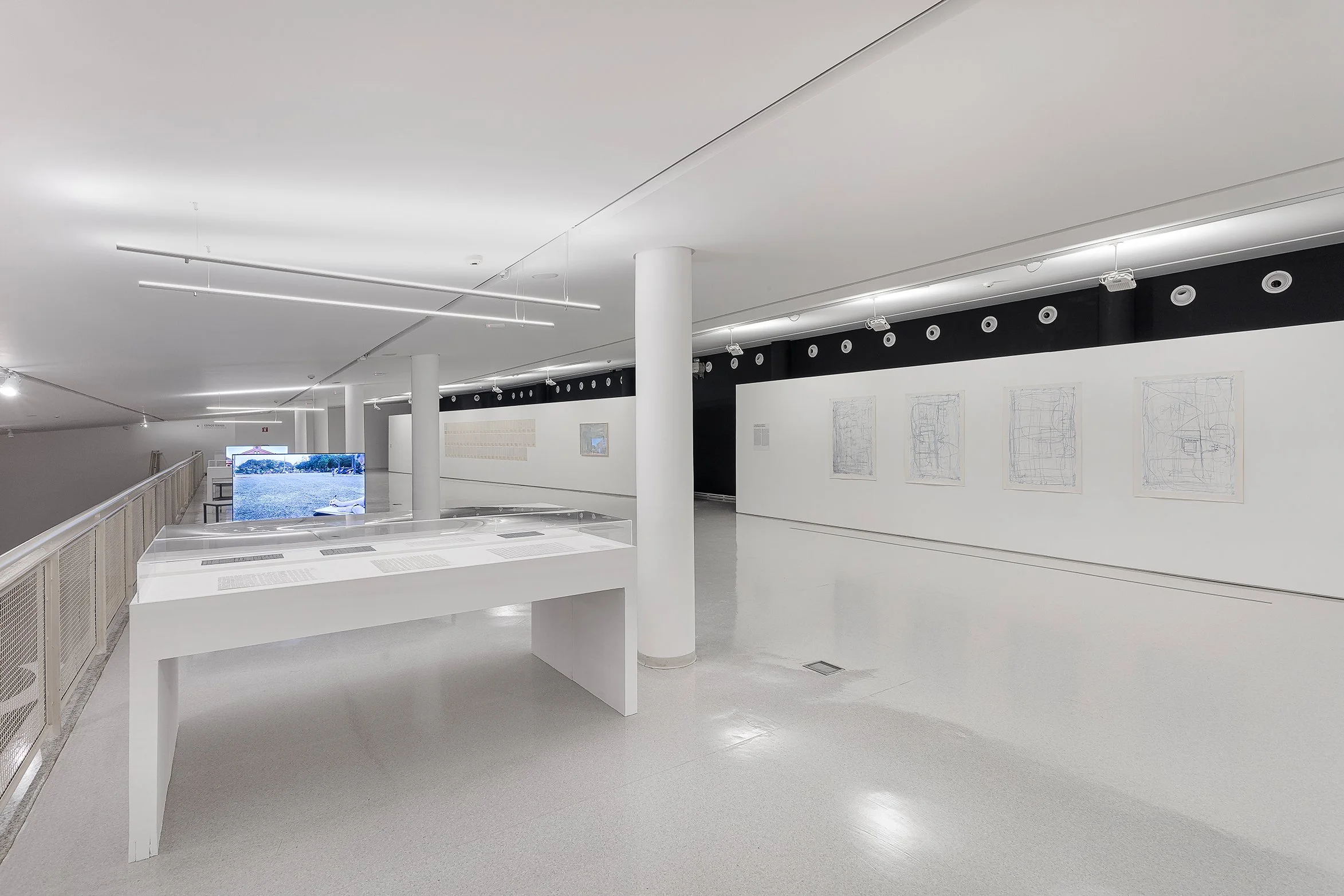
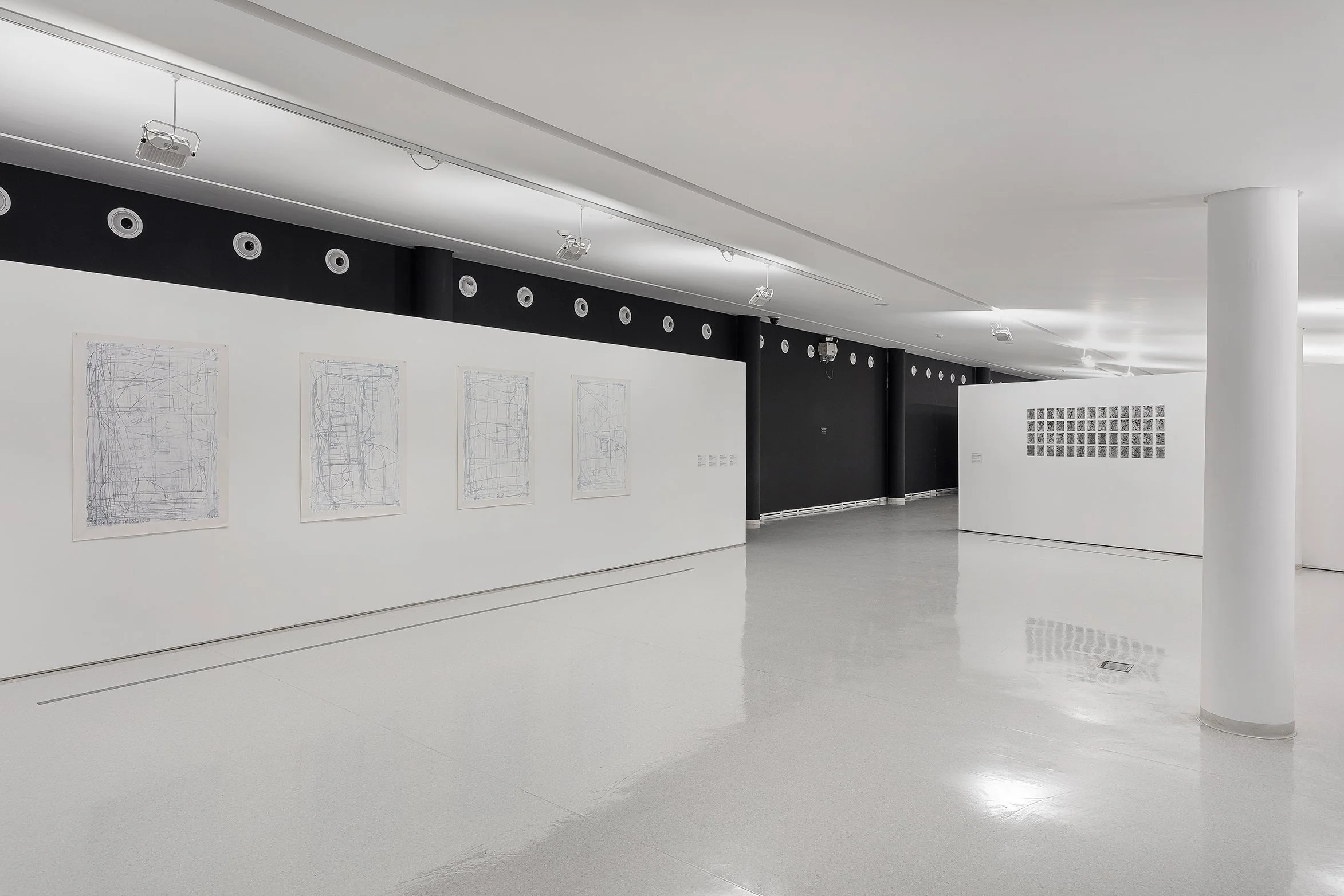
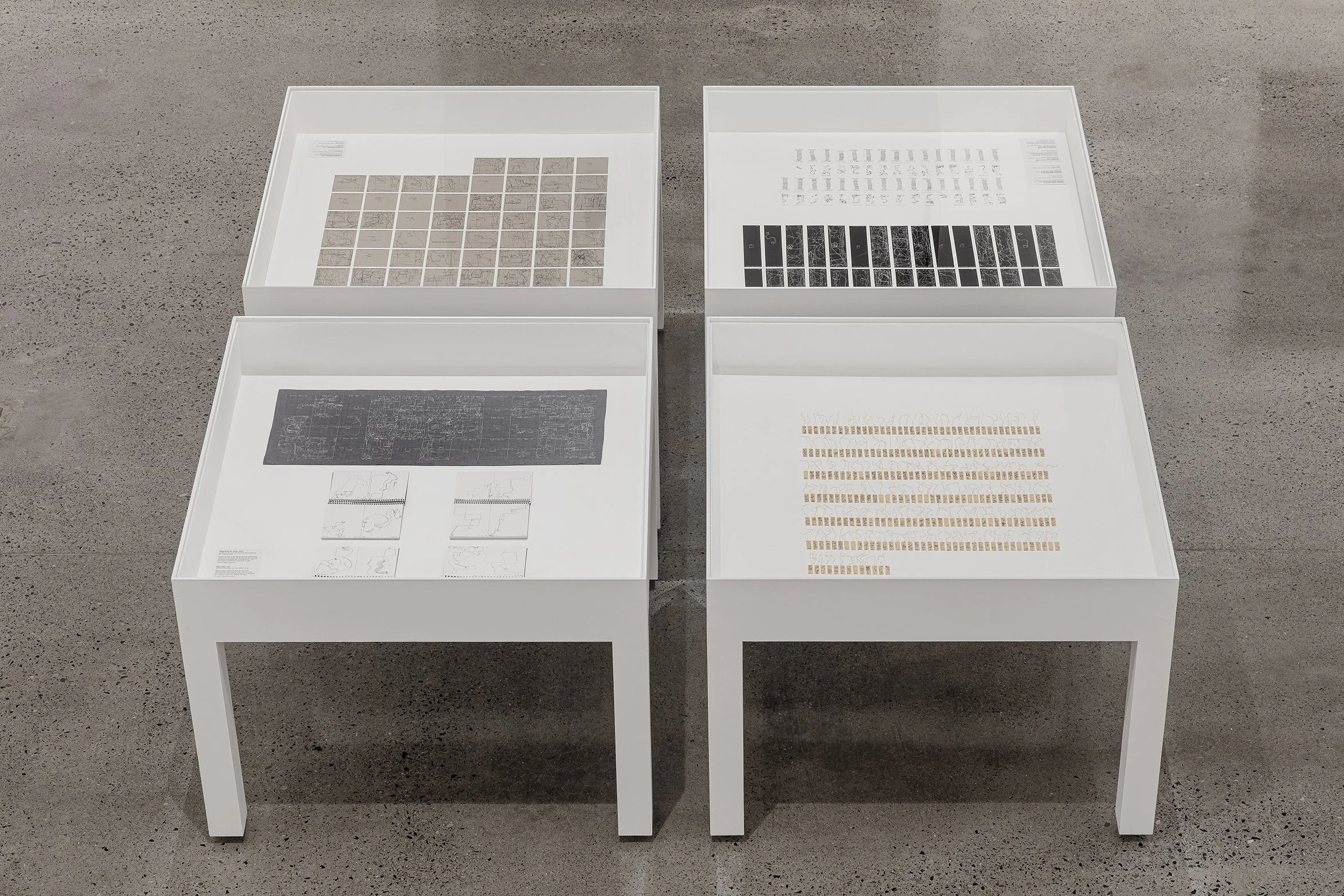
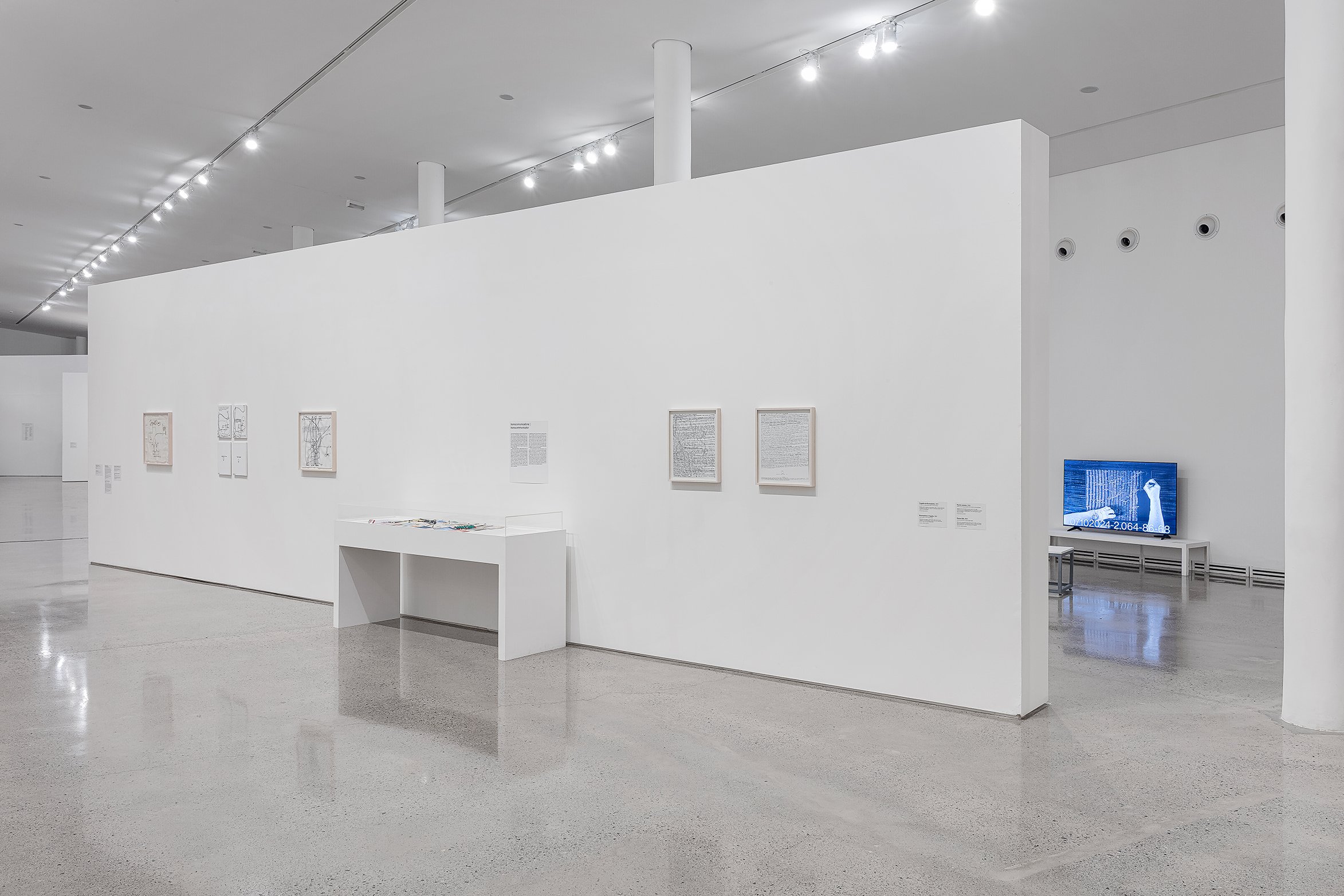
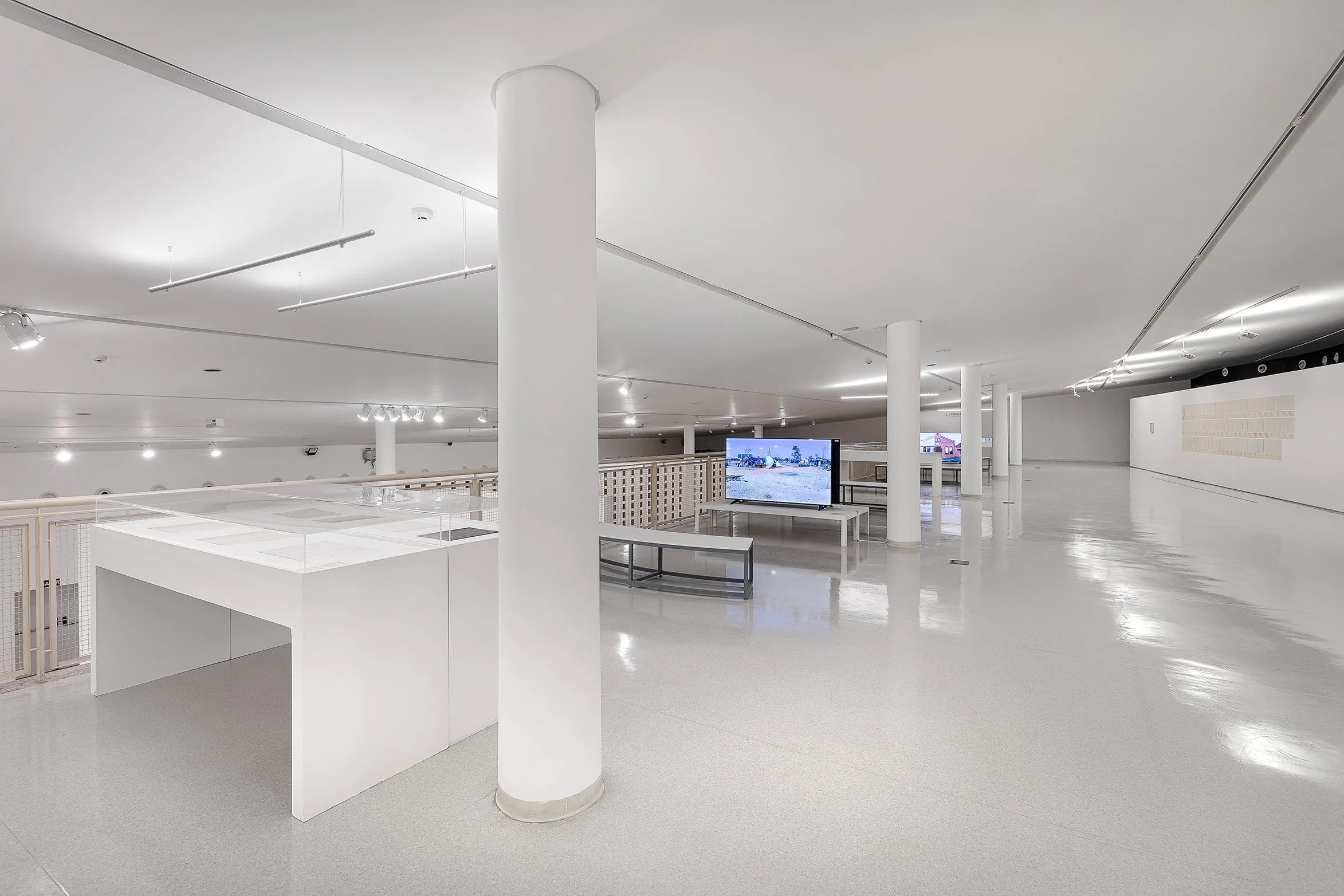
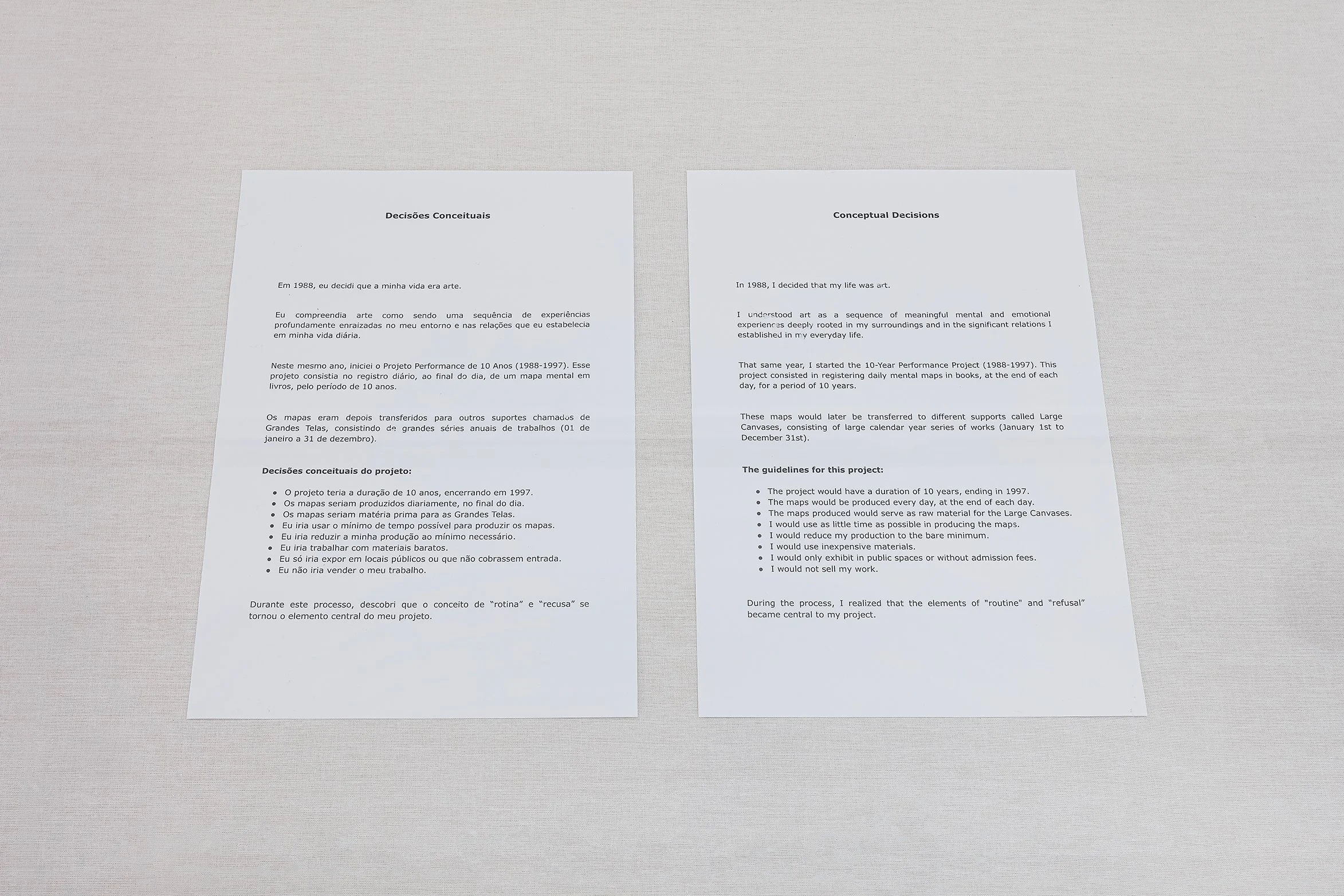
In the artist's conception and universe, she and her production are inseparable. Her life is art. Her art is not a representation of life, it is life itself. This can help us understand why the decisions she made, even if they seemingly had no relation to the work itself, are actually an integral part of it. Some of these decisions are described in the texts that highlight the exhibition, addressing specific issues that the groupings of works reveal. Others emerge with enough clarity from the works on the walls and in the showcases. Others, still, might remain submerged in the gigantic mass of work that Ana Amorim's practice condenses. This is part of the game, as in everyone's life: there are more things in heaven and earth than our philosophy can conceive or understand.
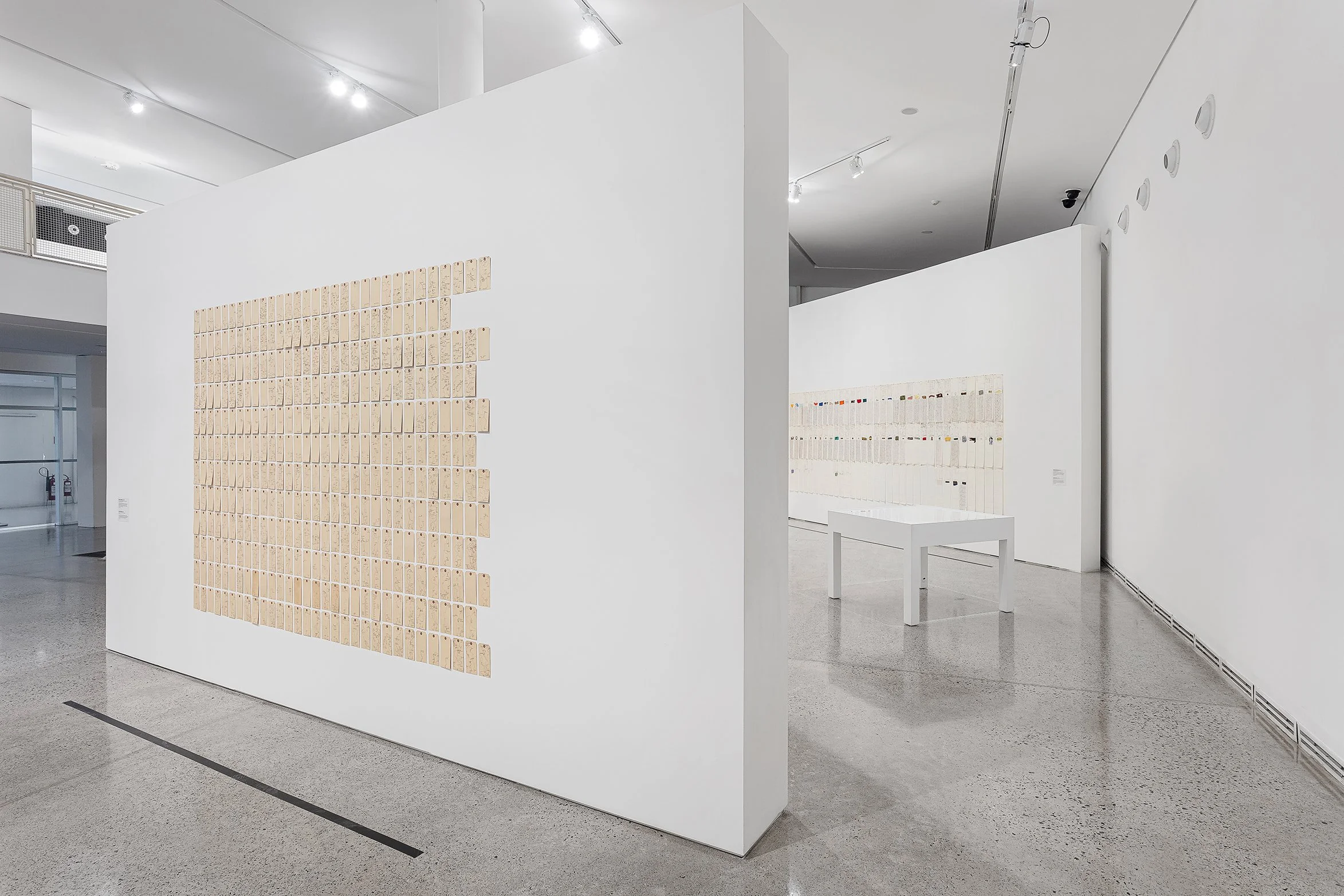
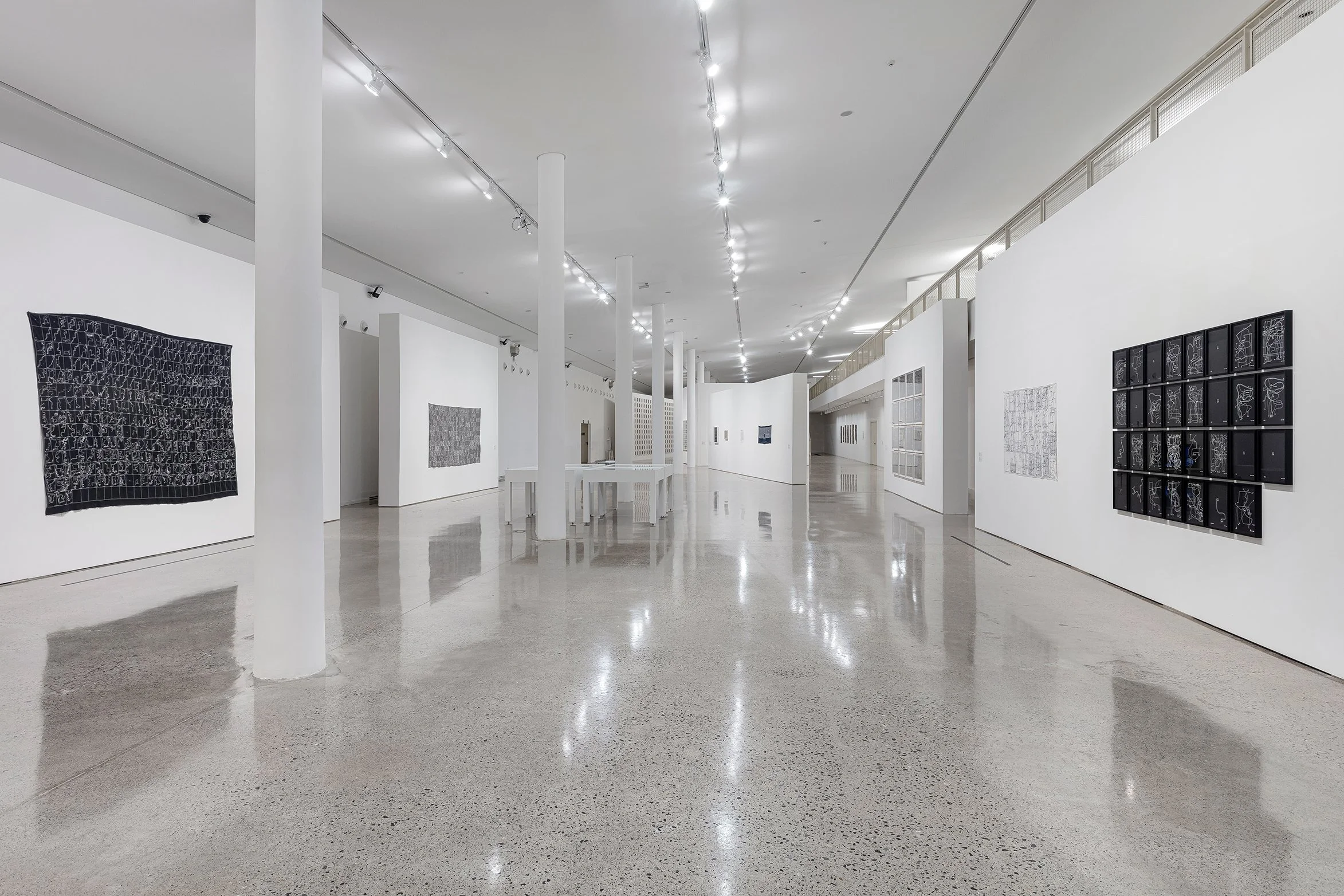
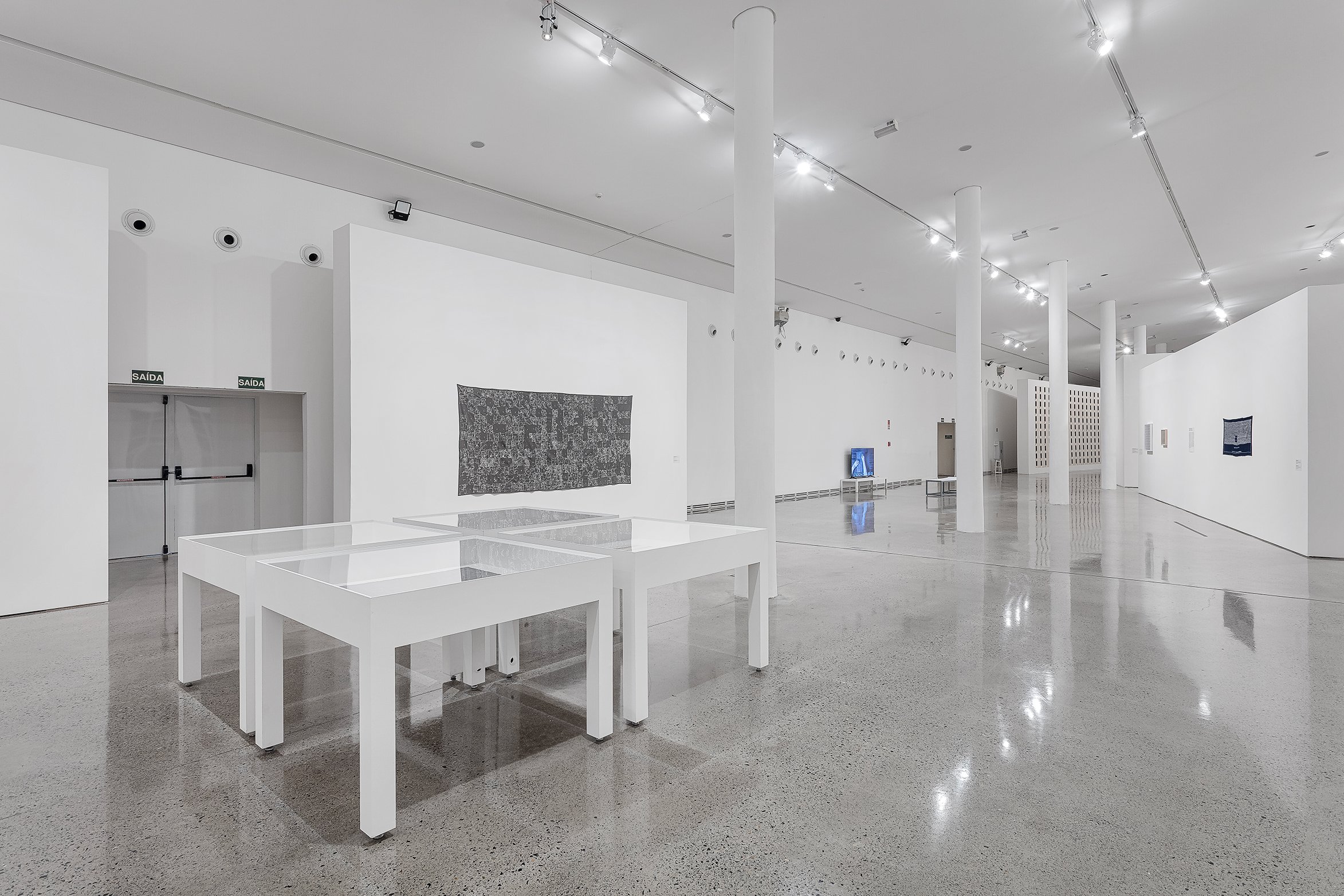
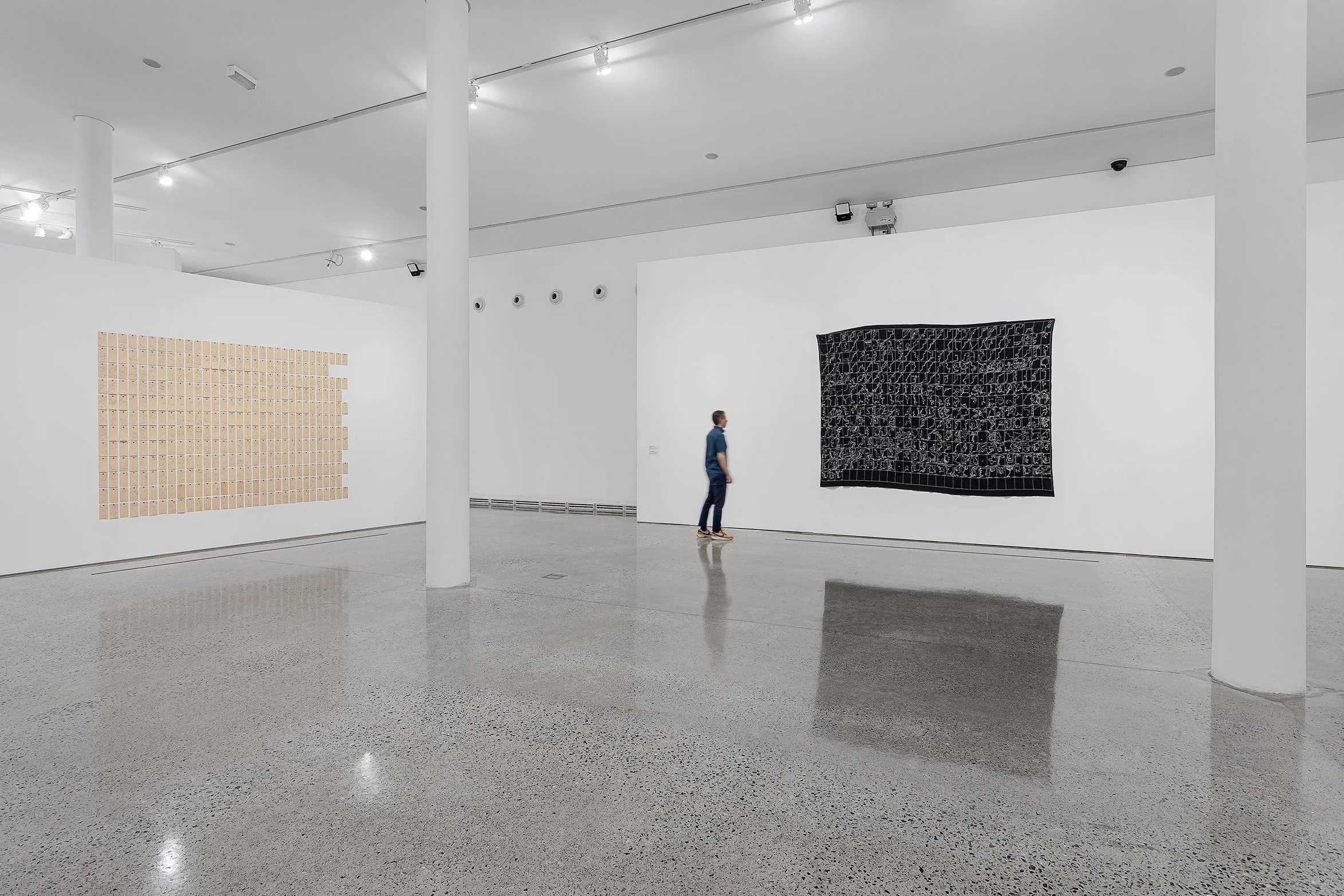
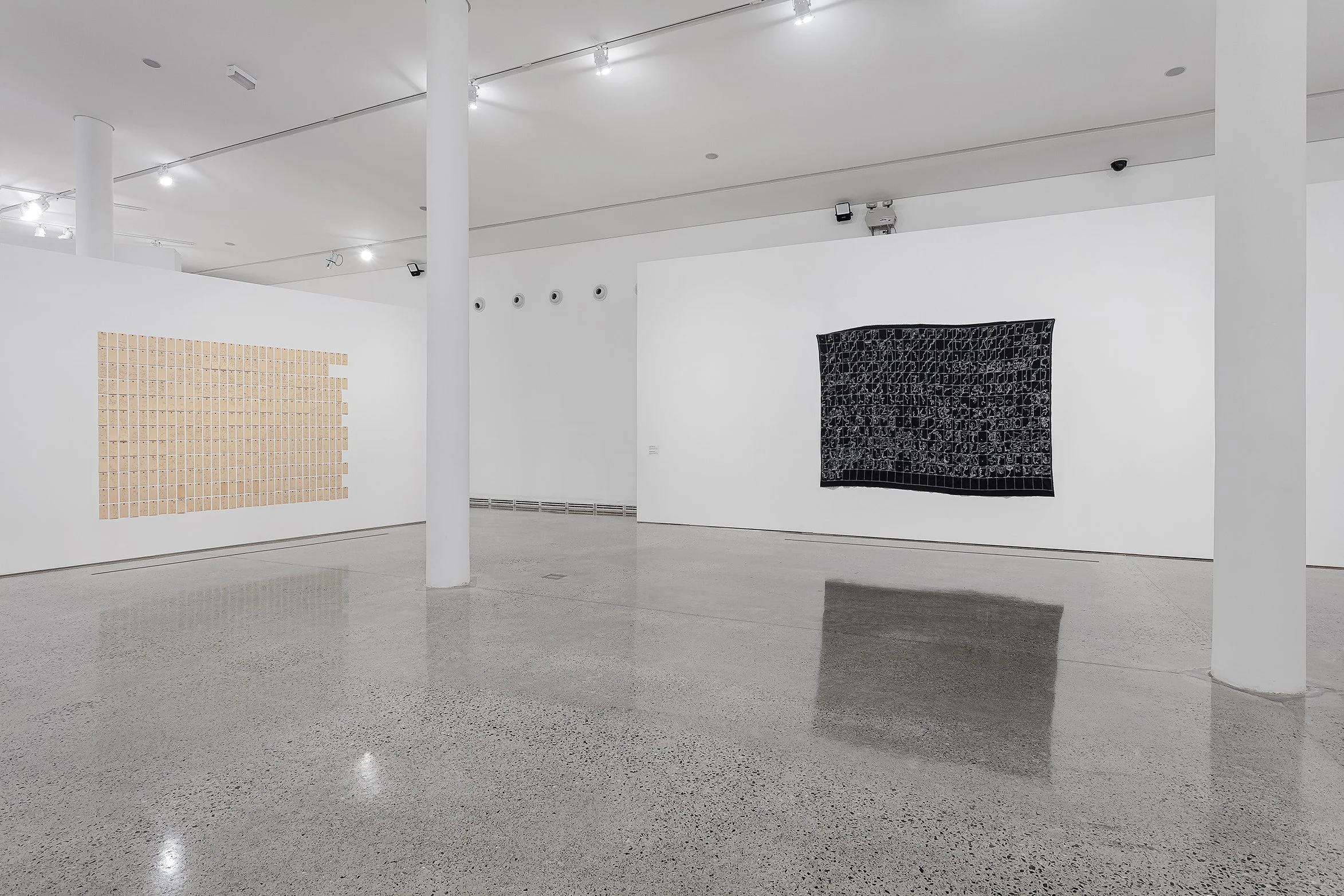
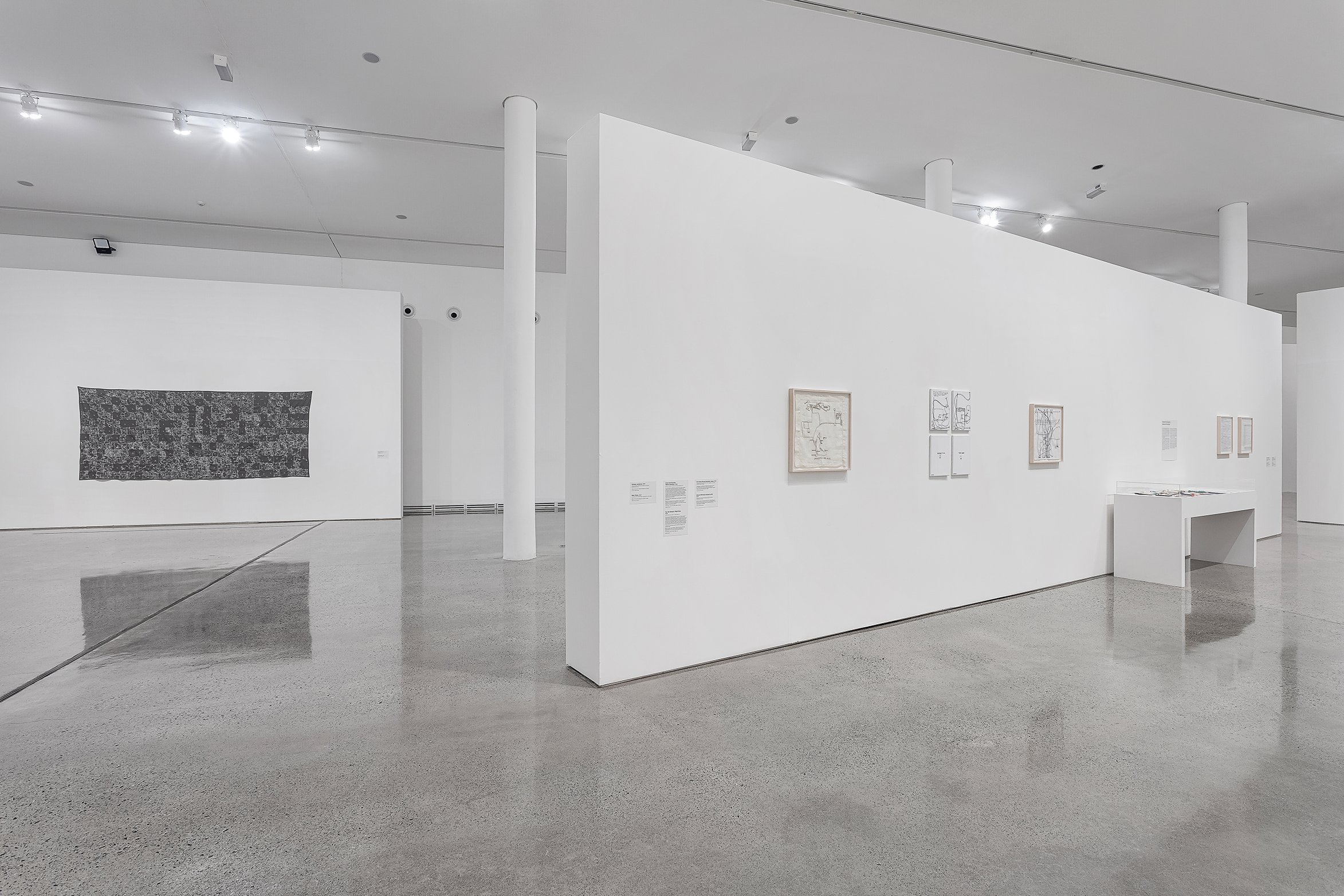
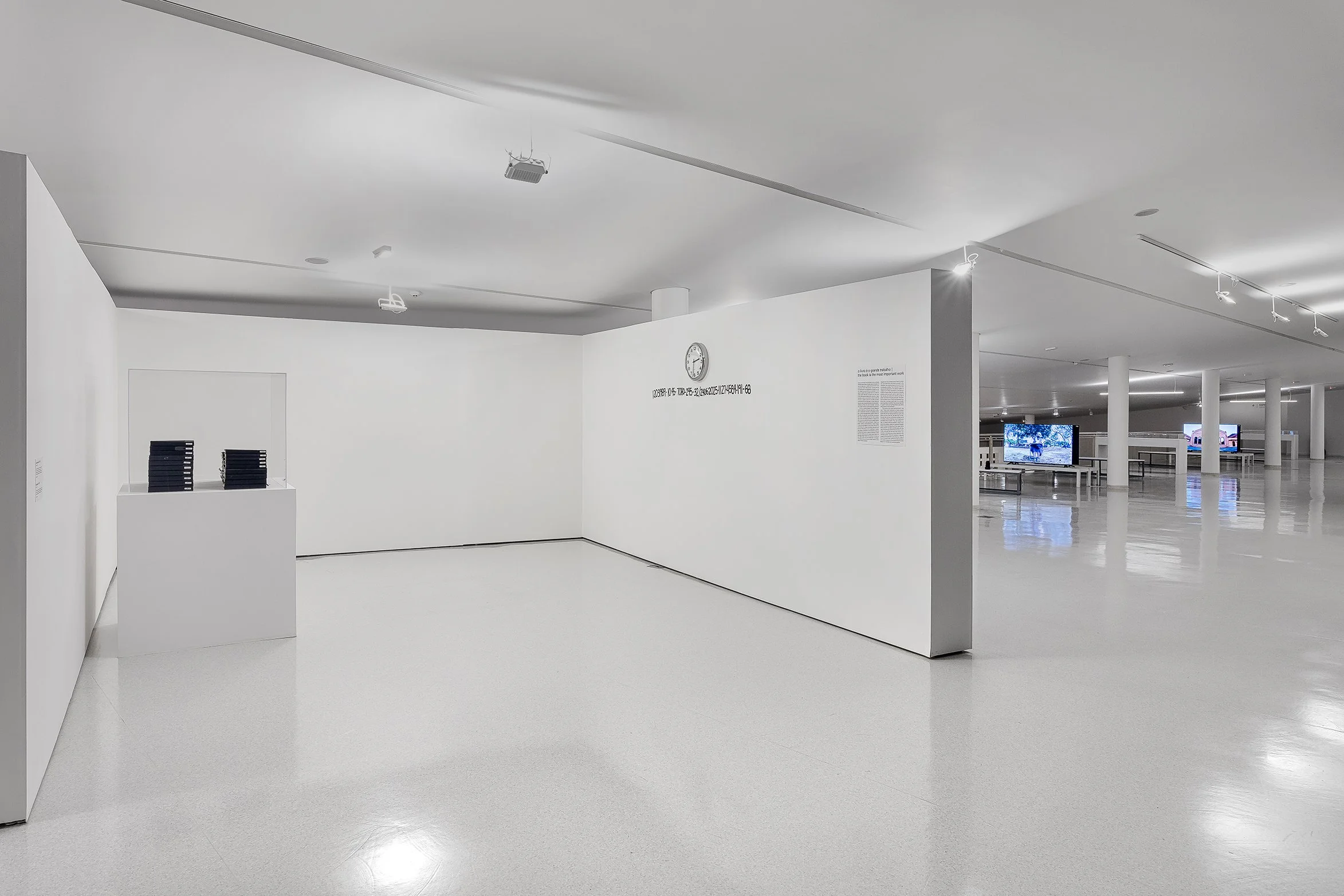
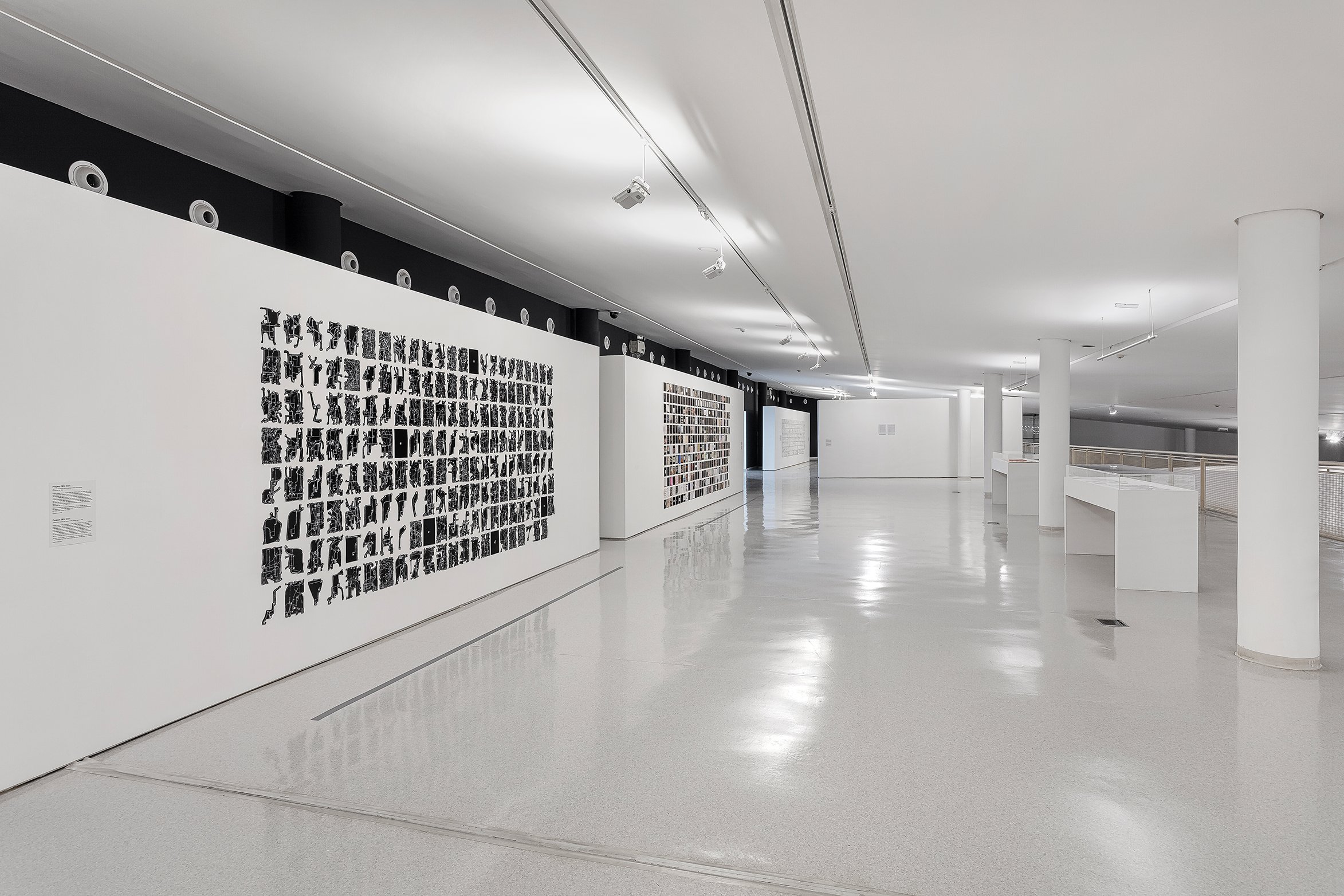
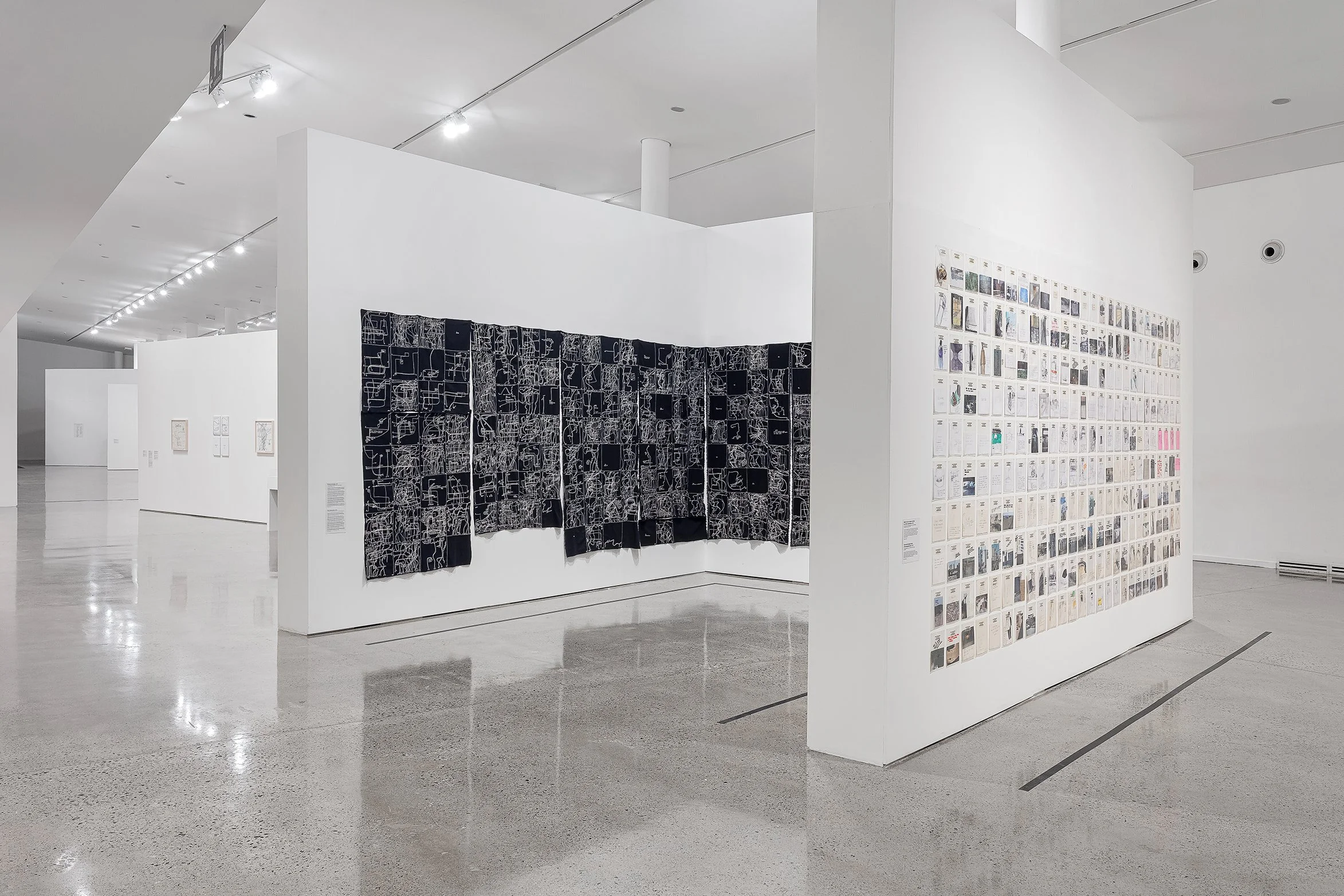
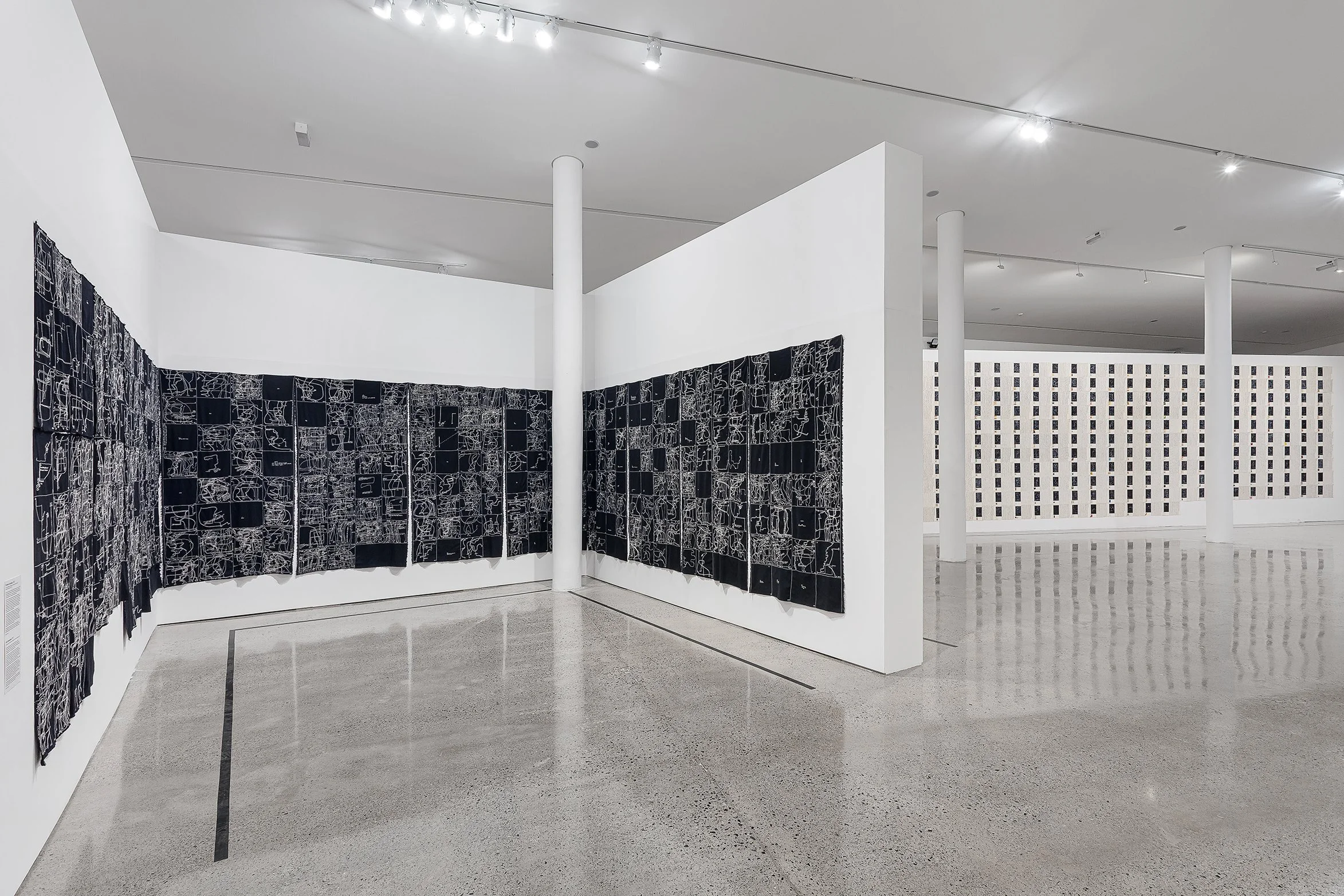
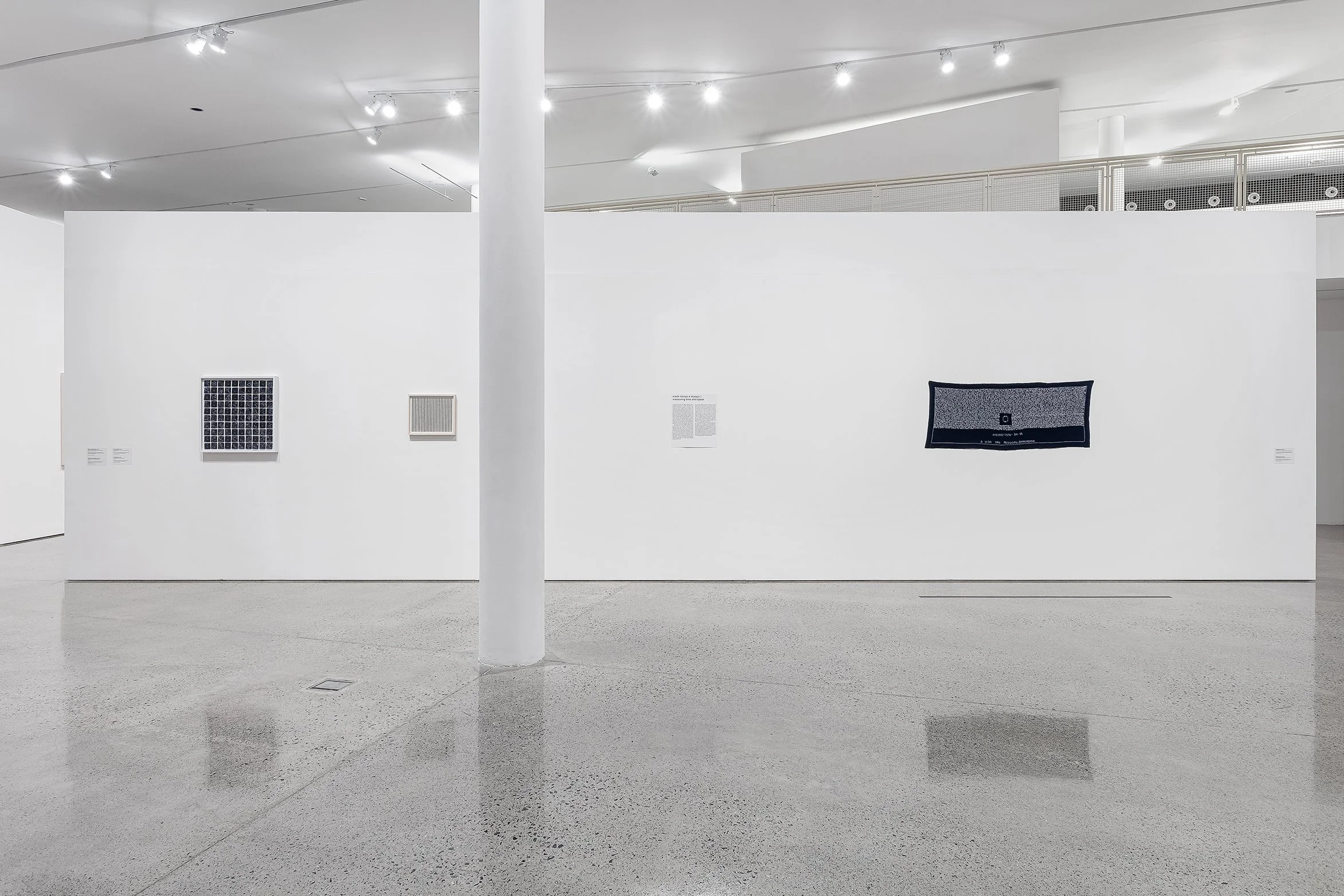
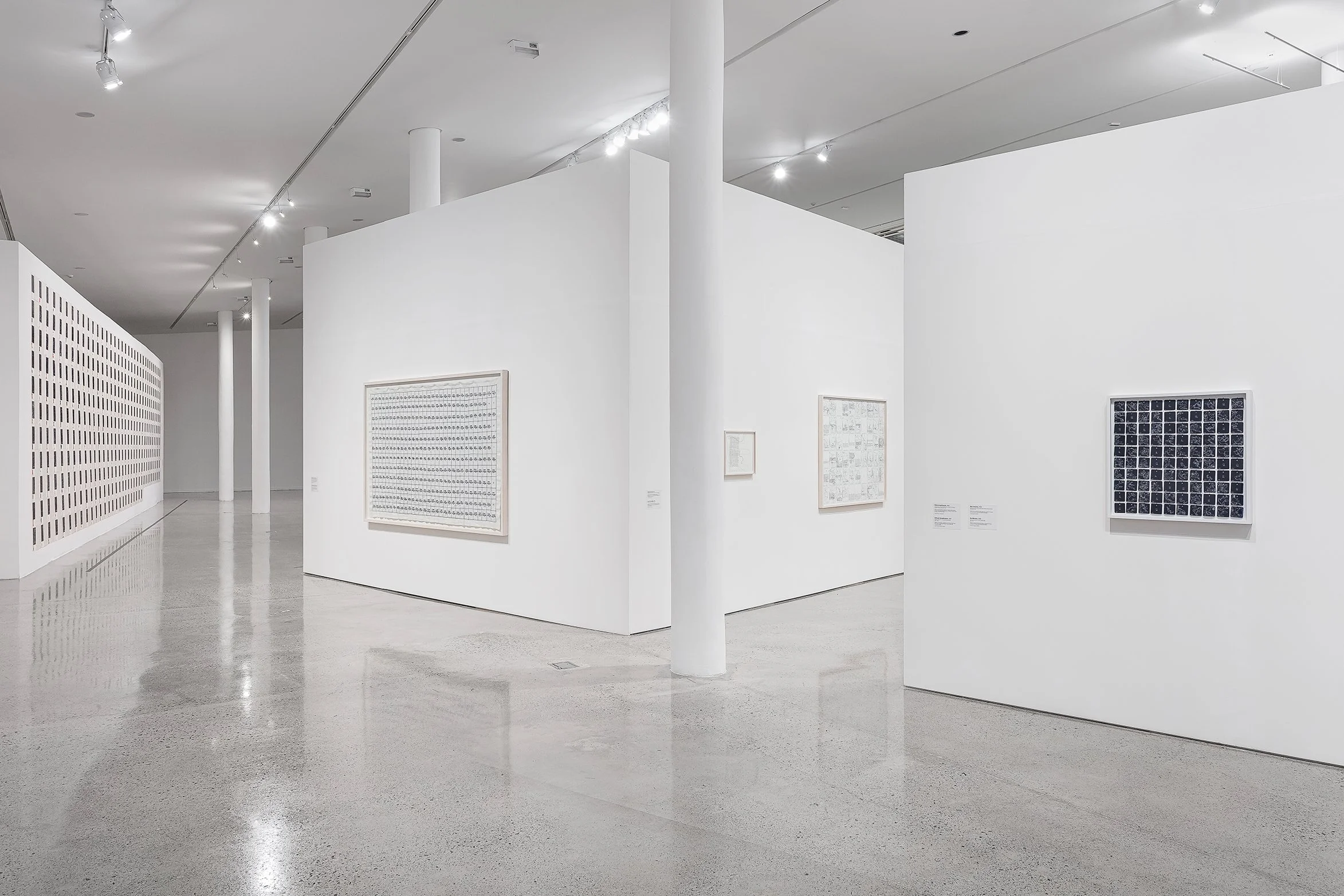
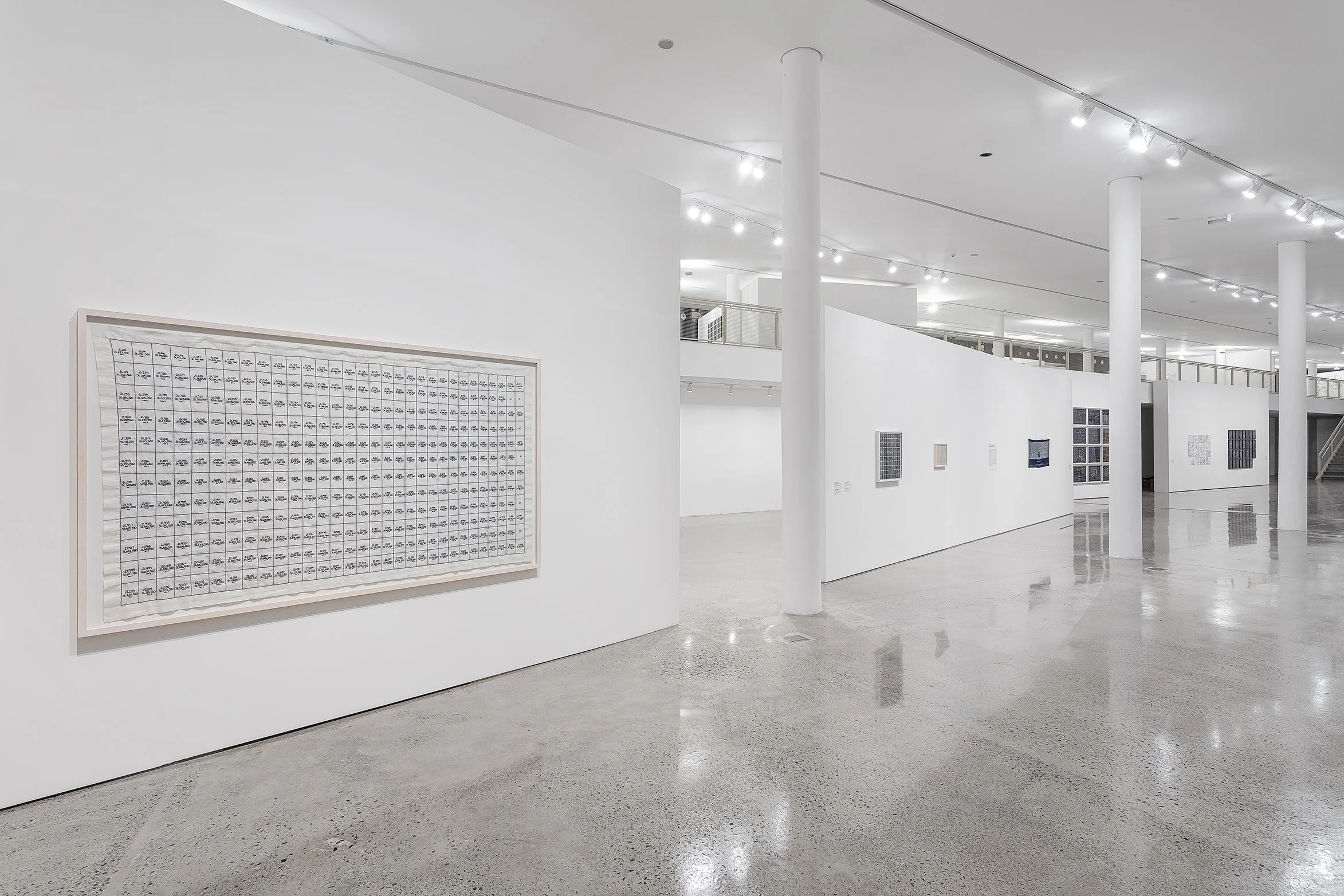
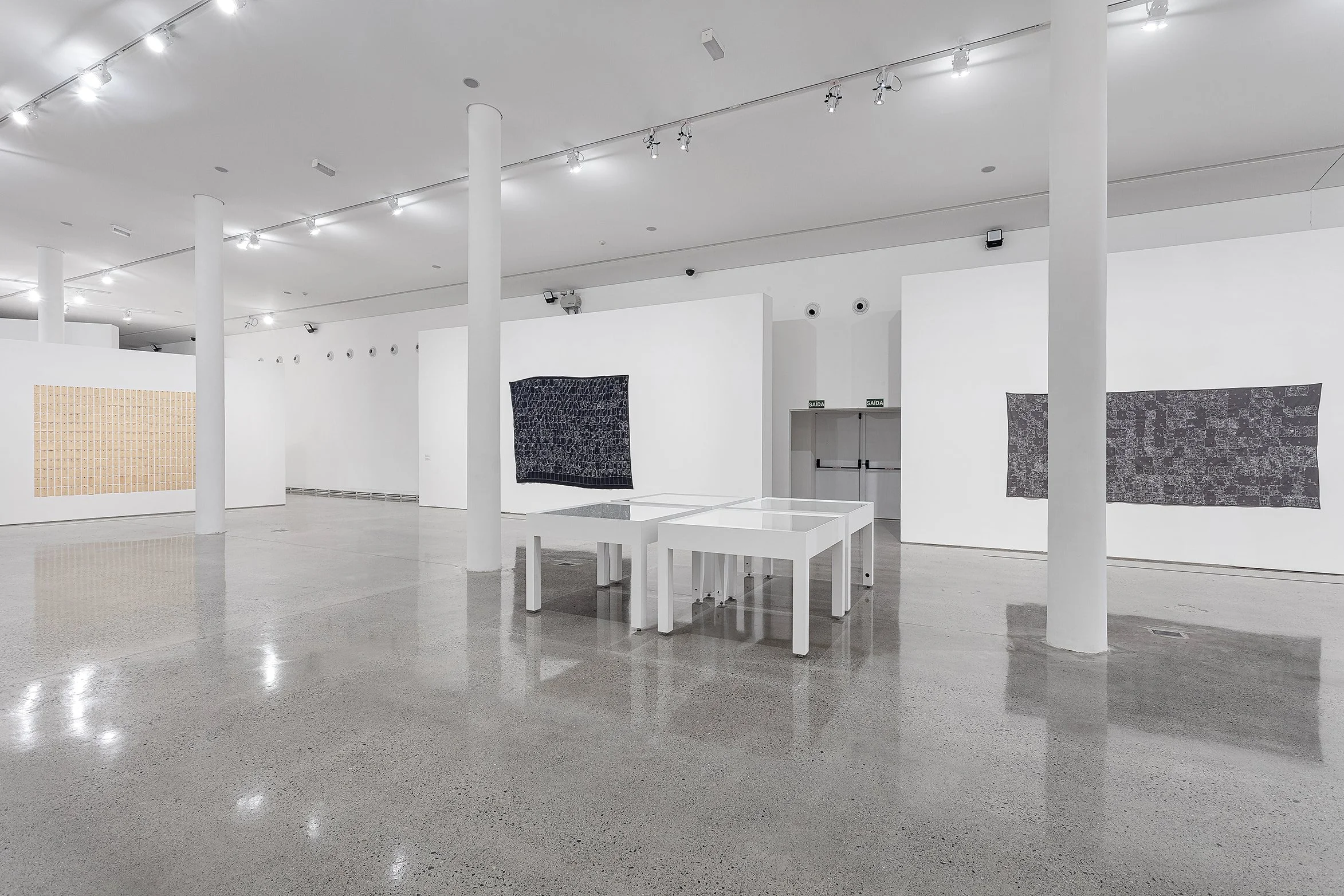
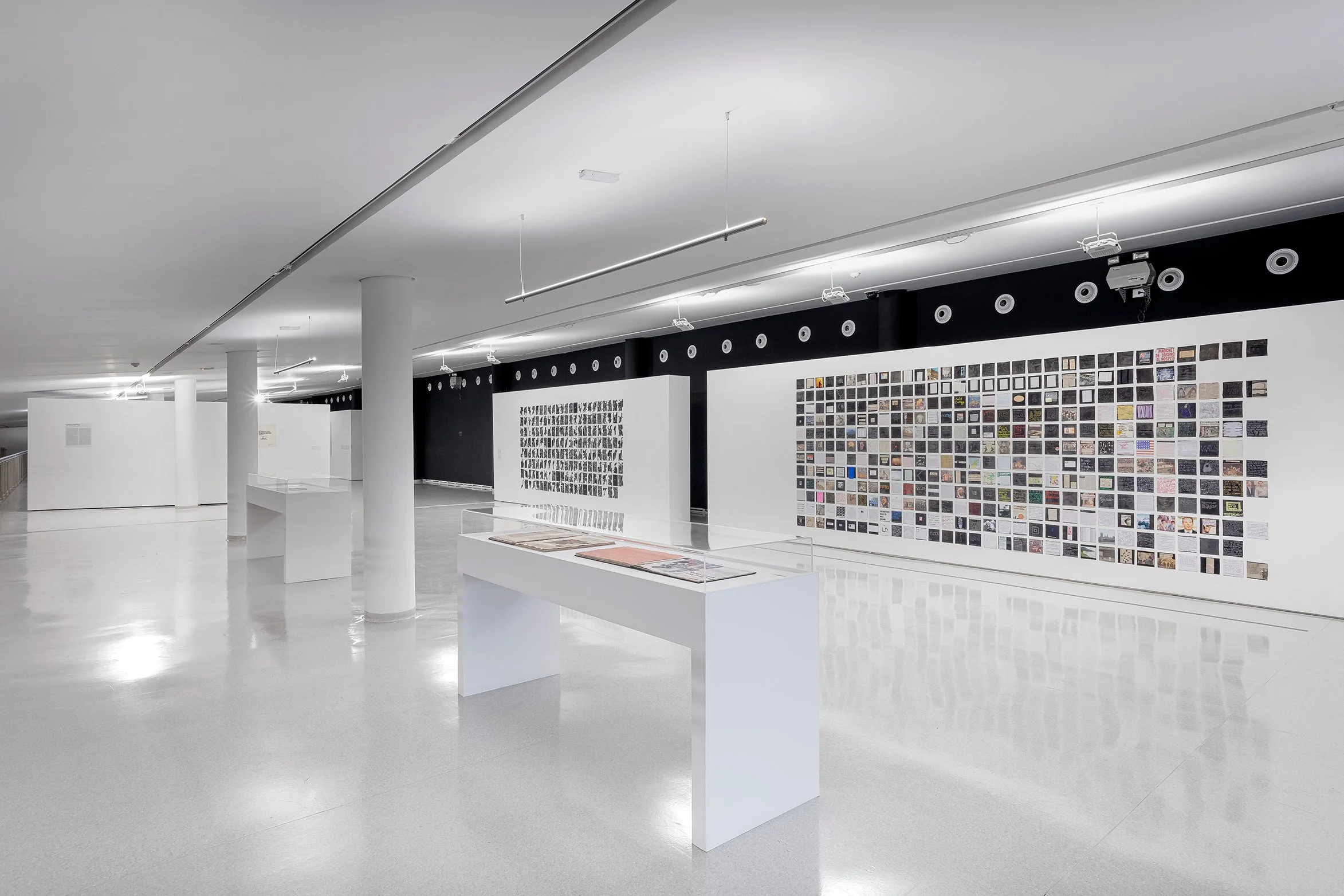
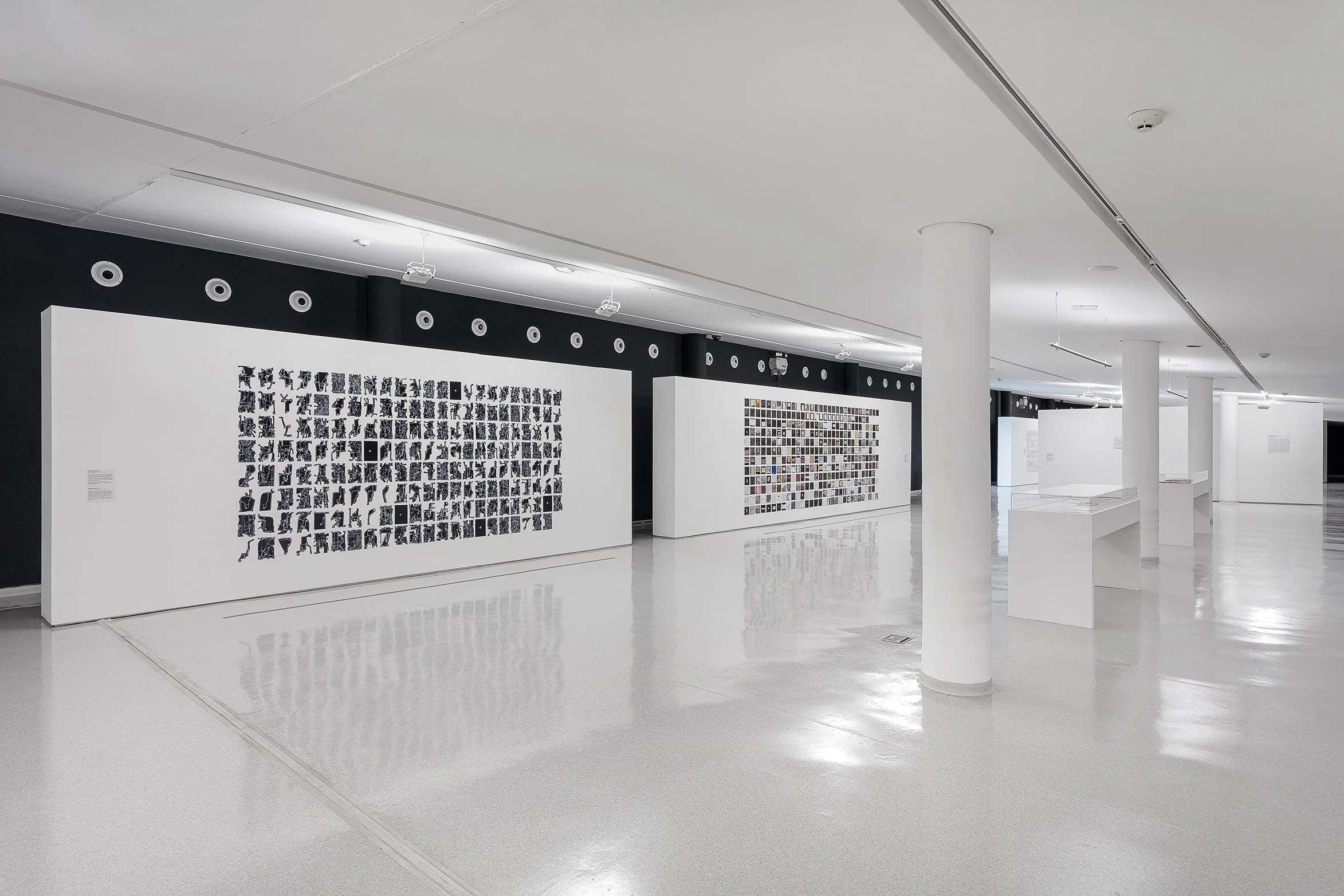
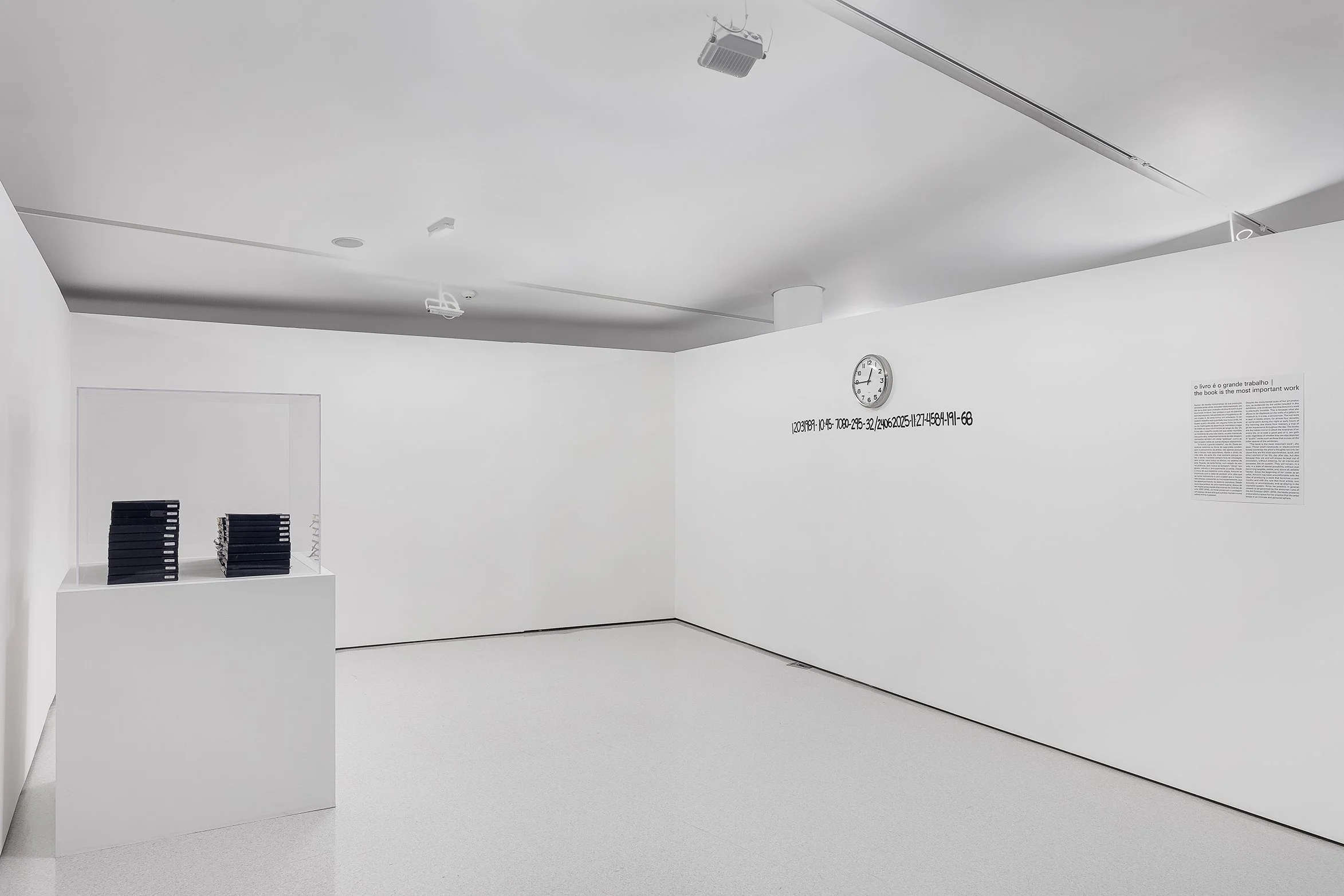
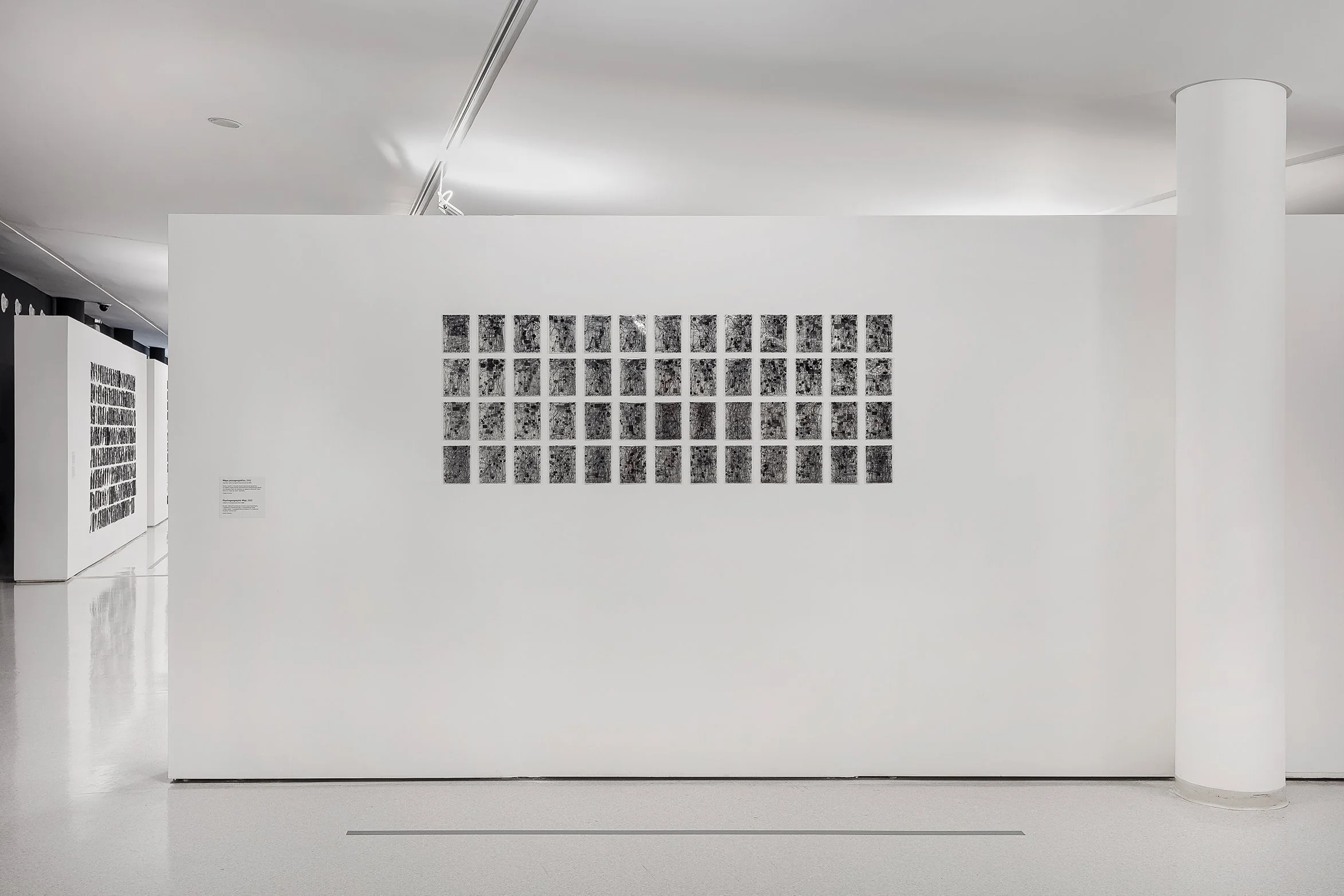
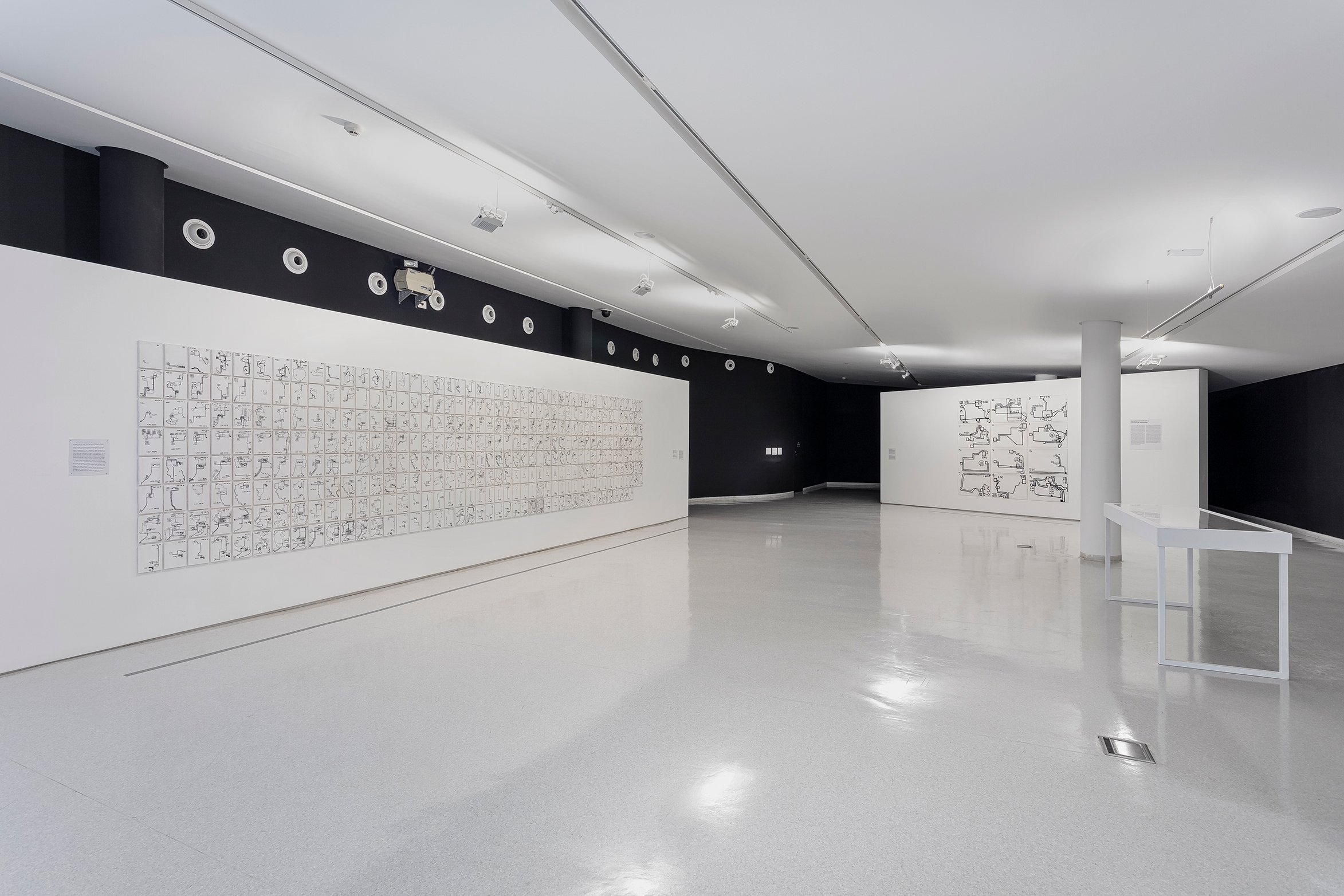
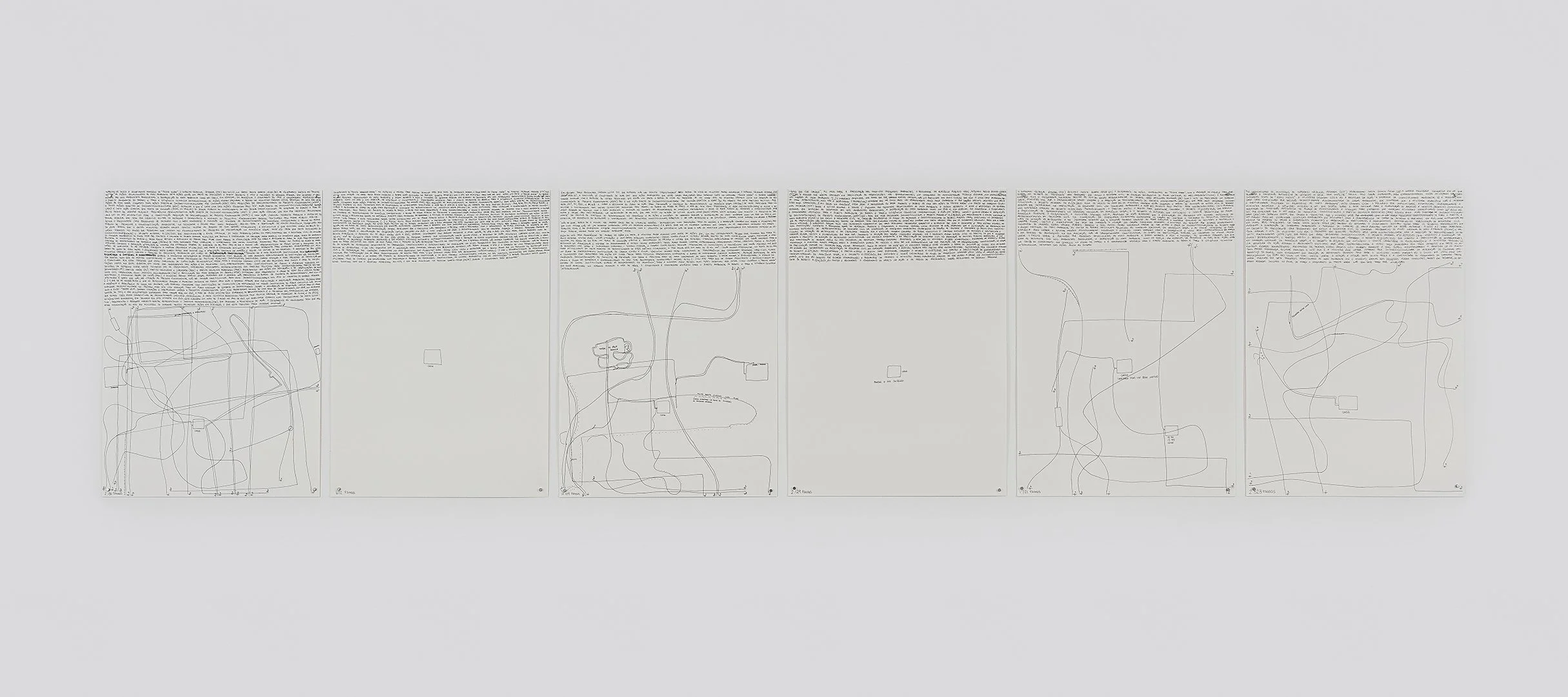
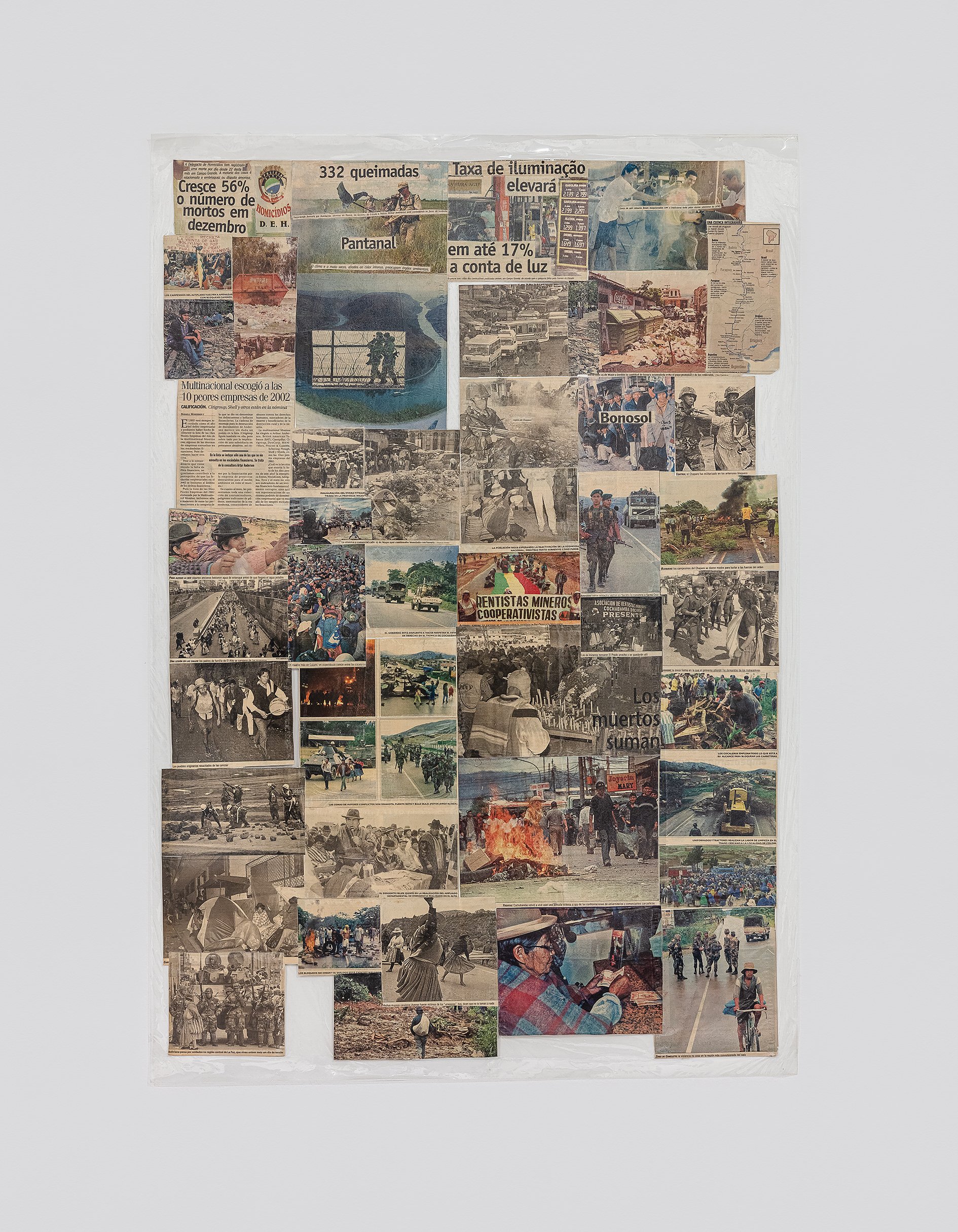
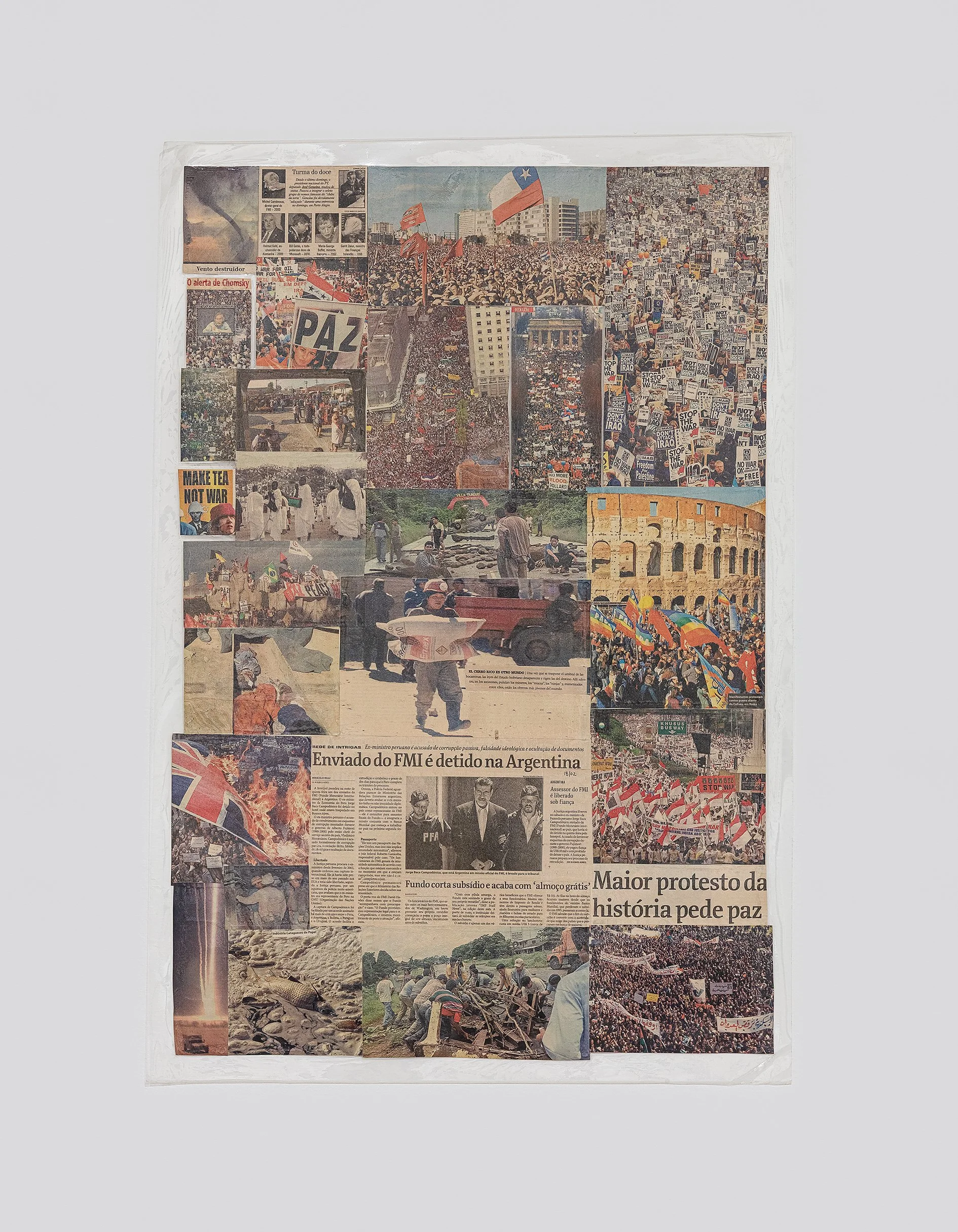
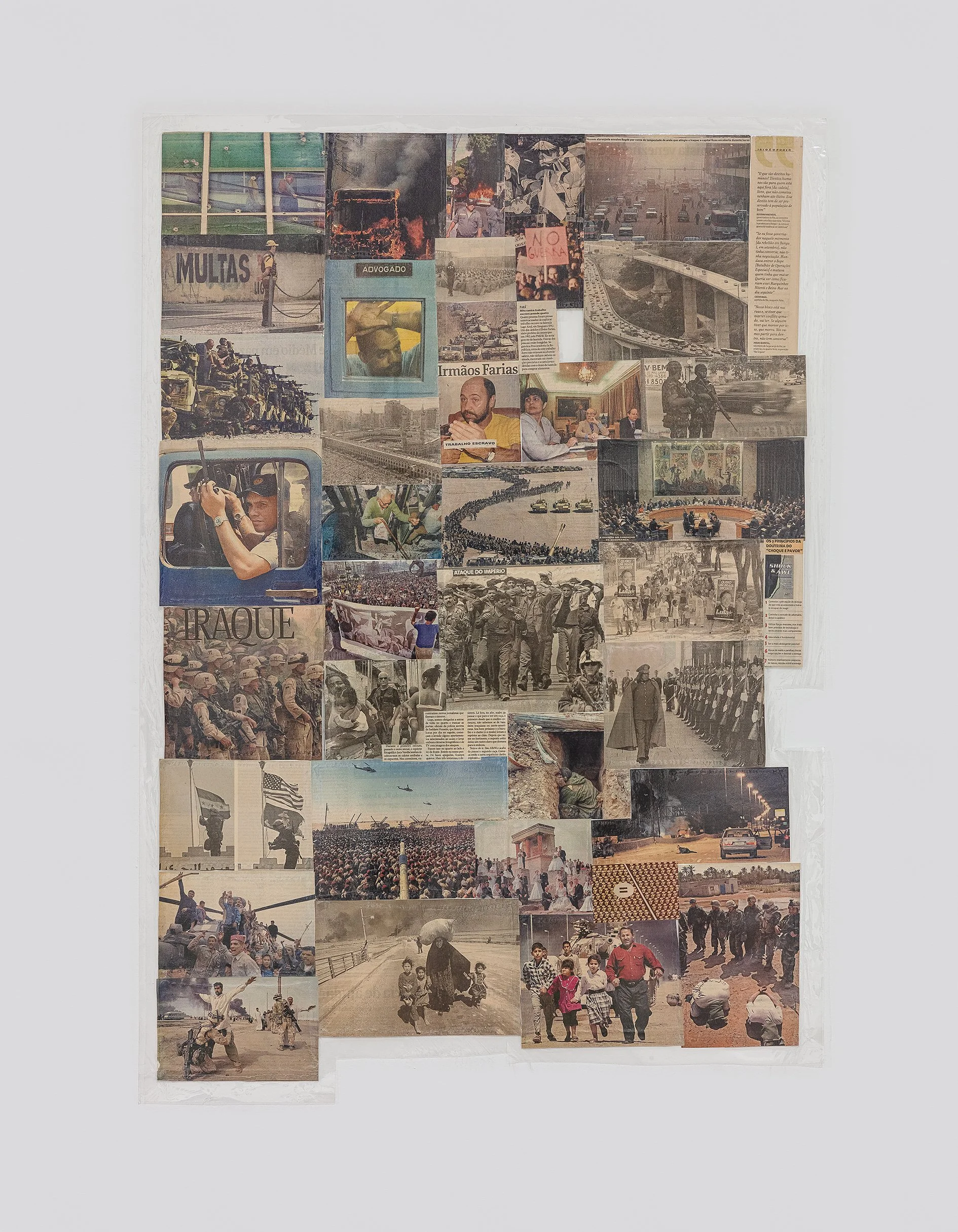
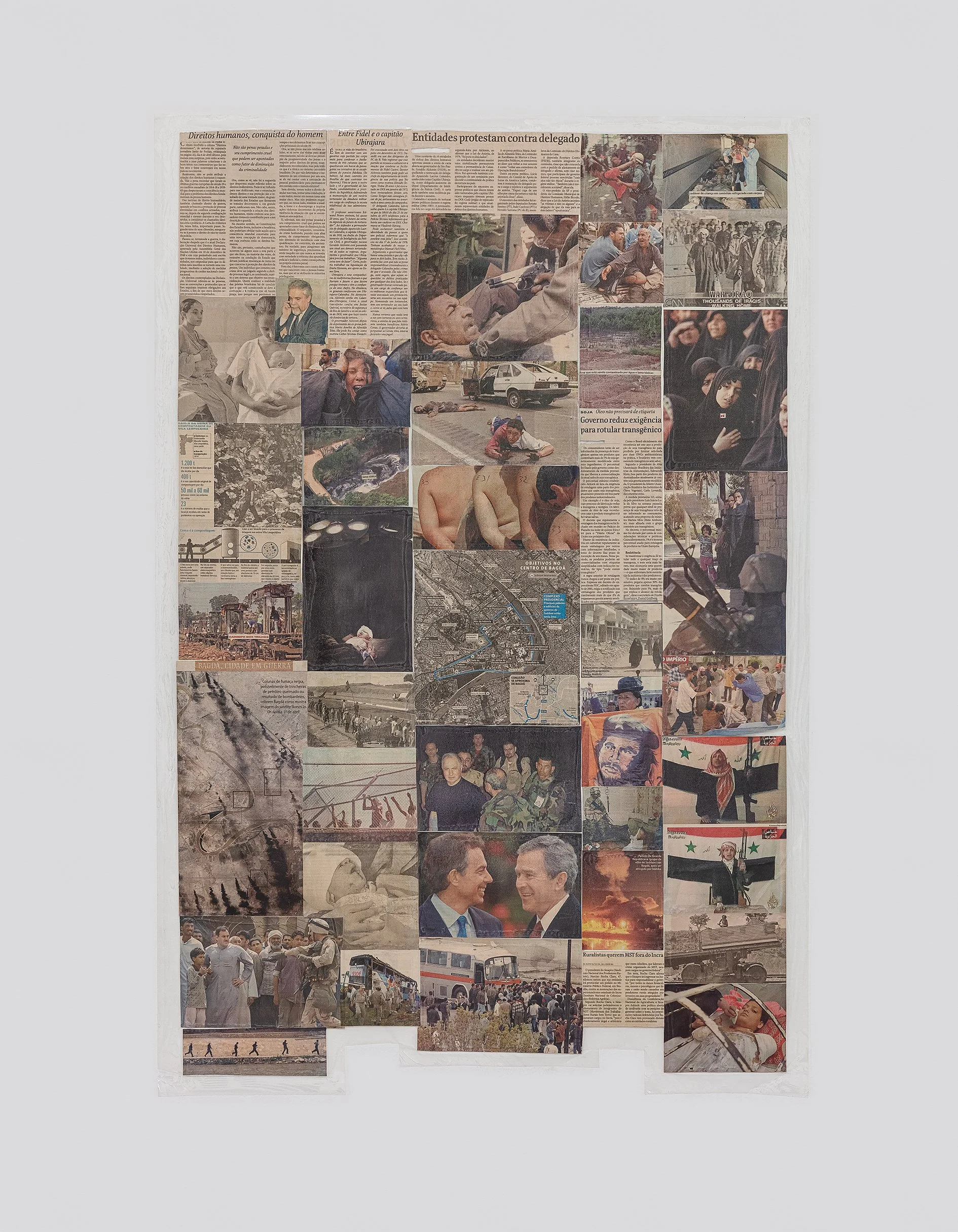
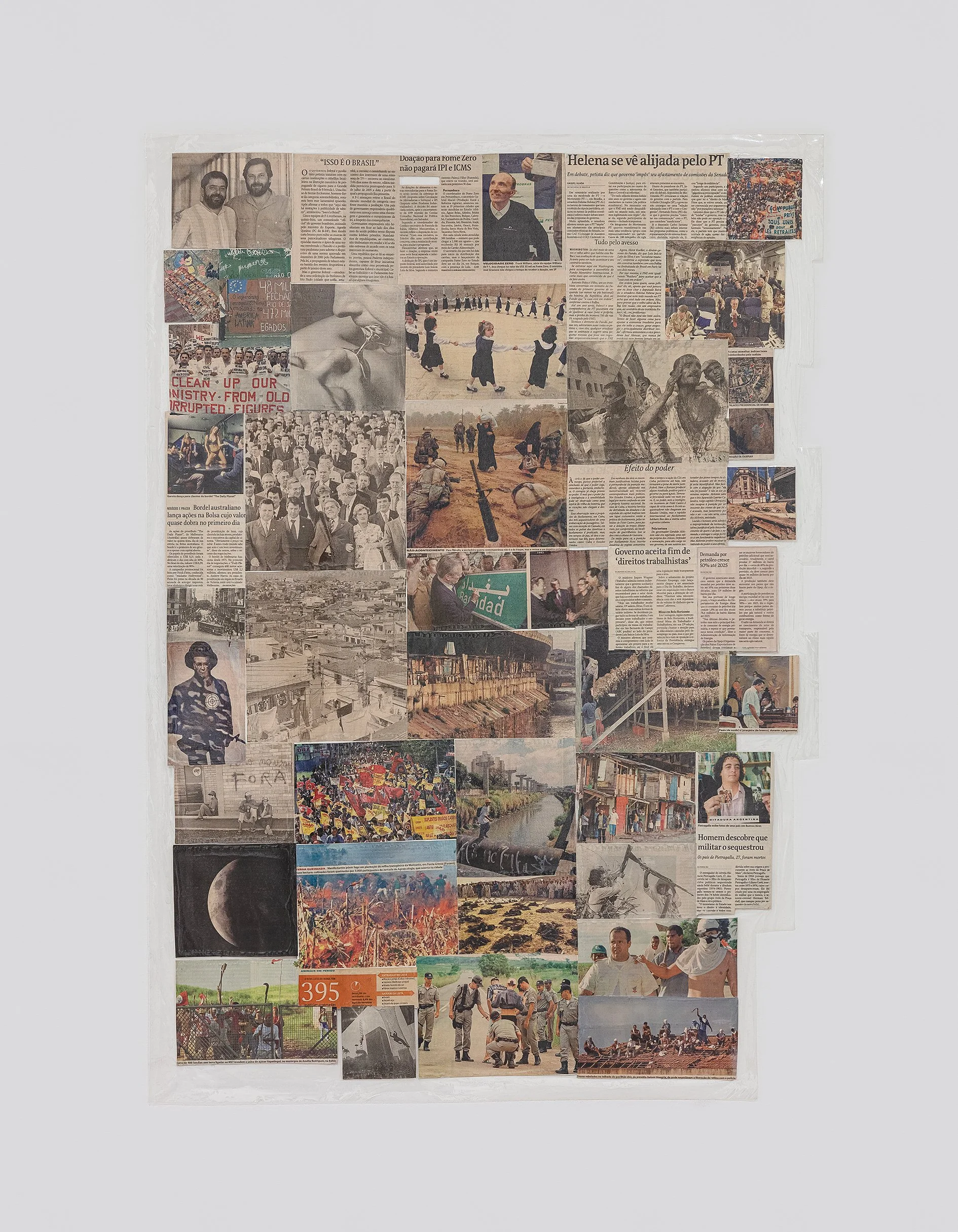
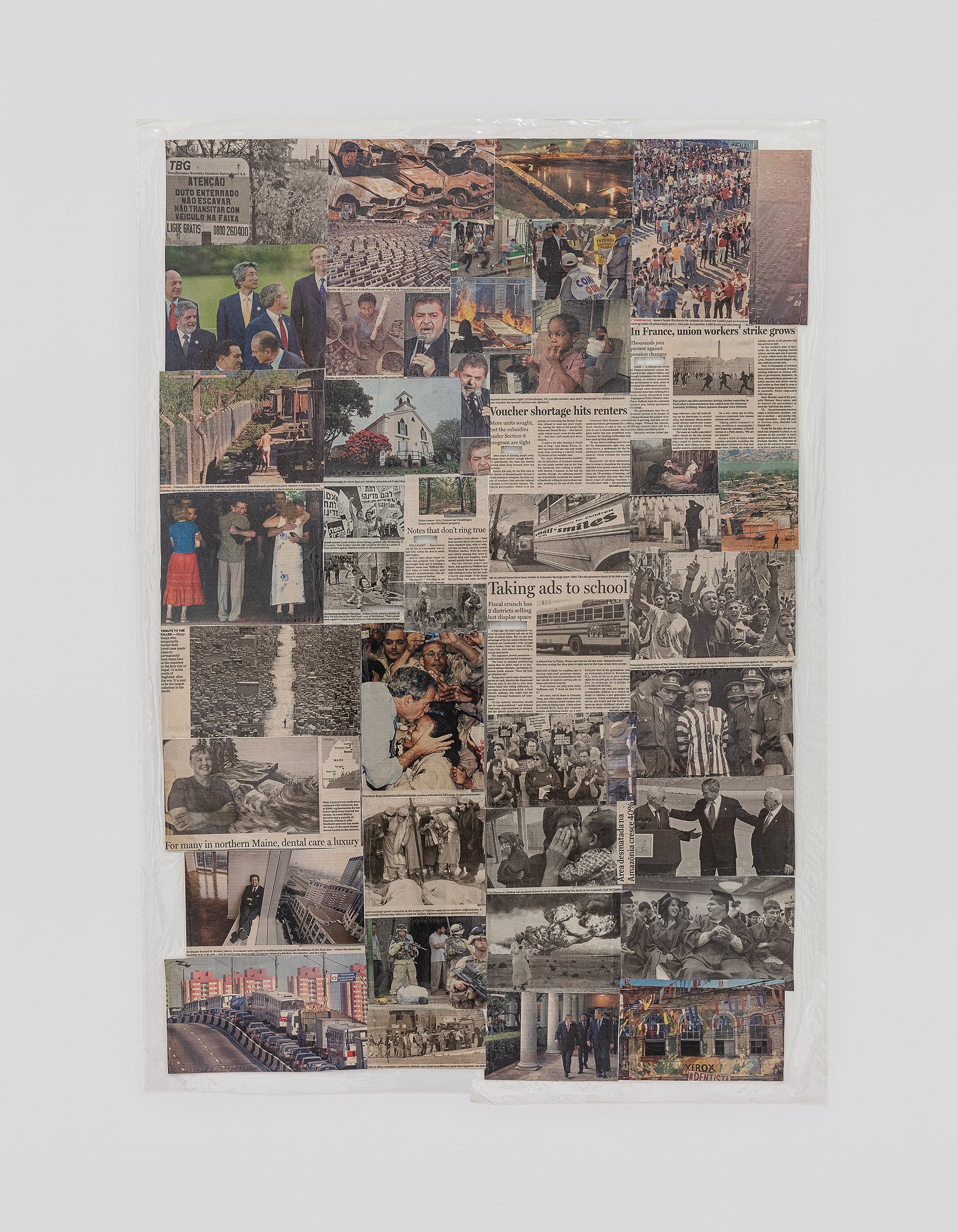
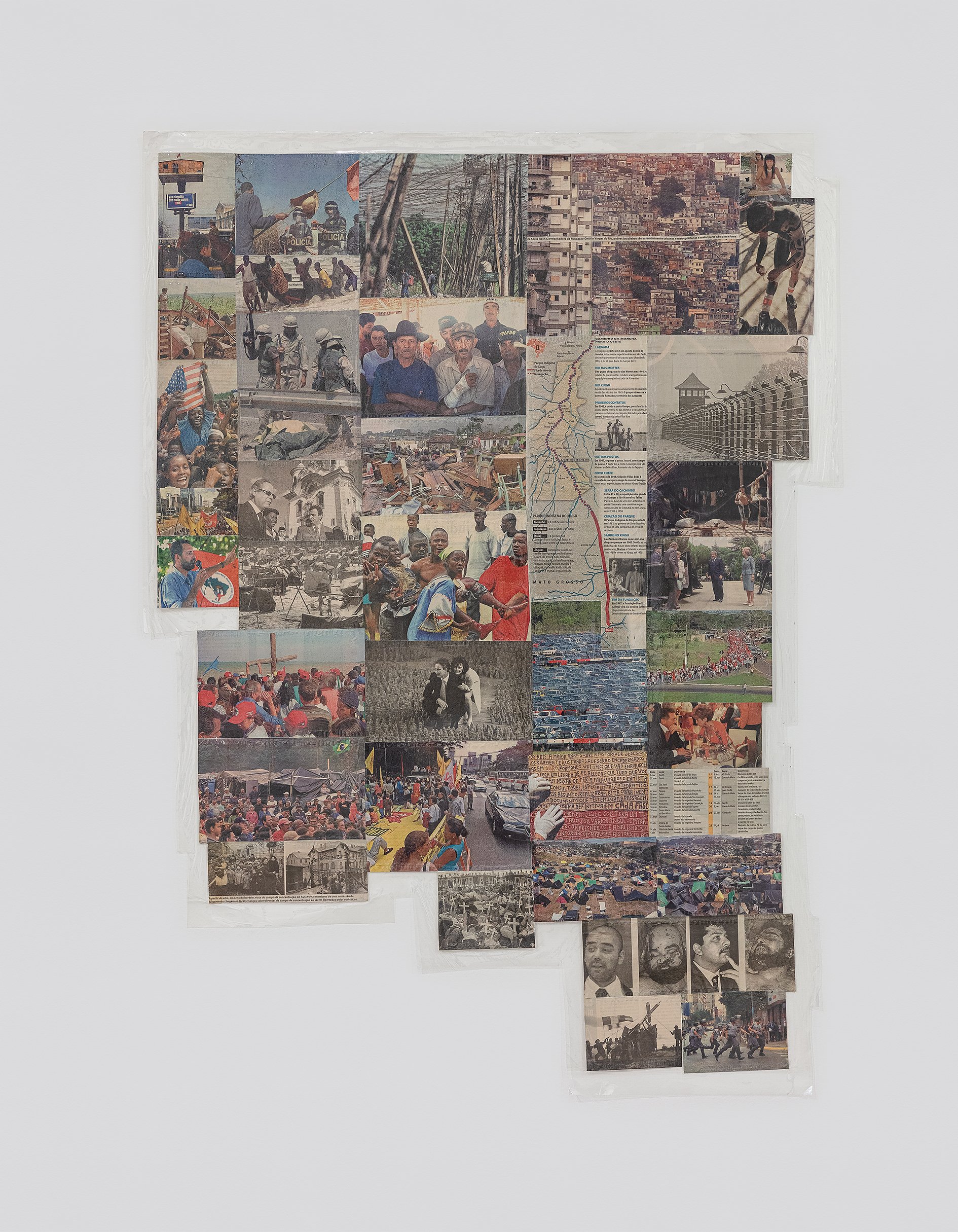
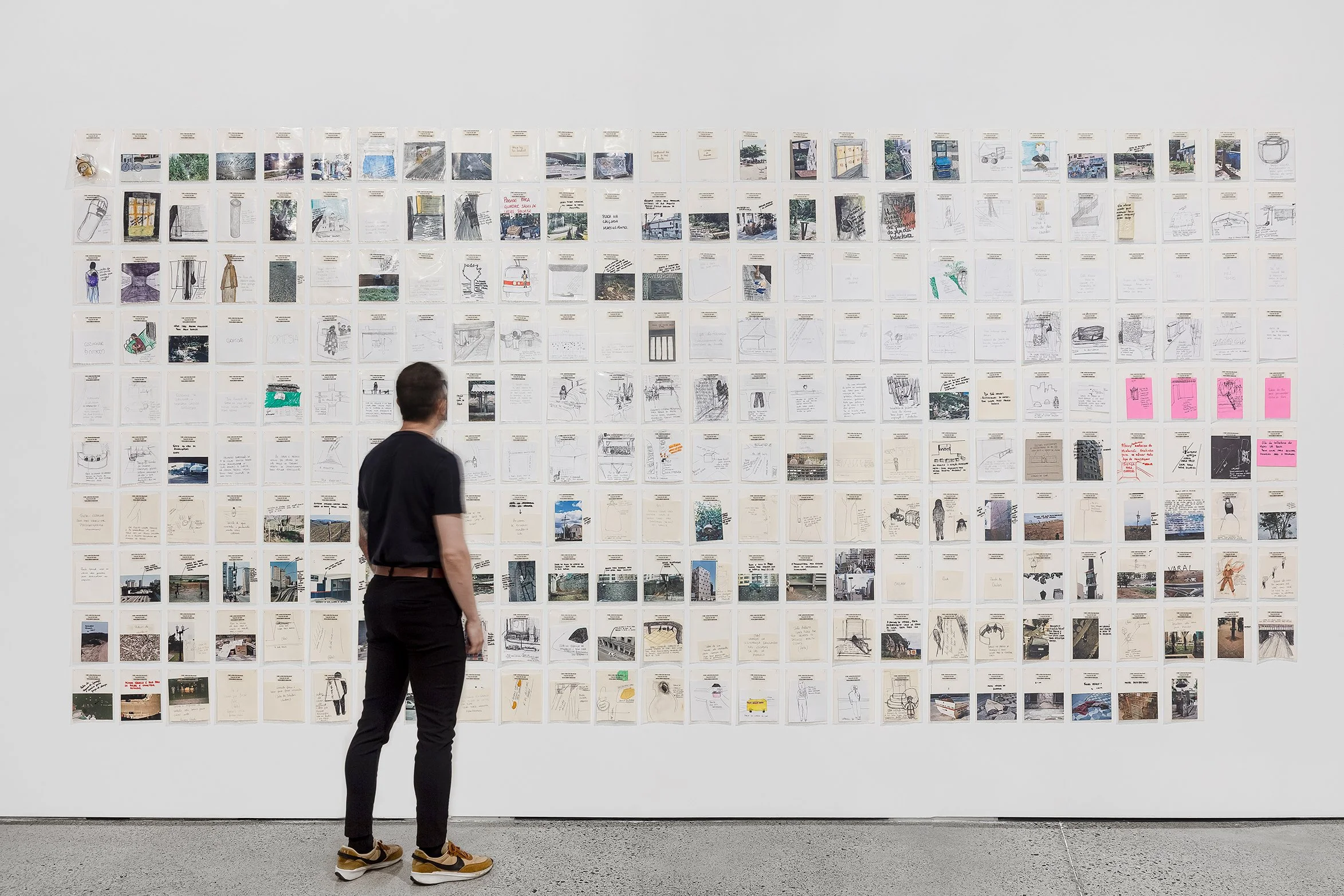
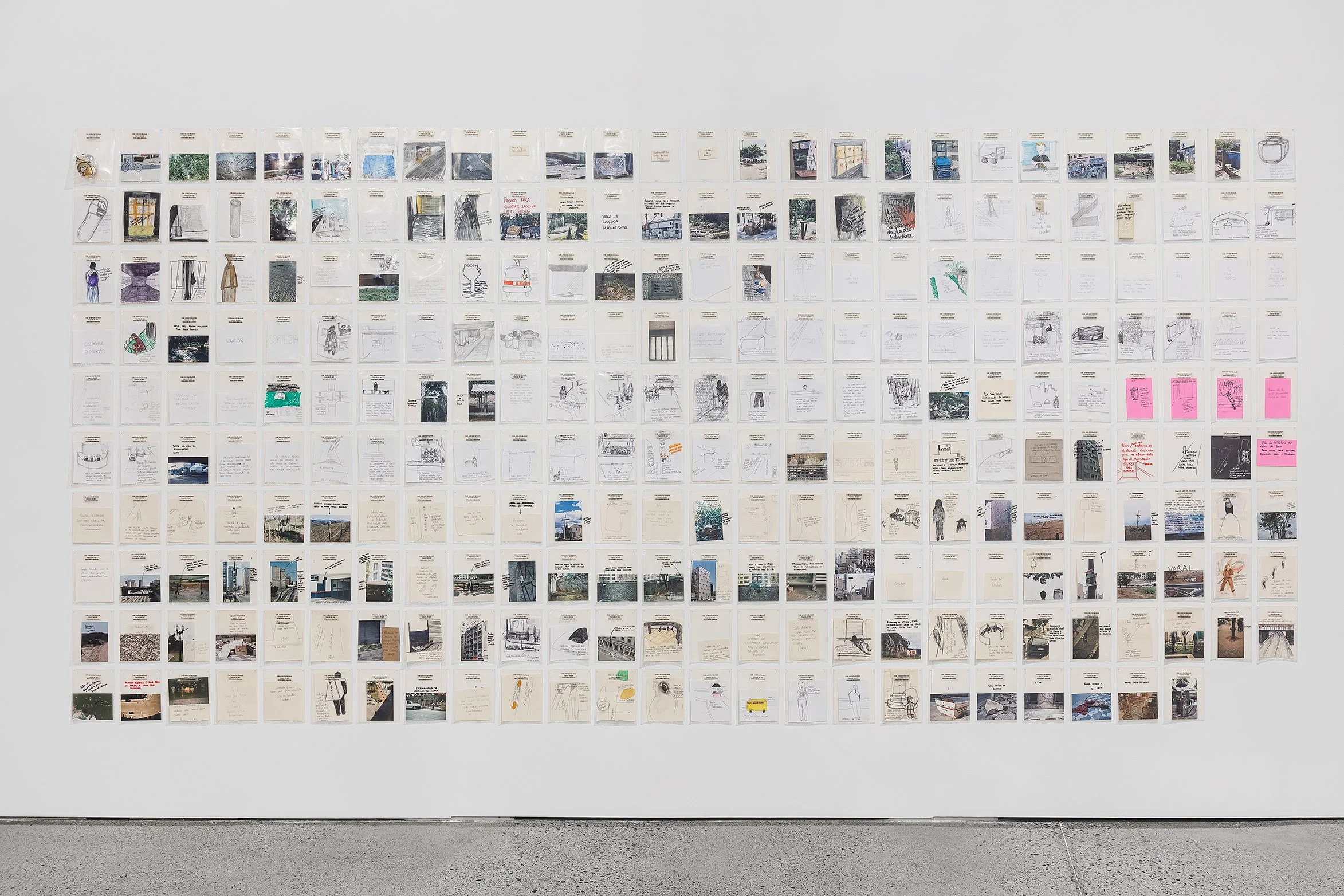
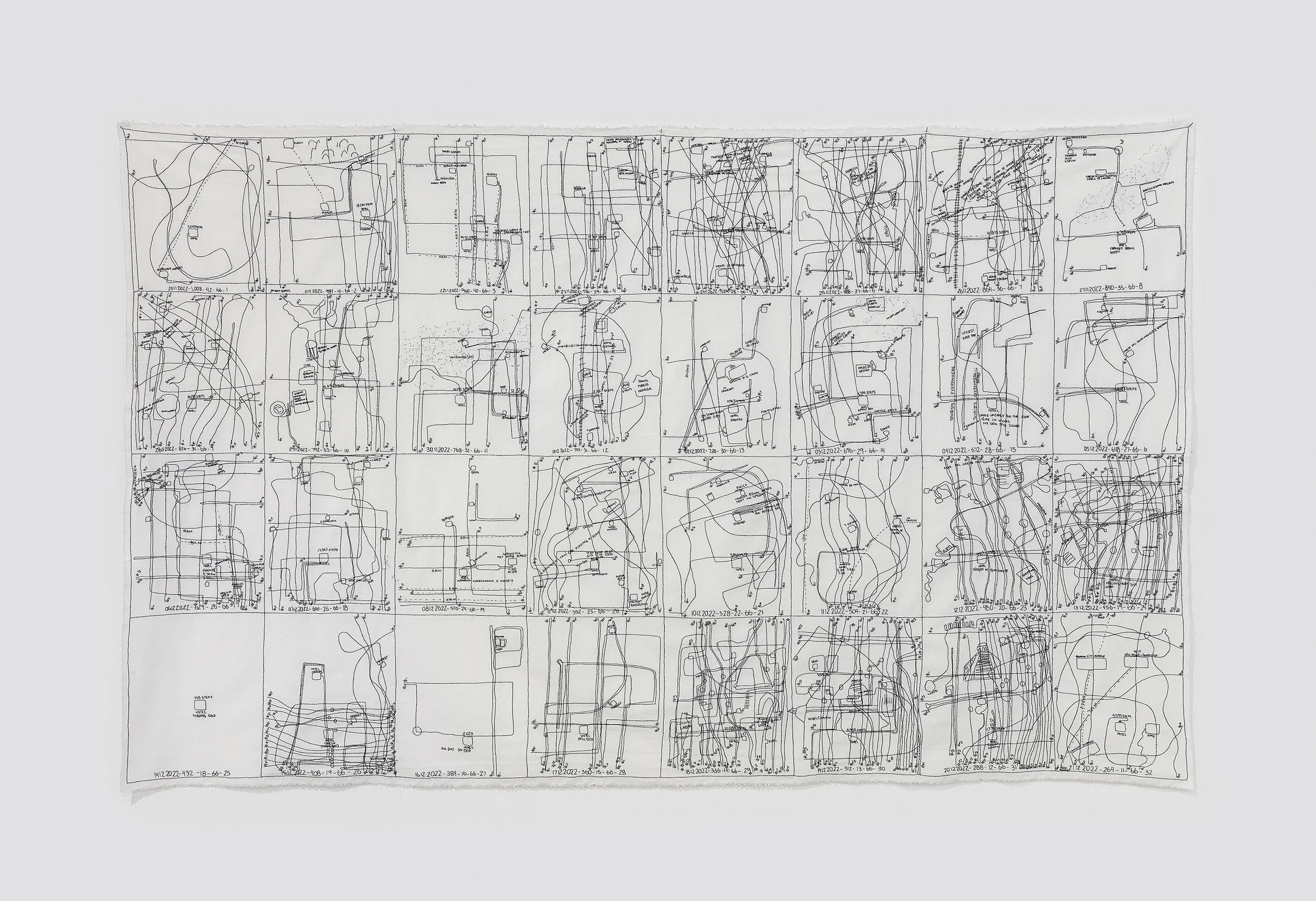
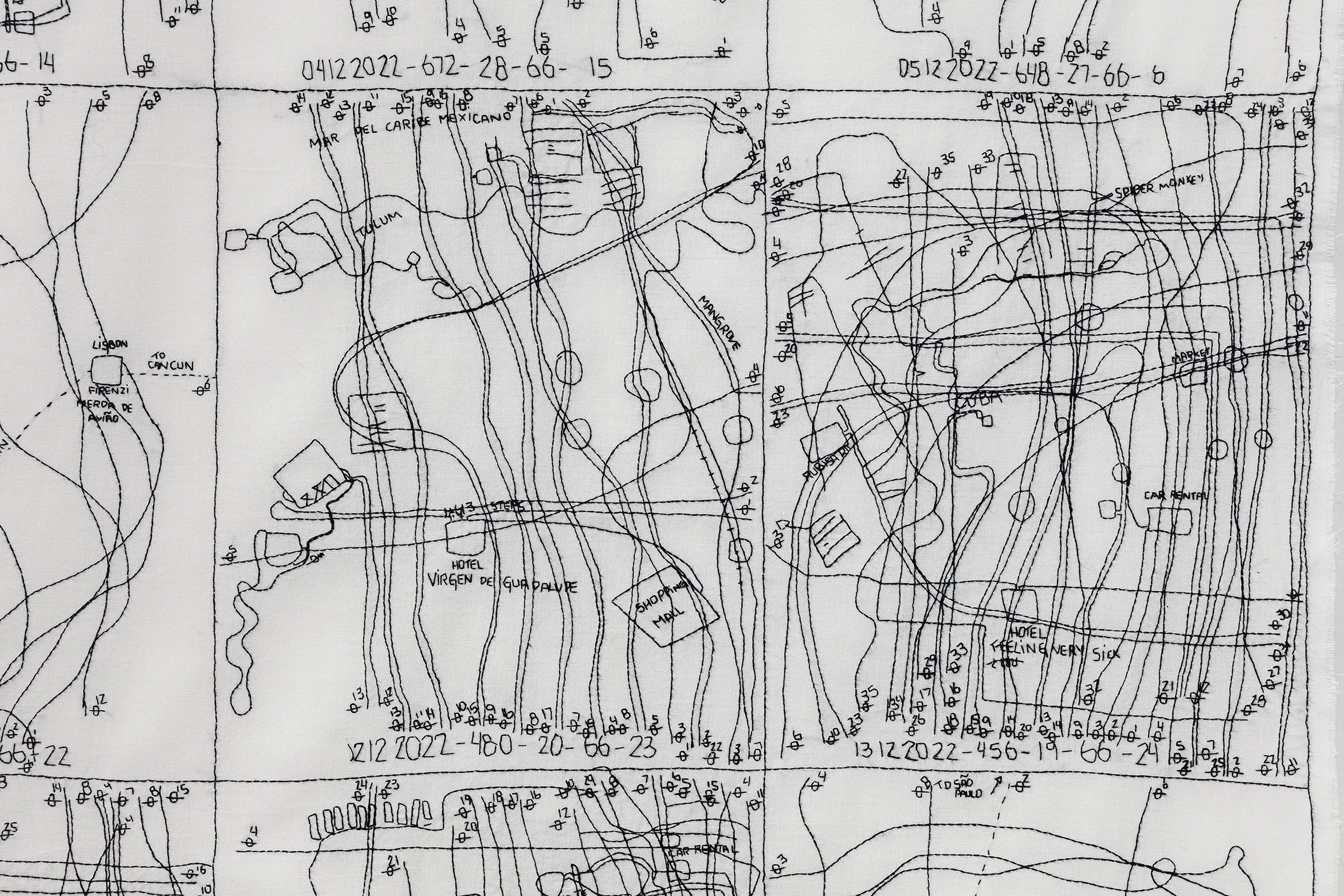
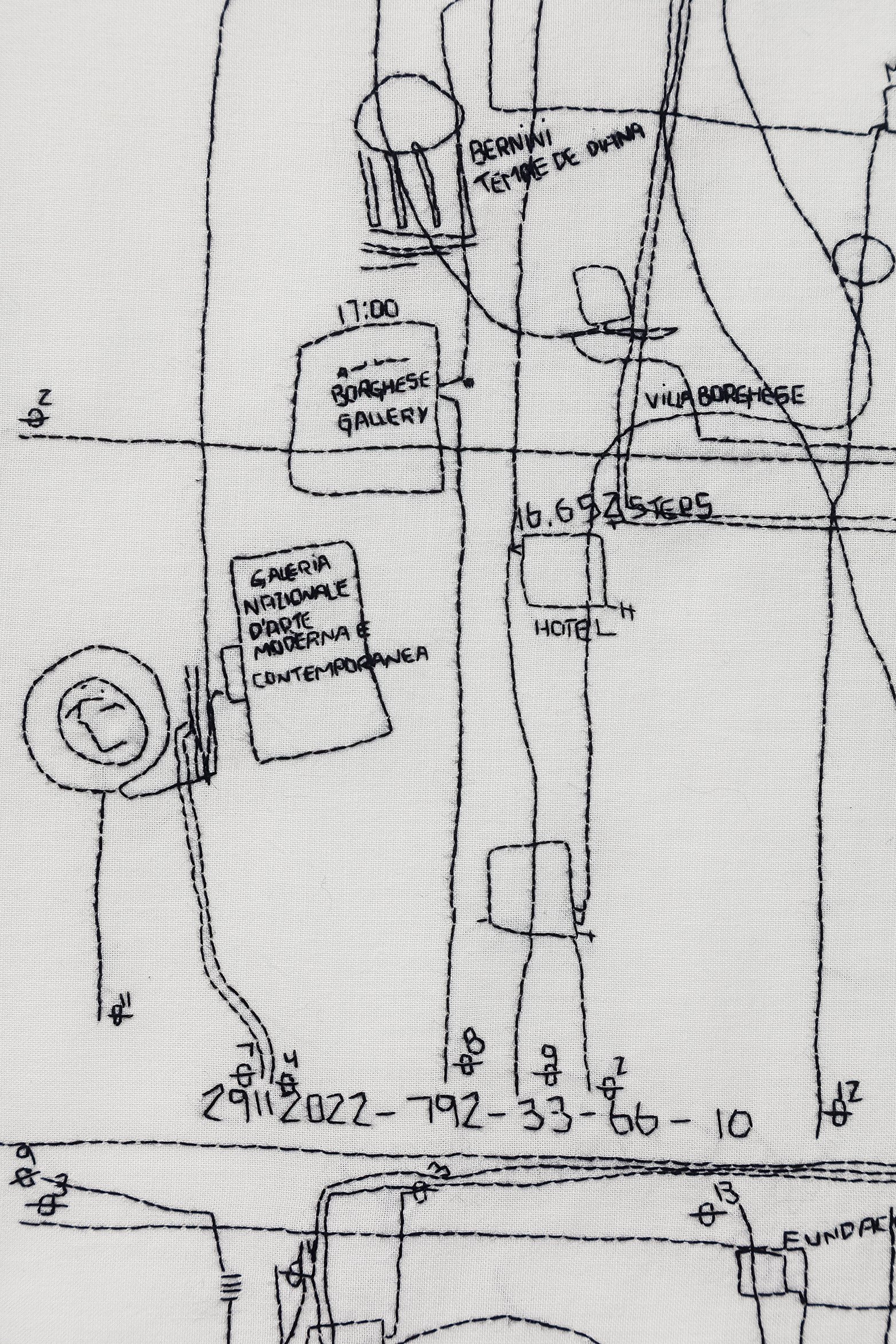
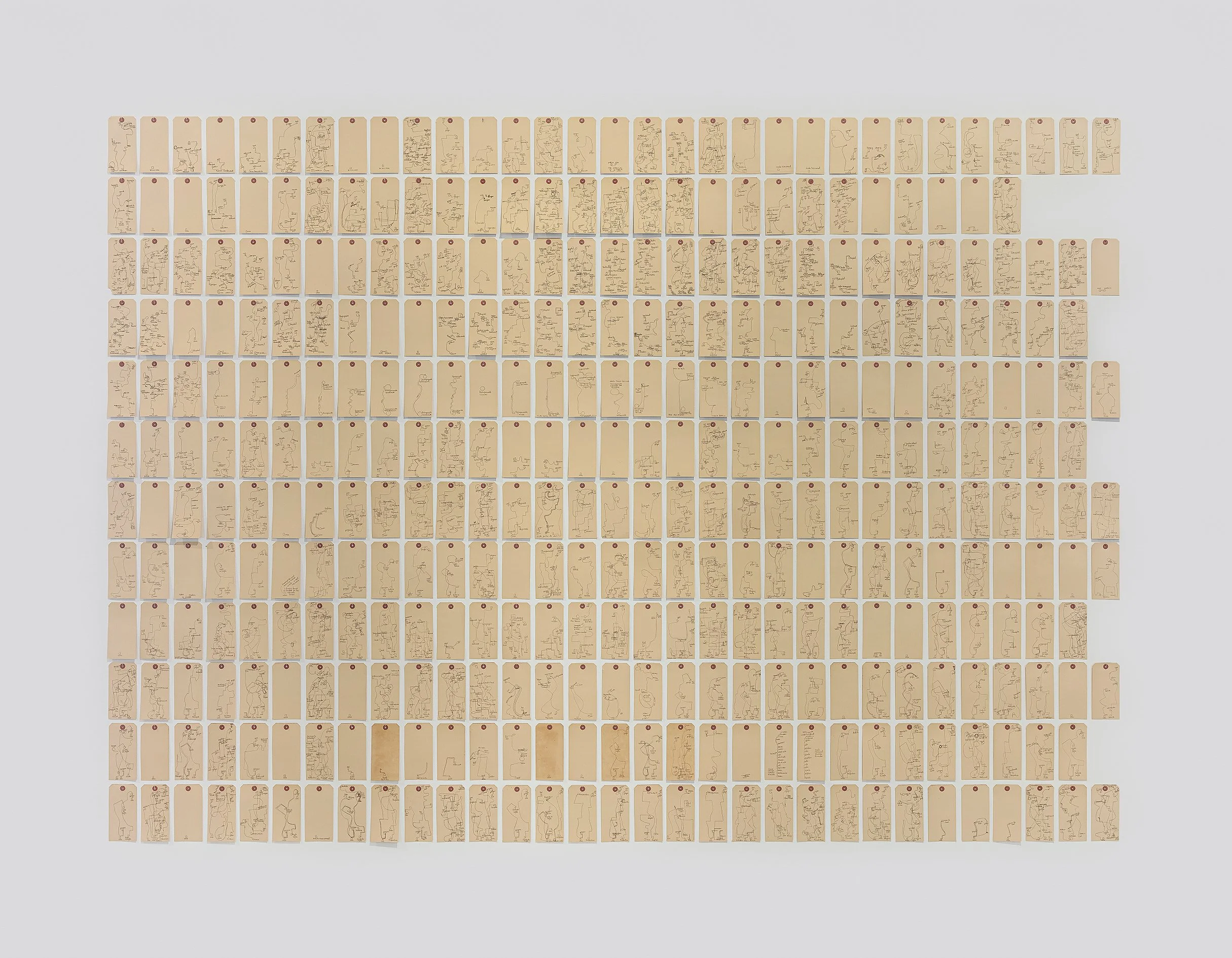
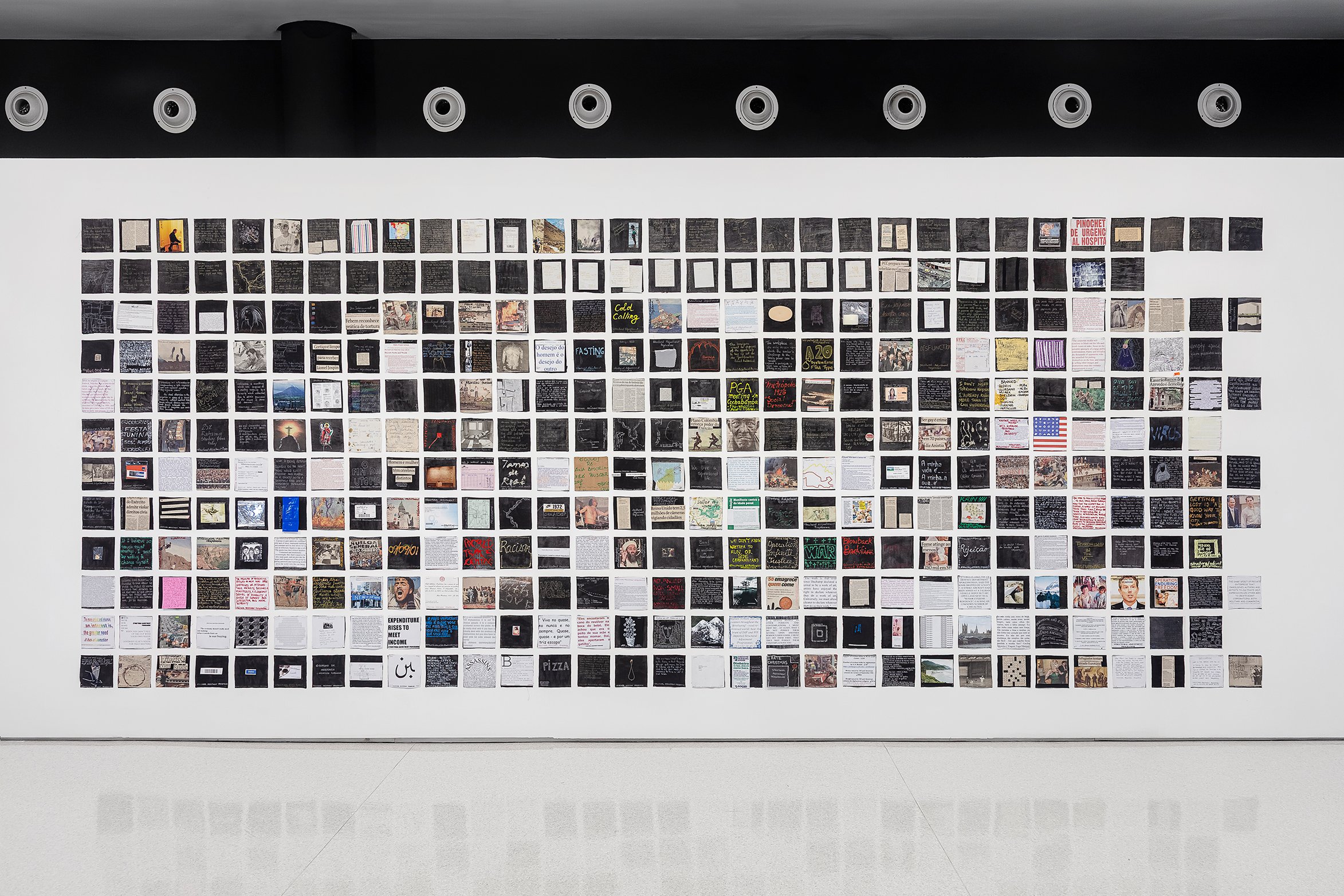
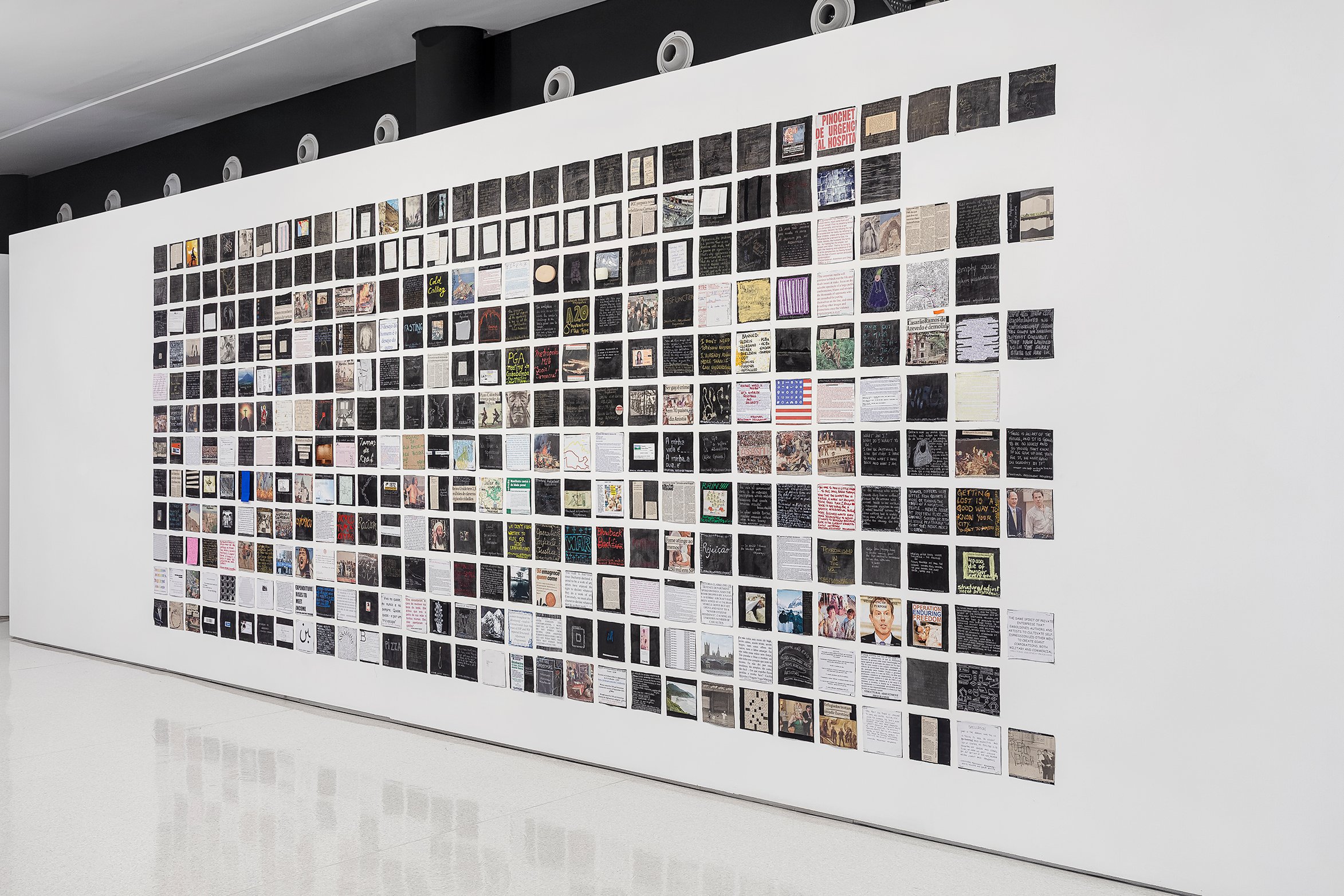
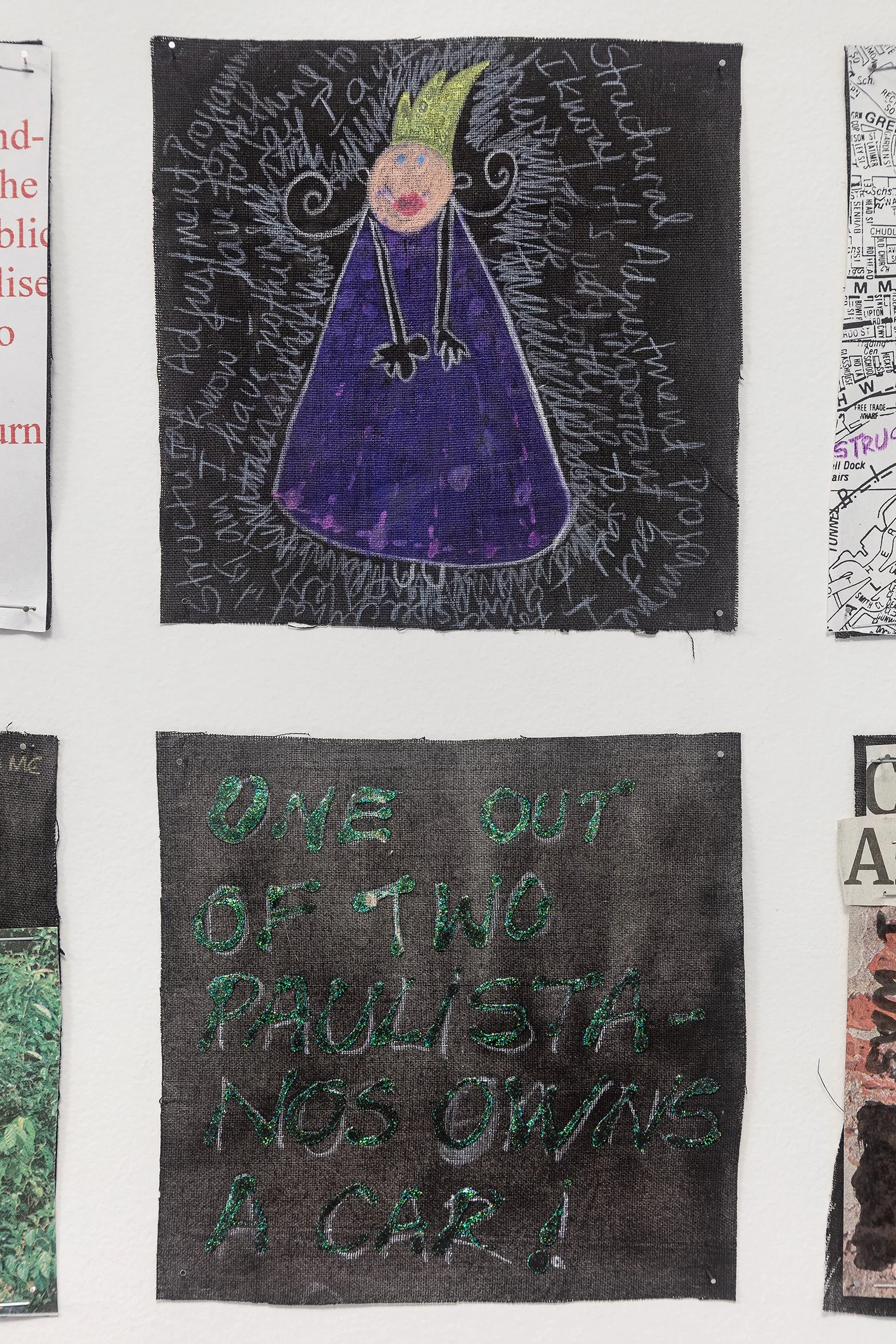
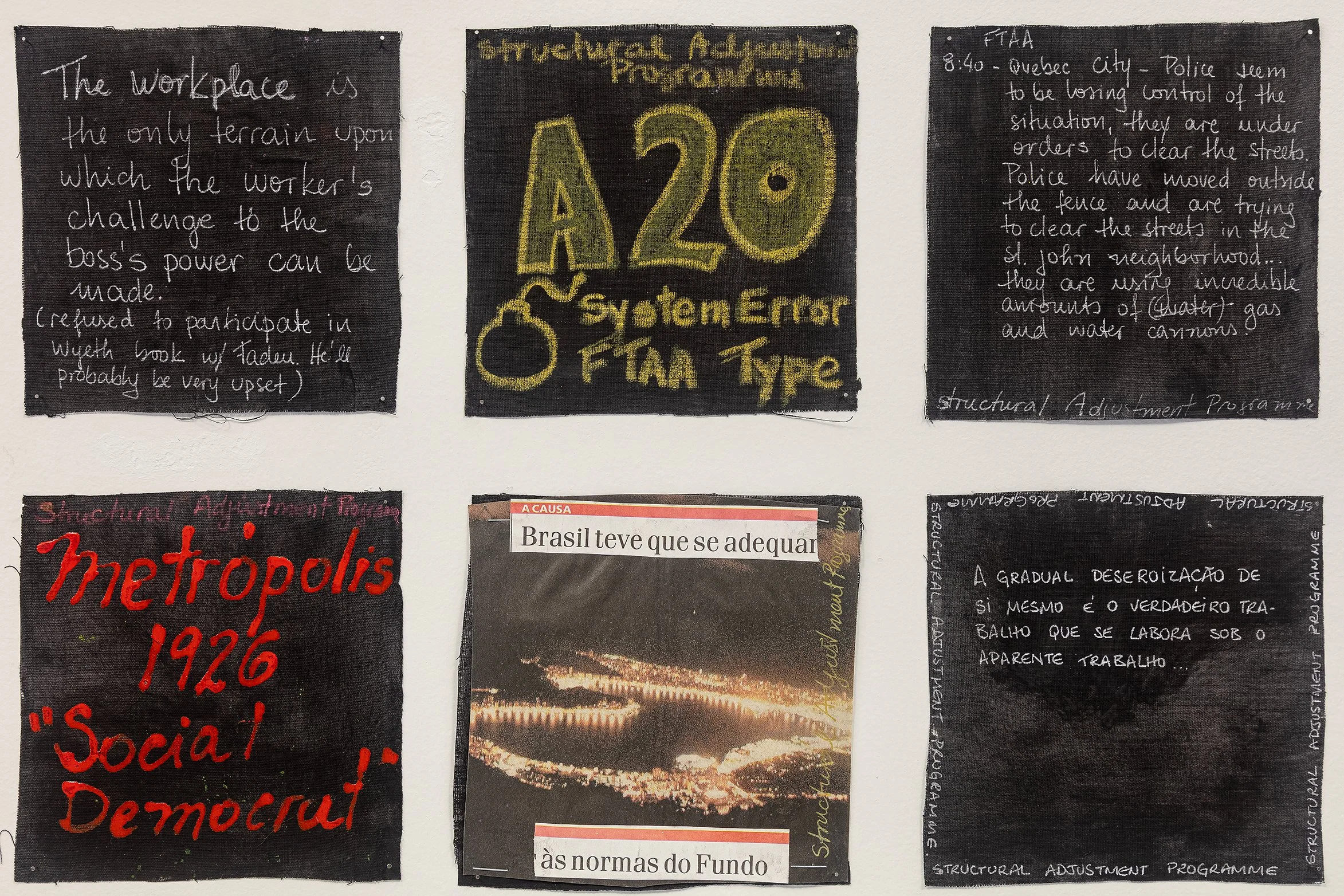
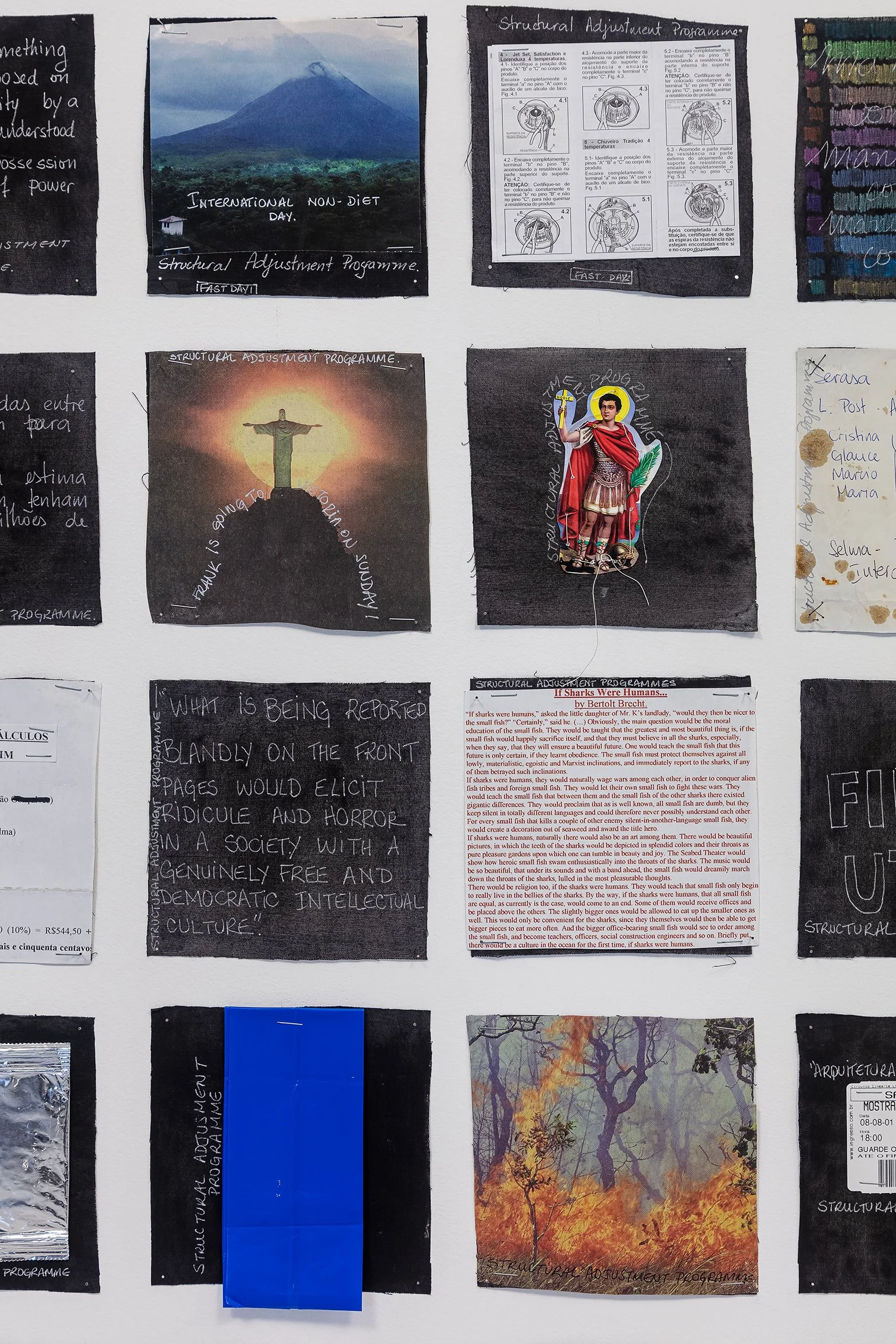
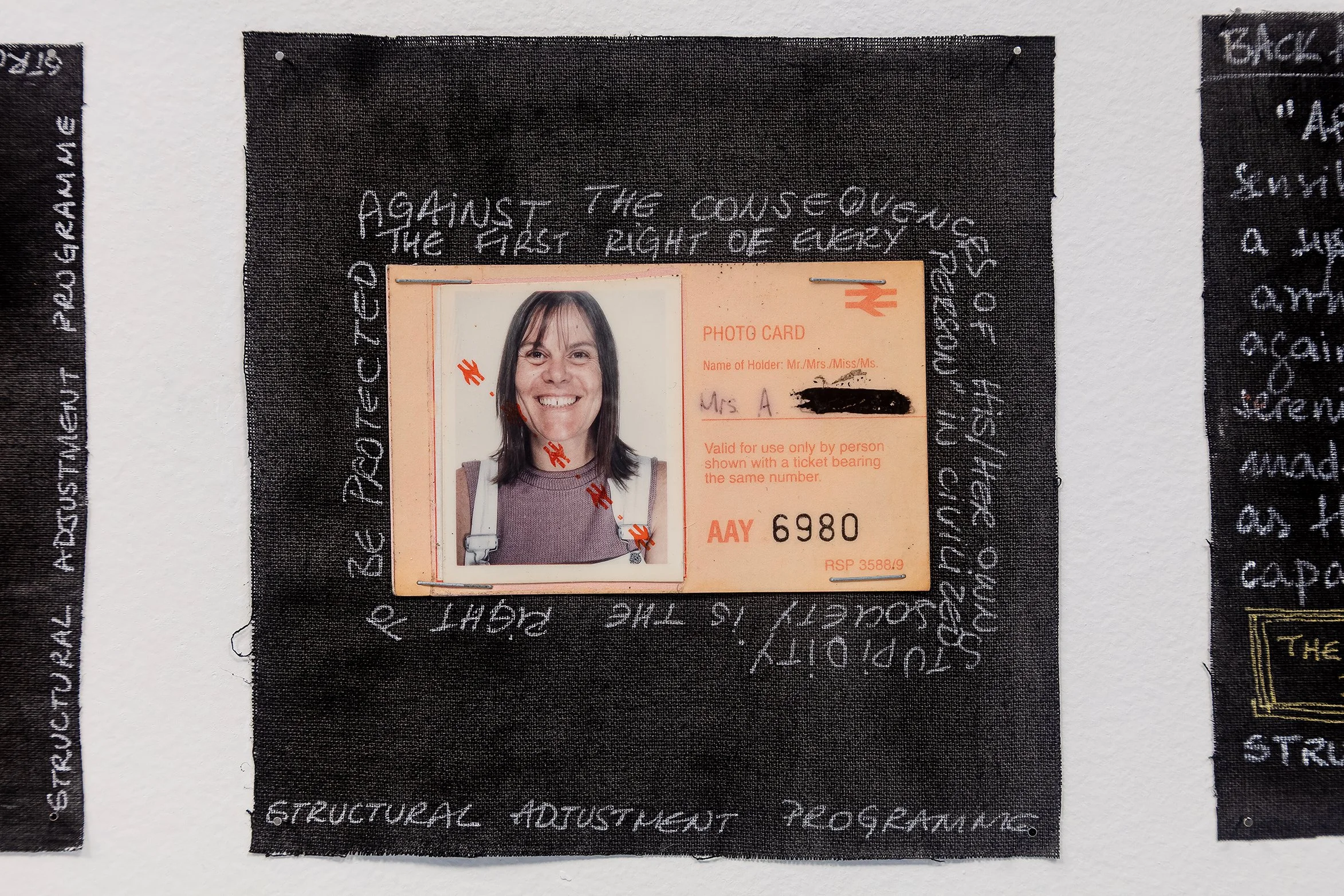
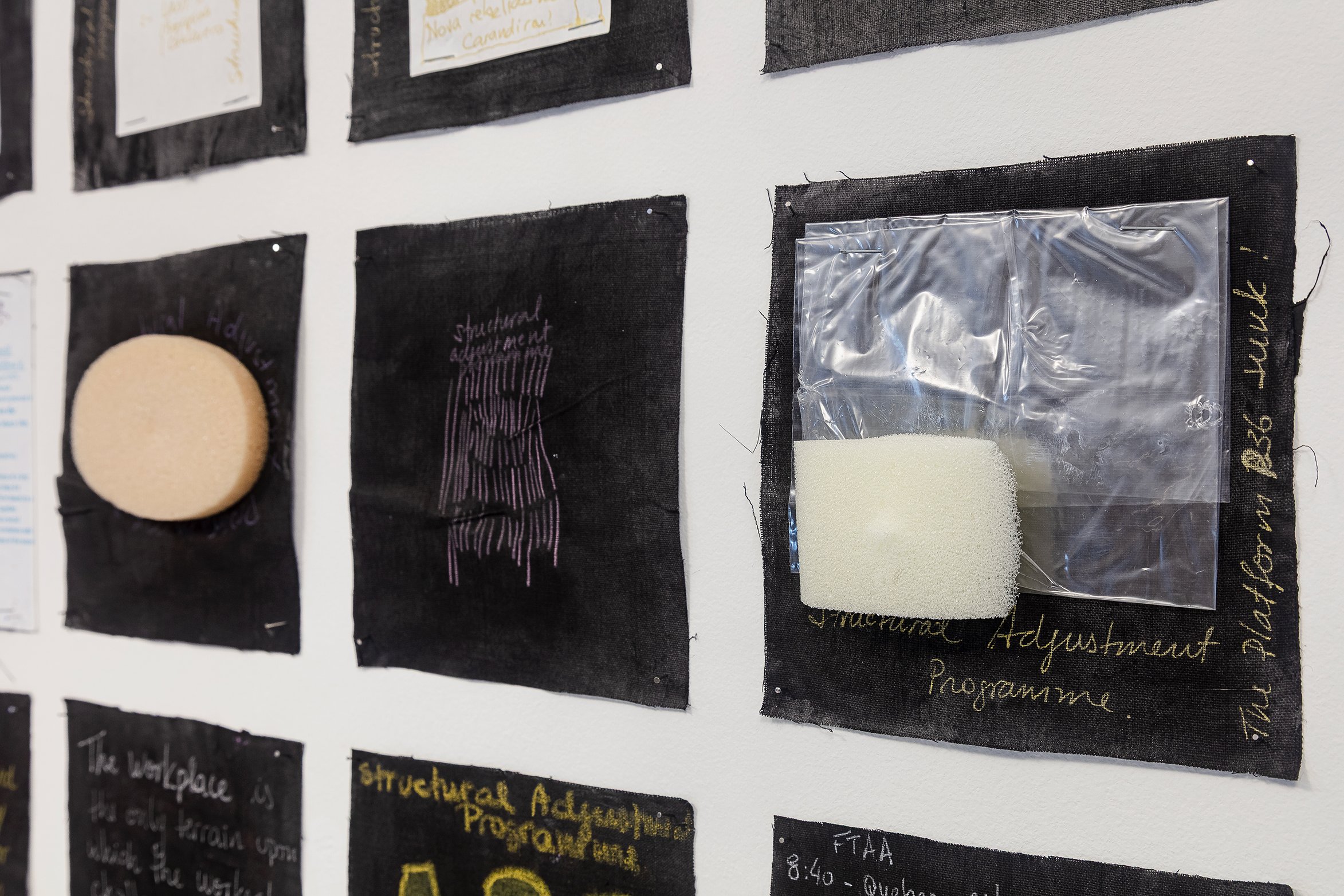
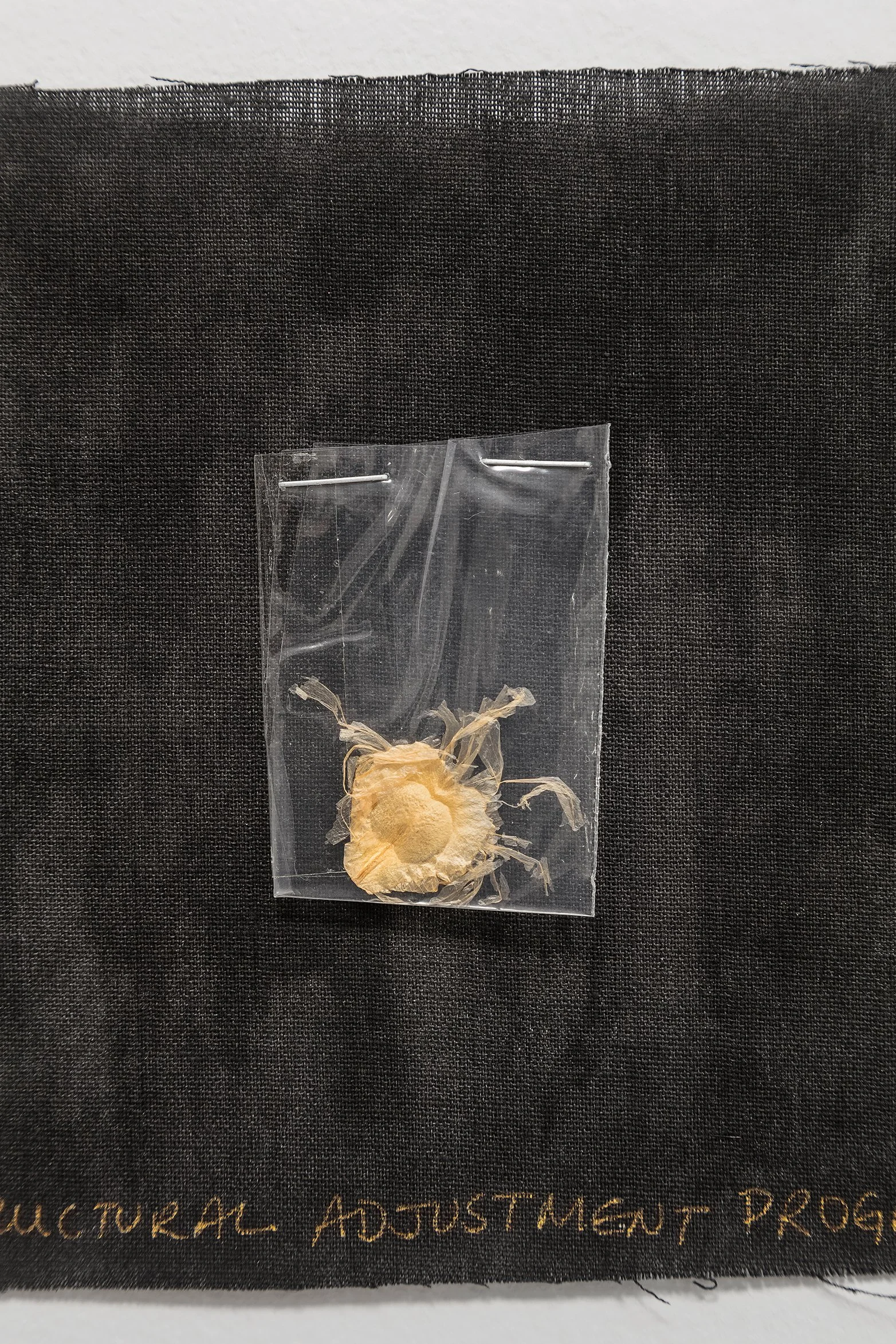
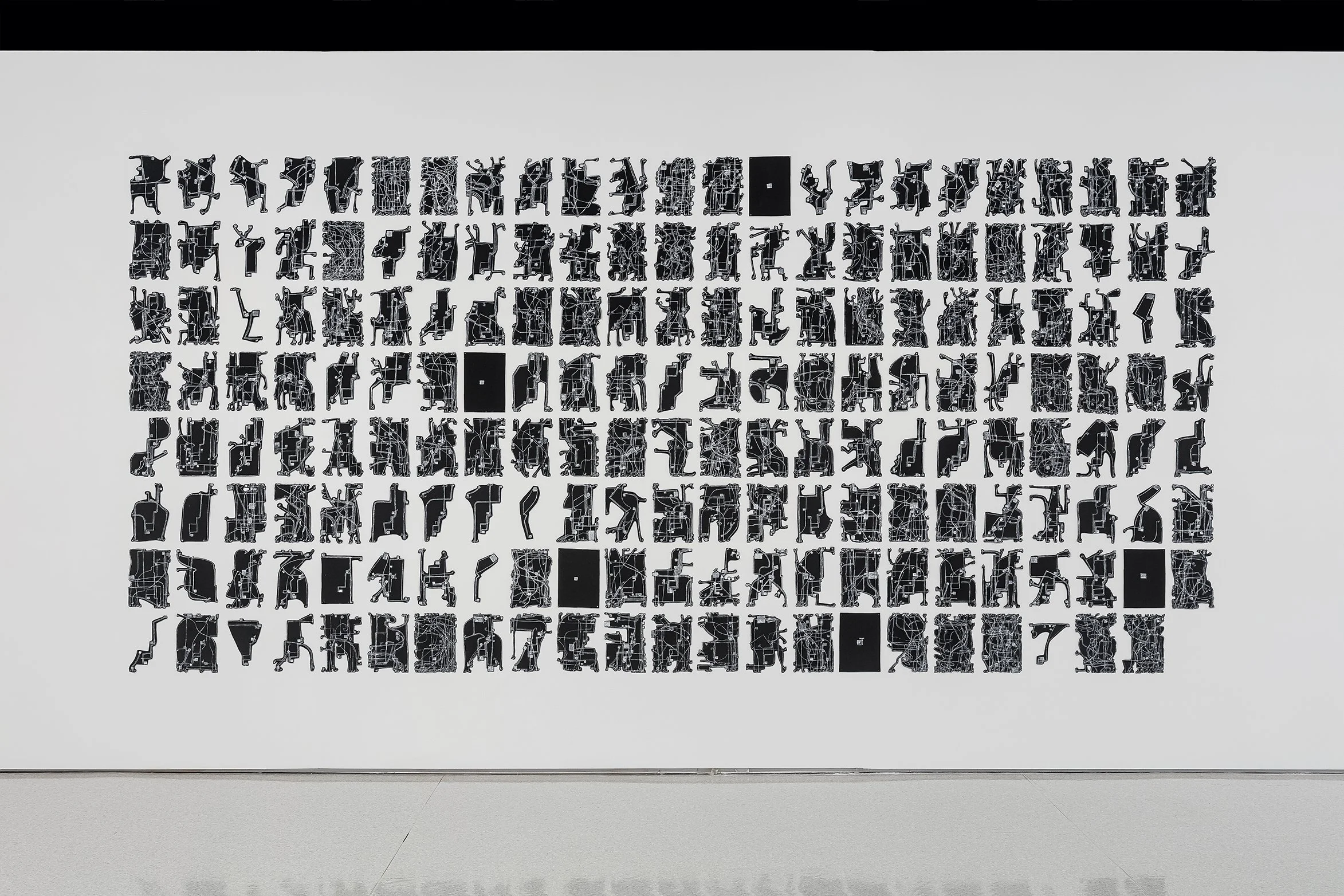
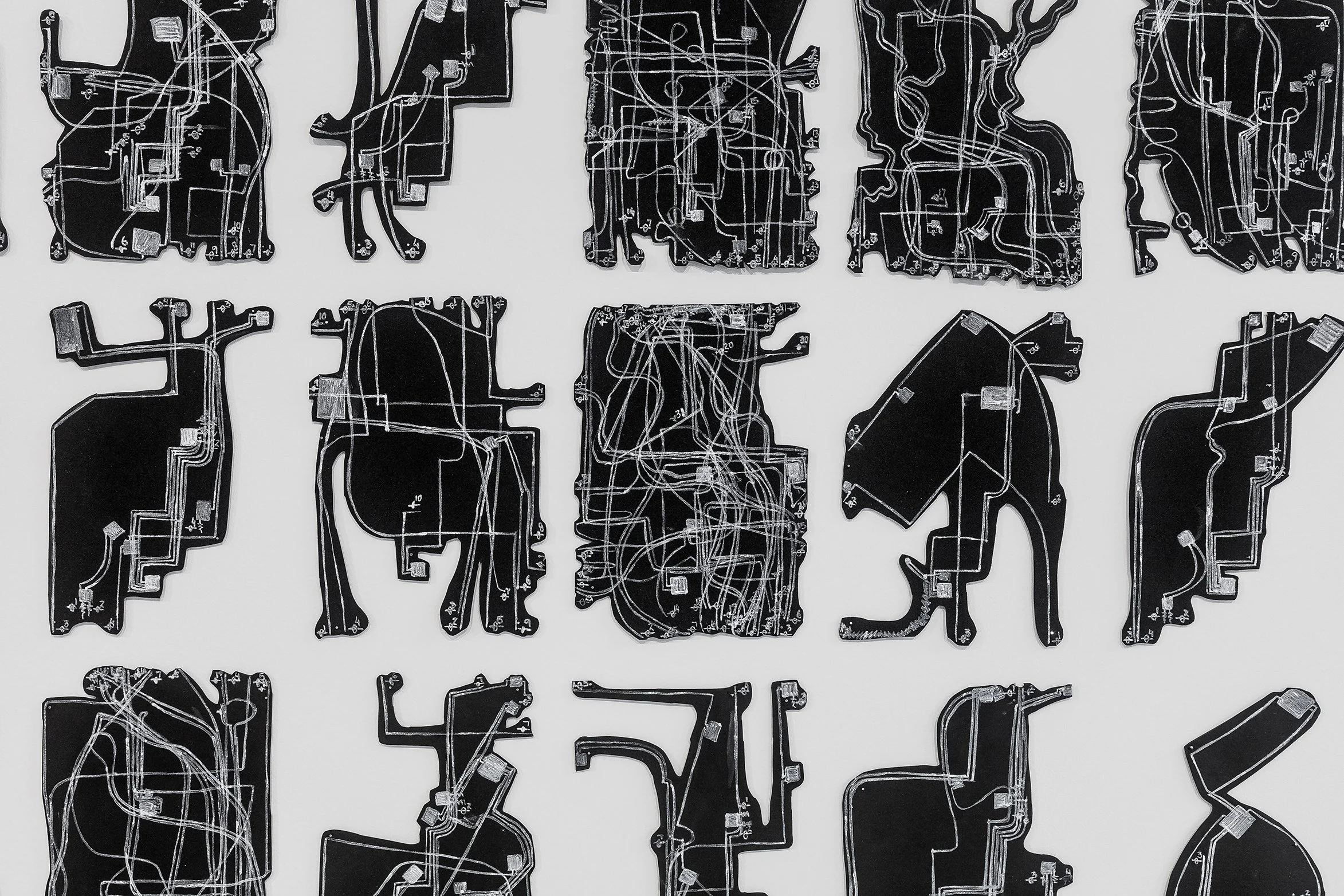
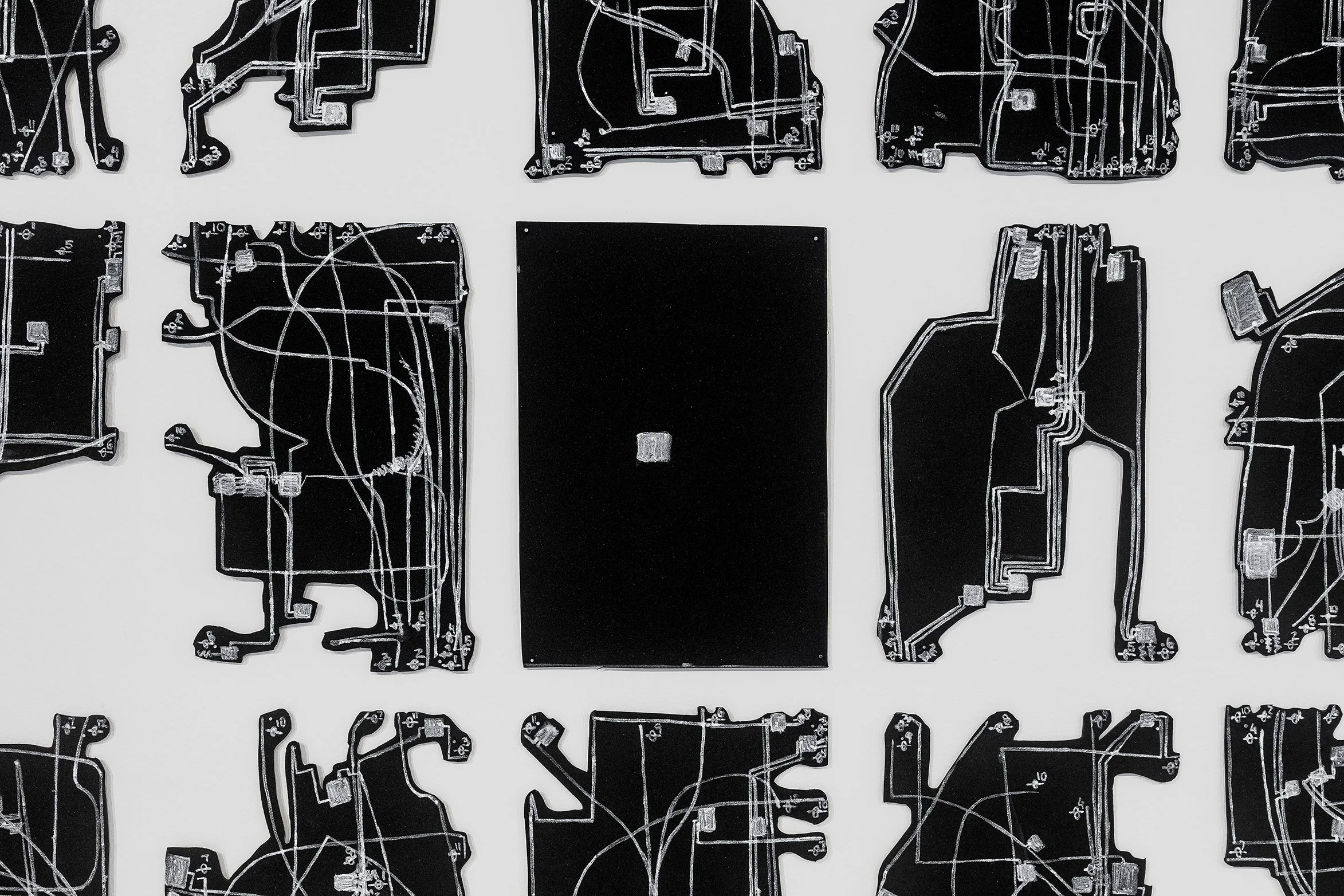
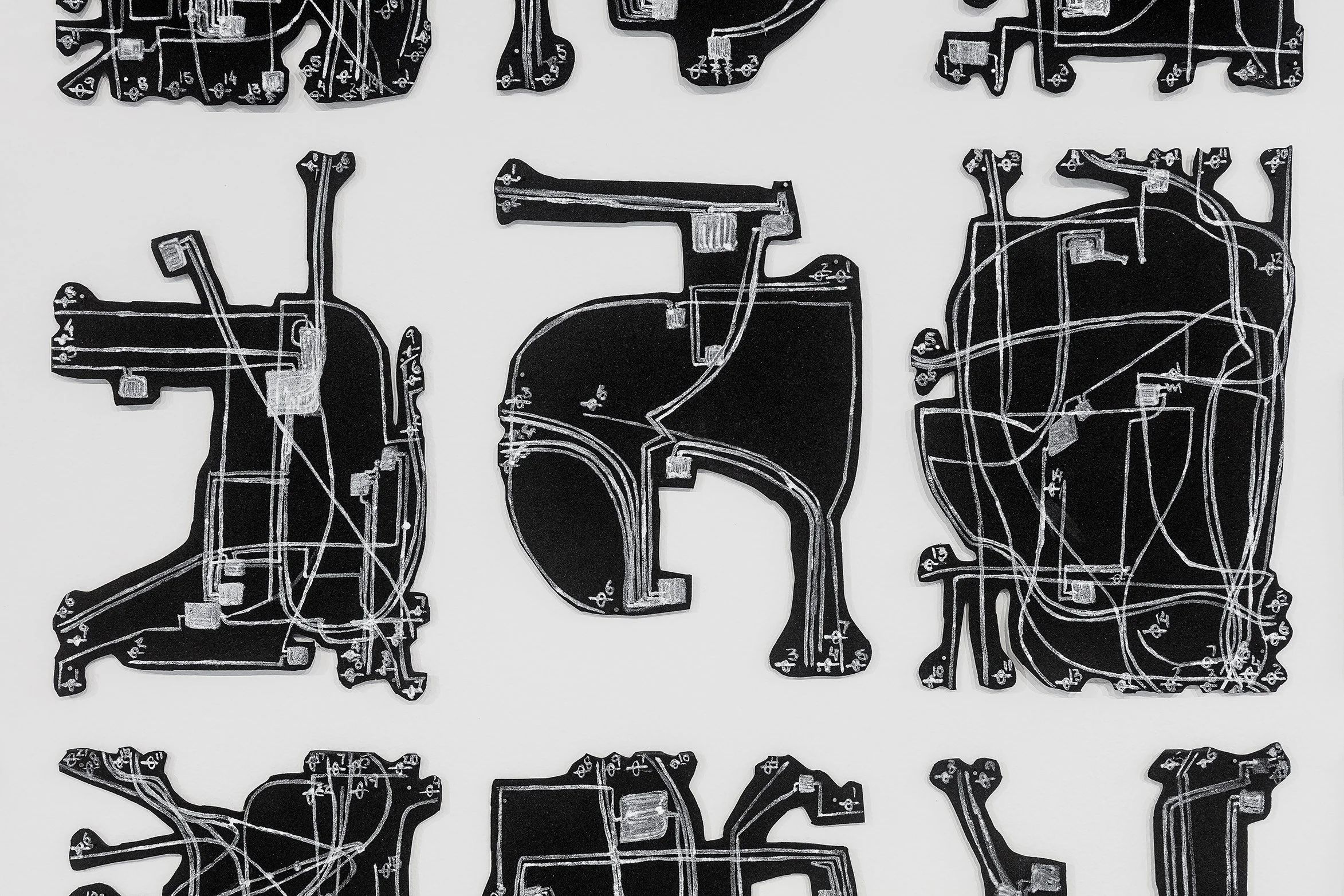
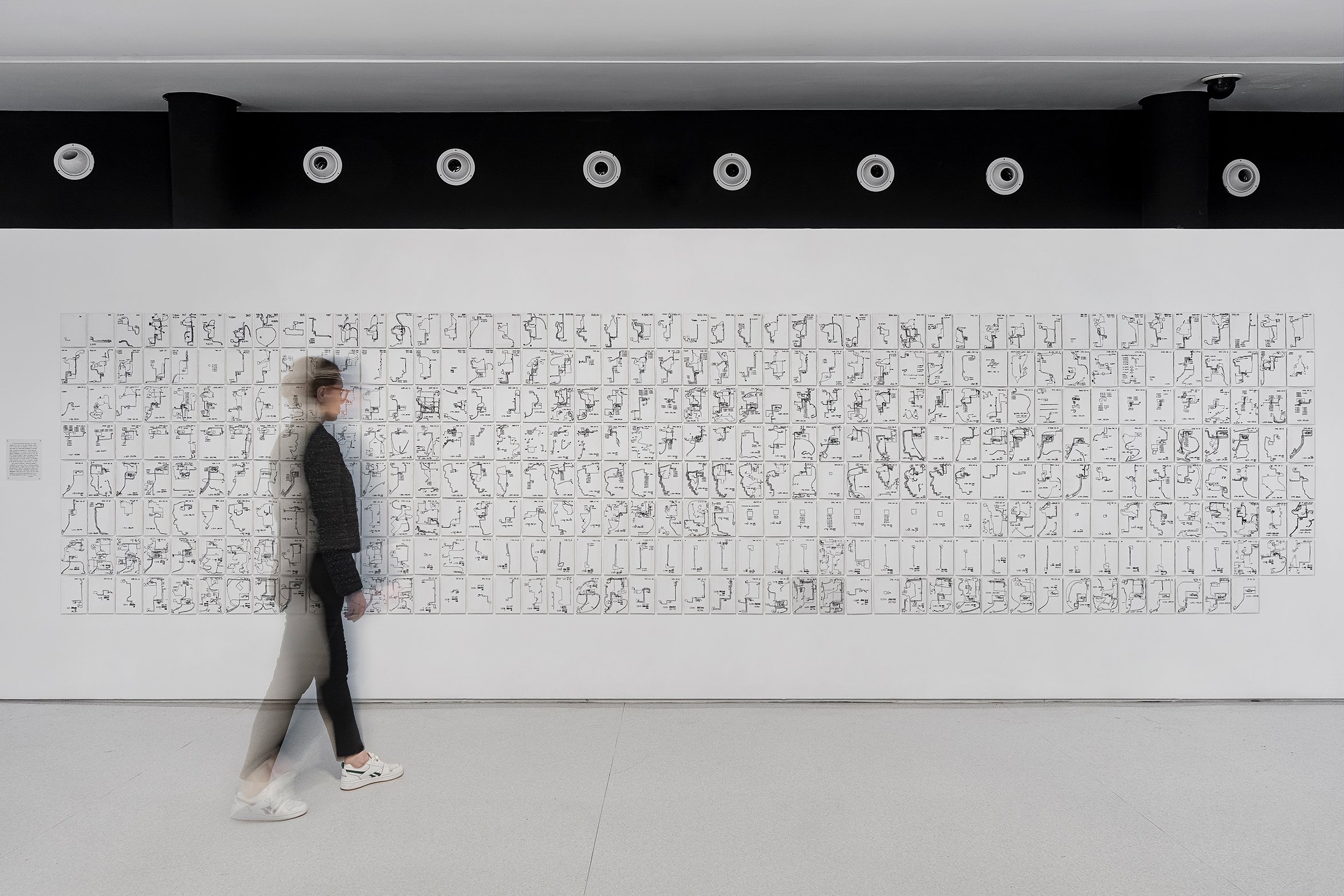
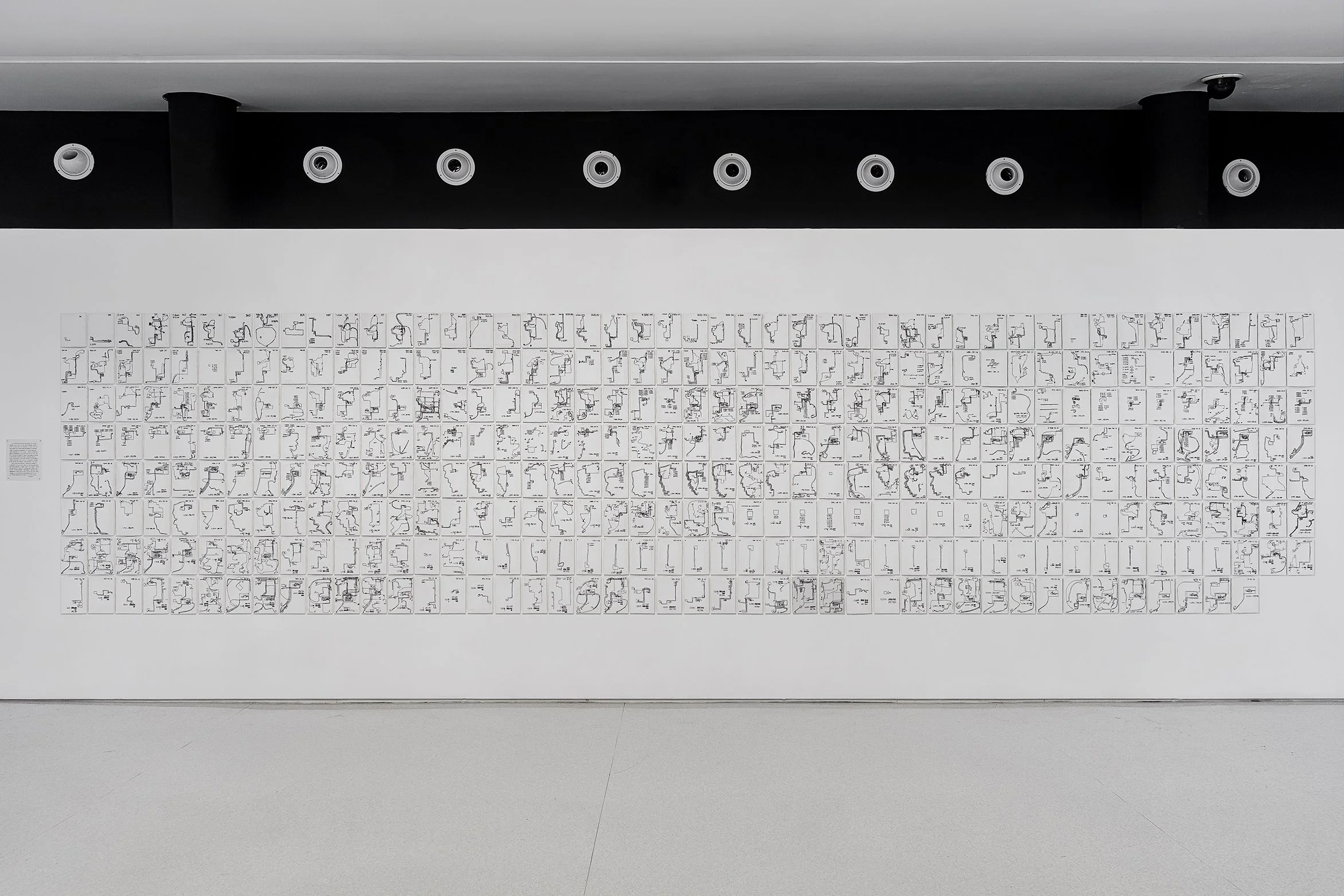
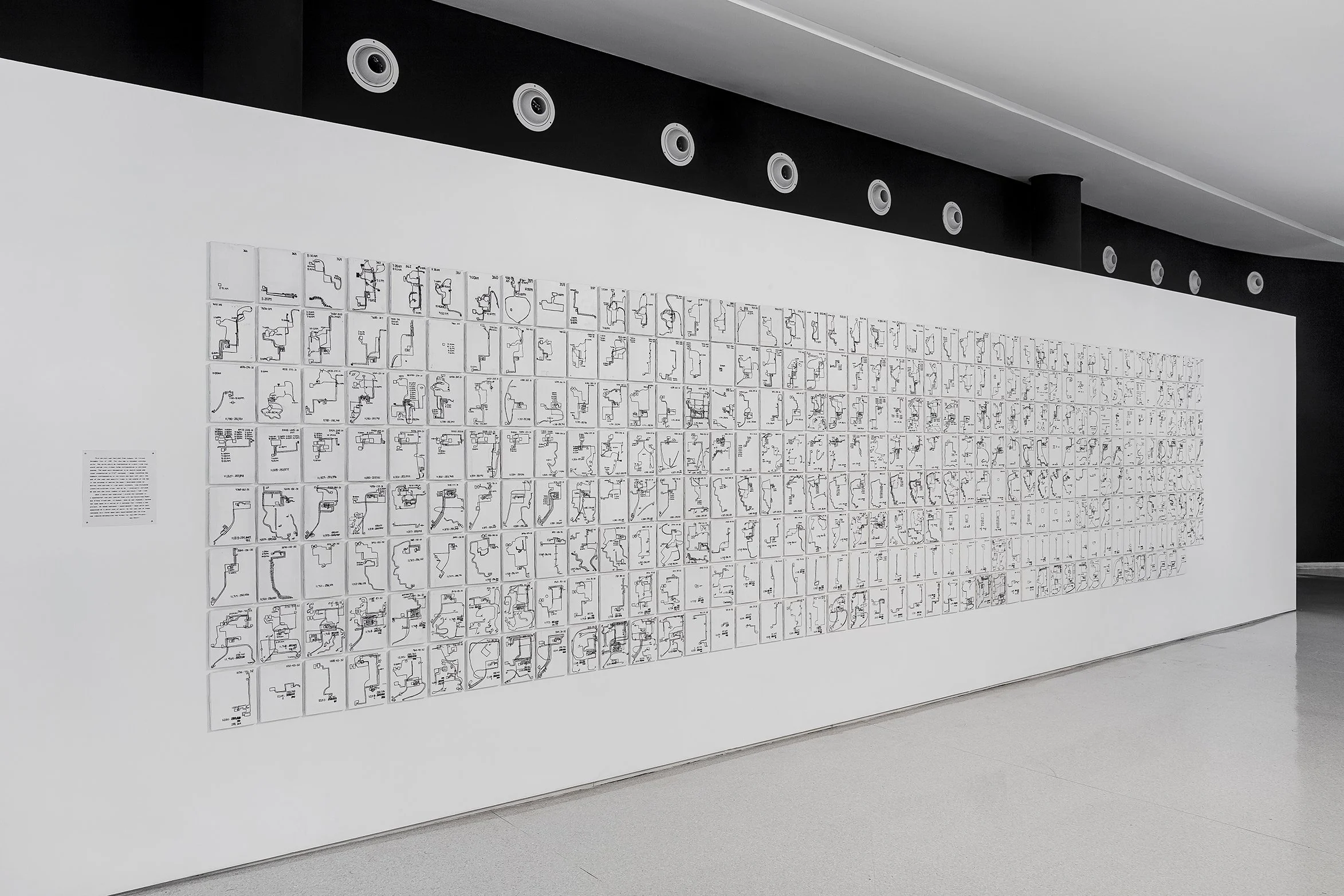
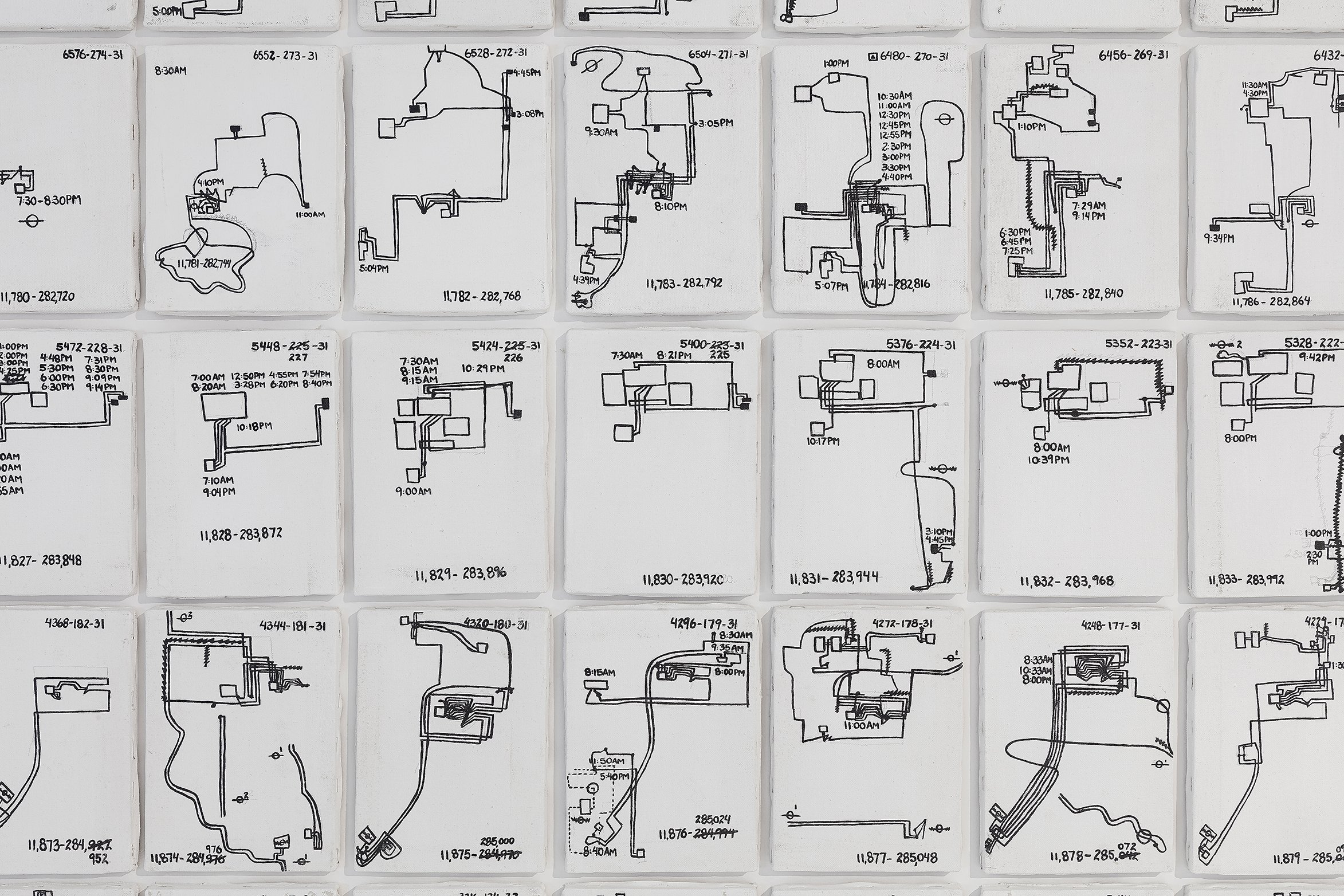
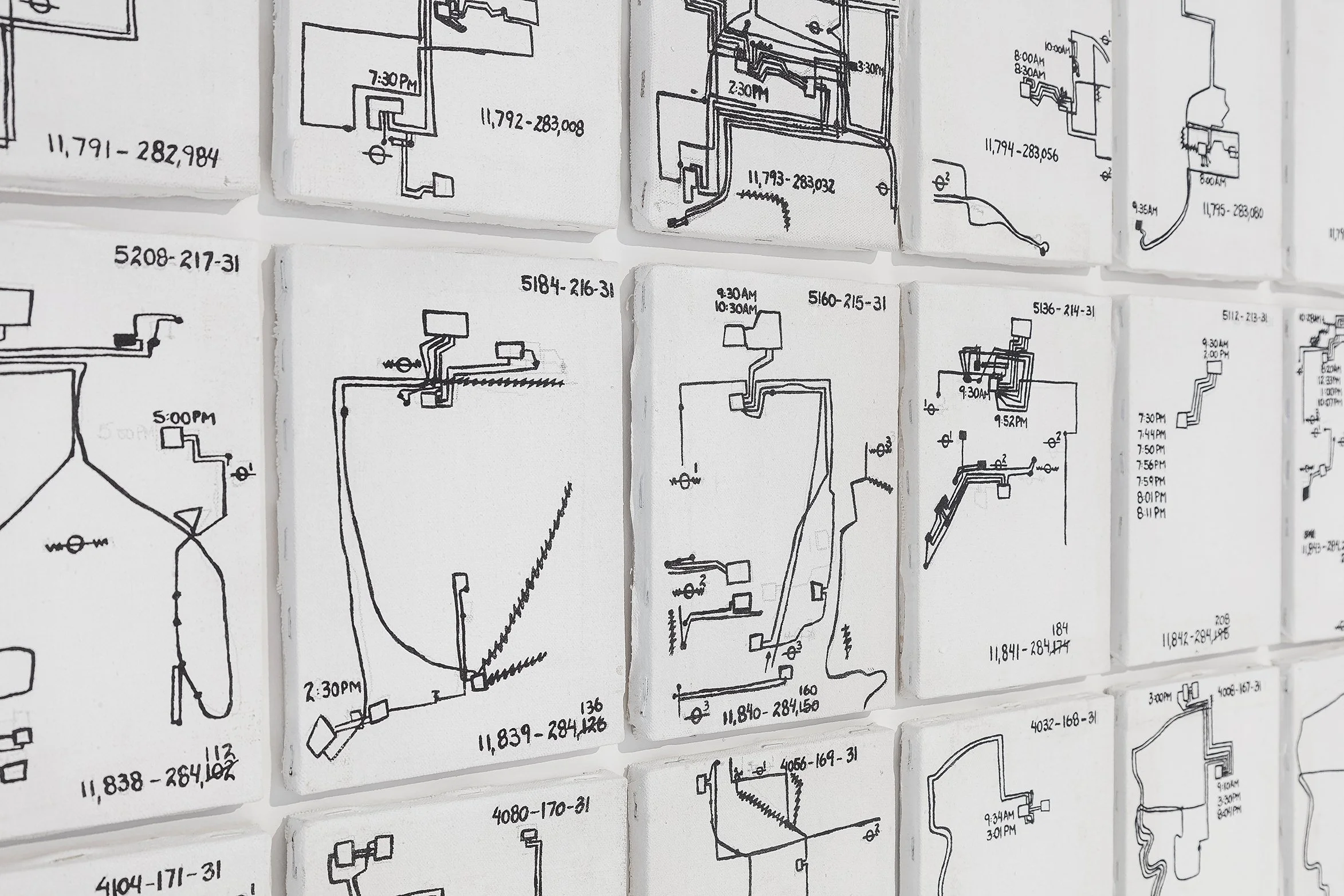
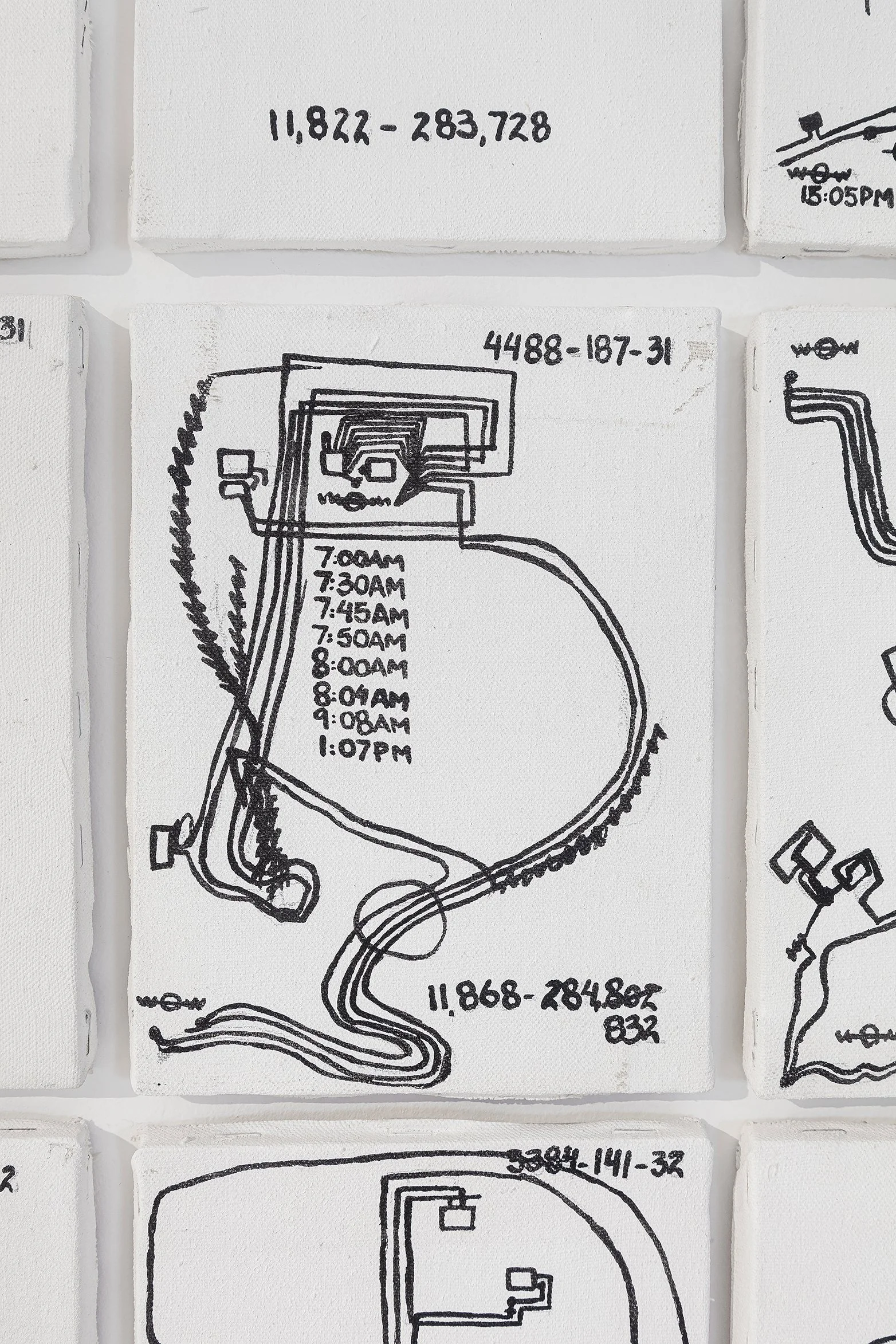
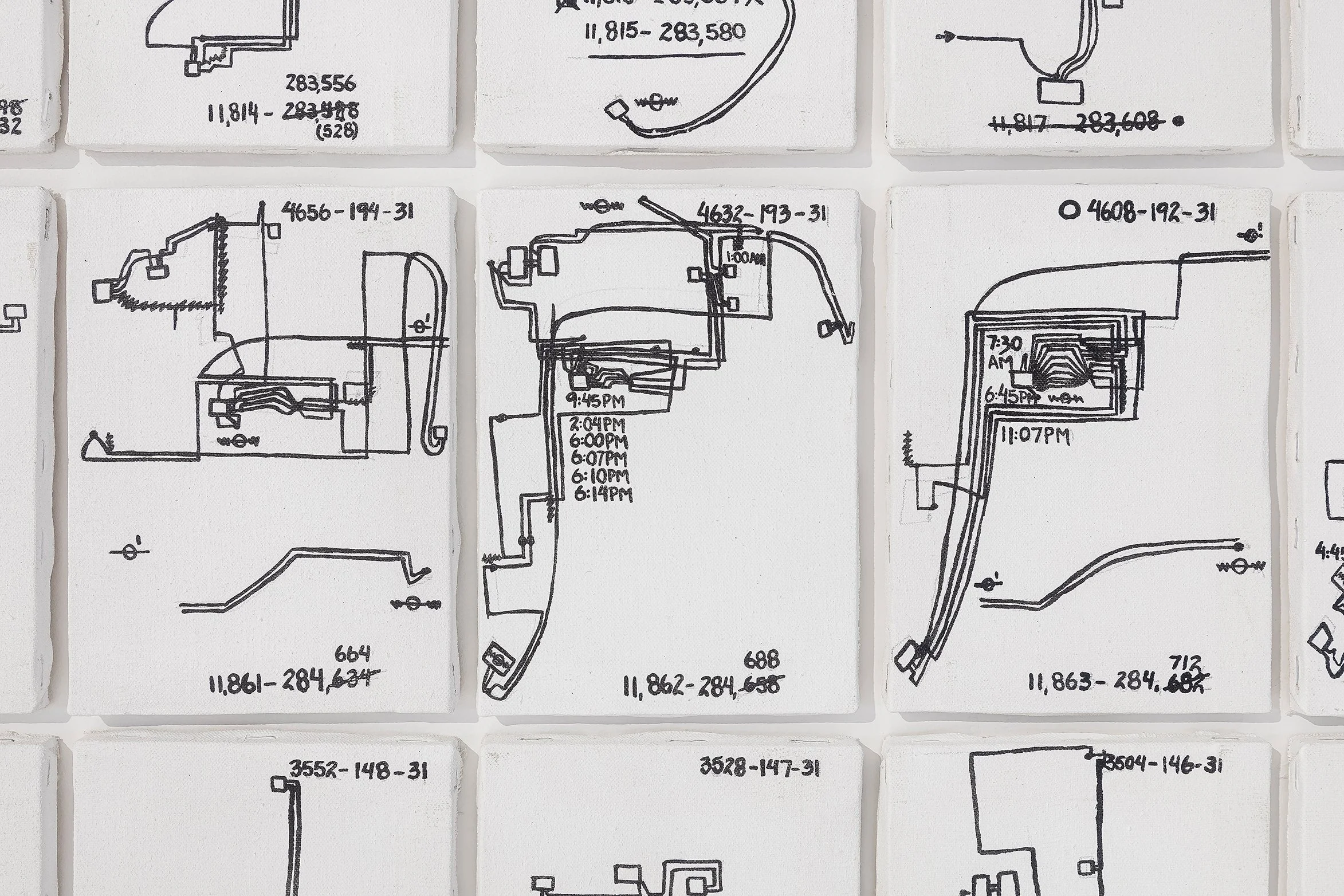
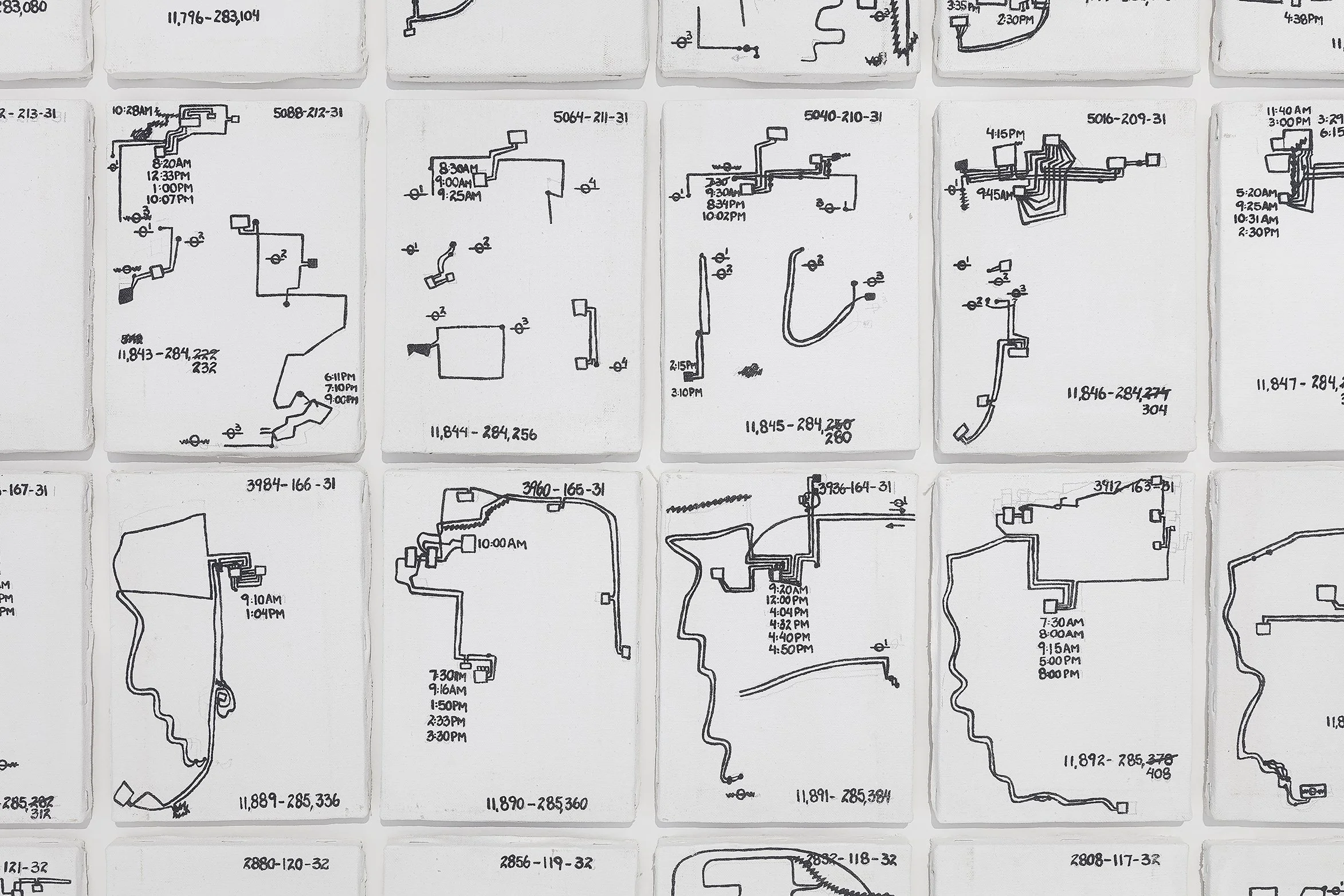
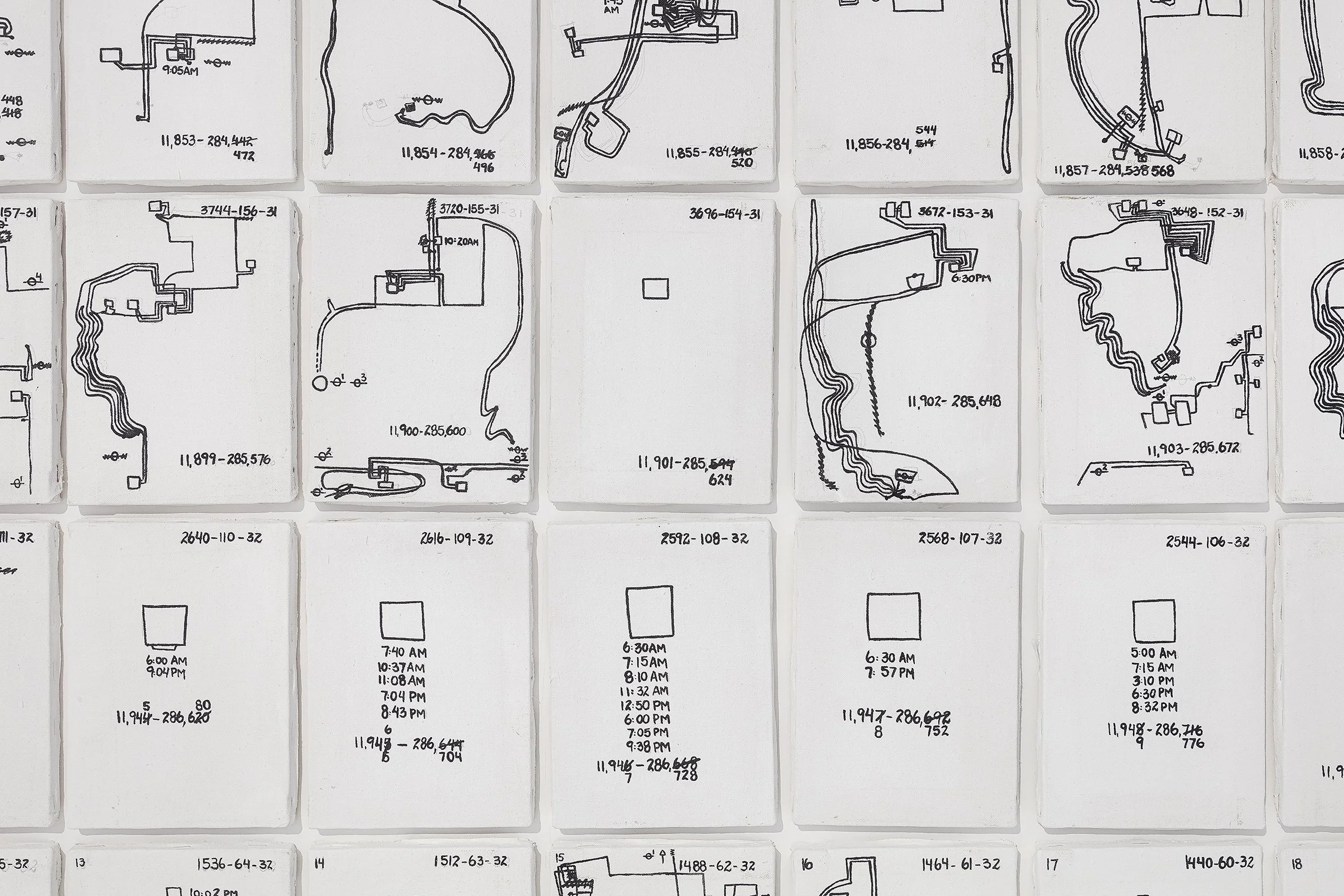
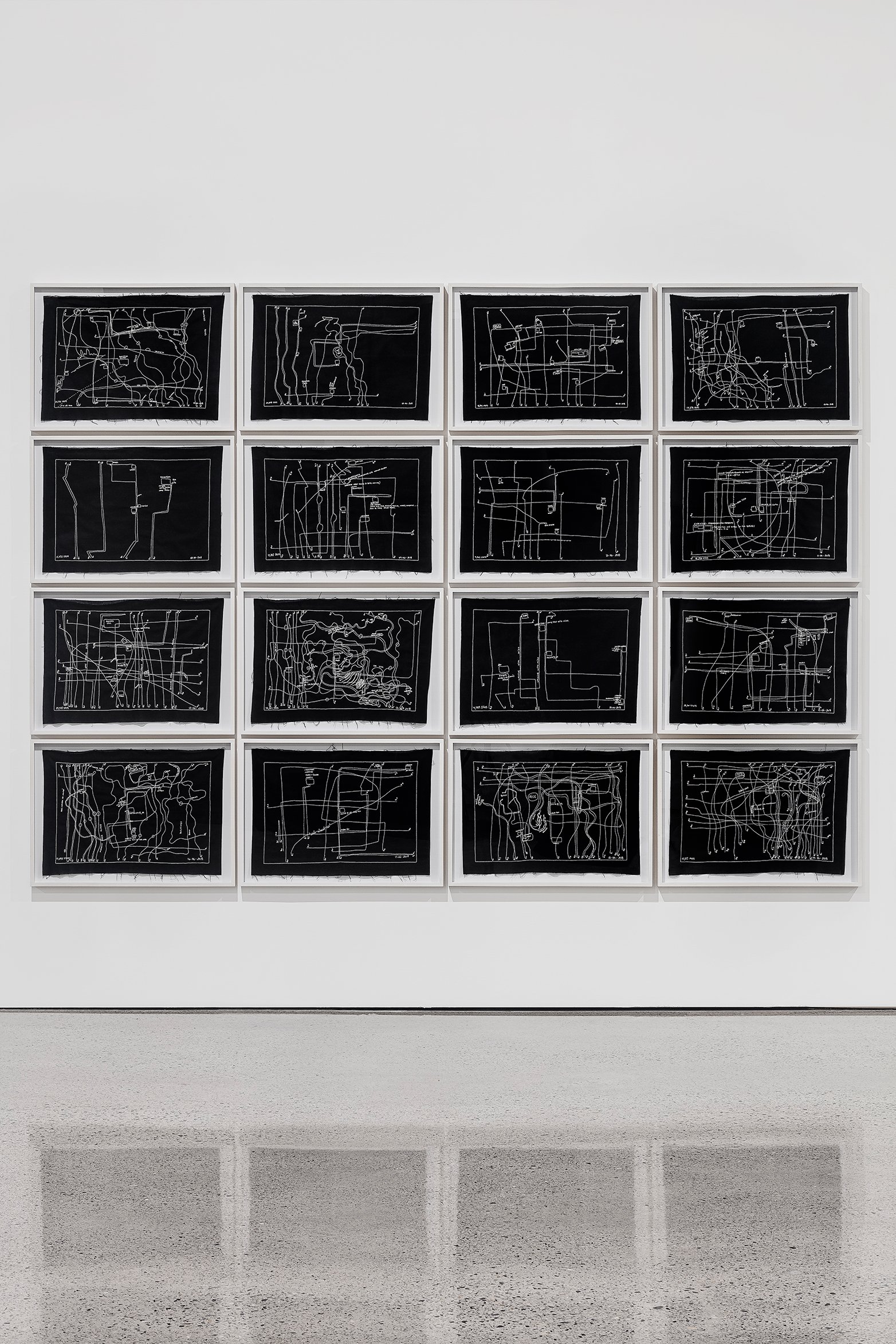
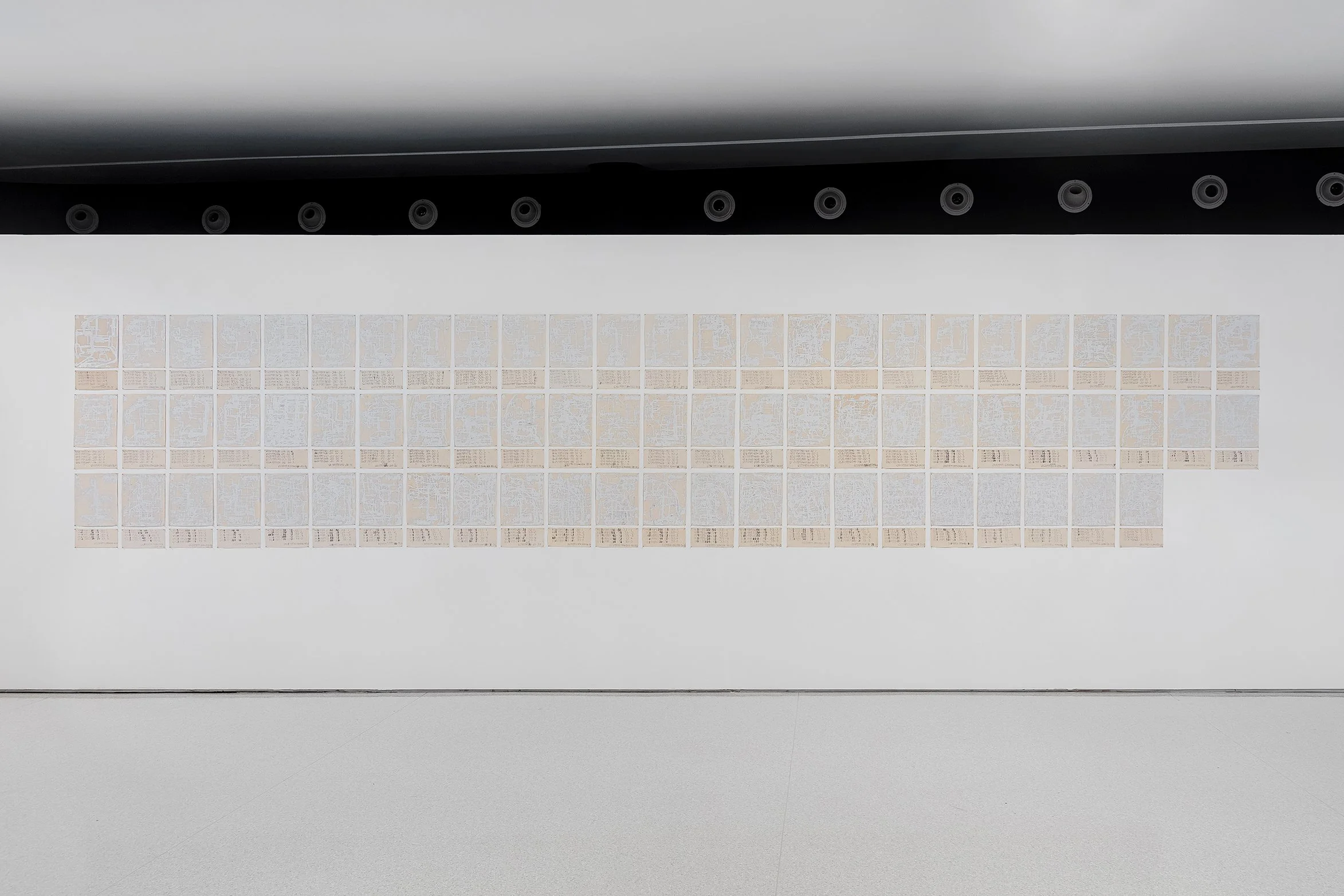
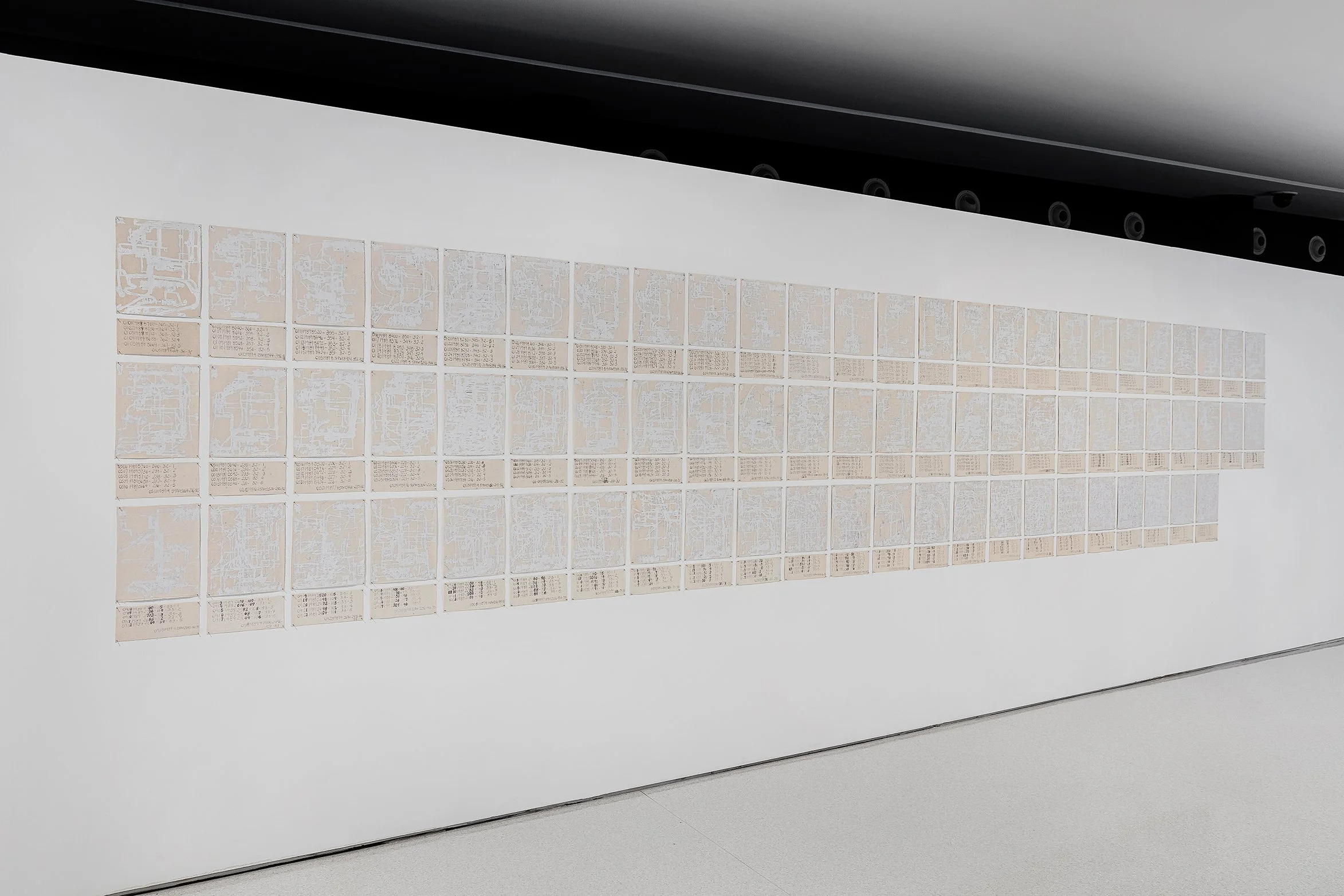
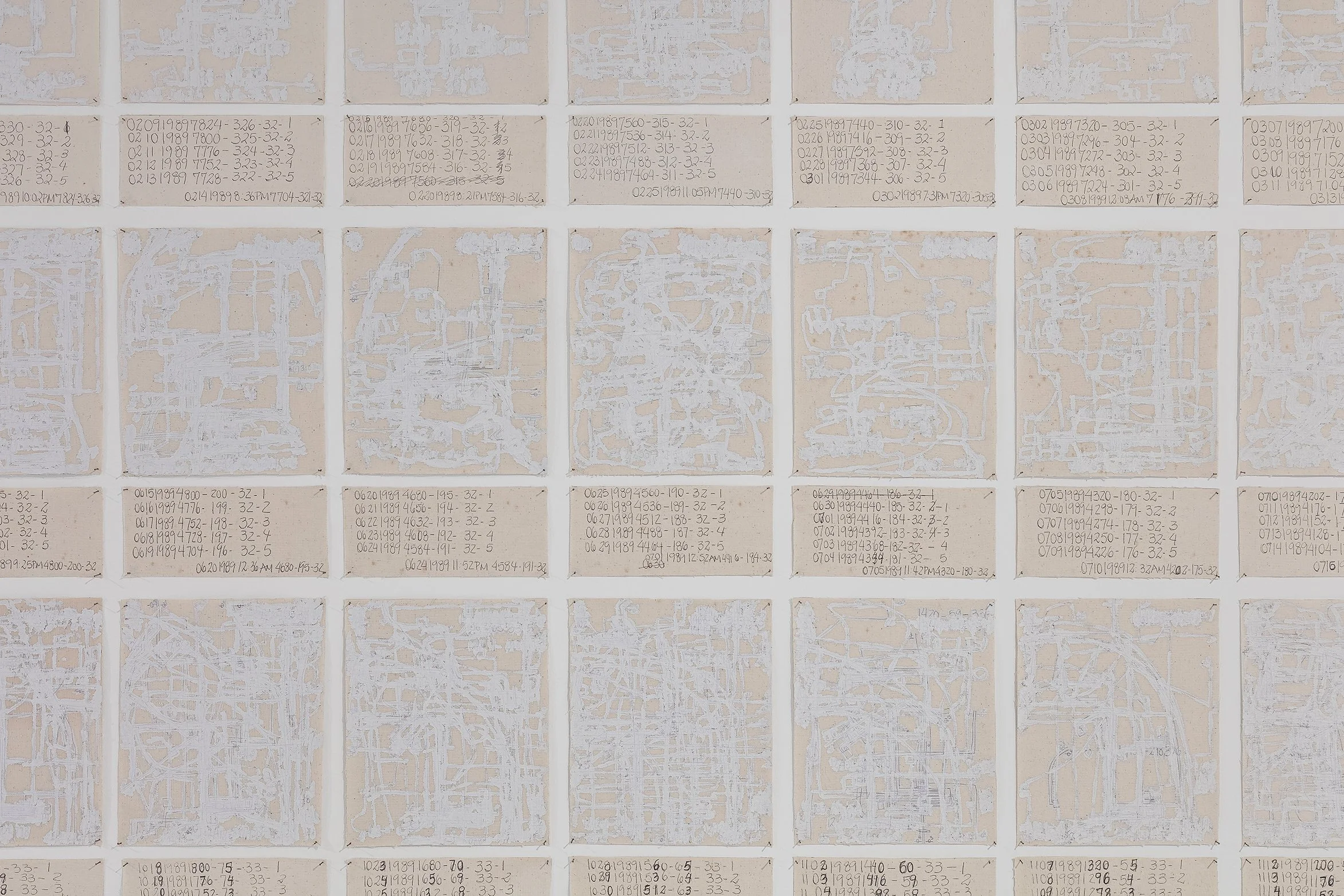
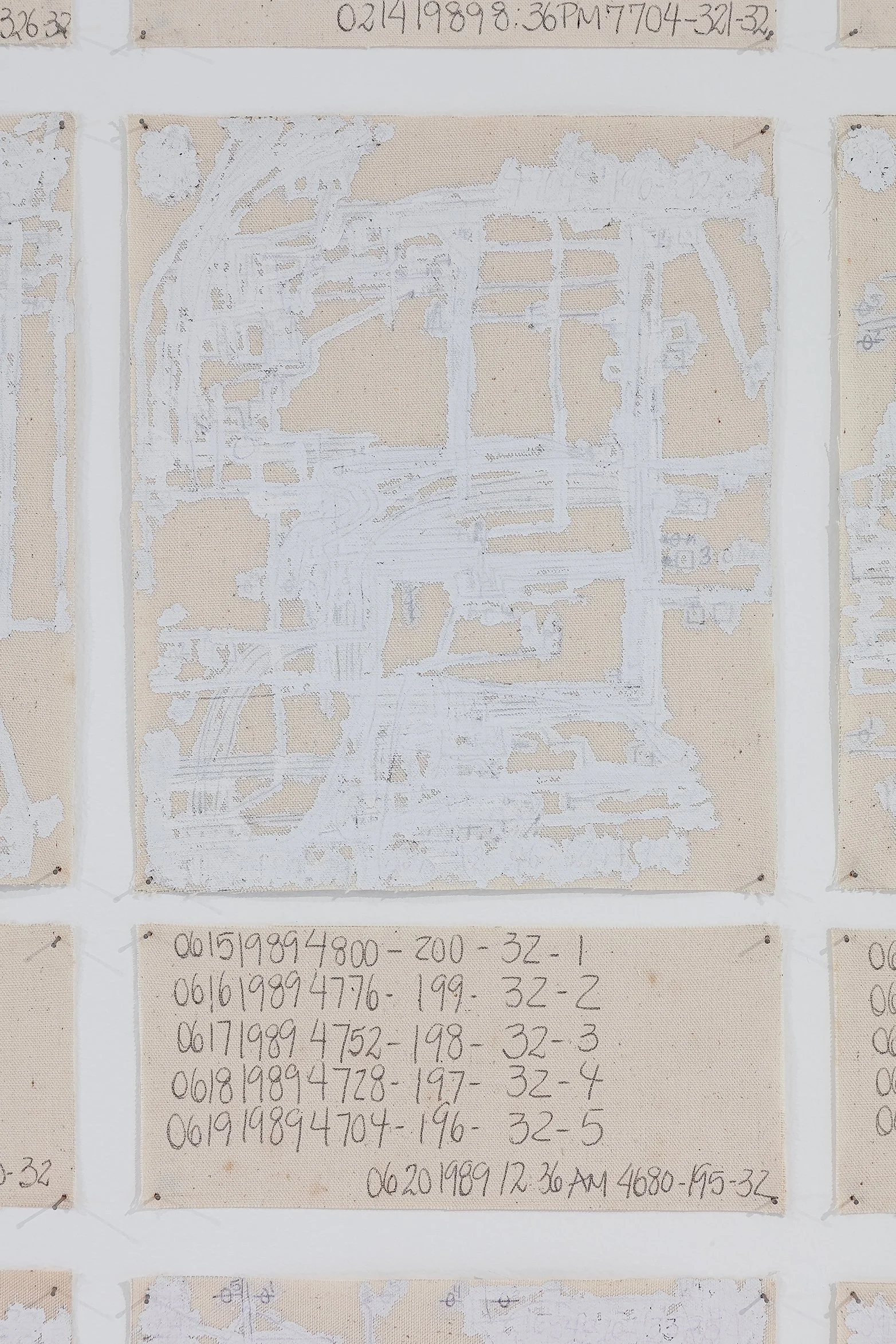
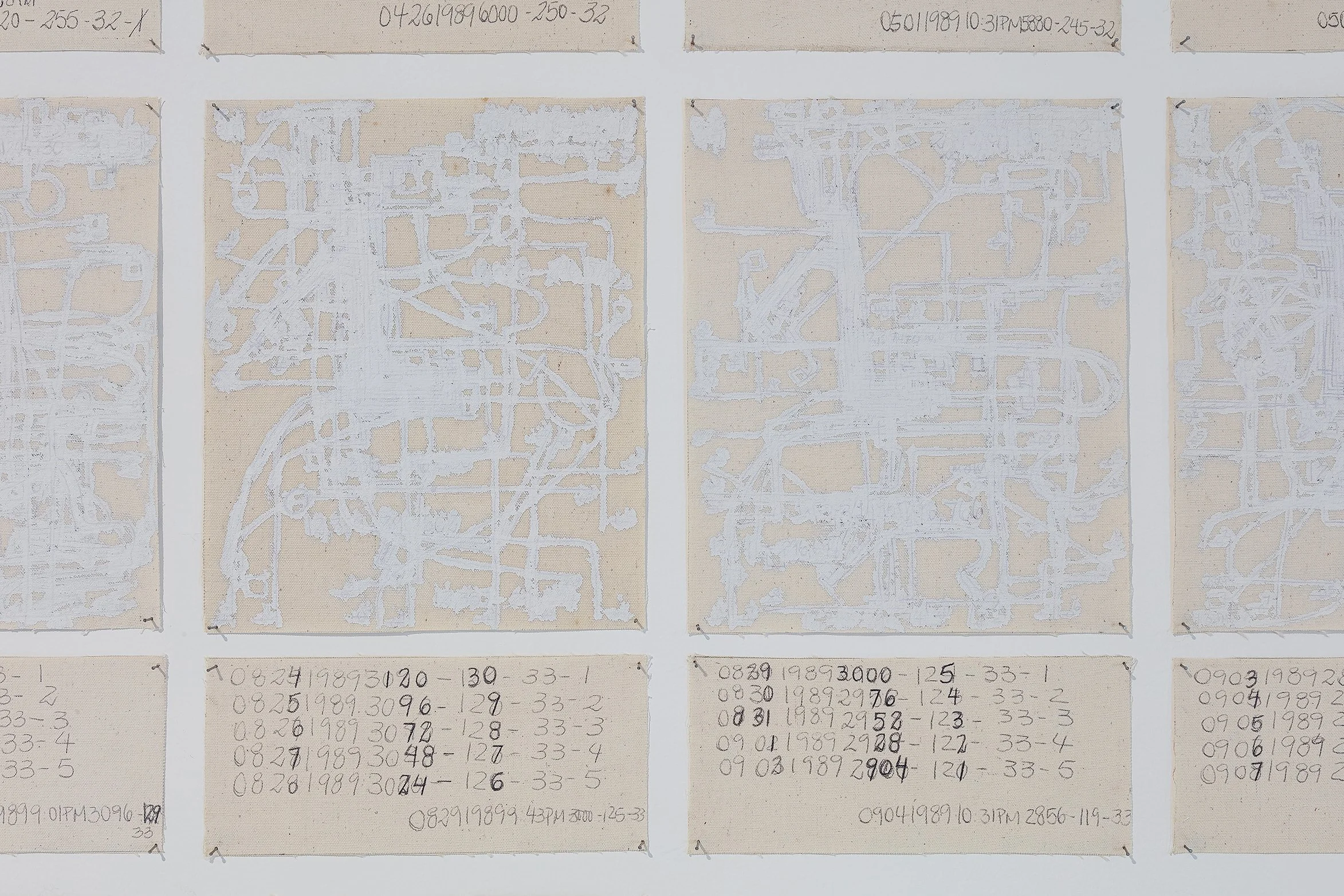
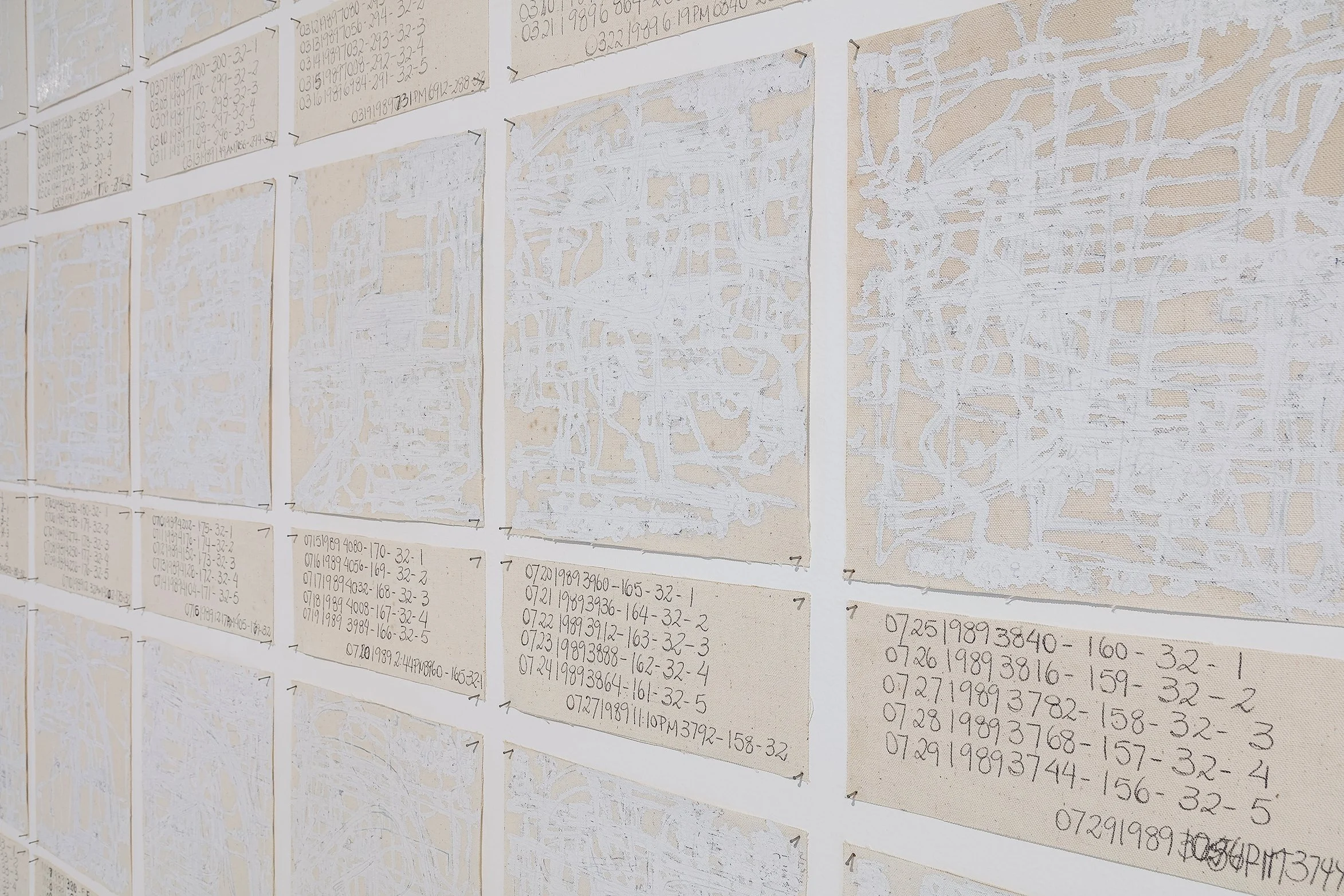
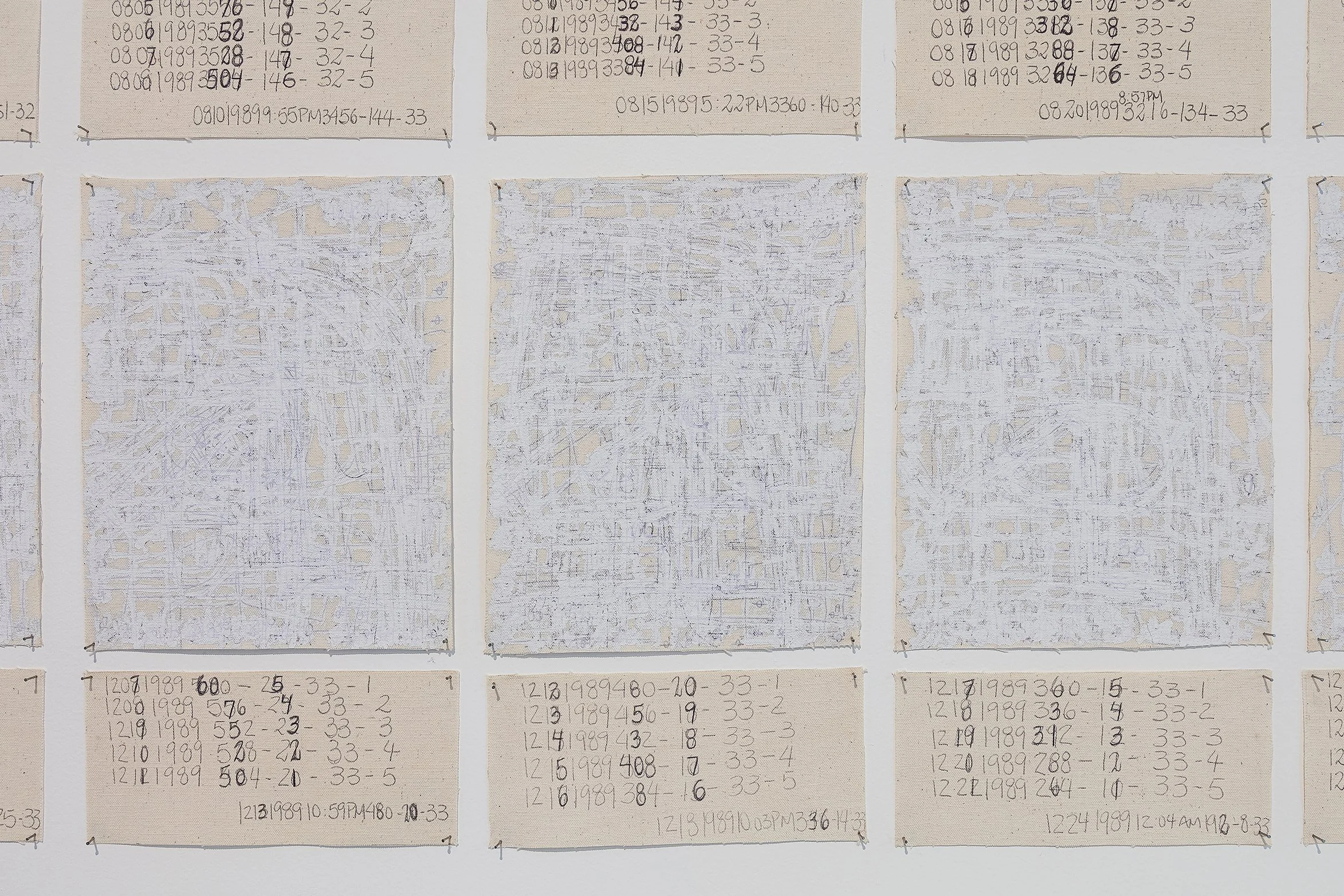
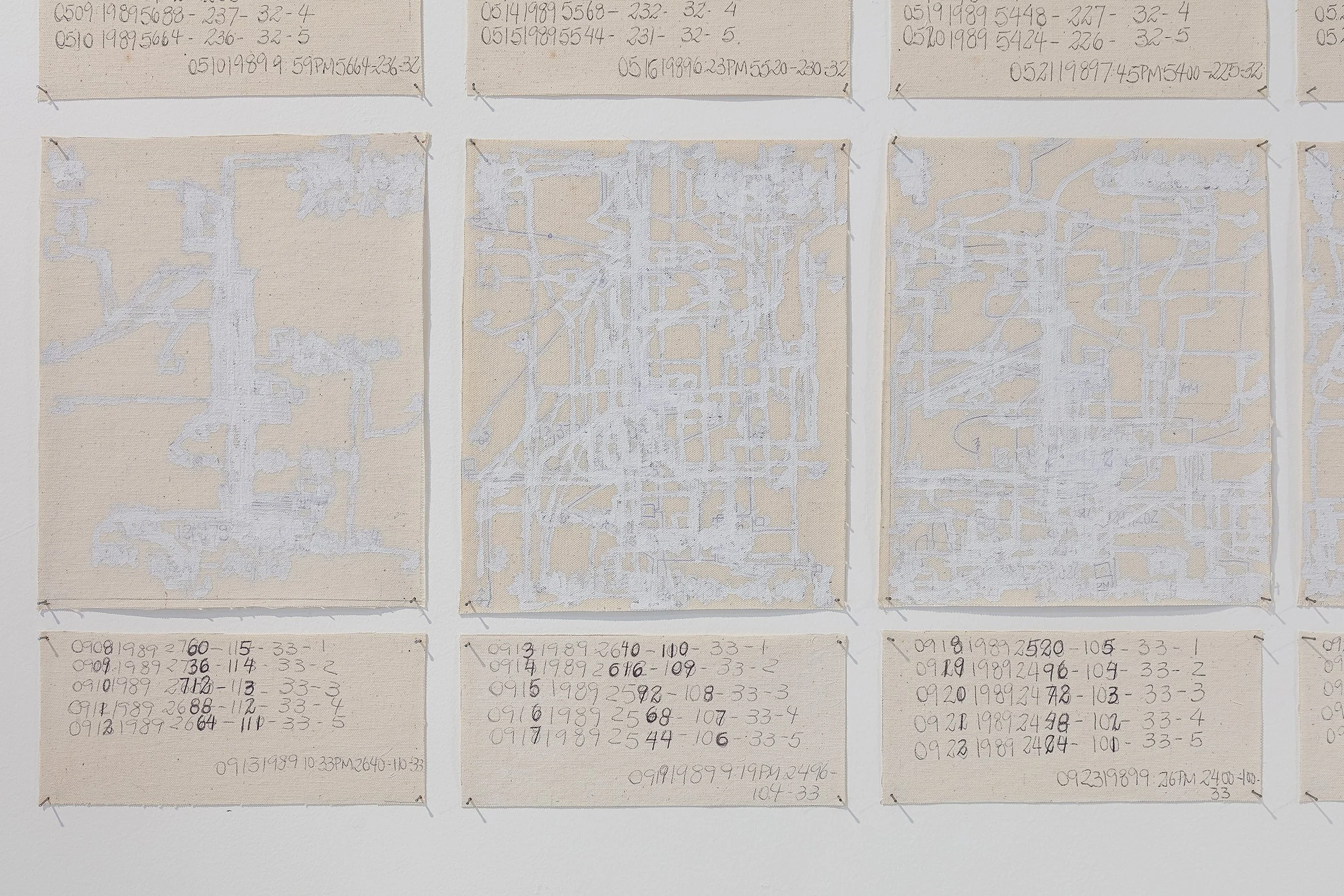
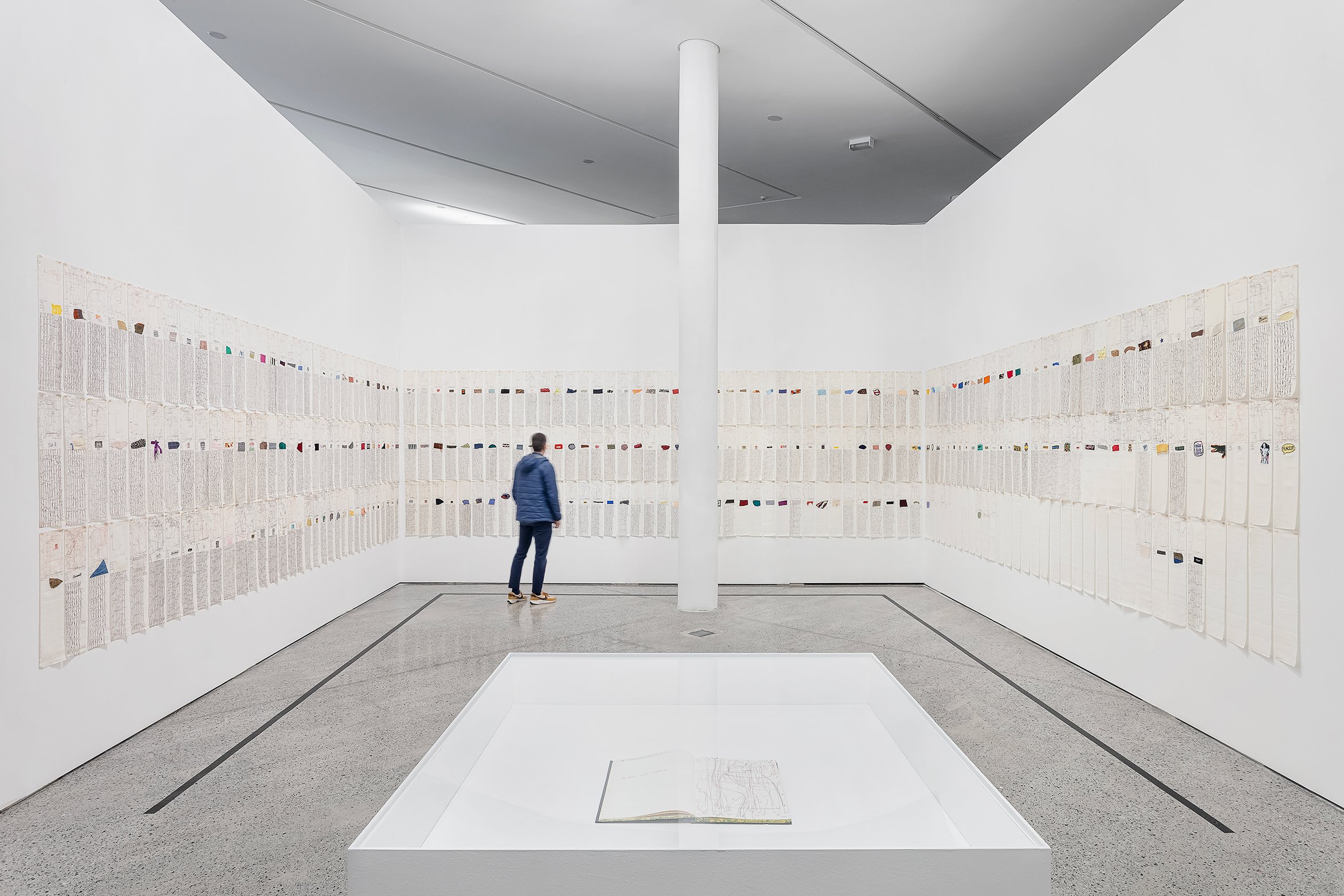
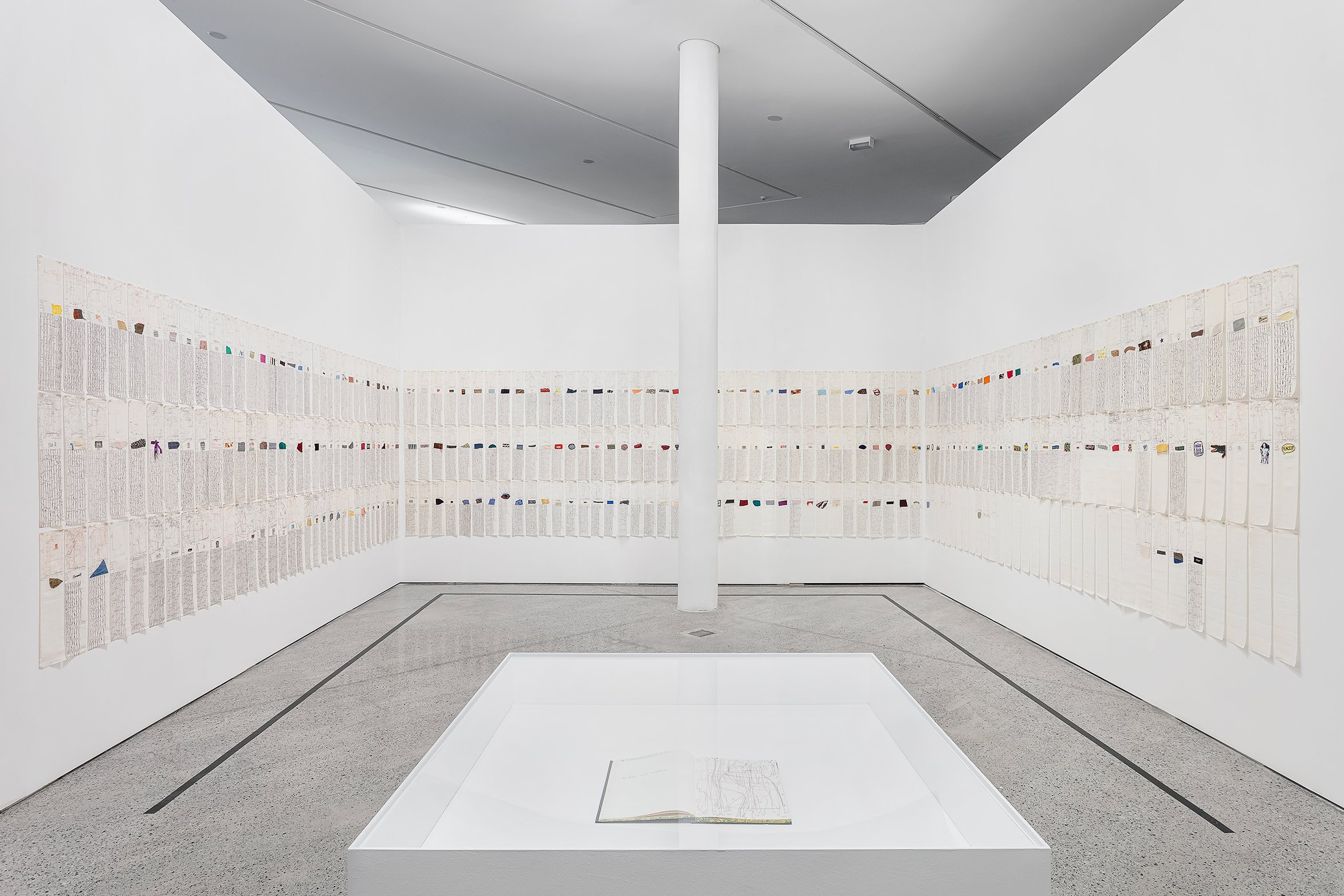
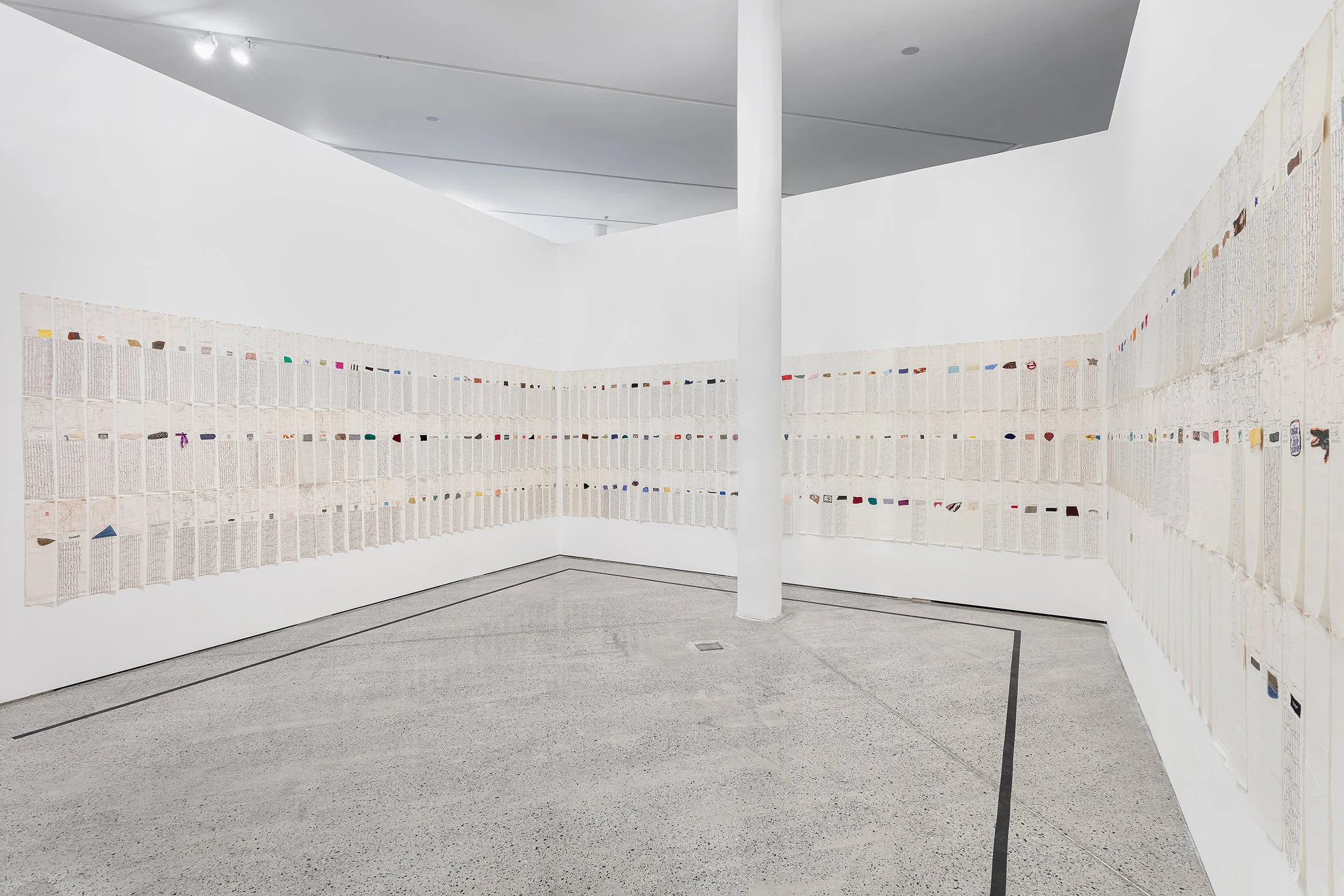
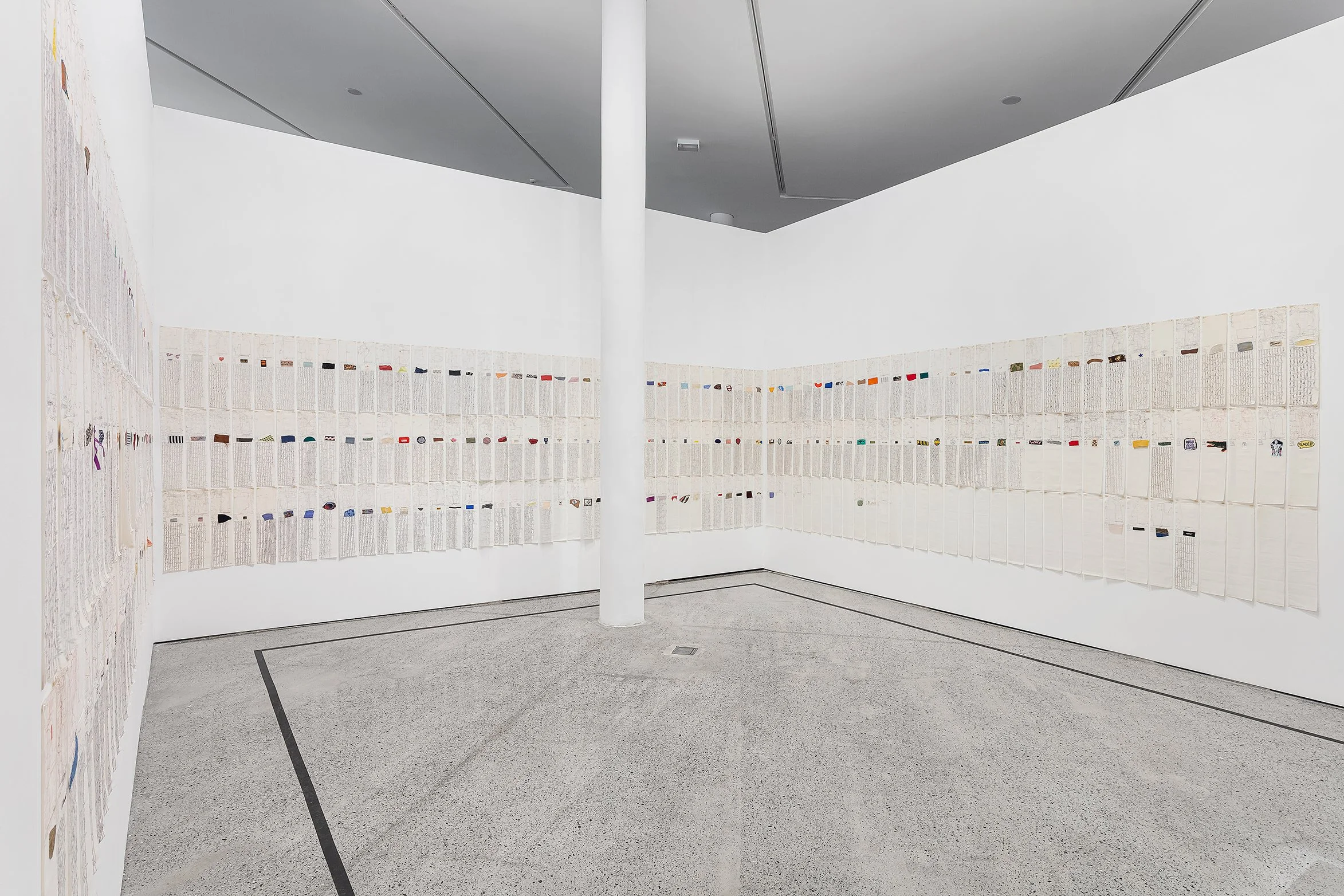
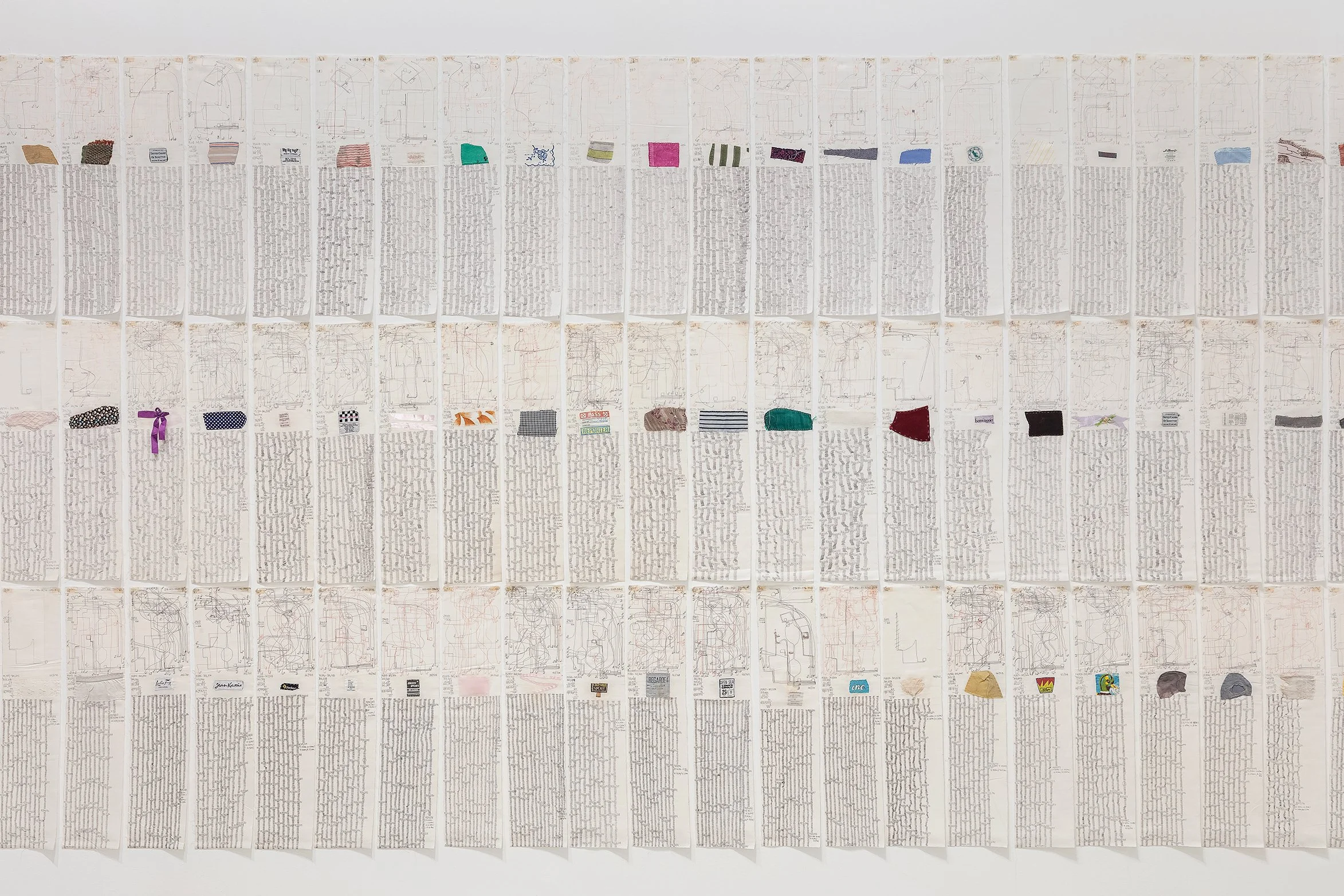
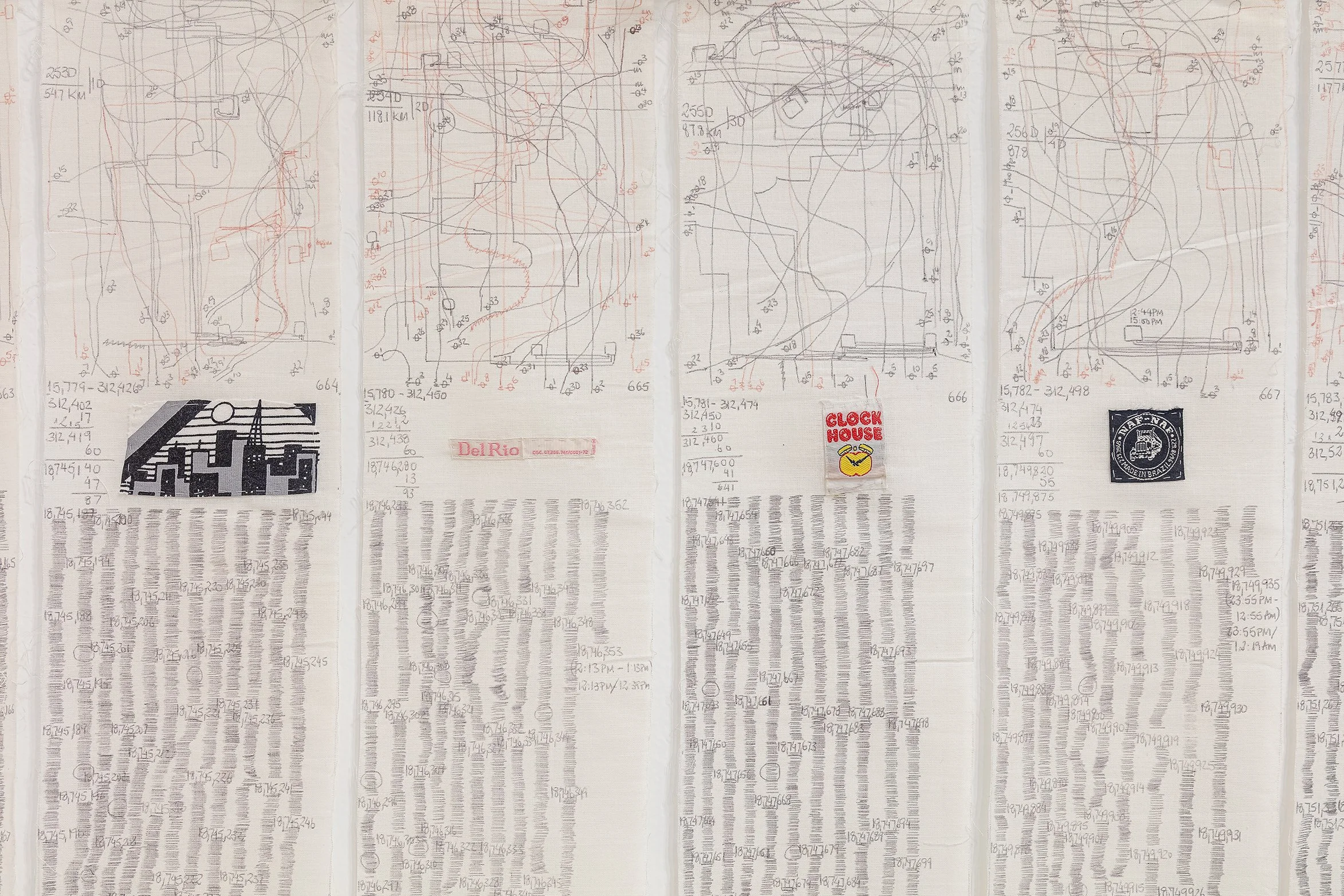
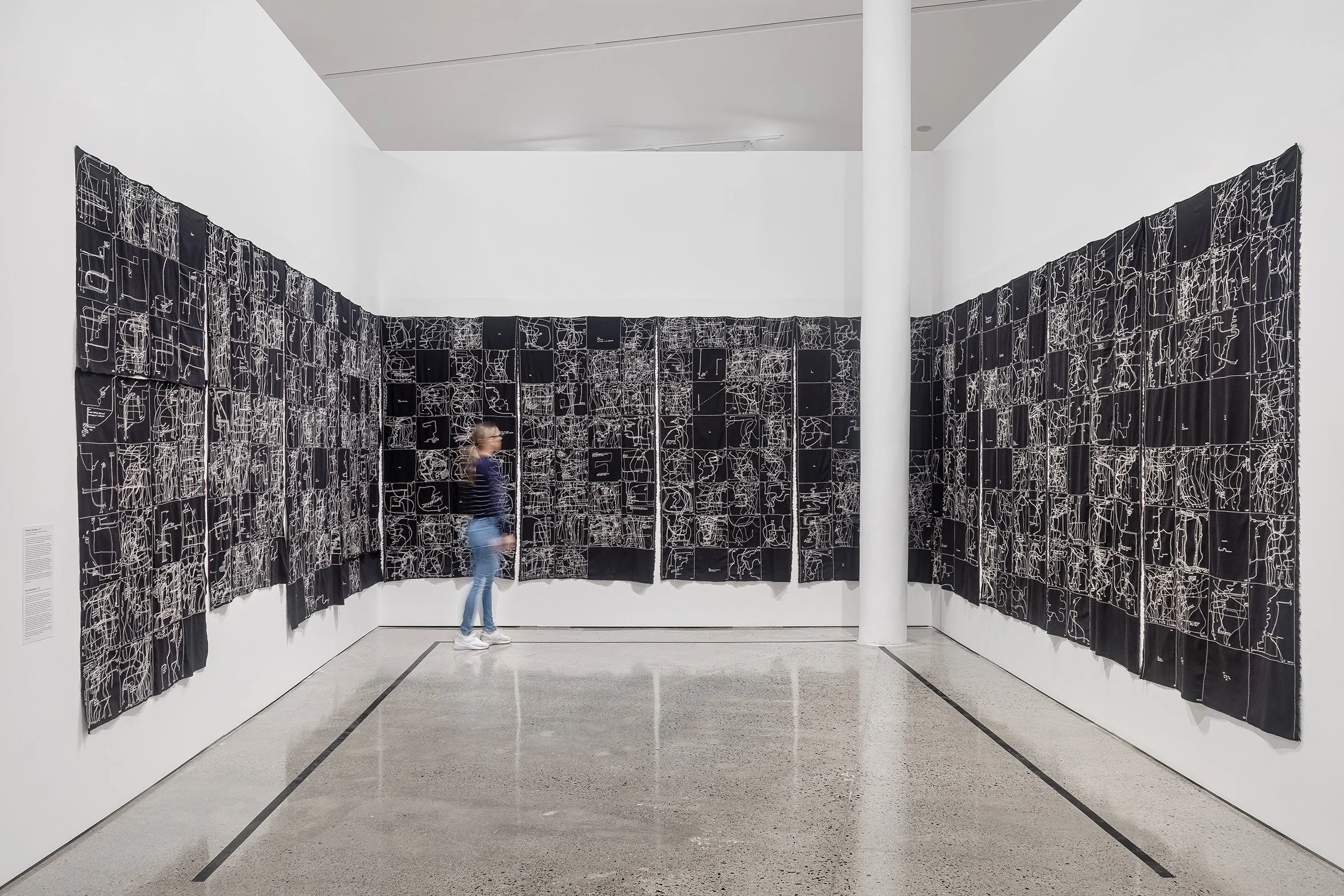
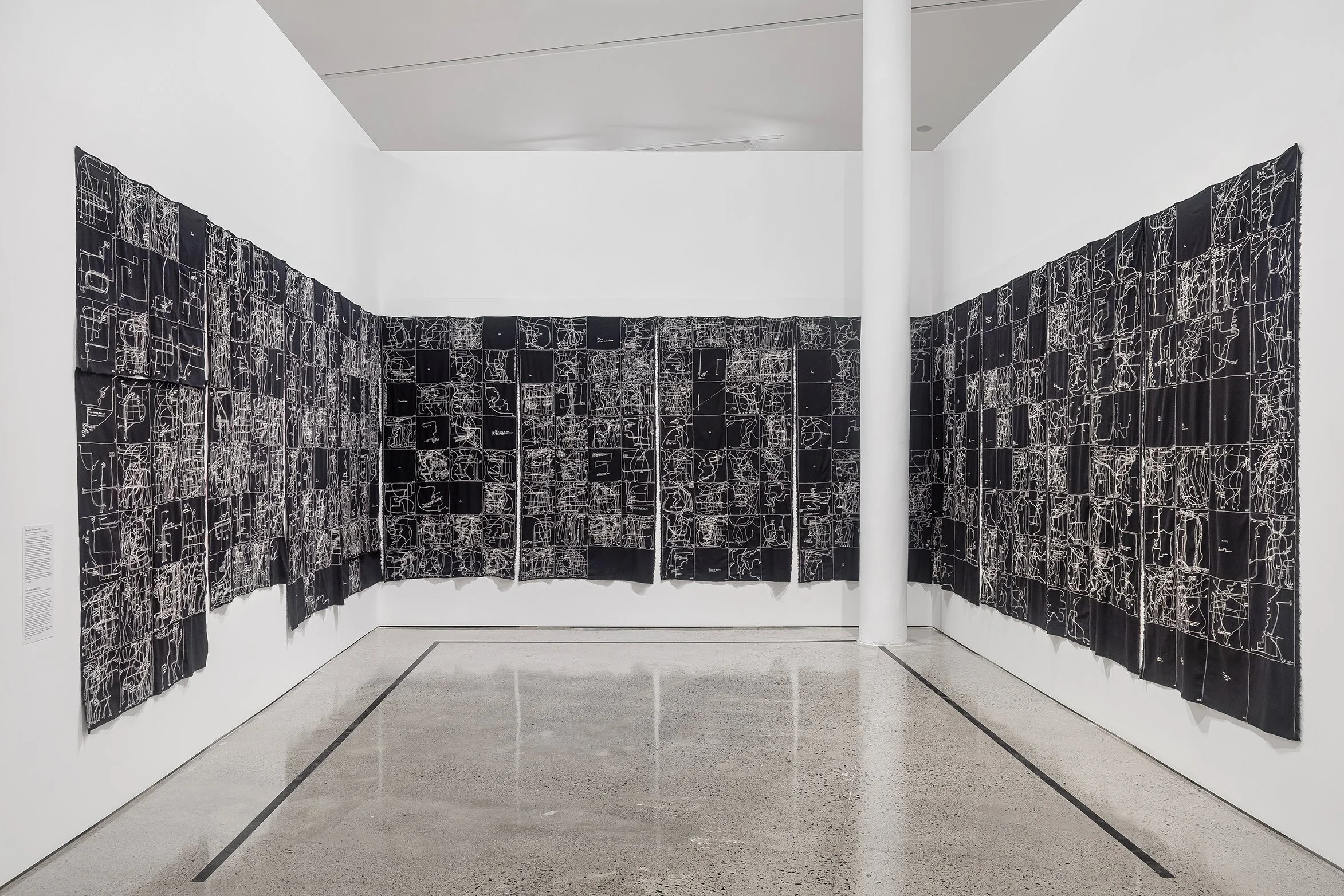
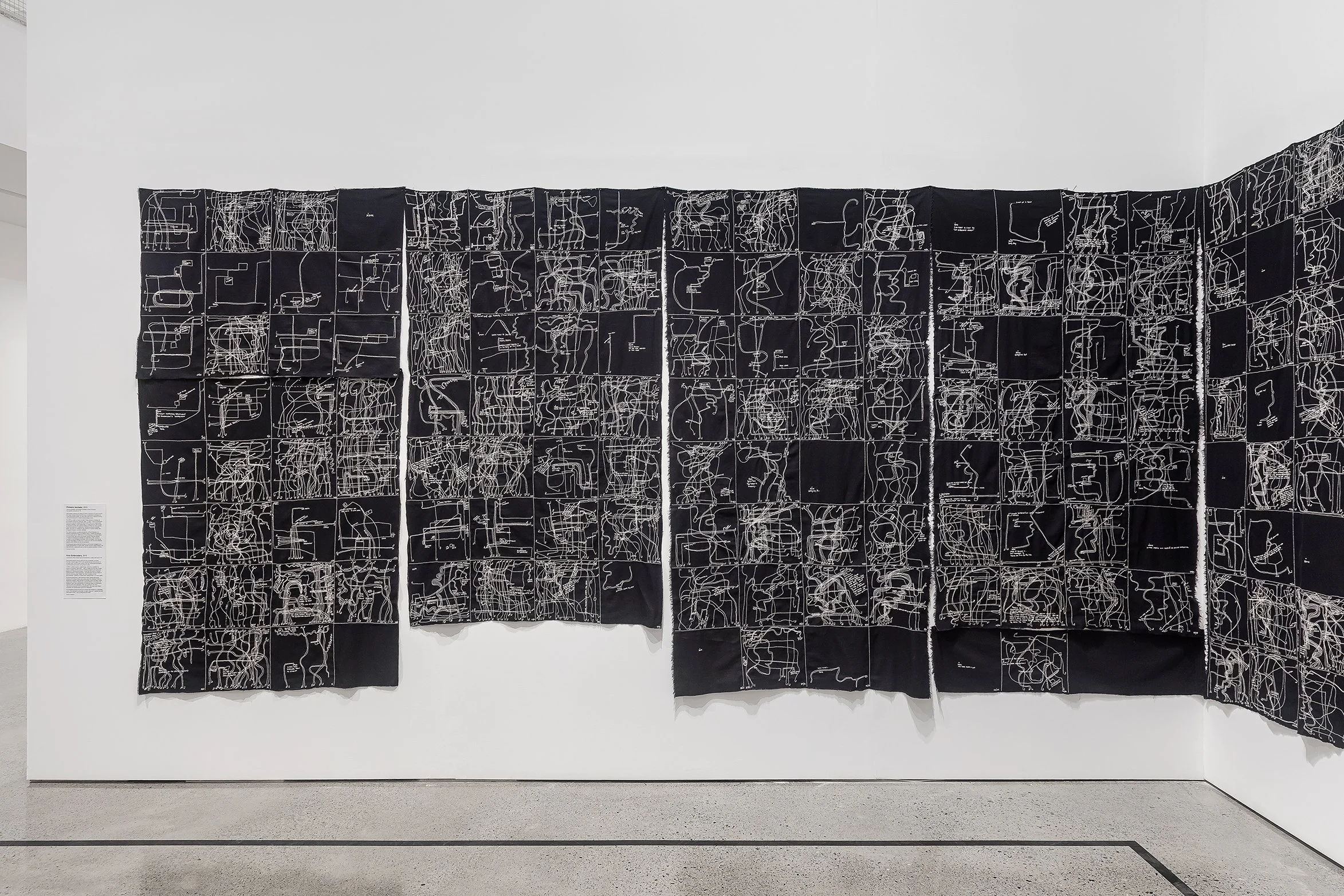
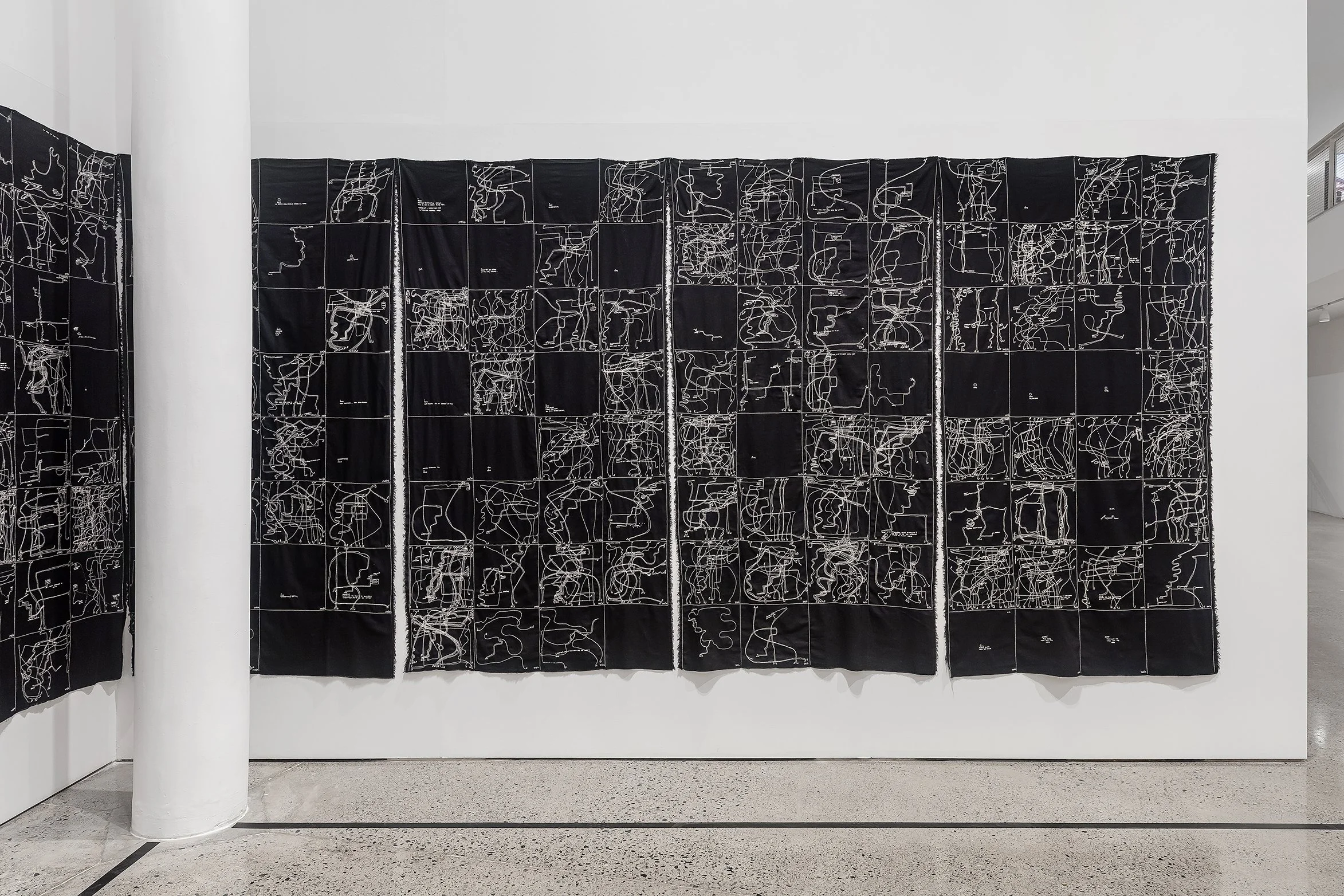
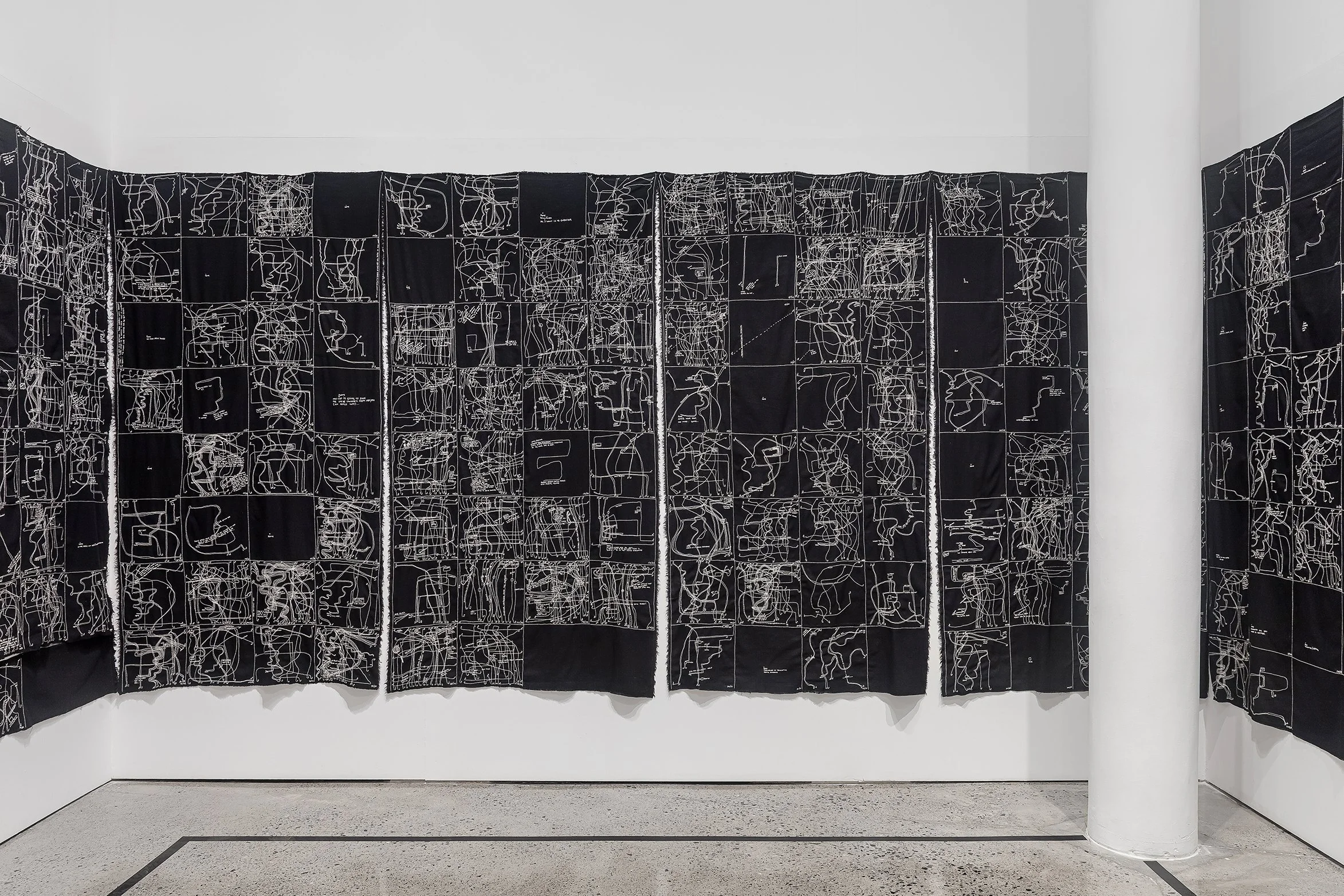
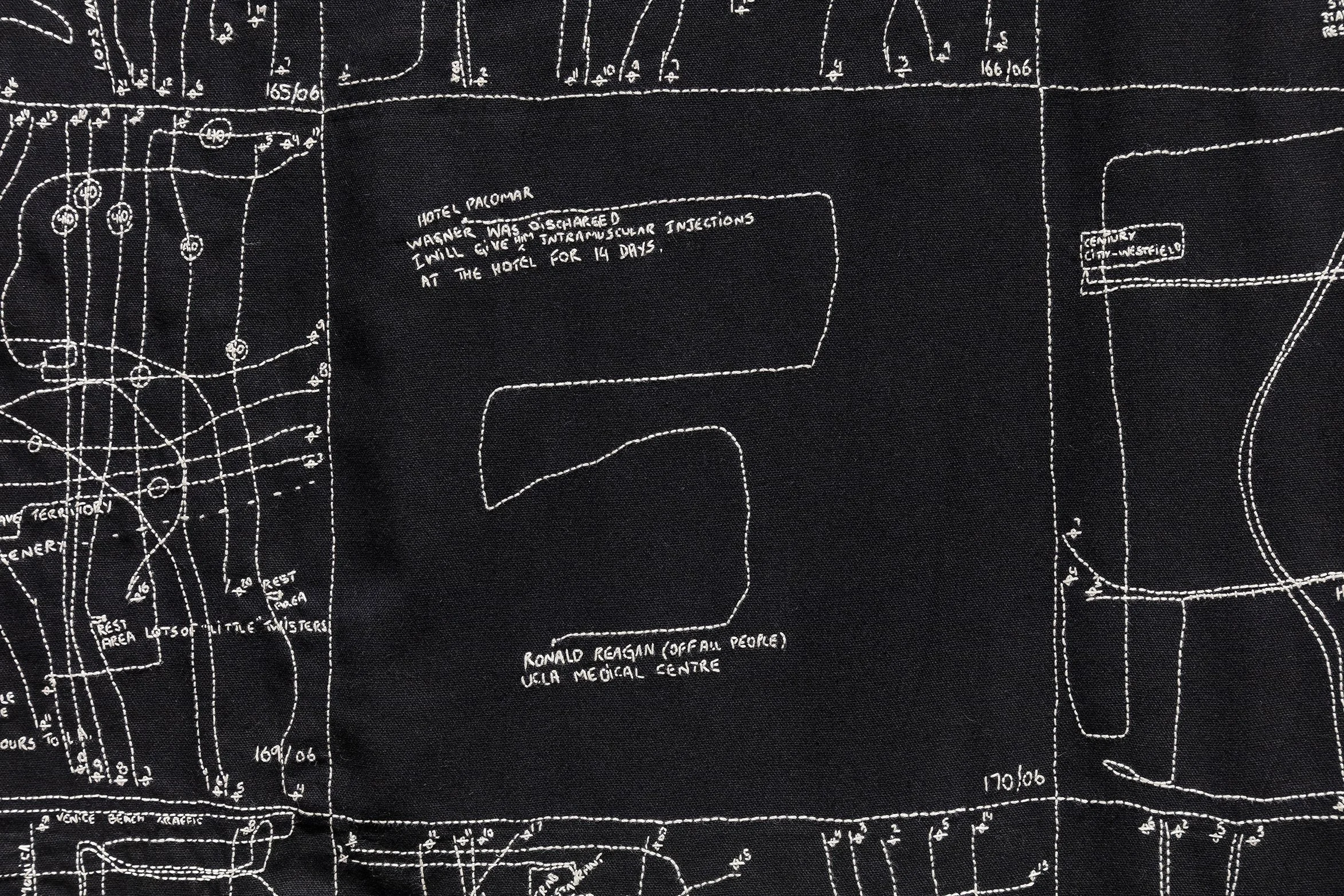
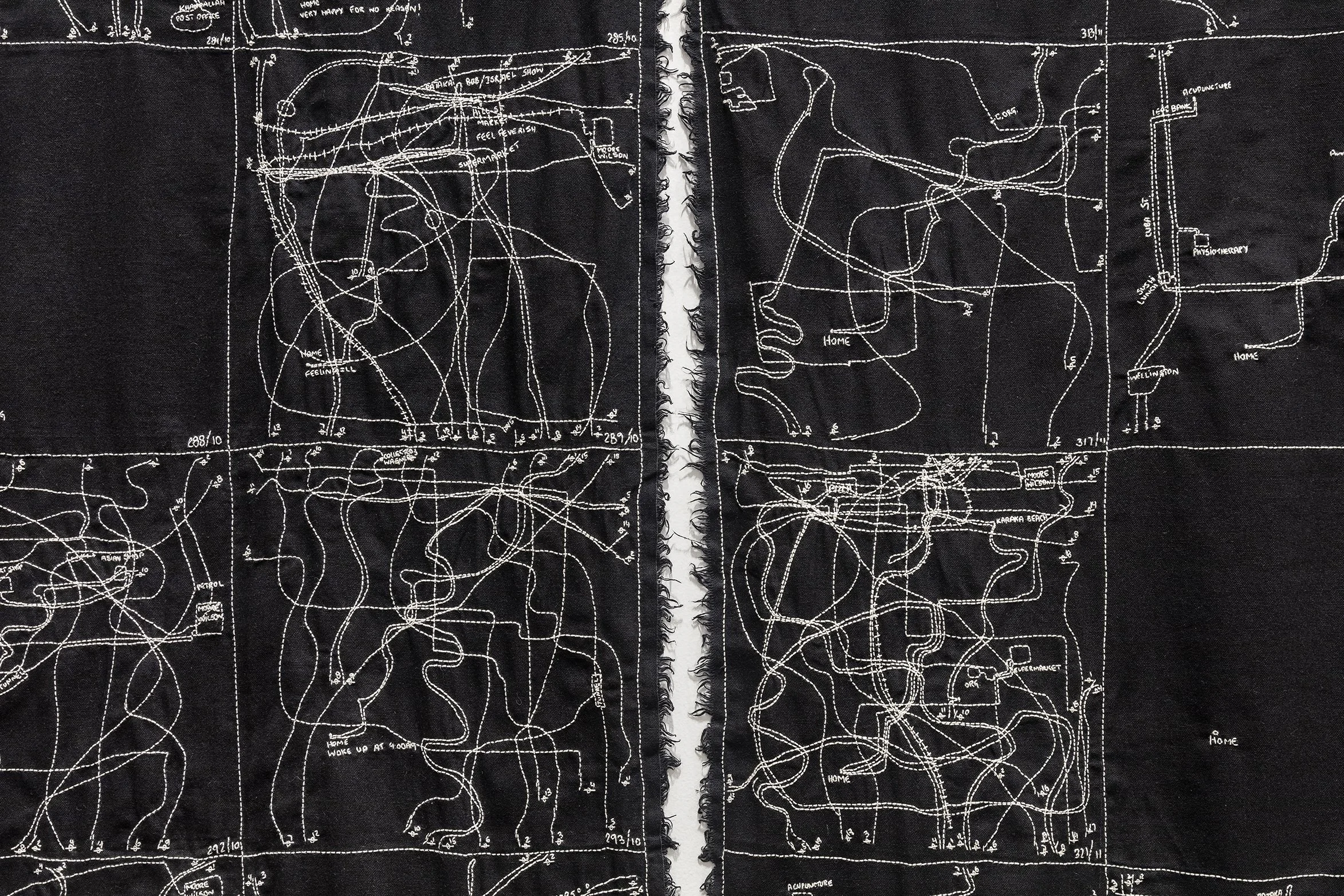
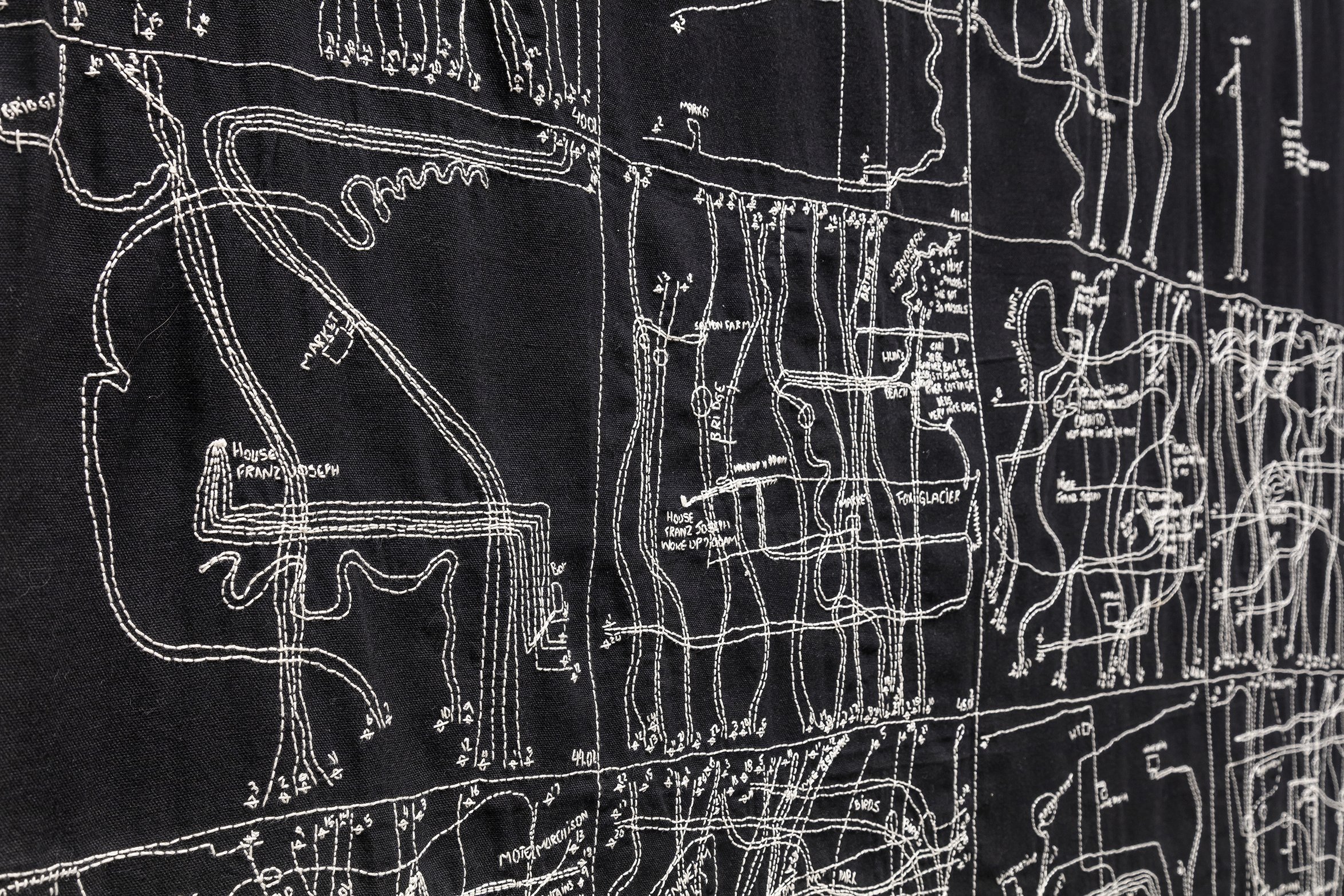
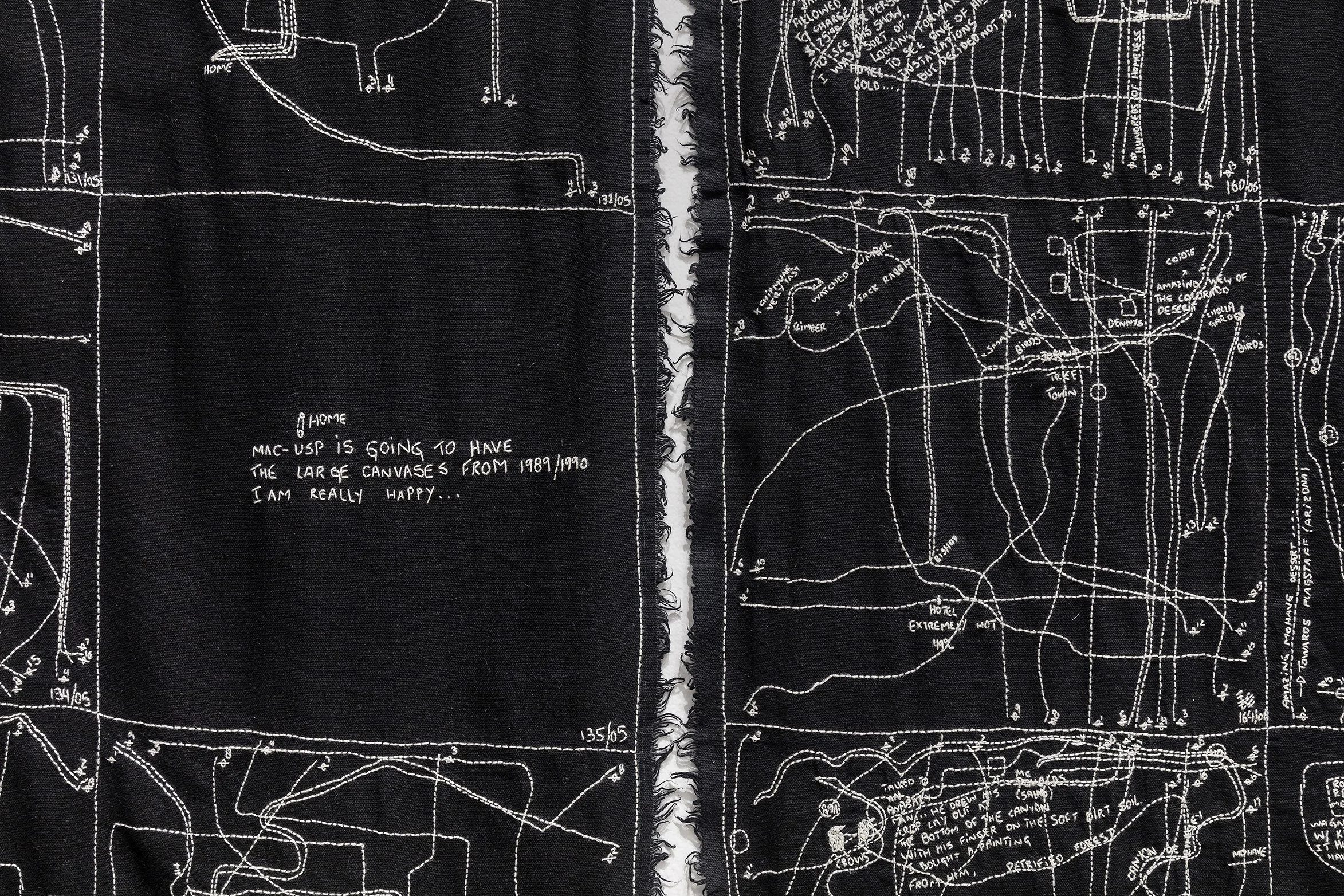
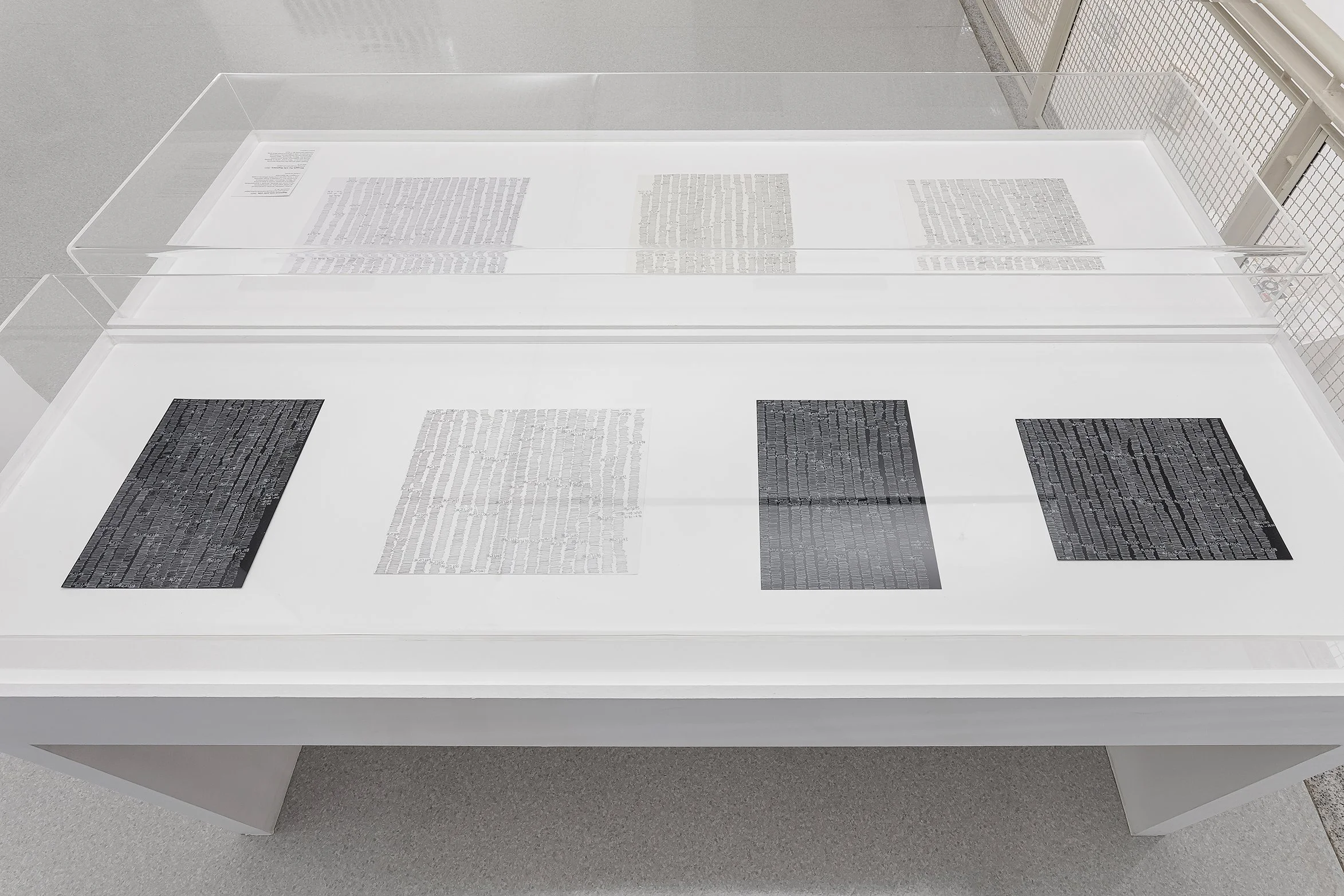
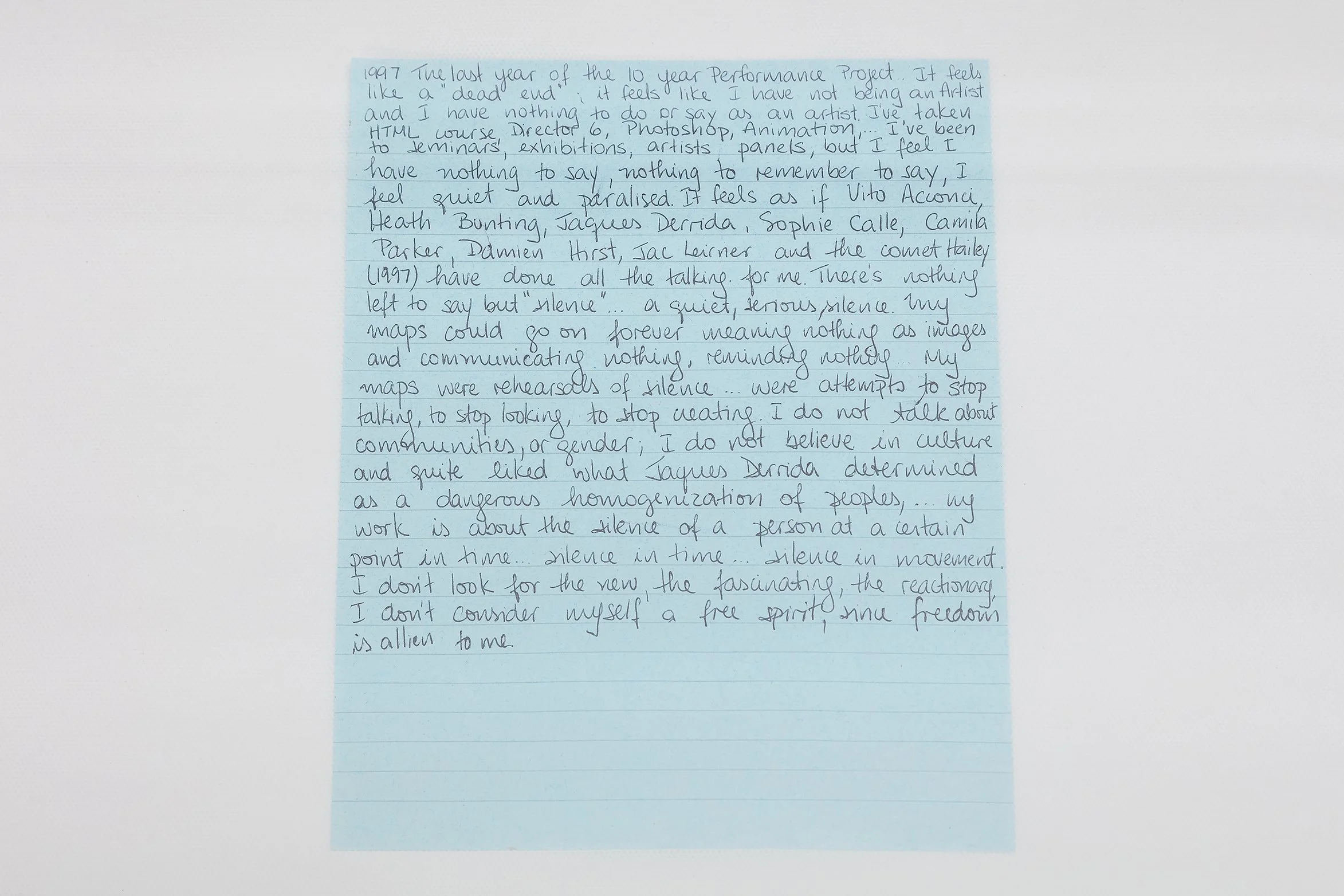
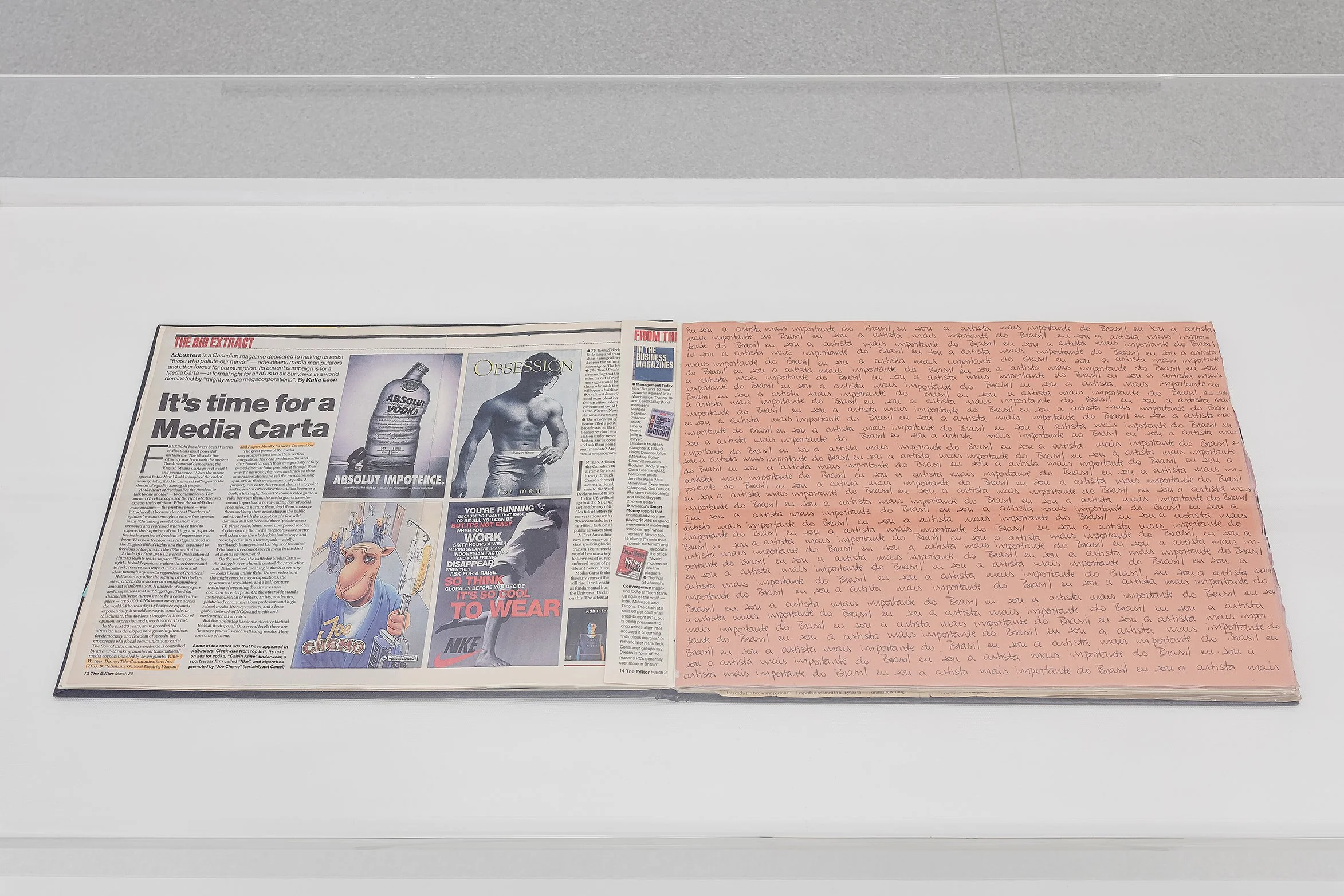
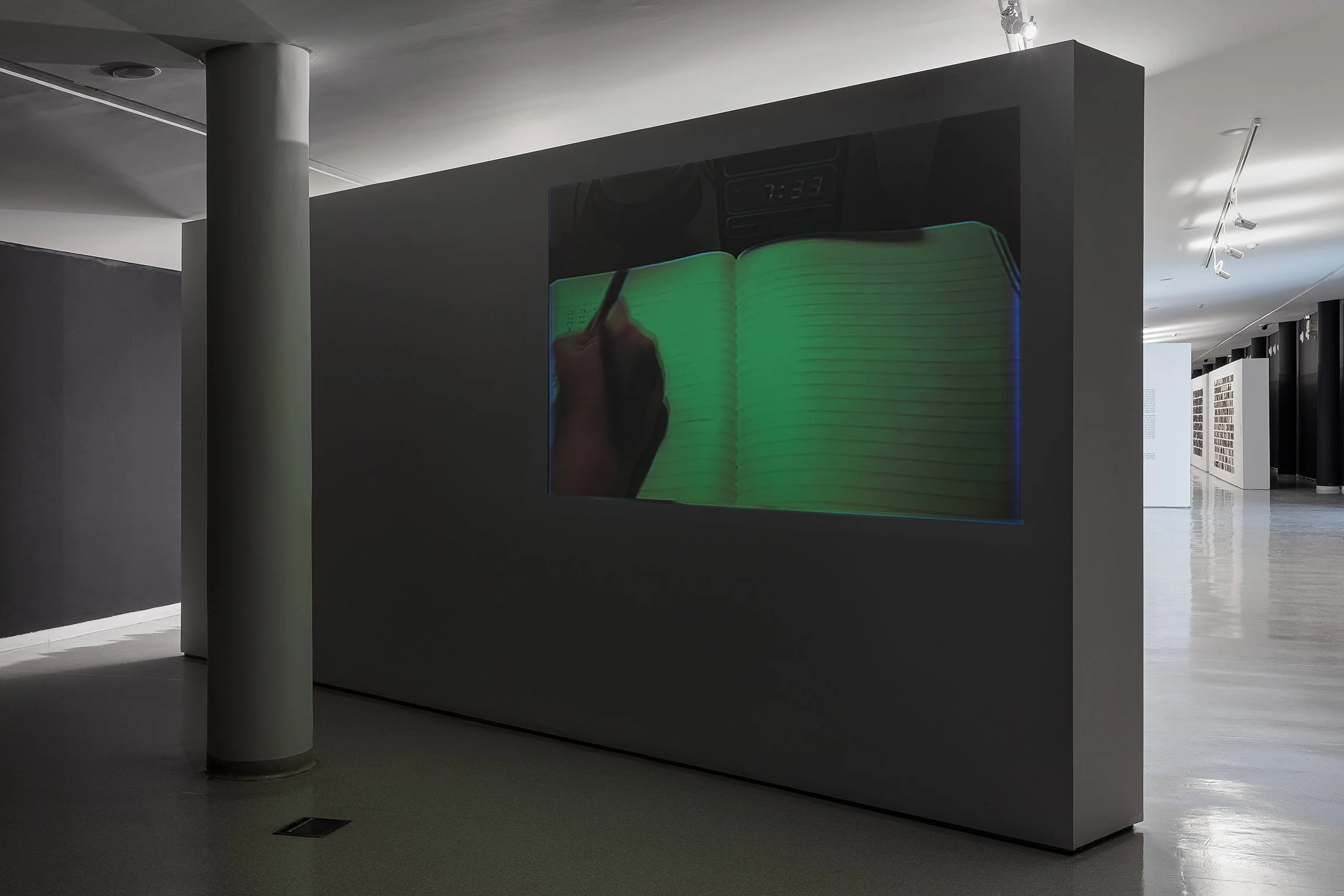
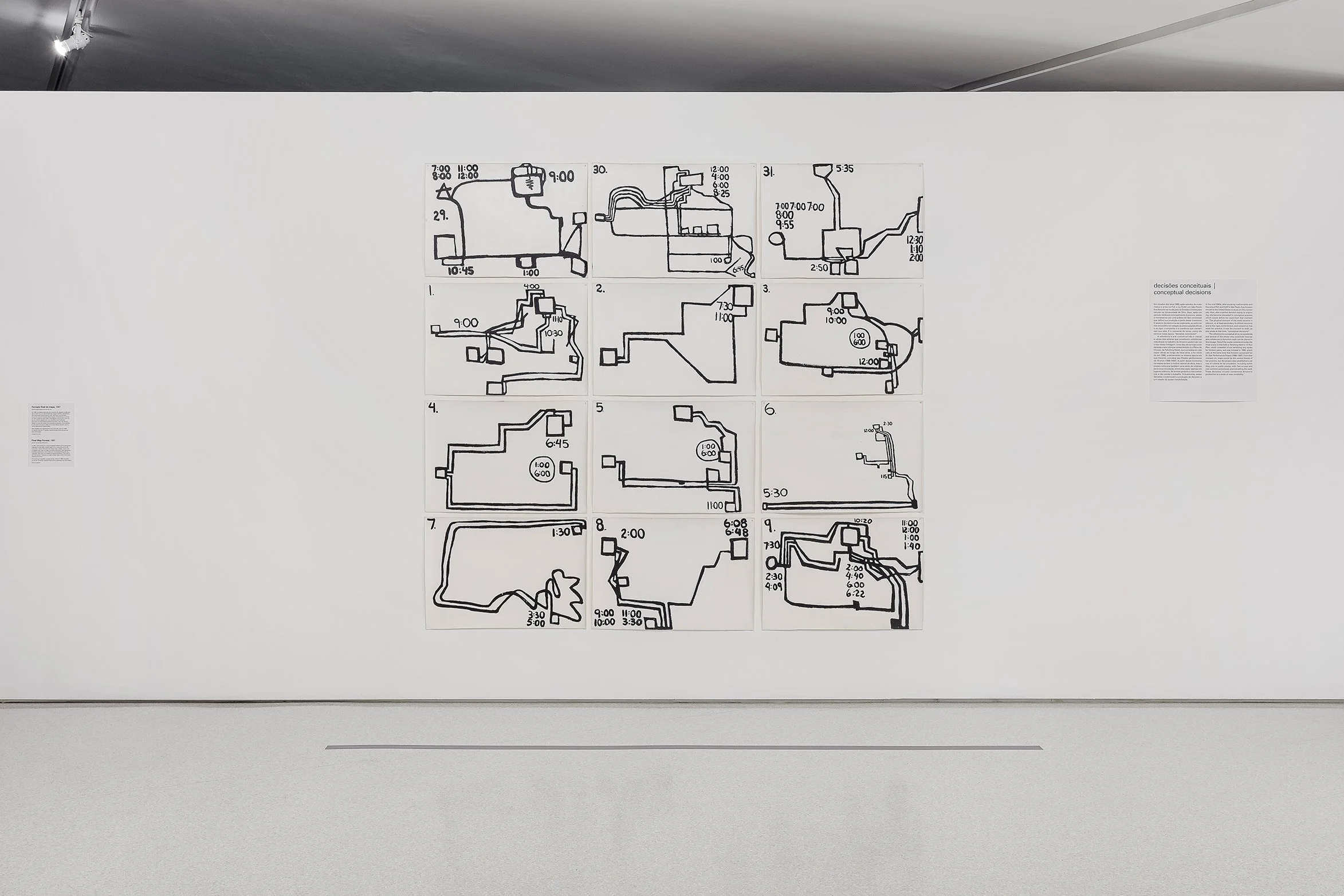
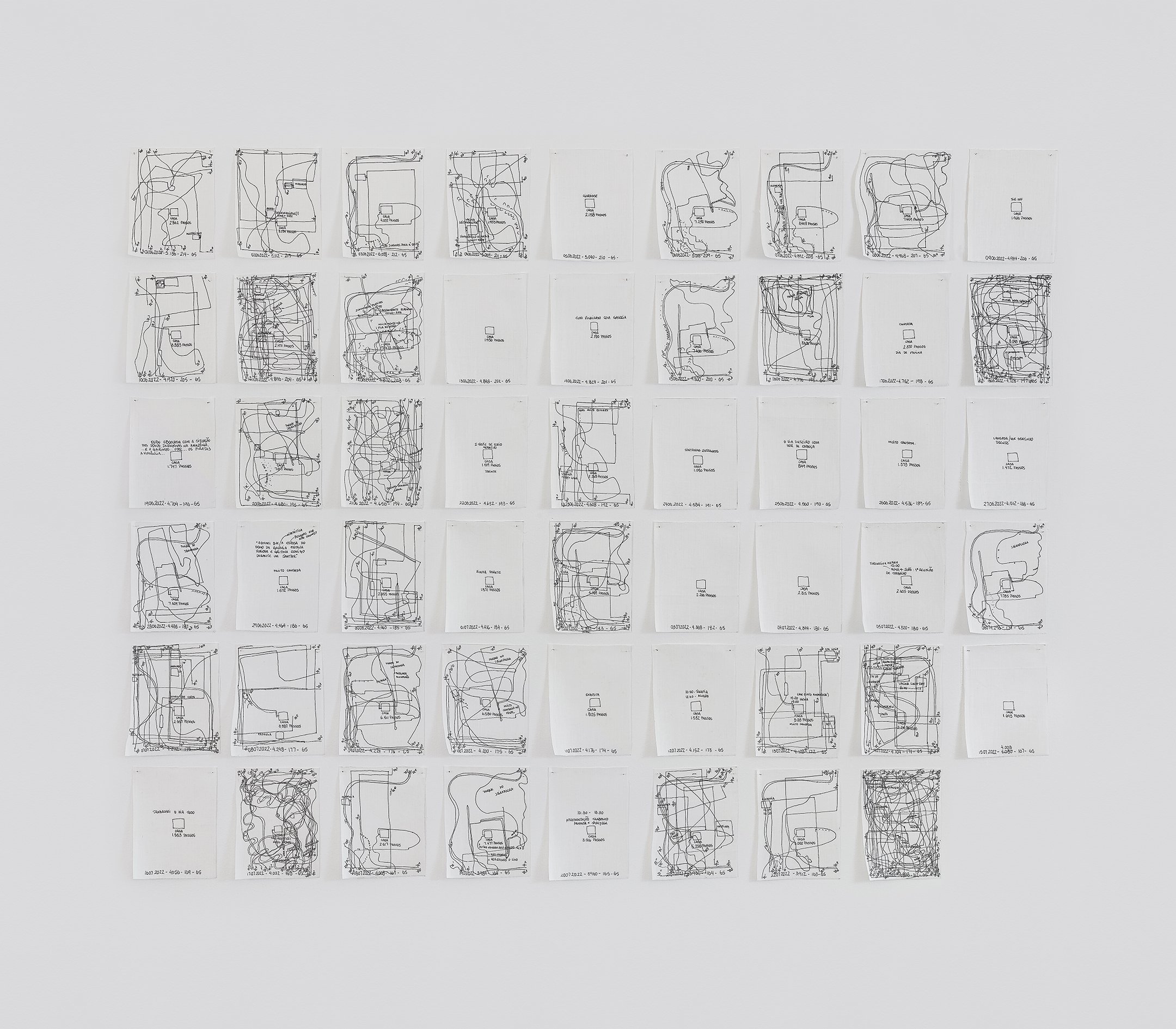
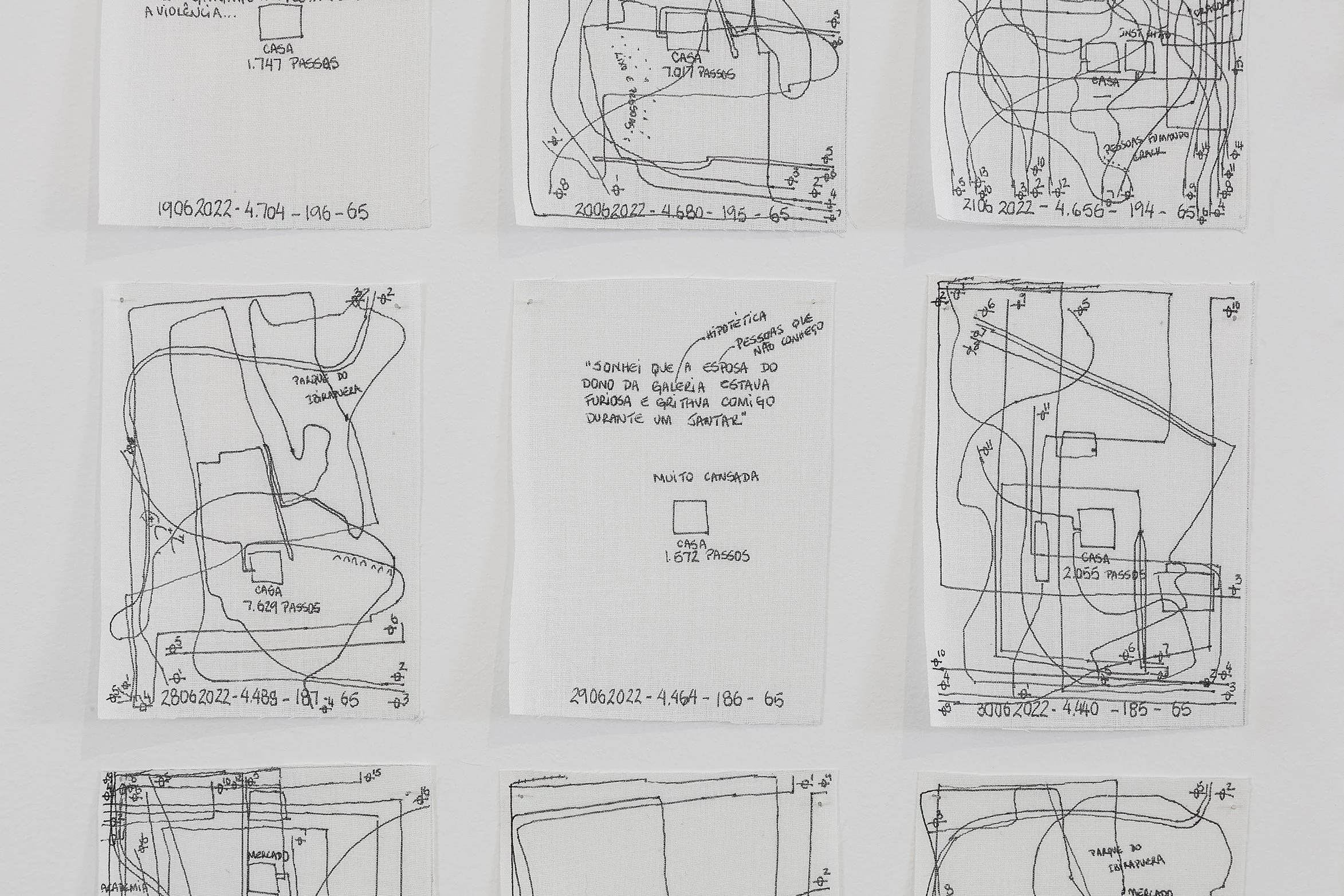
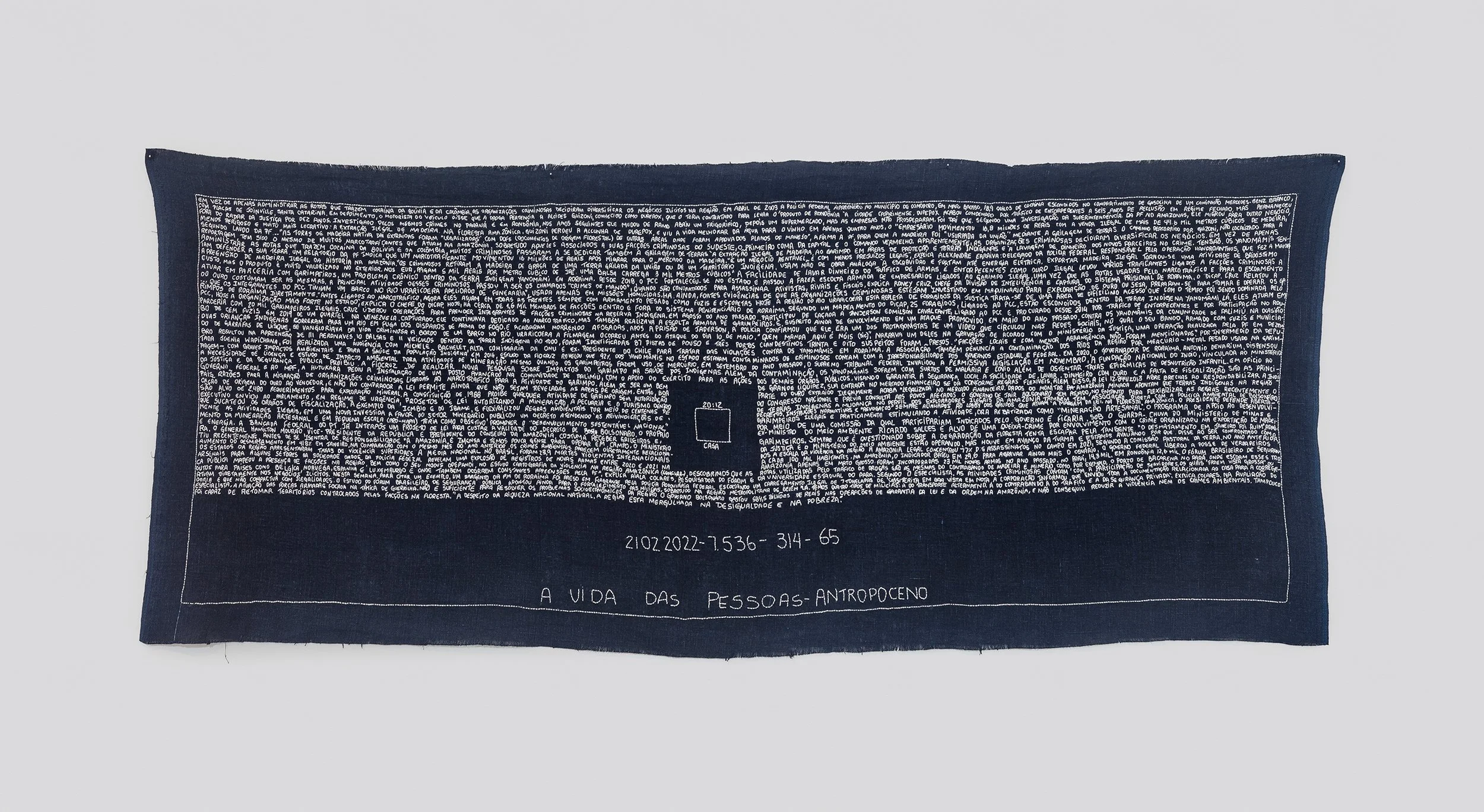
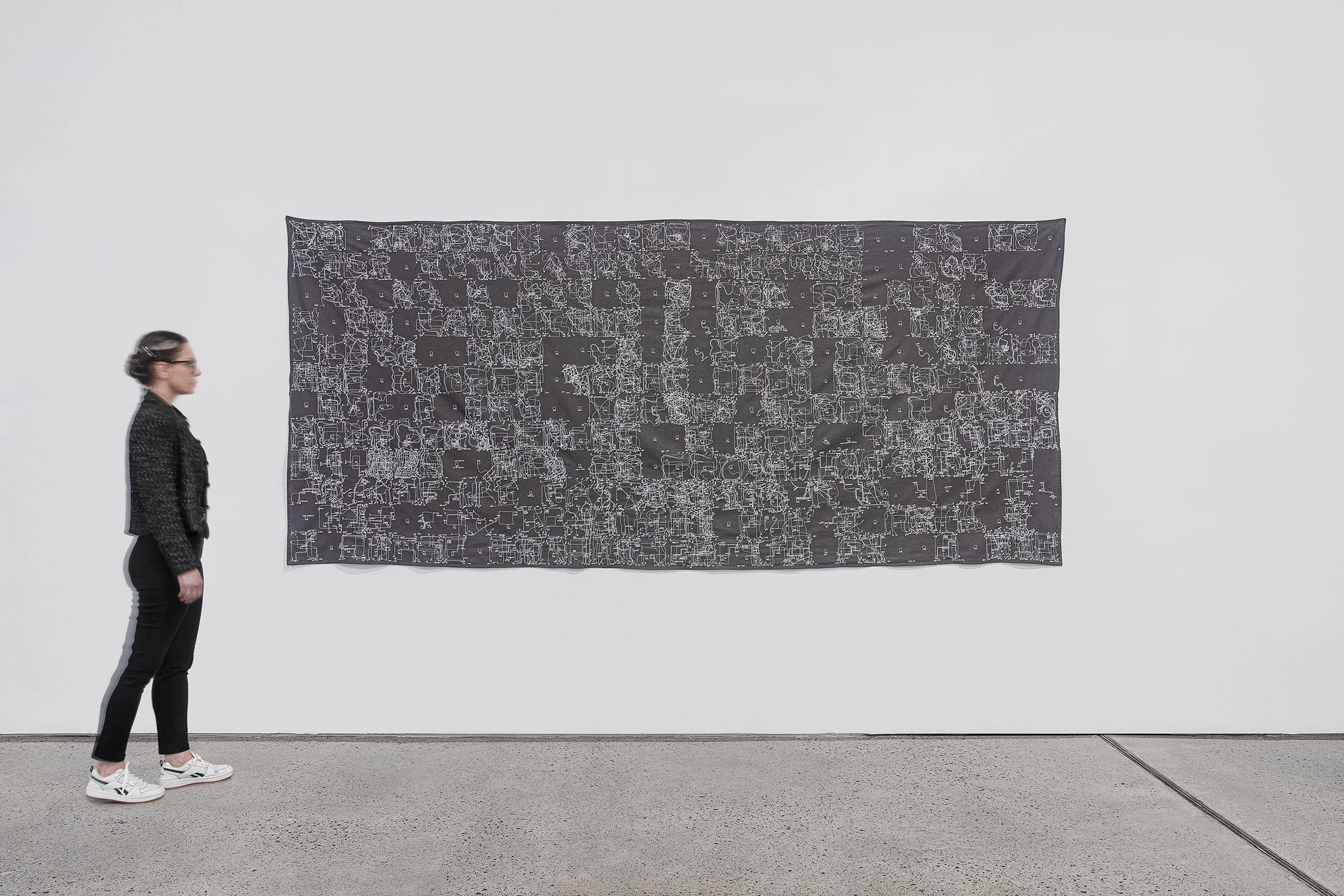
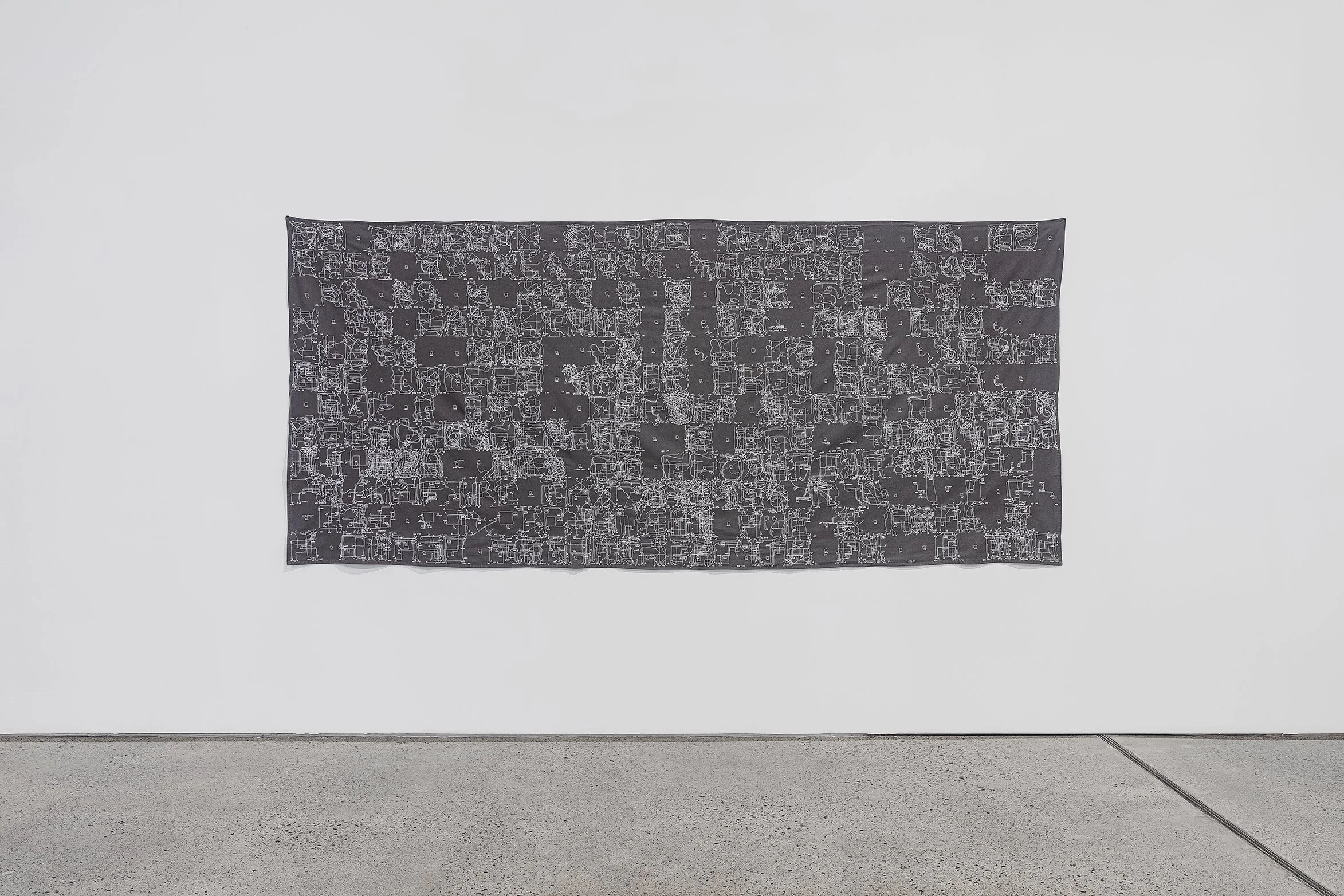
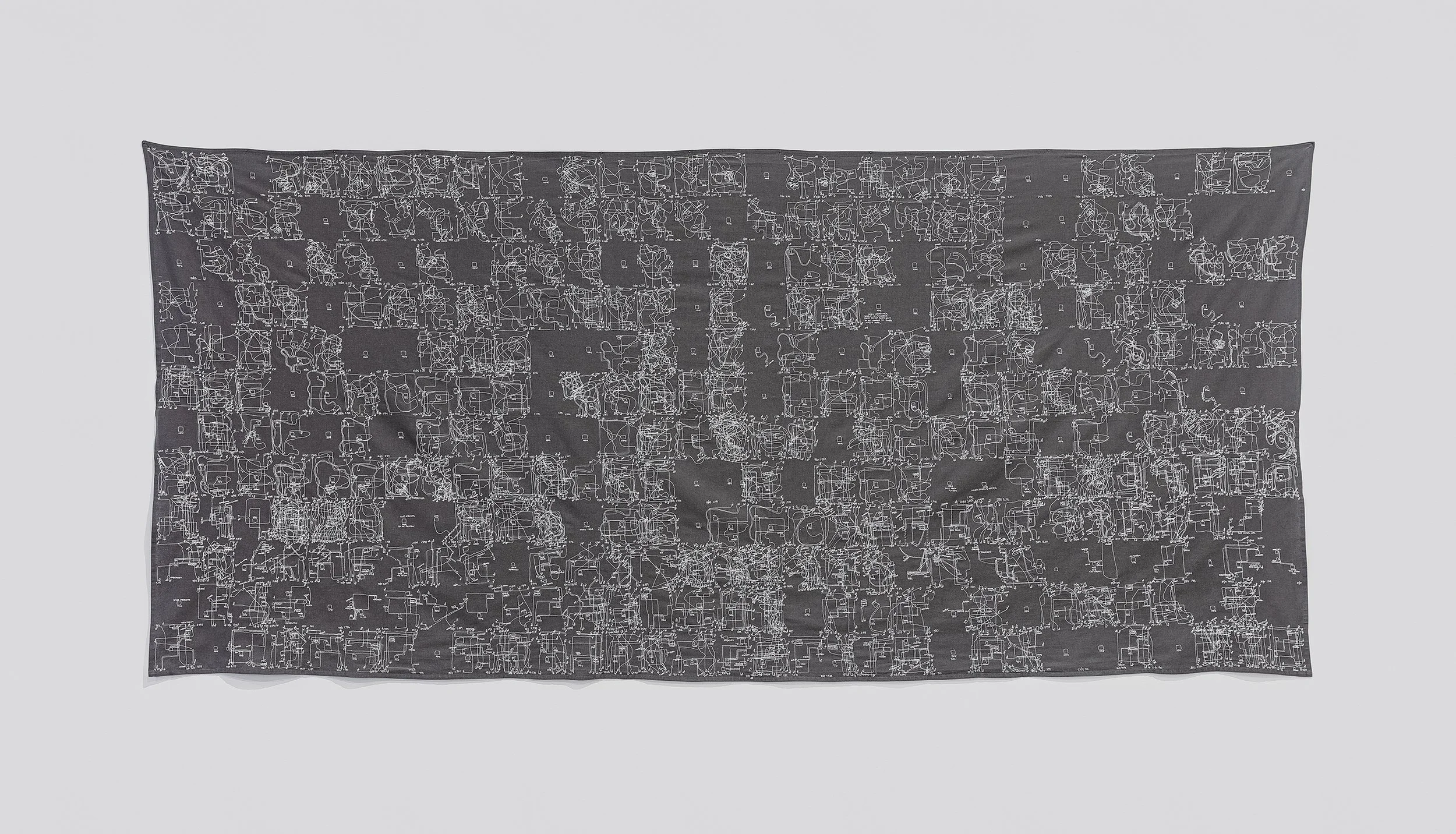
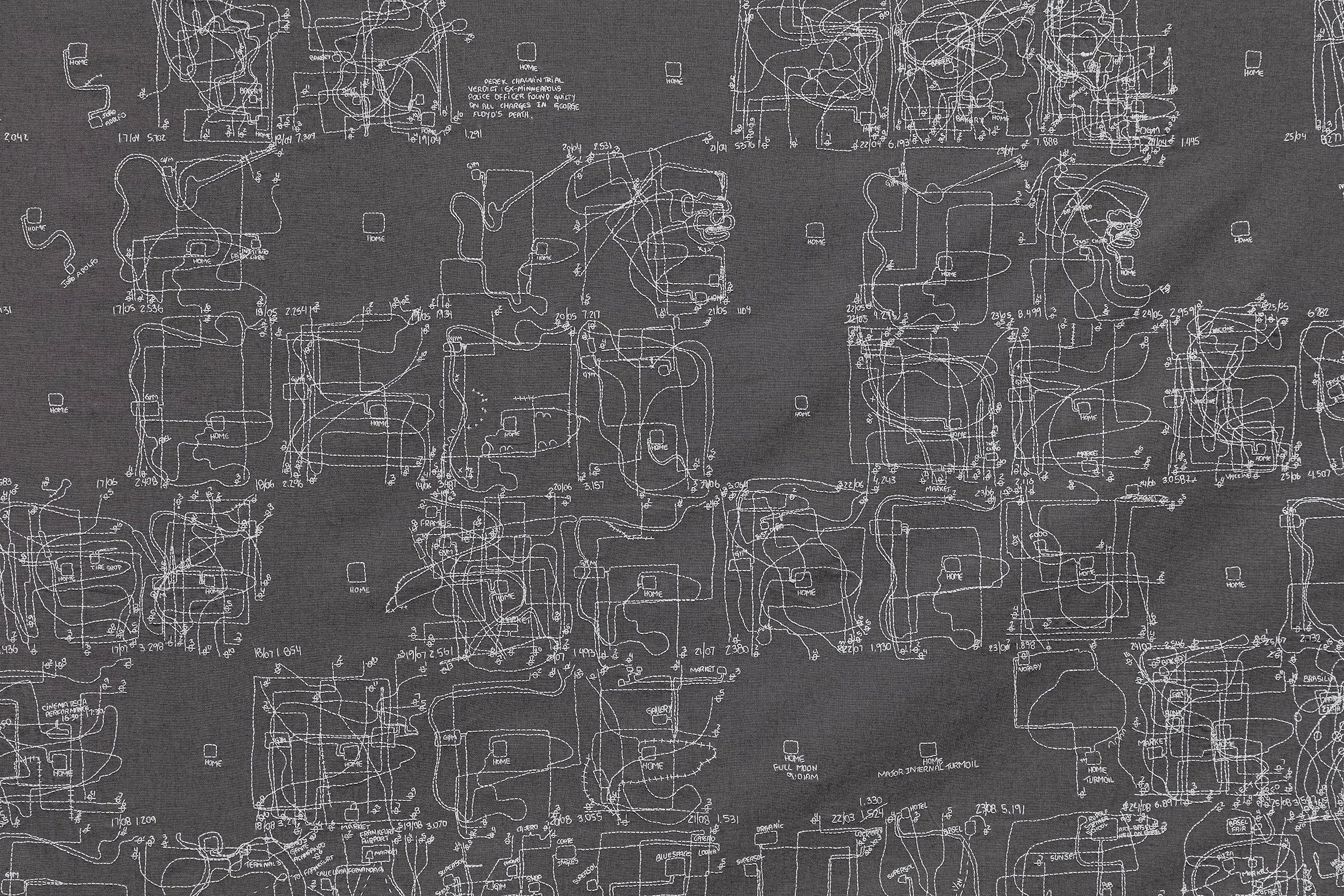
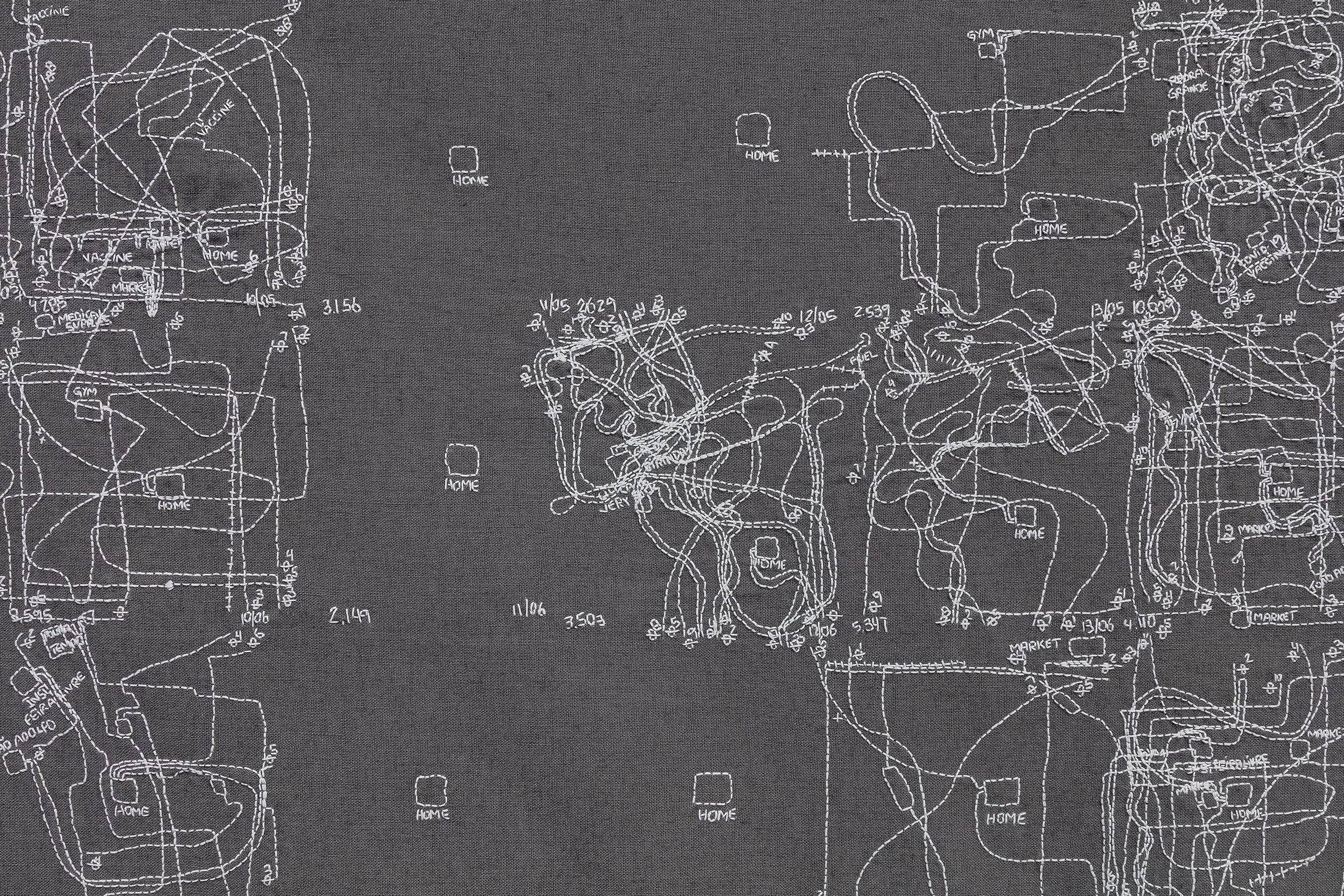
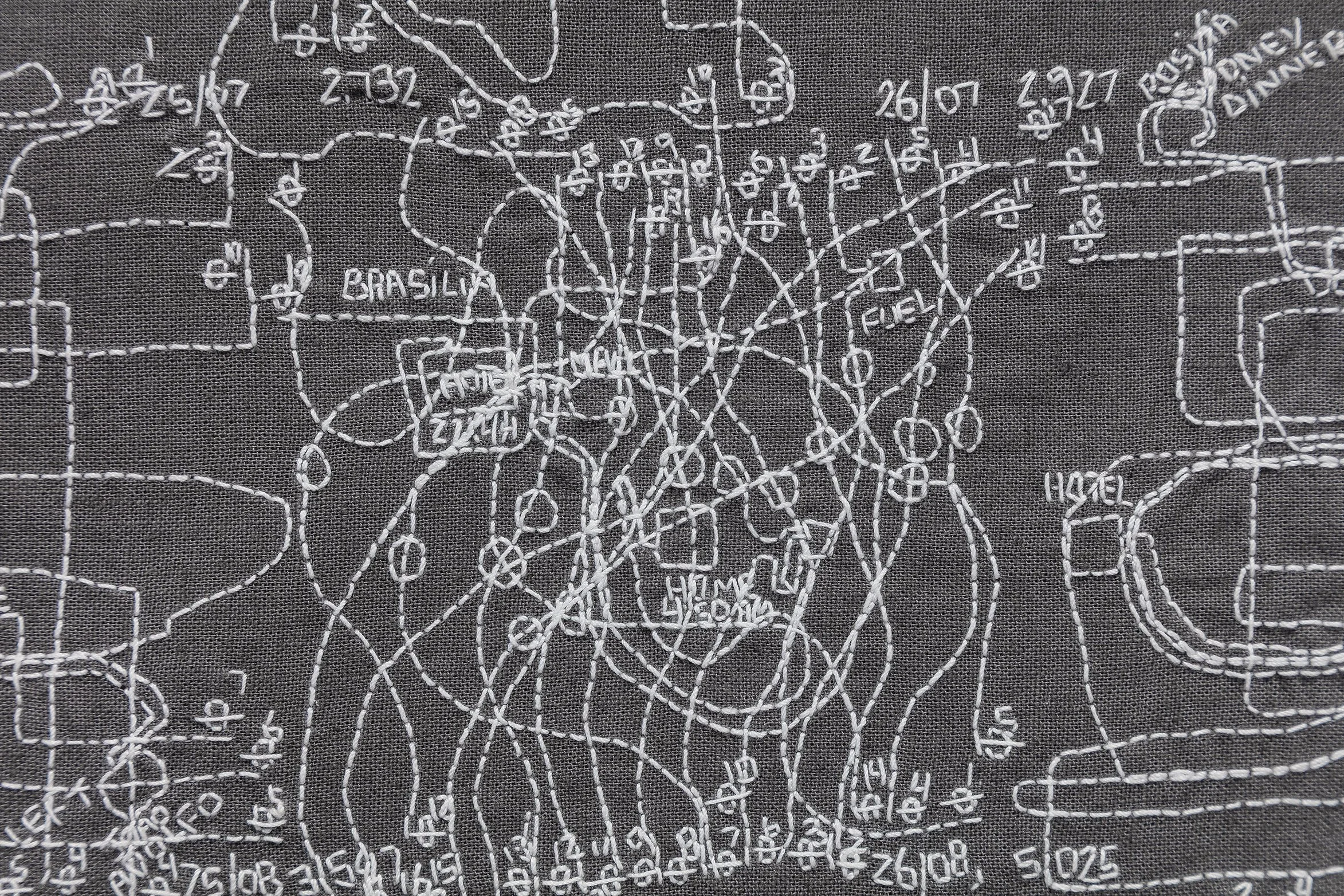
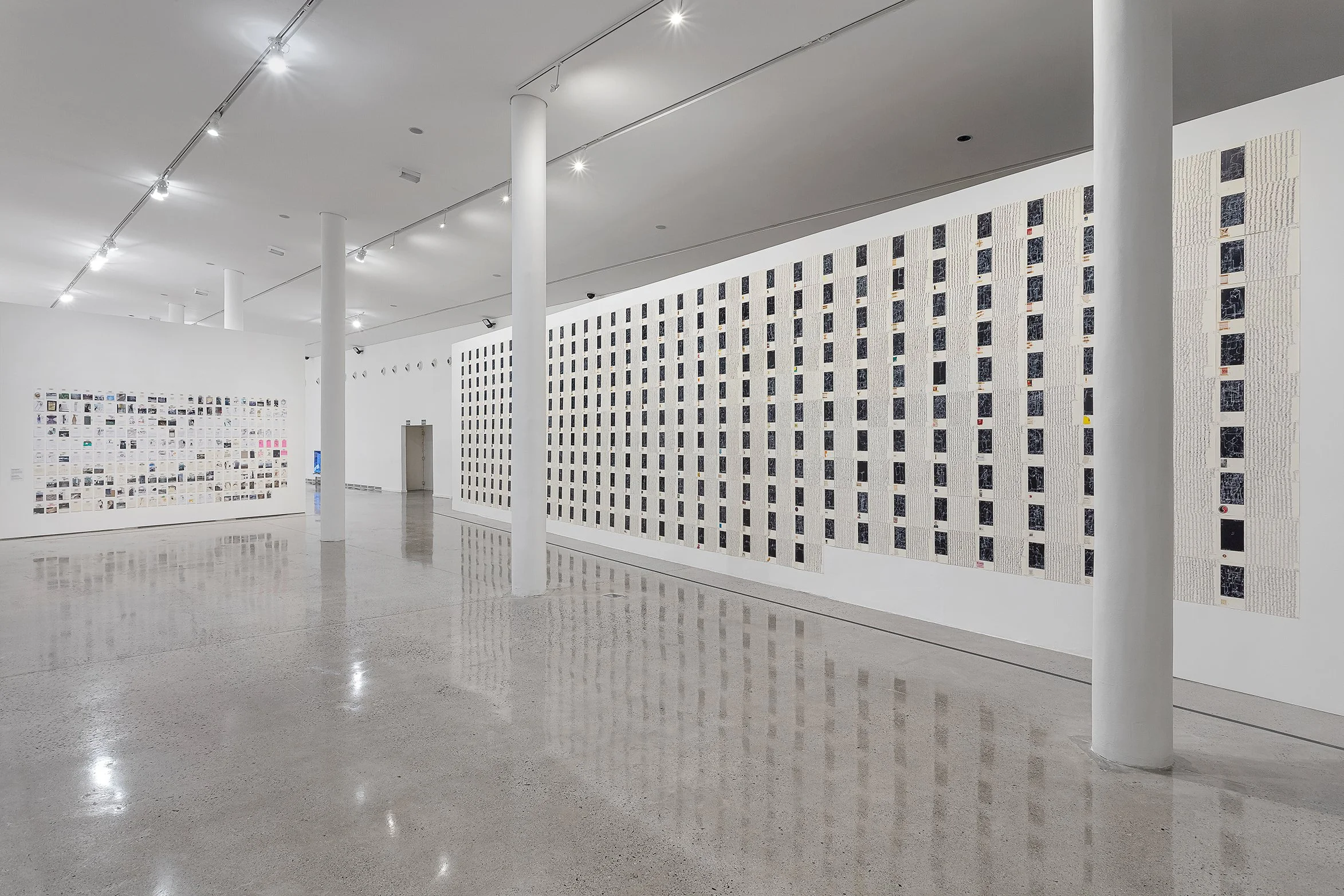
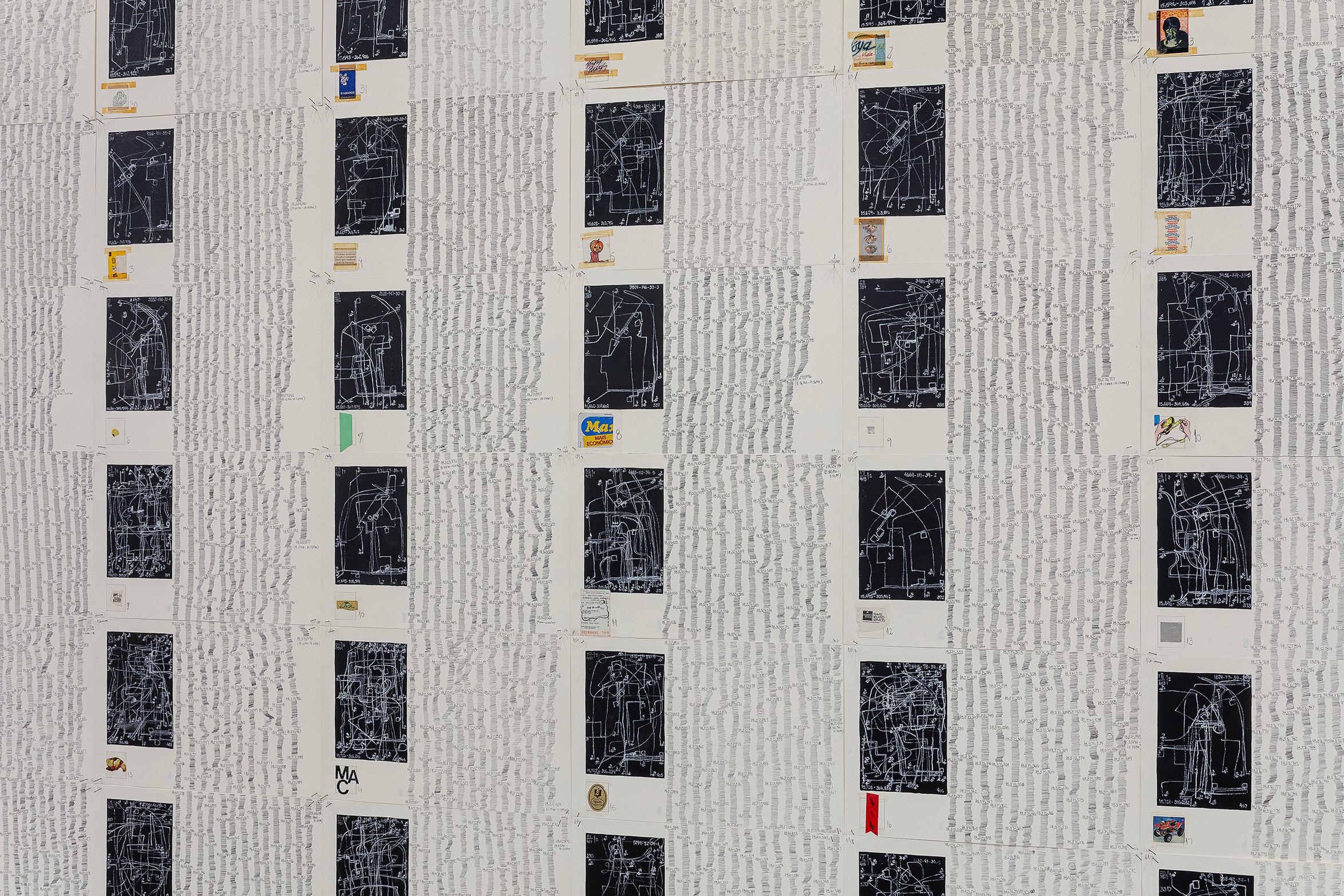
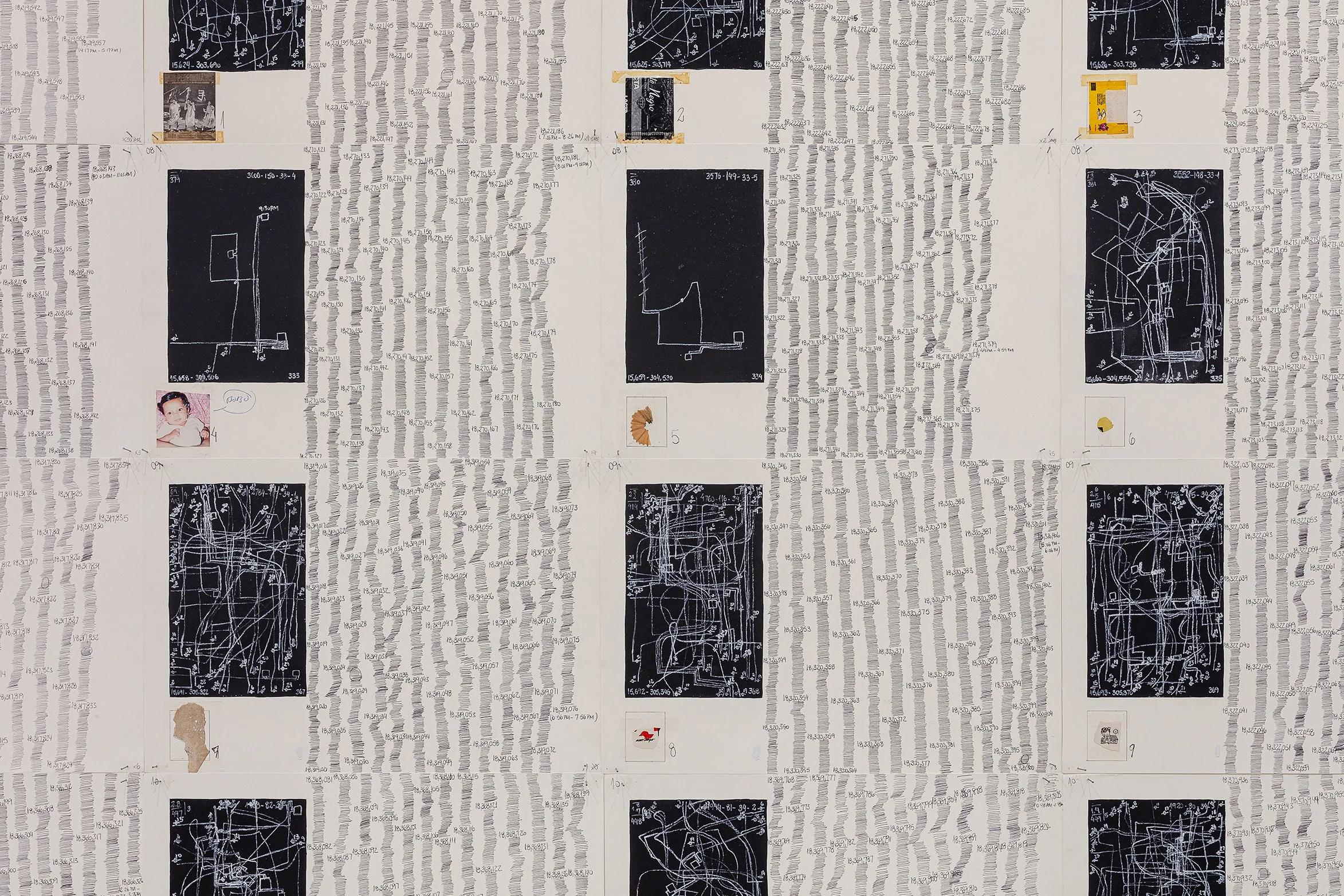
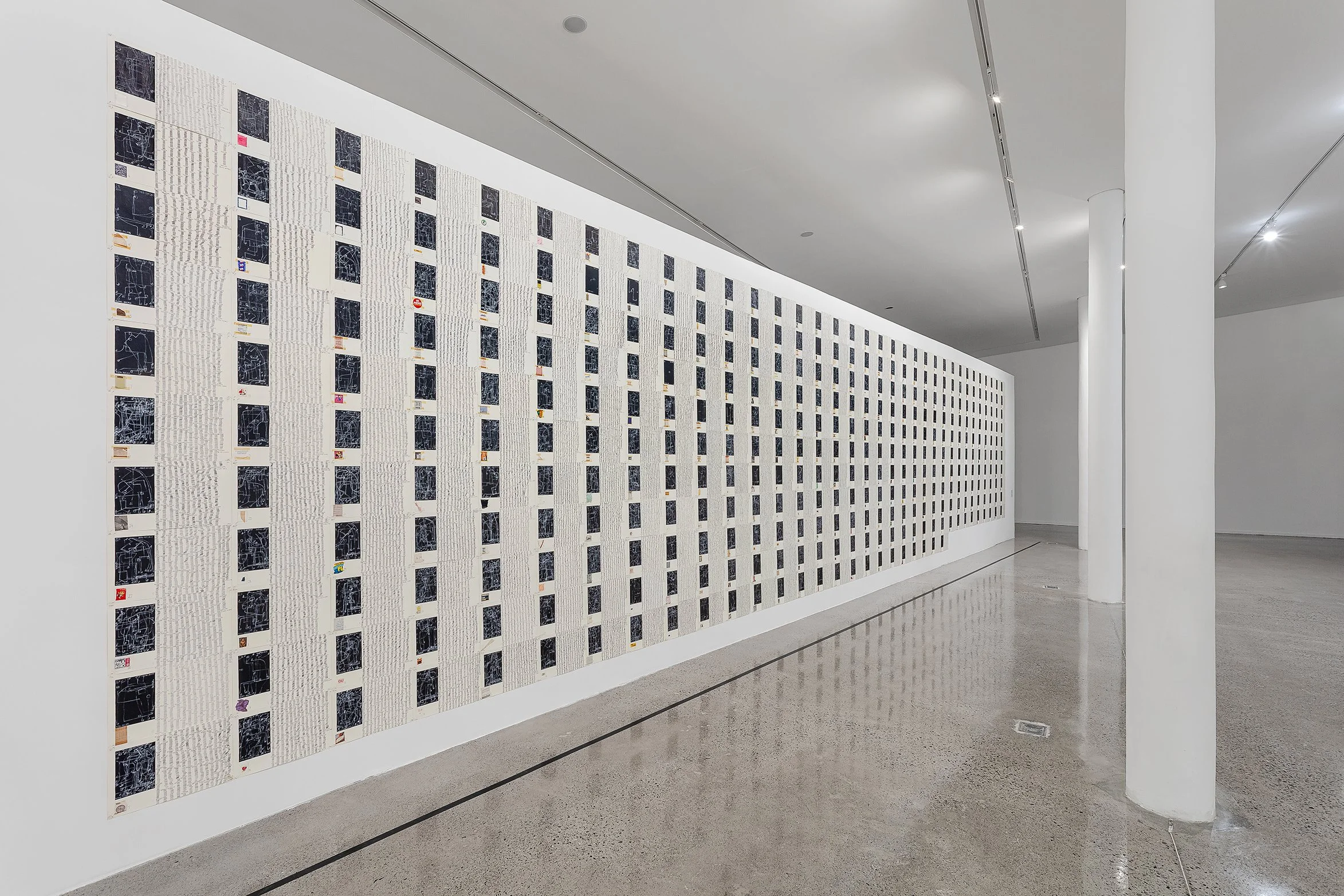
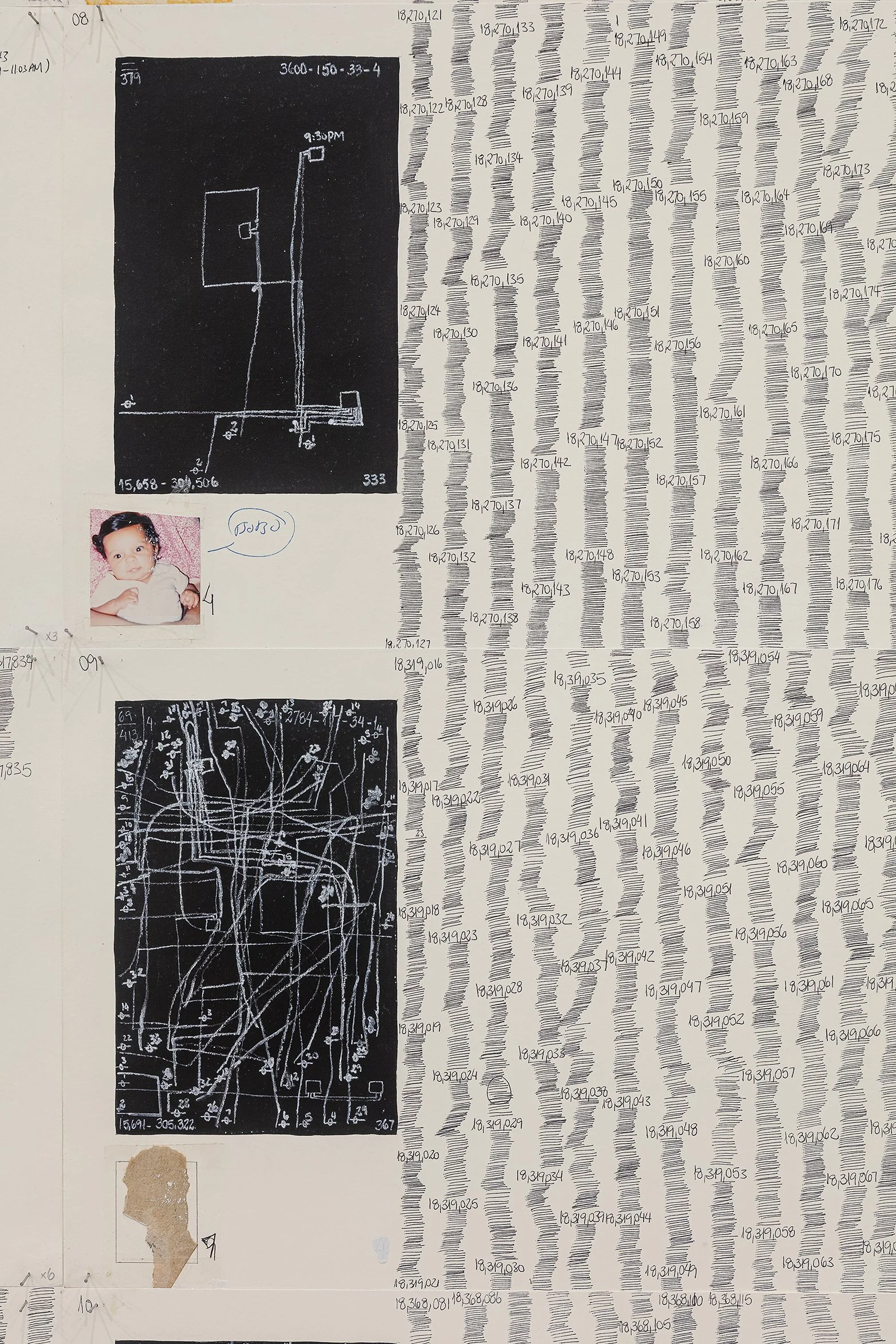
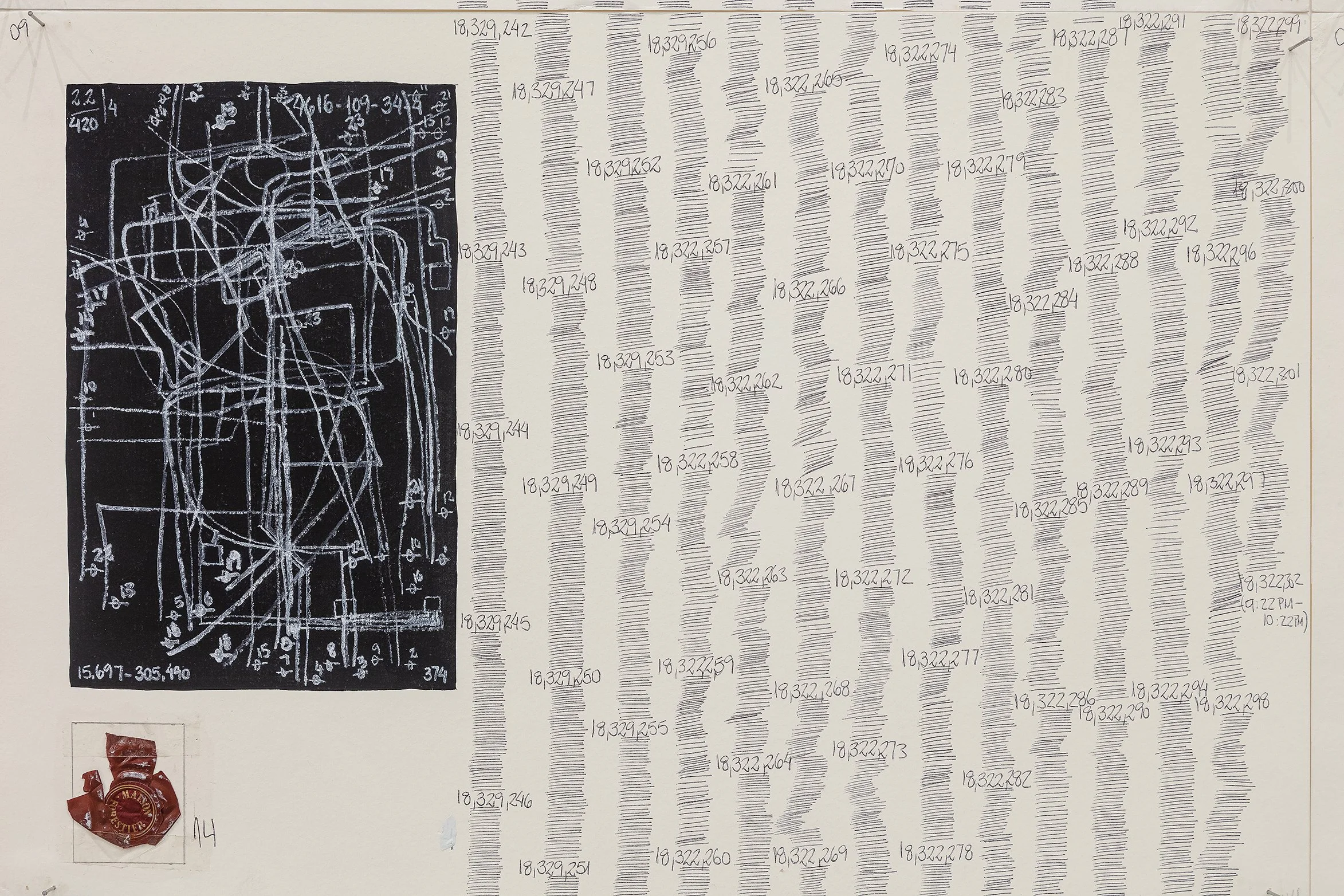
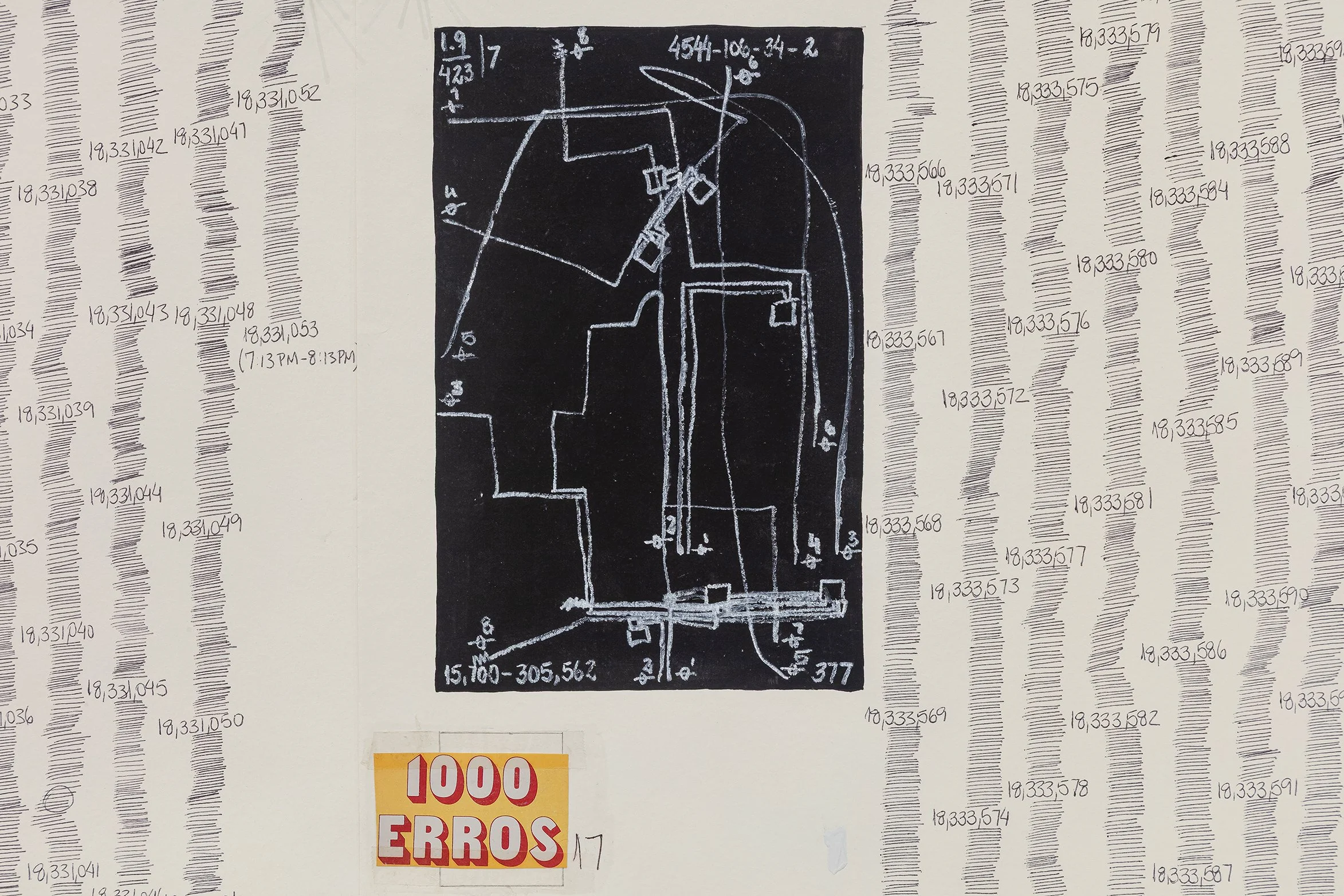
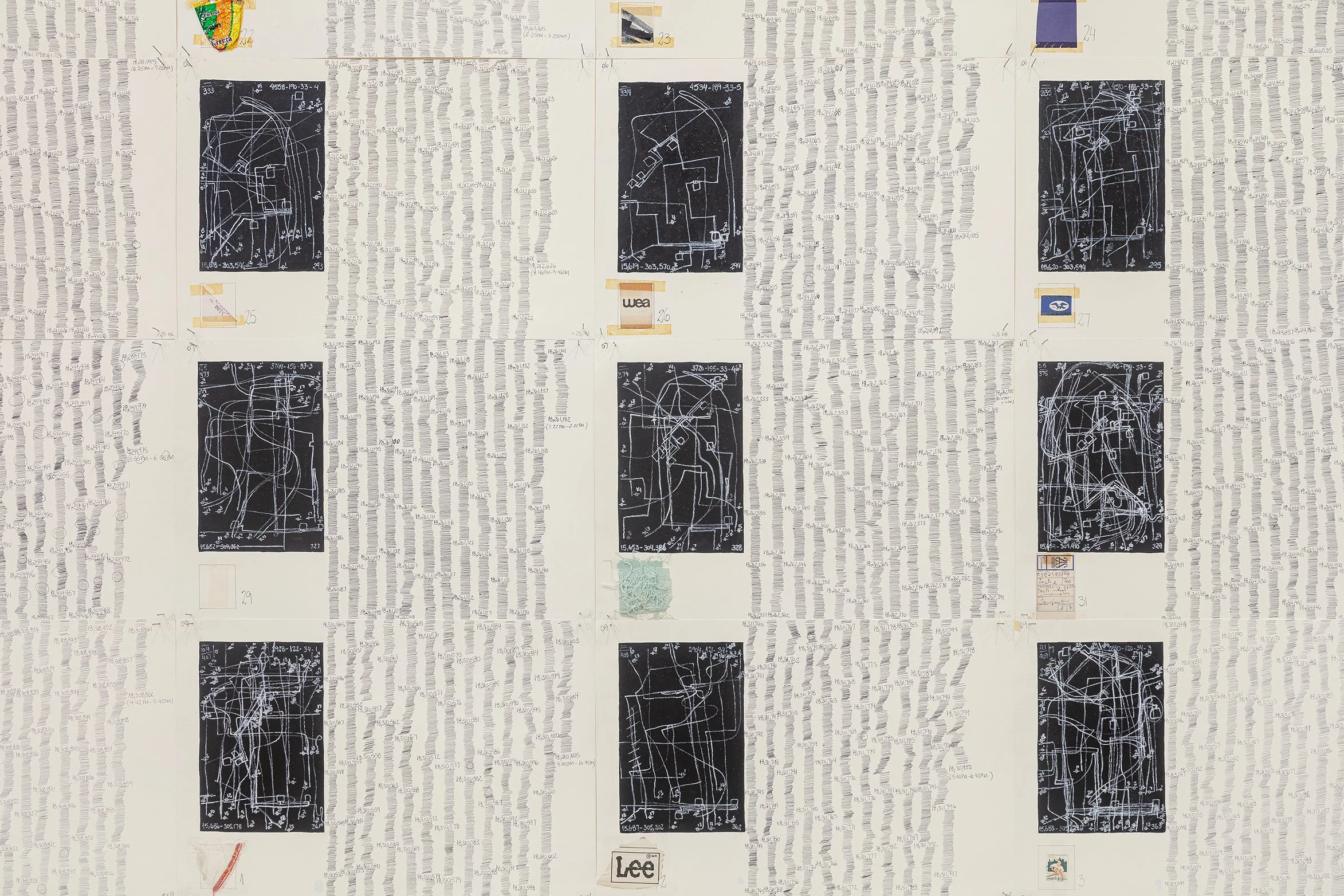
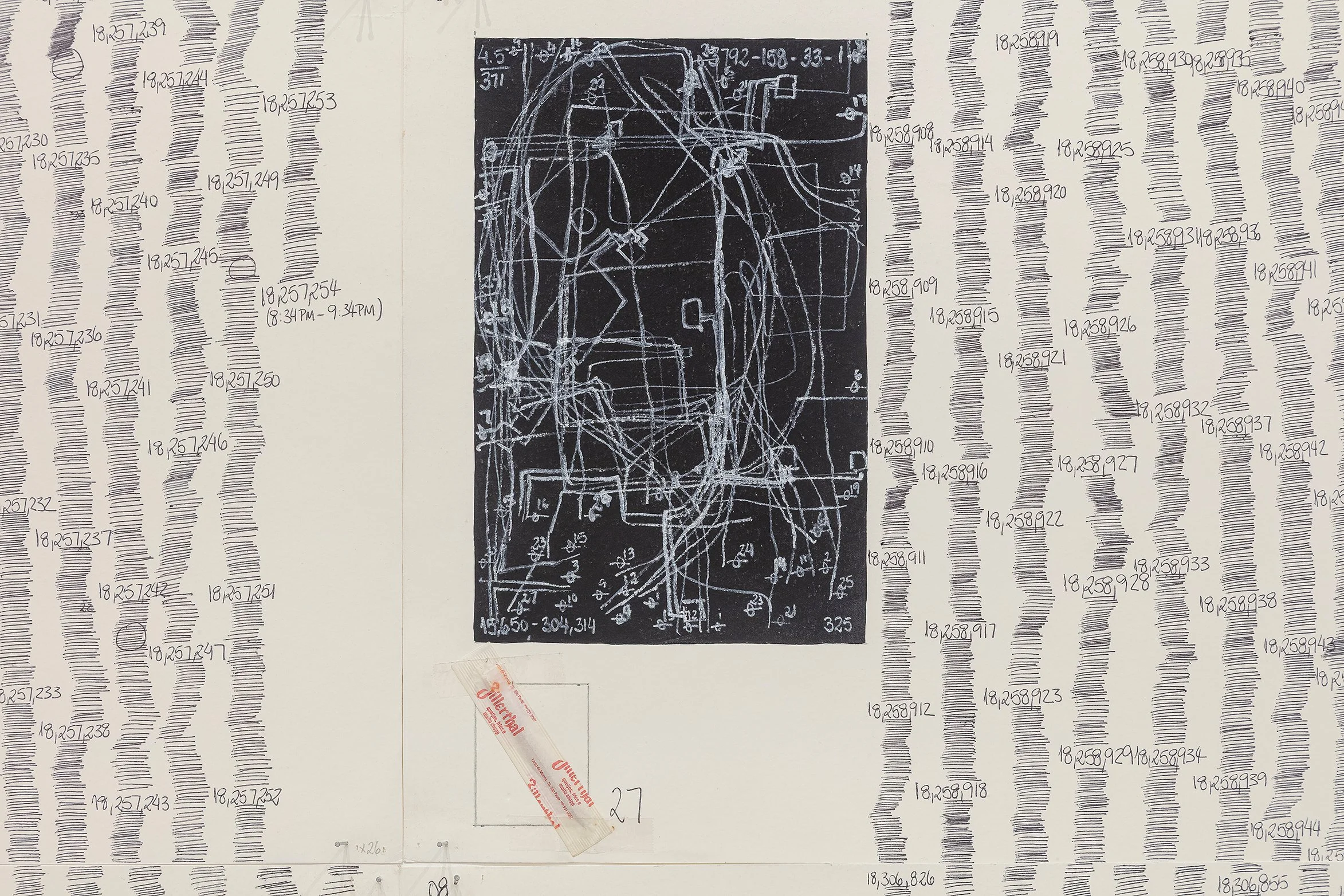
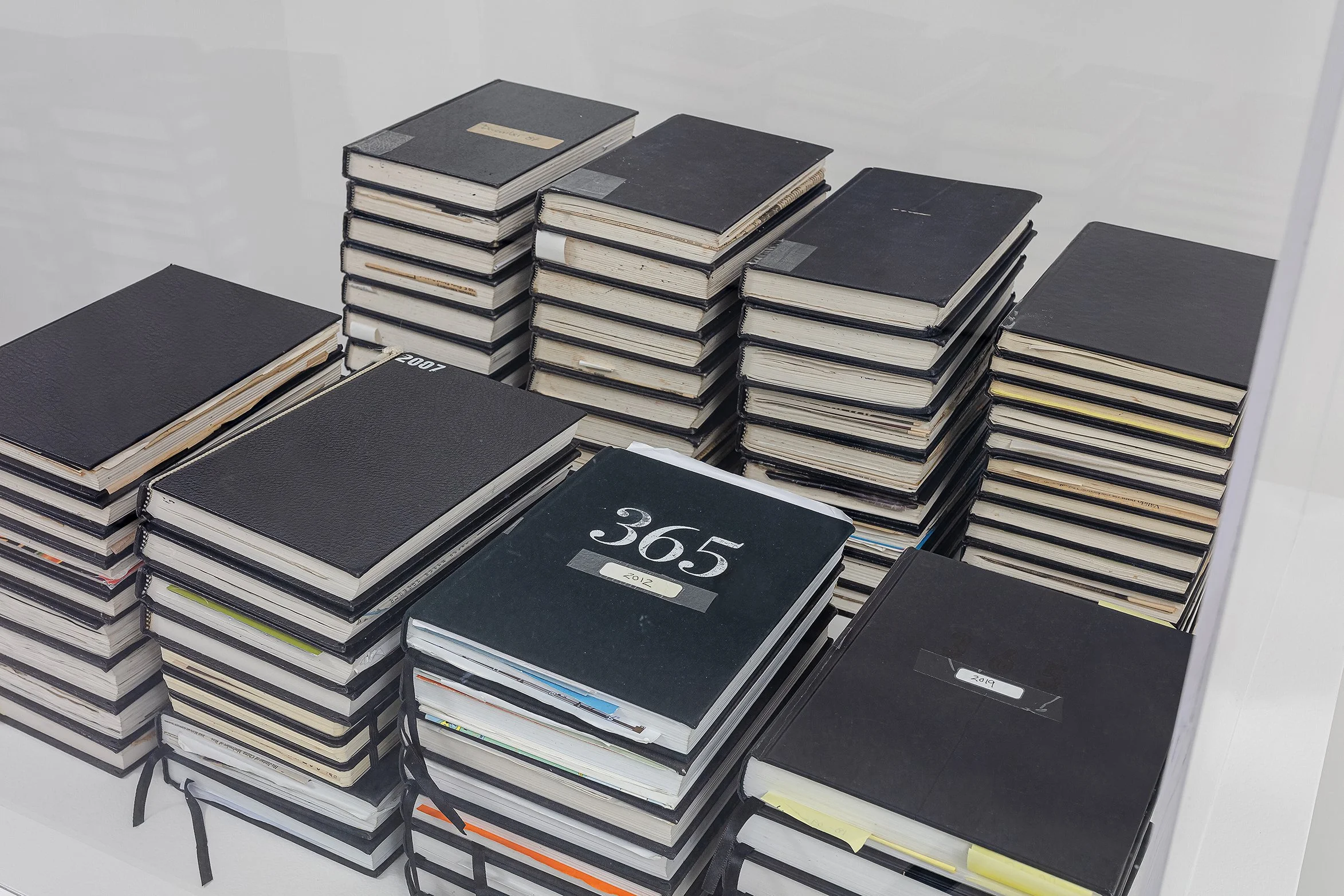
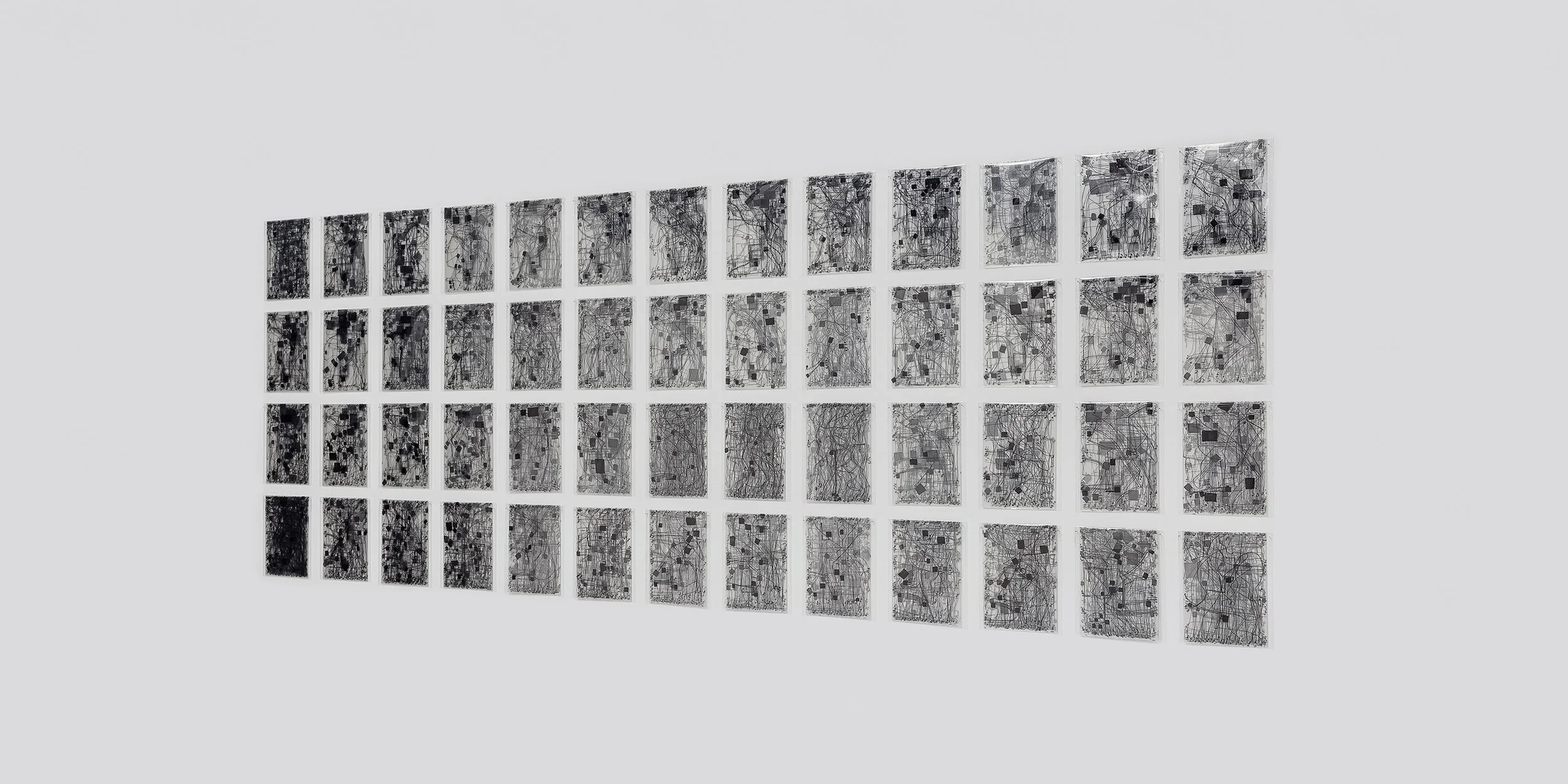
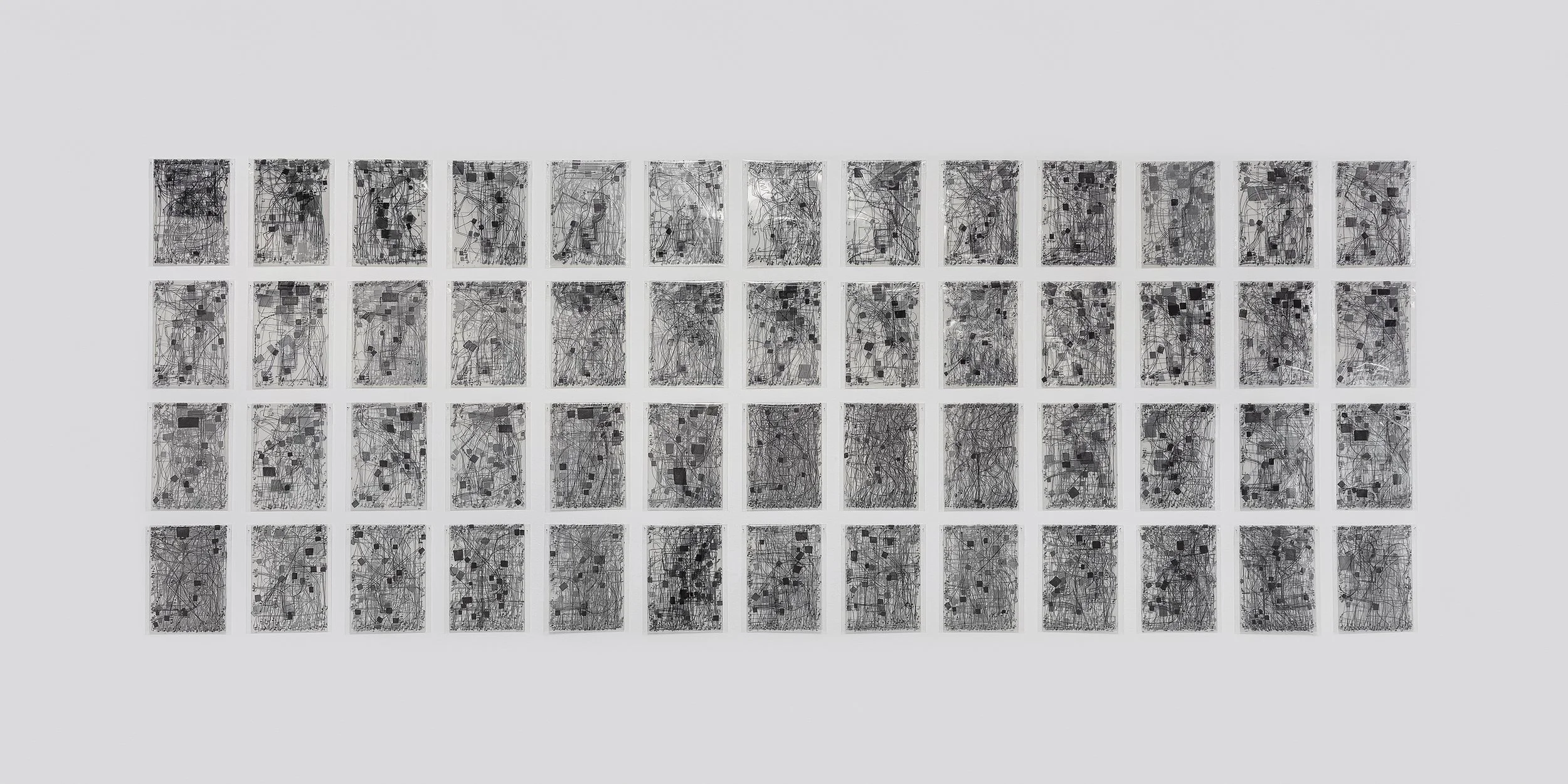
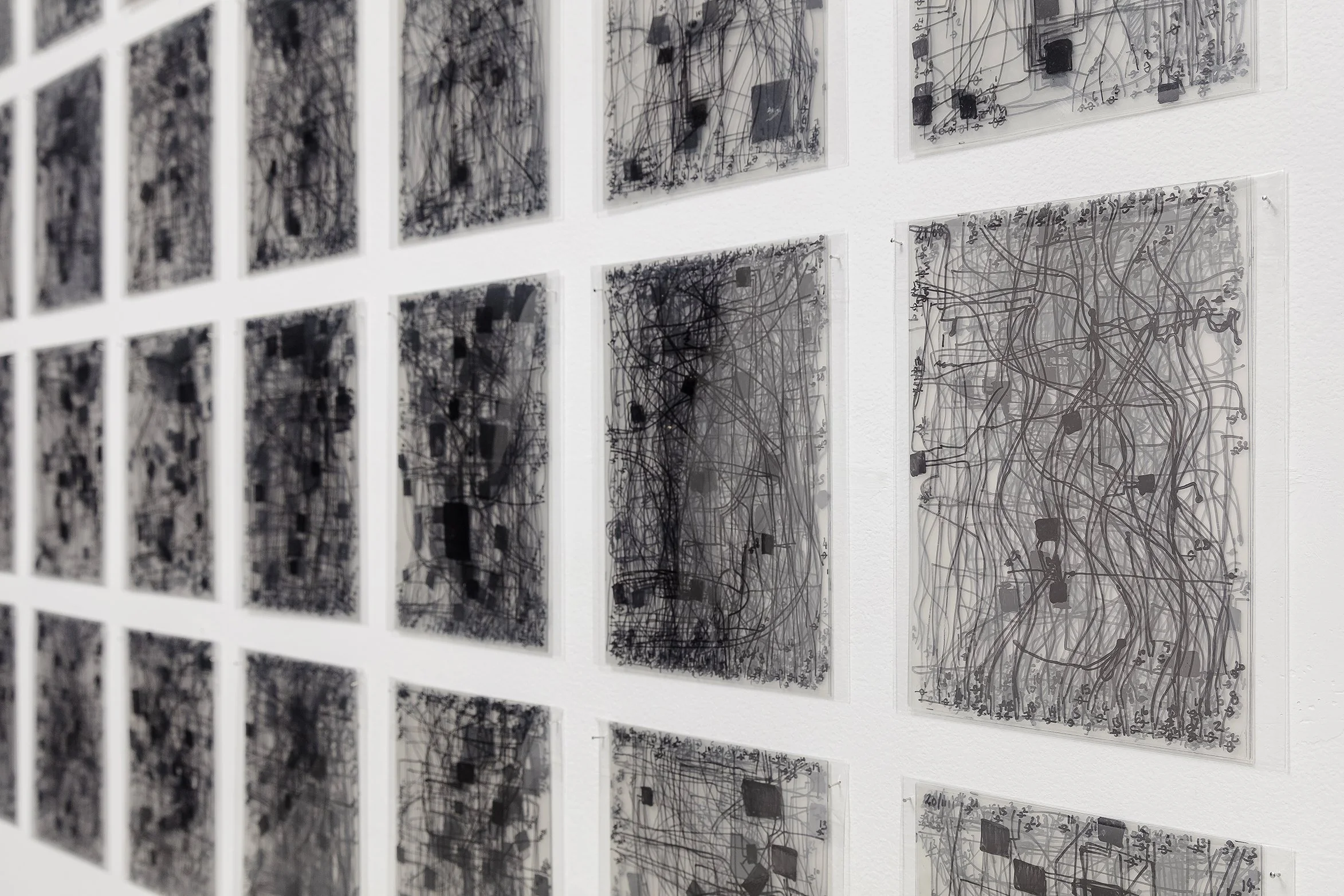
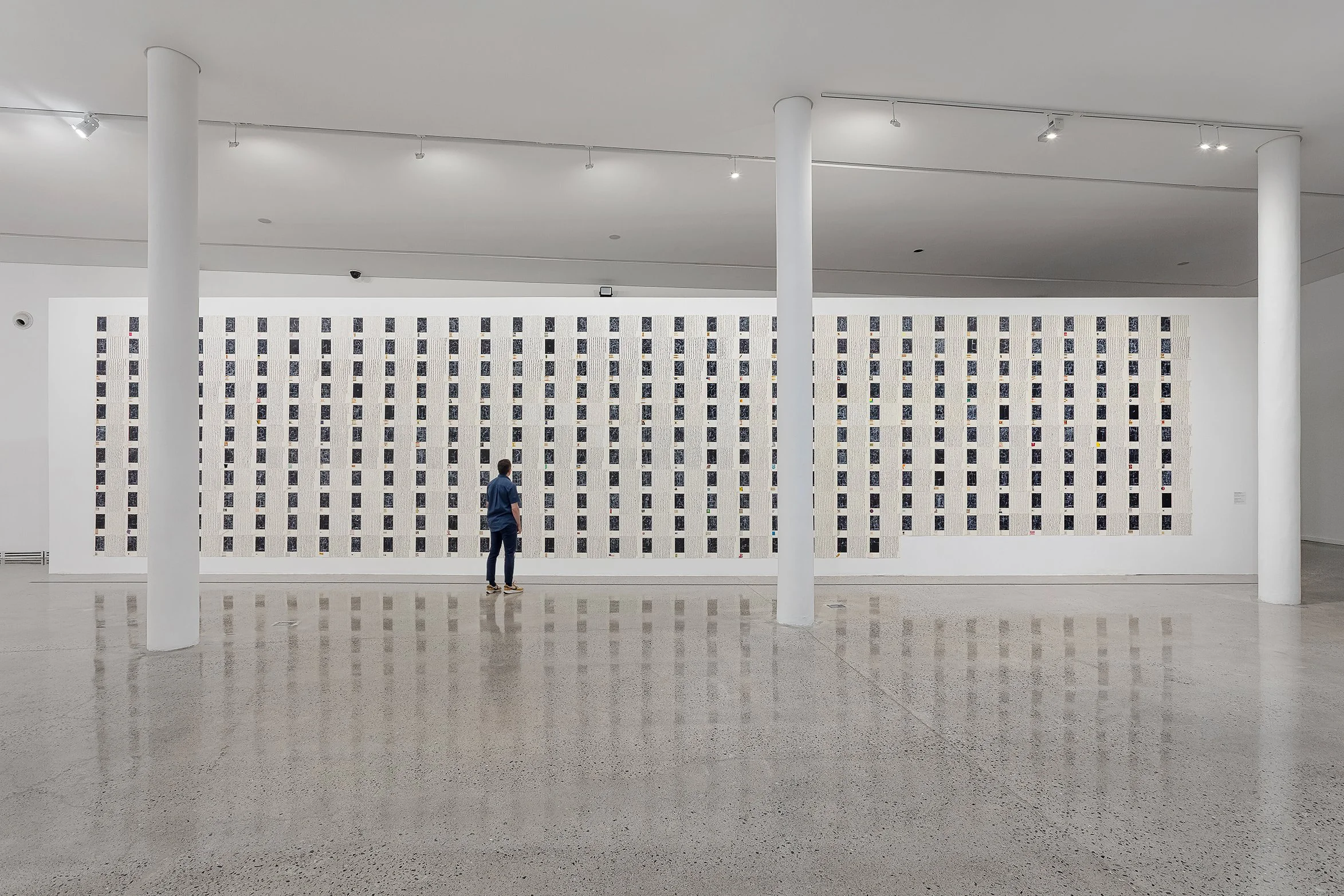
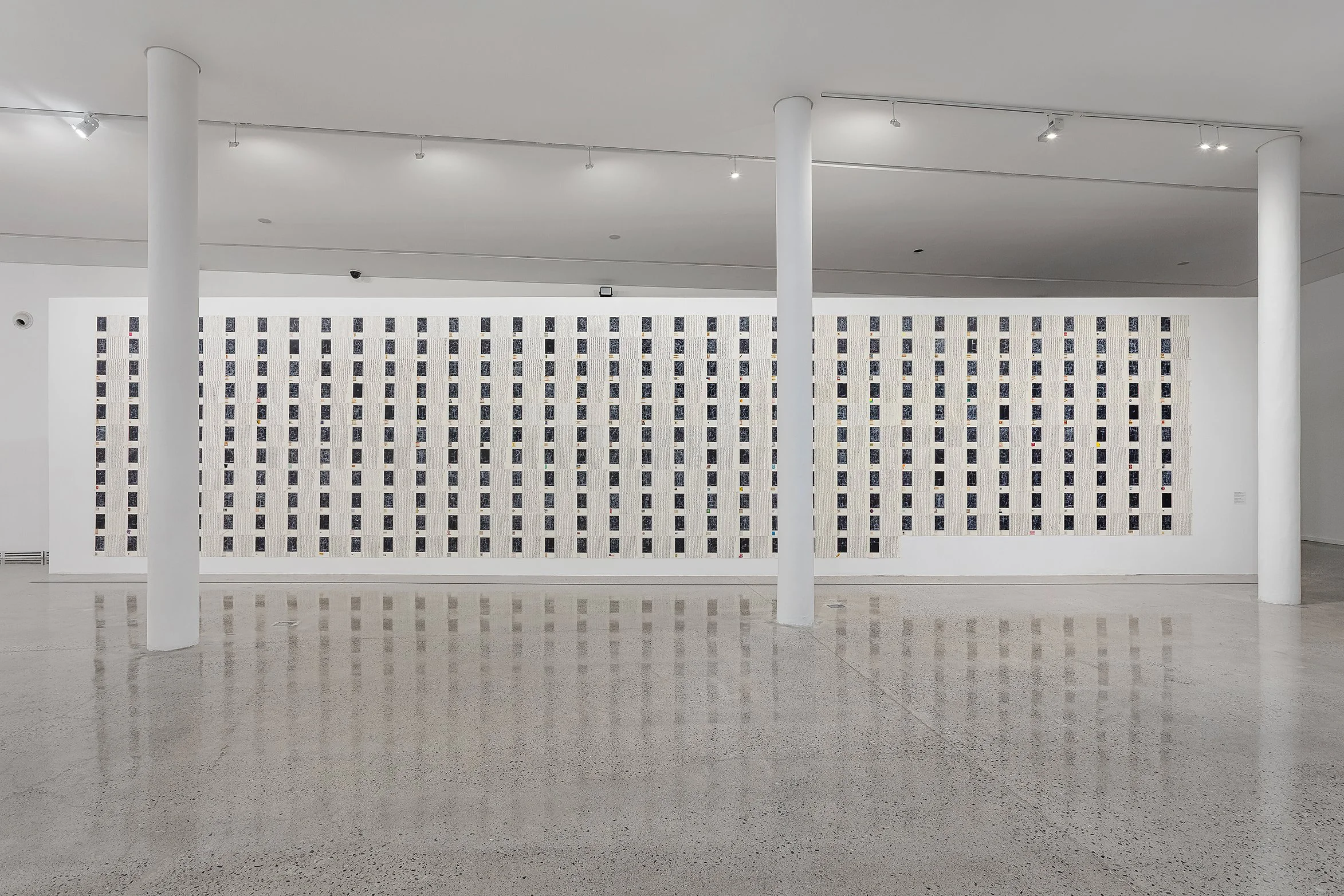
In the four corners of the space are installed the first four Large Canvases produced by Ana Amorim, never before gathered in a single space. Each one, and all the works in this series produced to date, correspond to a year’s work, and are therefore composed mostly of 365 parts (or 366, once every four years). She works every day, without exception. If she is alive, she is producing something. She calls this something art, but it is also, or mainly, a trace of her passage through the world, and of the passage of time over her. In a way, art has always been this, since those silhouettes of hands that remain hidden in the depths of some cave for thousands of years. A few centuries closer to us, Leonardo da Vinci, whose production was simultaneously artistic, scientific, literary, and military, once stated that even painting is a mental activity. Art, as Ana Amorim understands it, is exactly that: a mental activity. The tangible result of this activity, what we conventionally call “work”, its aesthetic quality, its “beauty”, are topics that interest her very little, and even bother her.
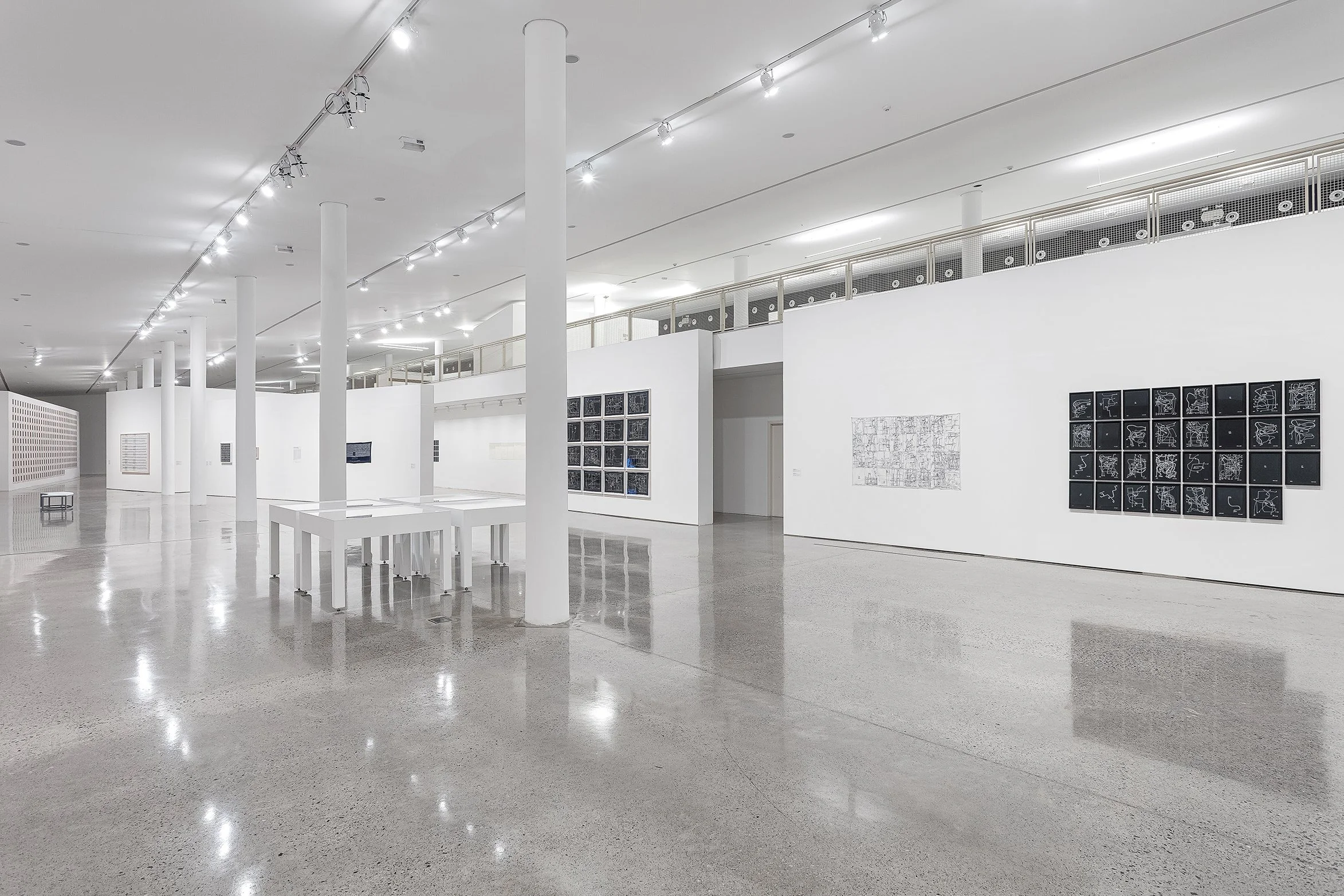
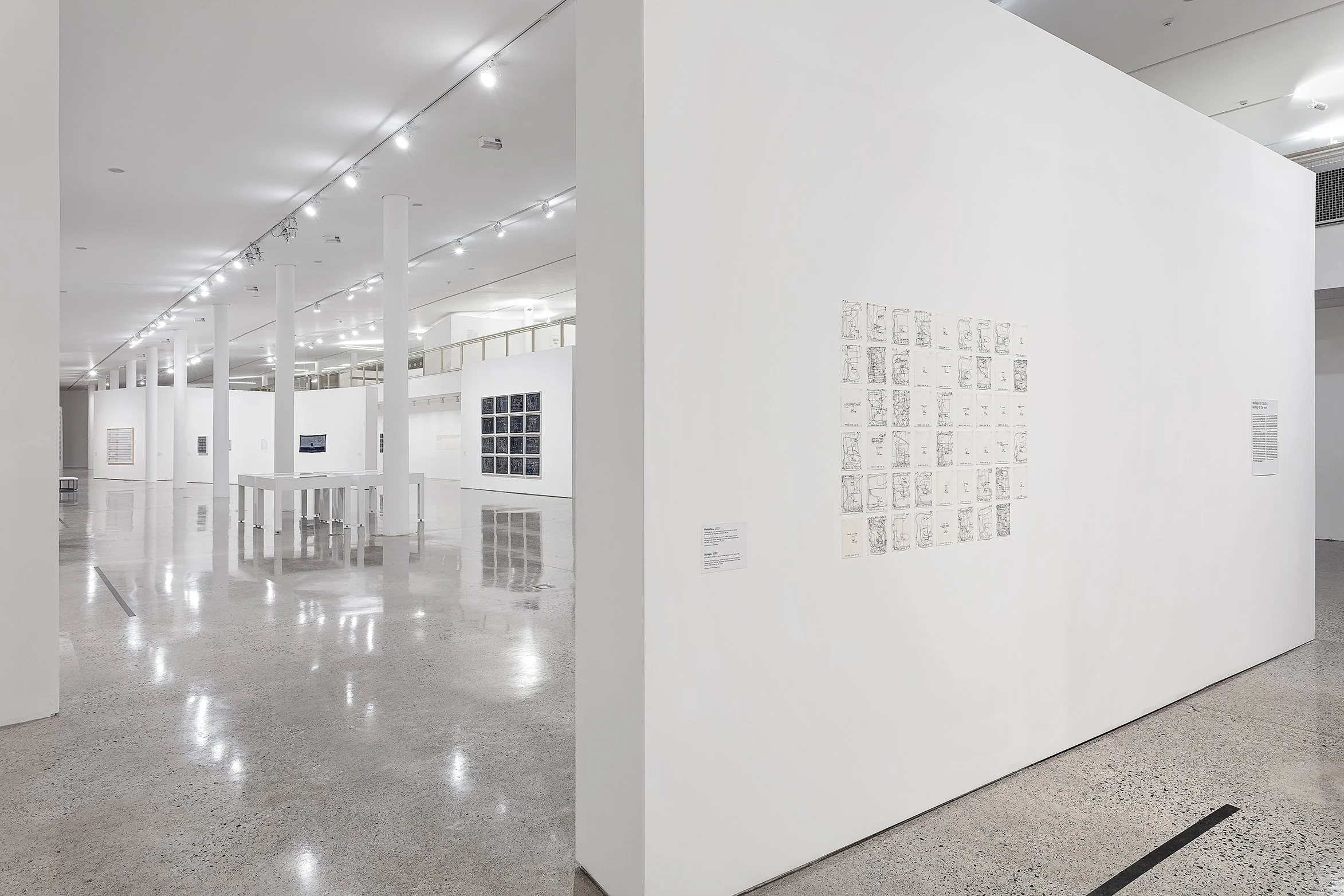
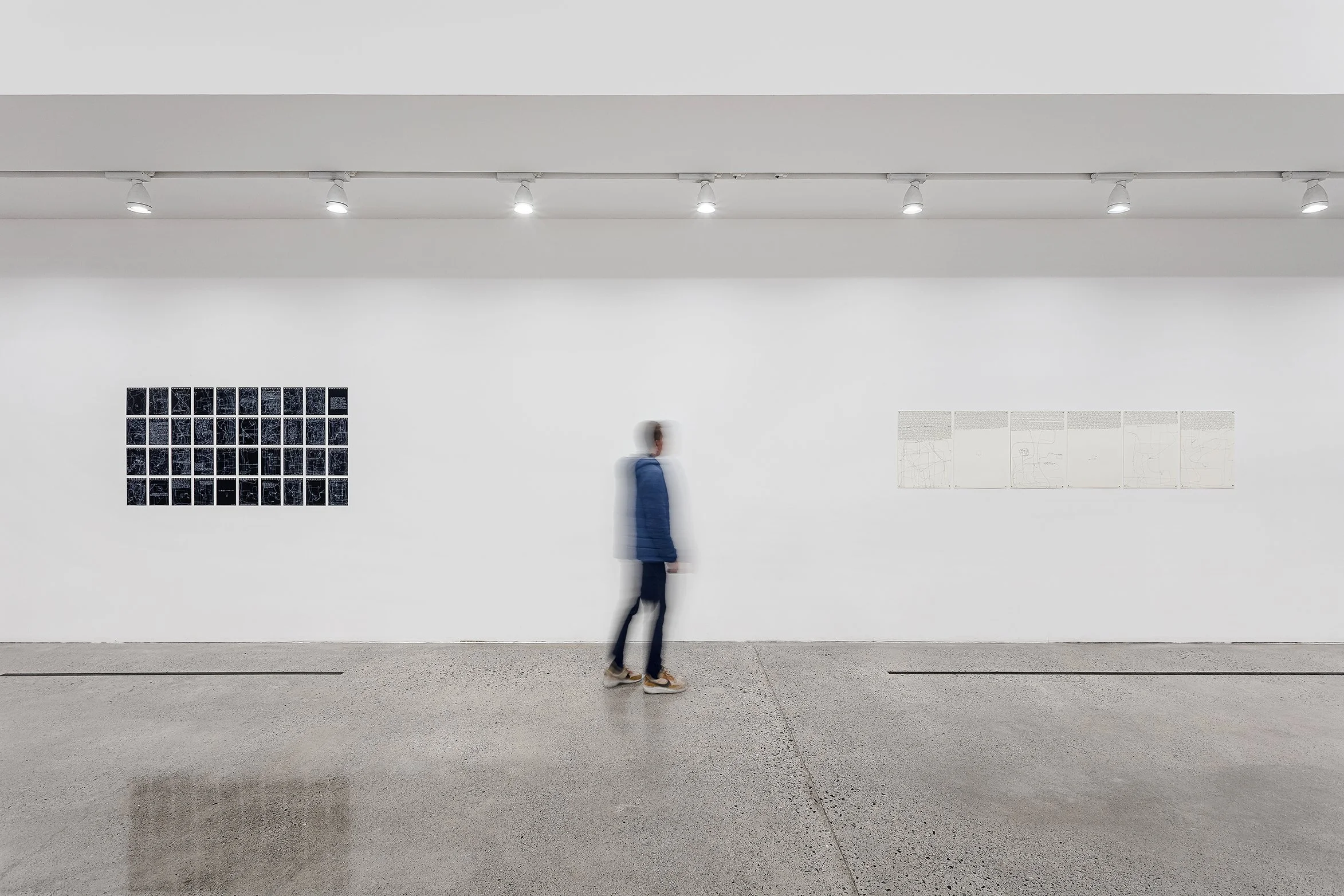
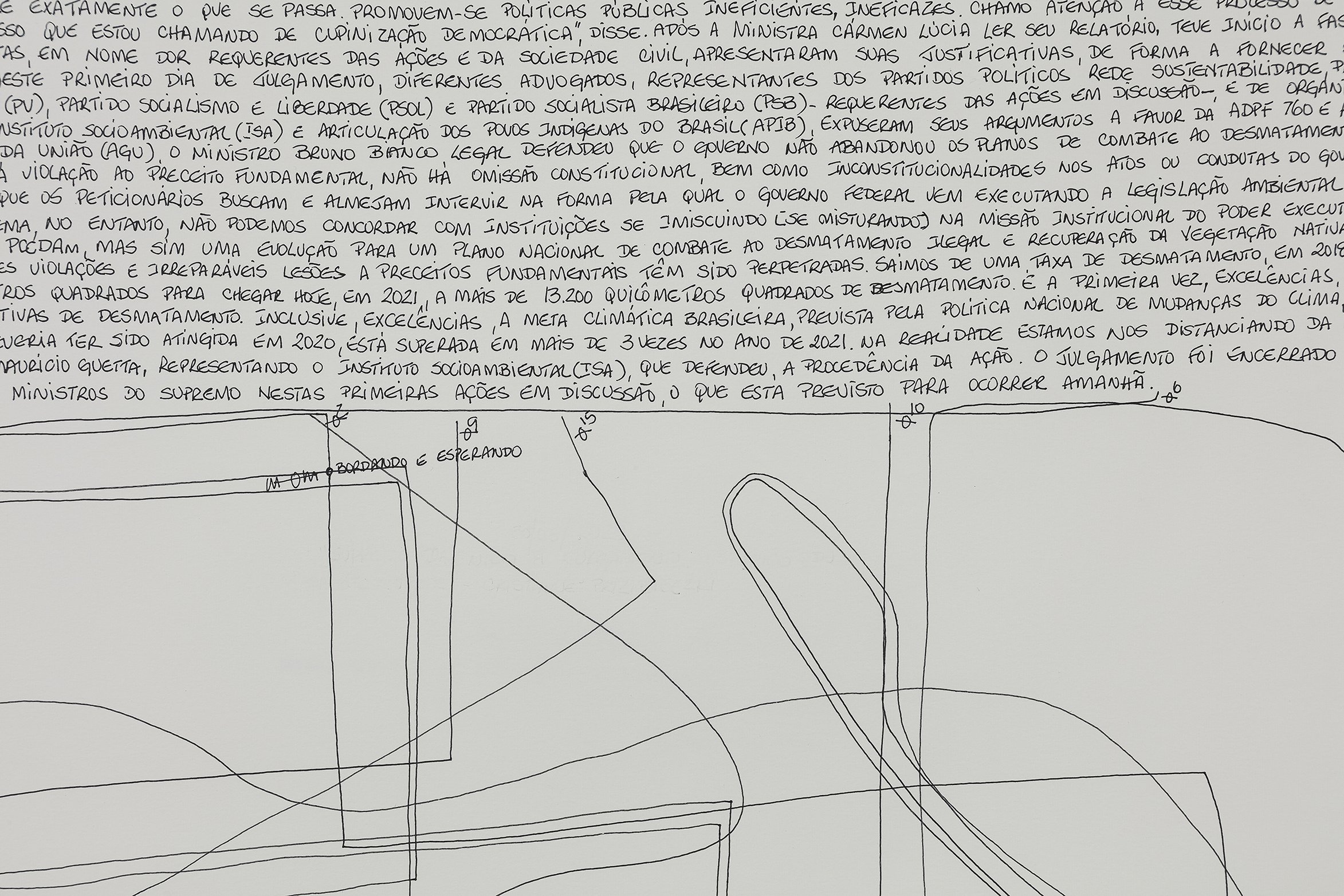
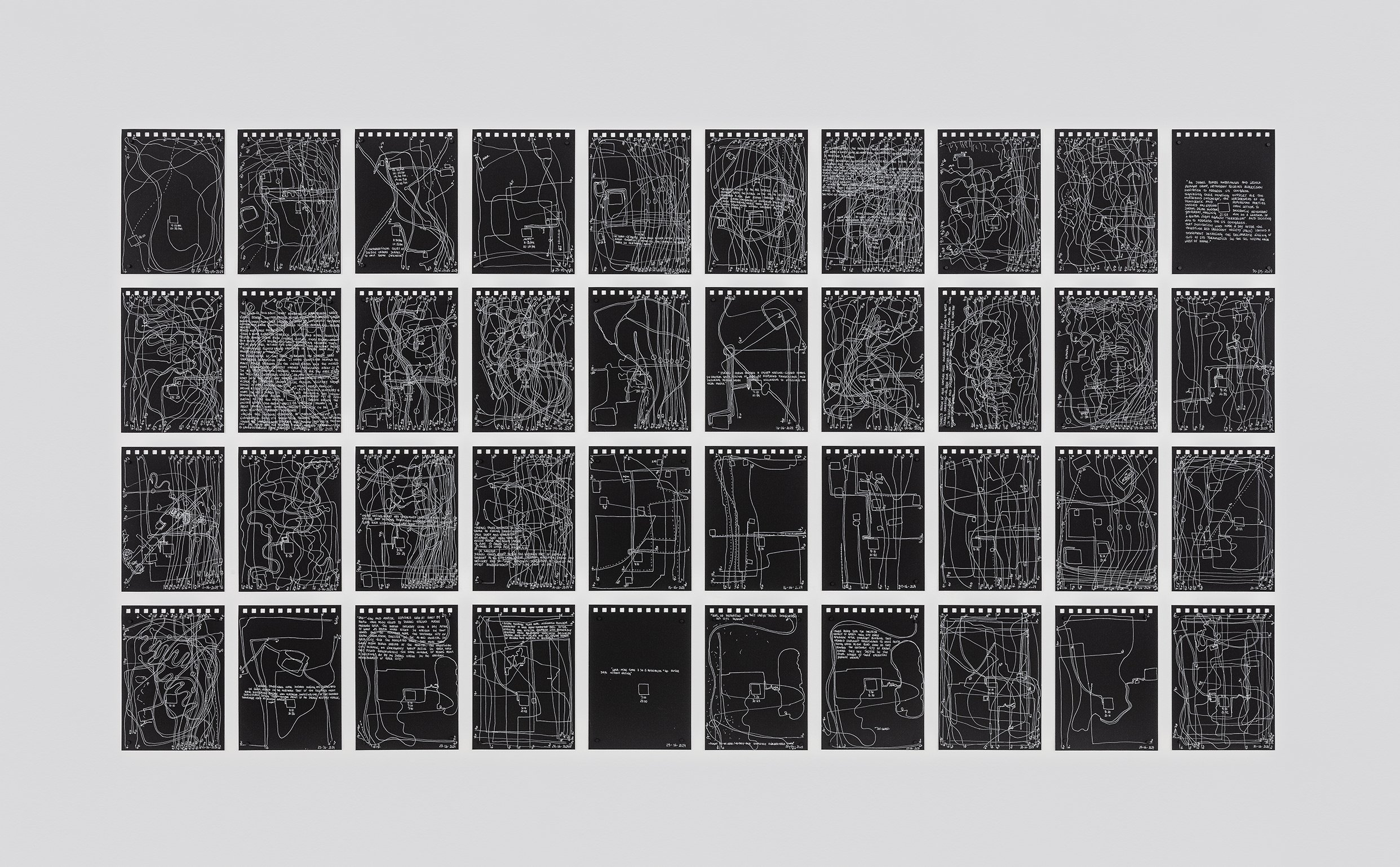
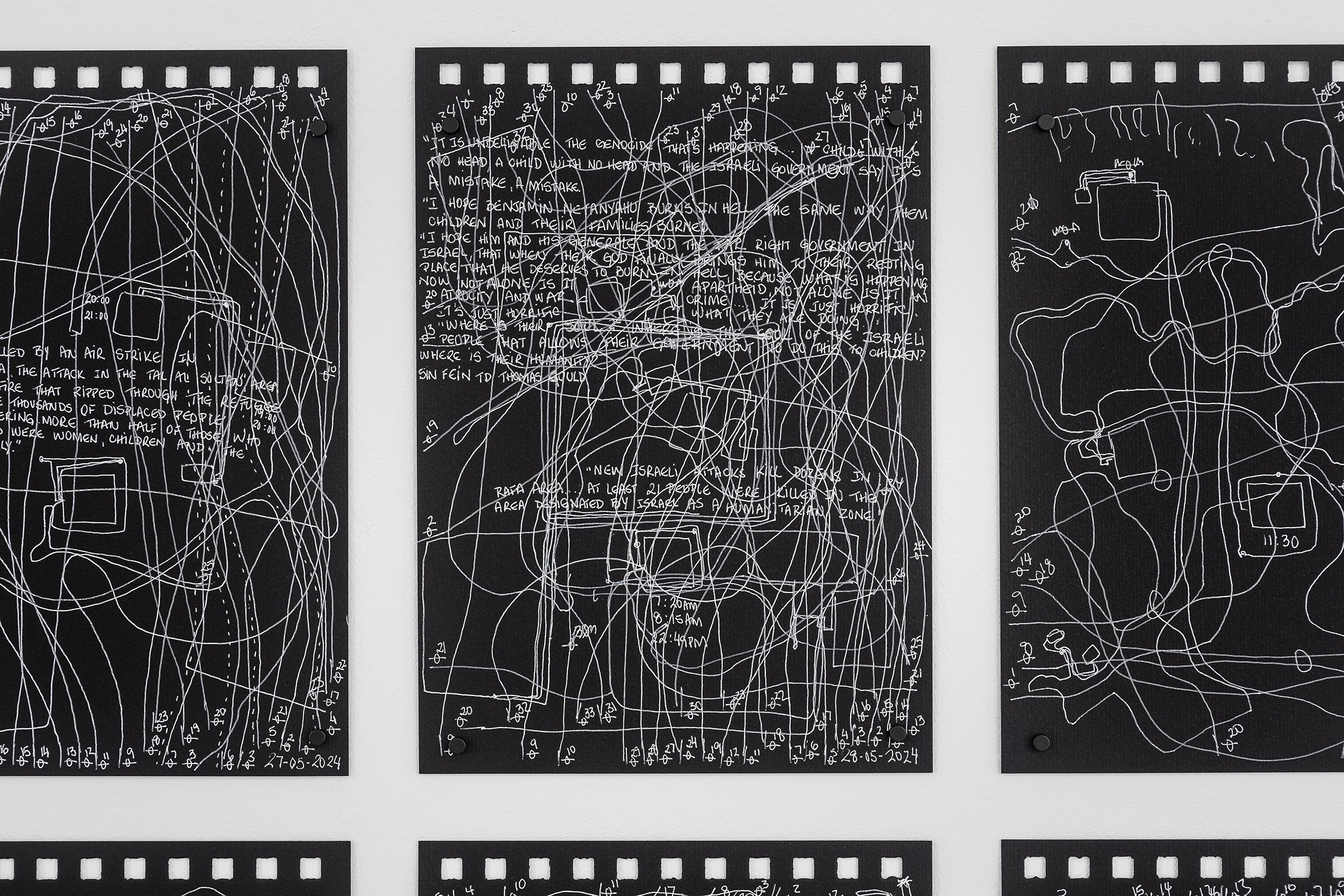
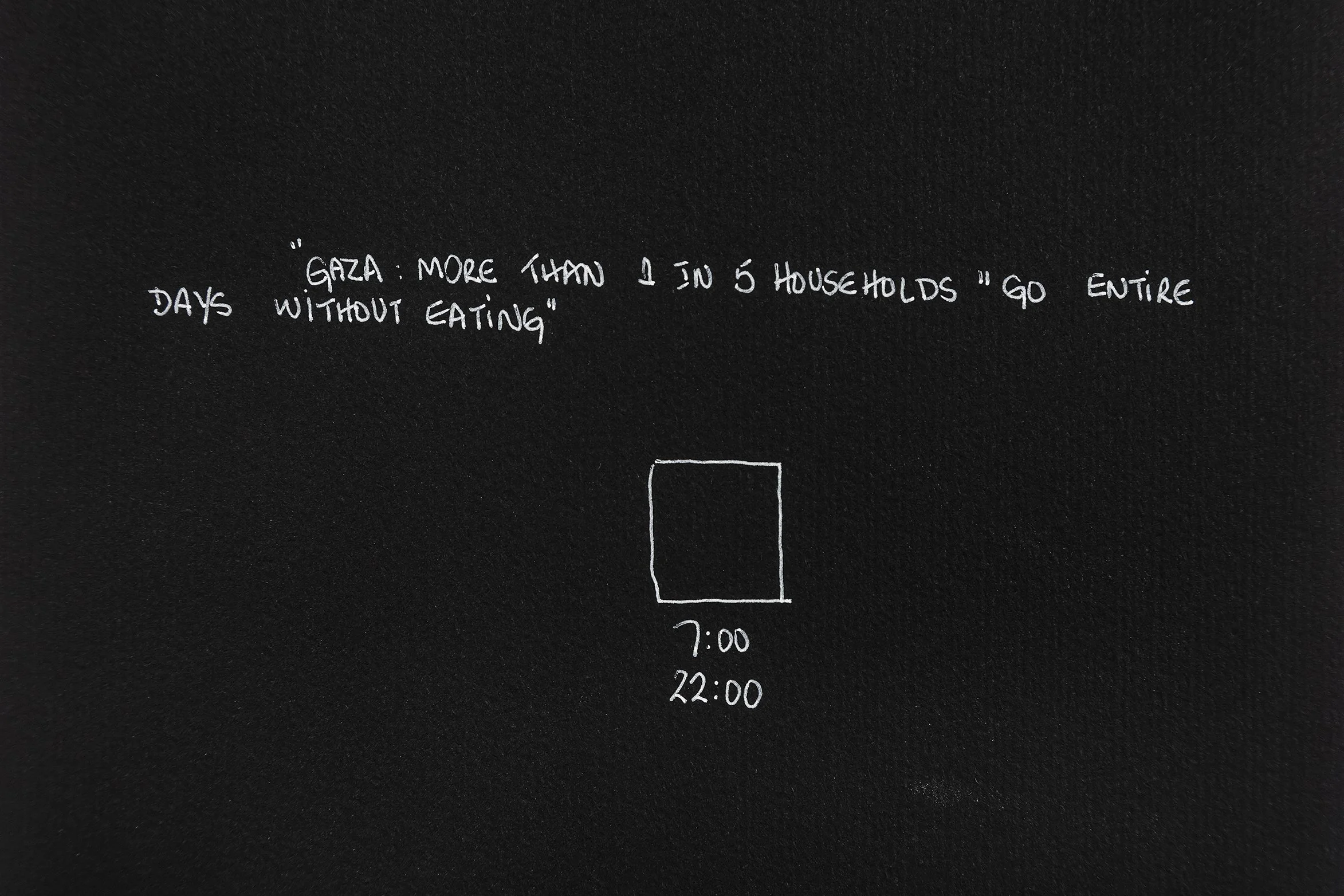
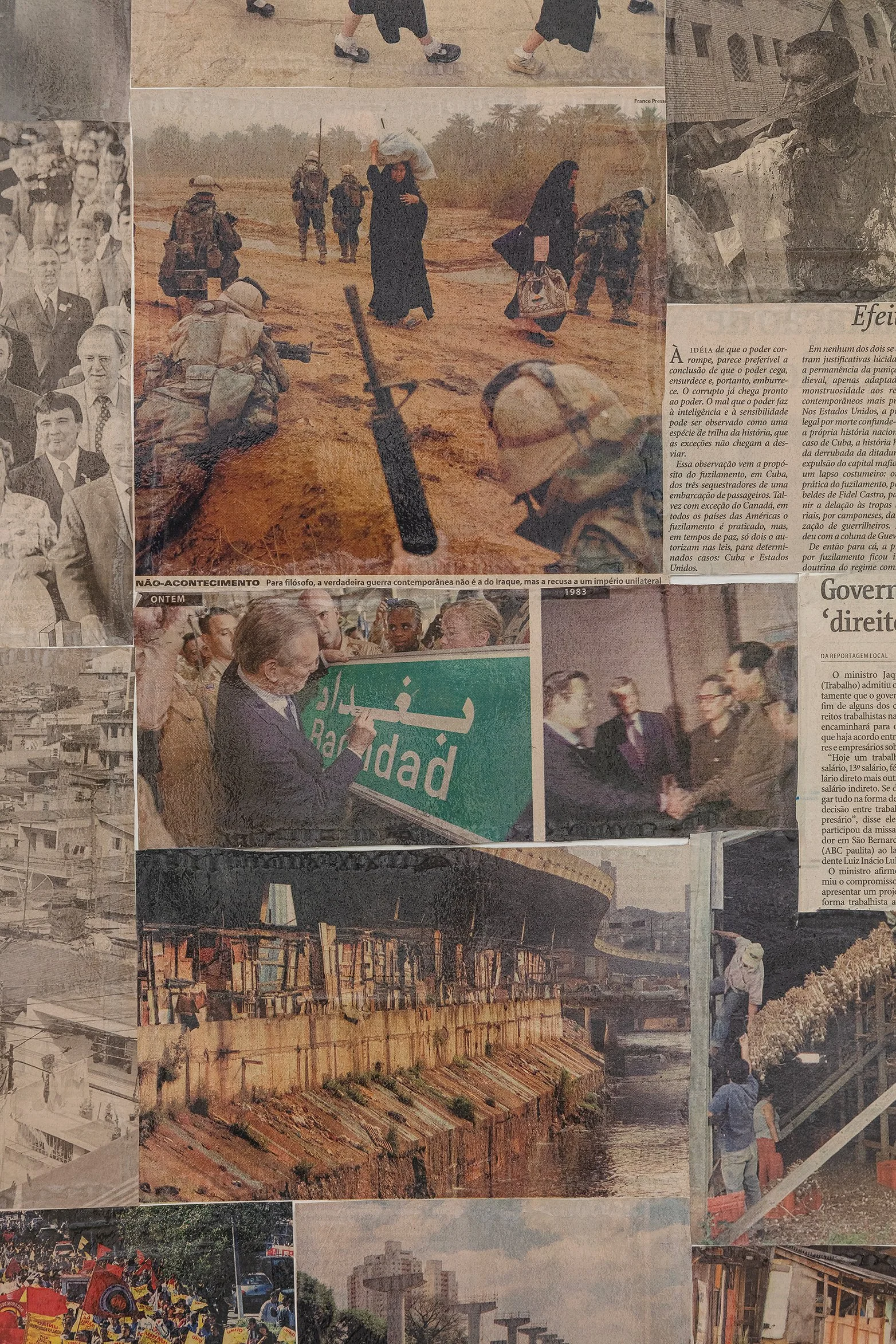
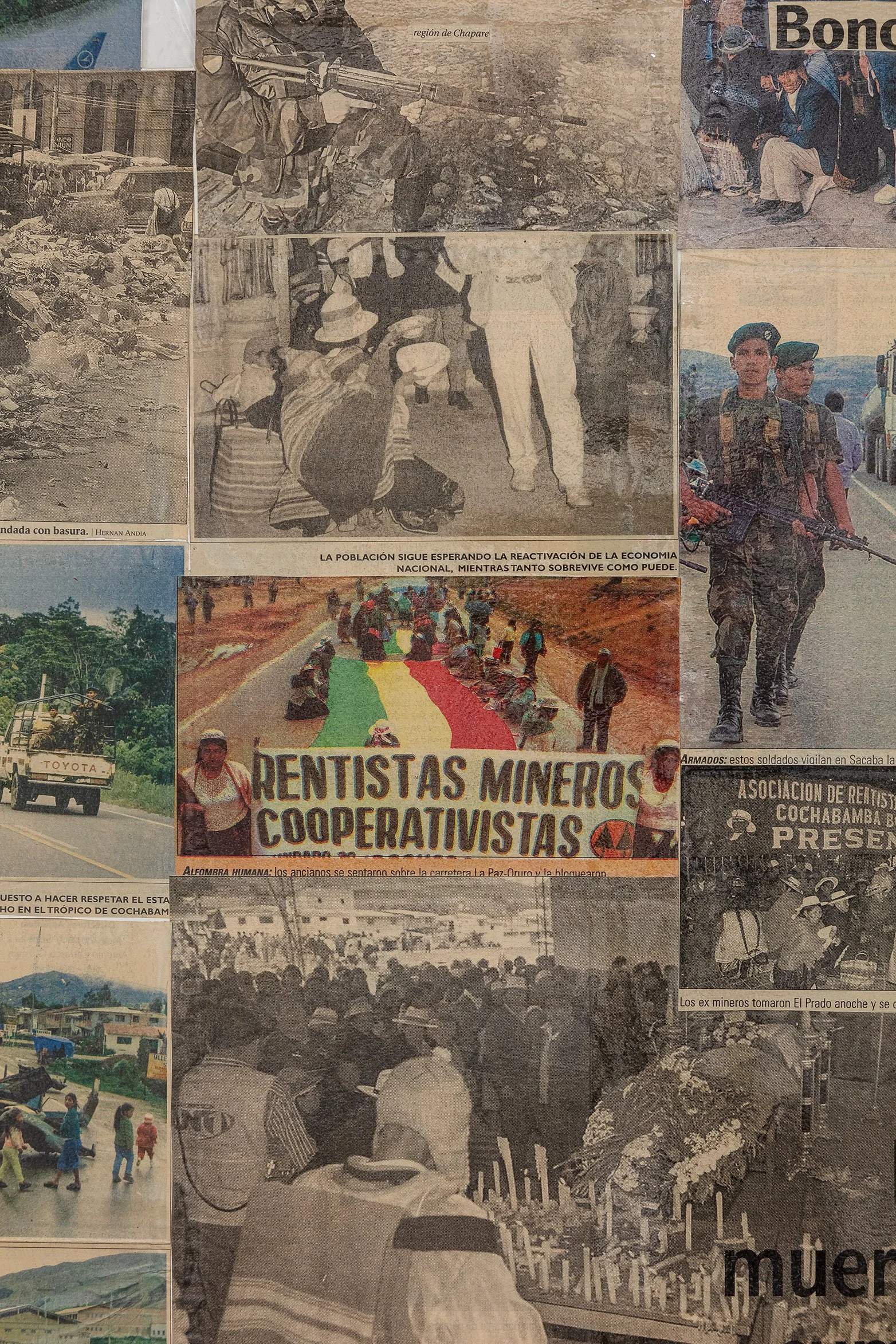
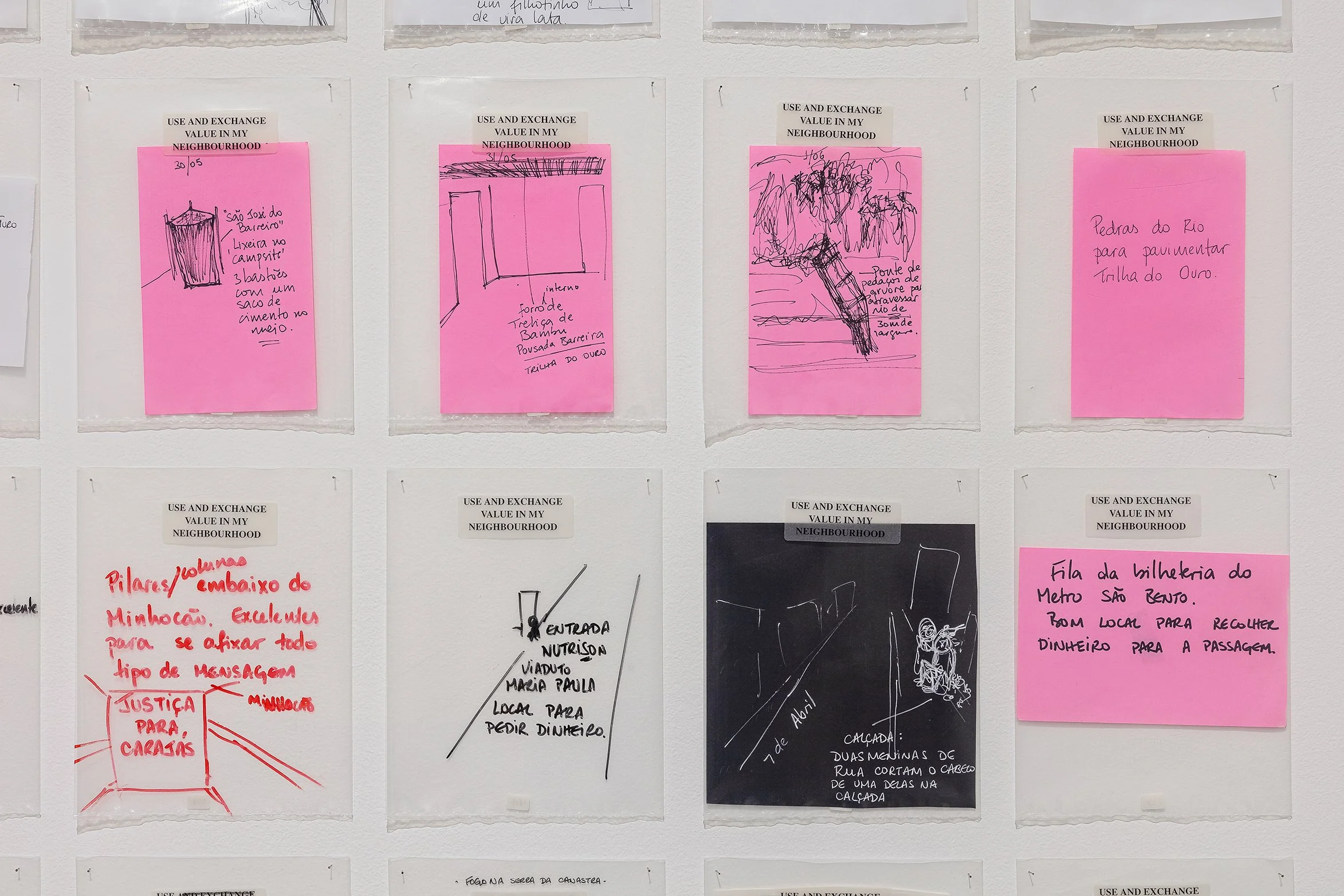
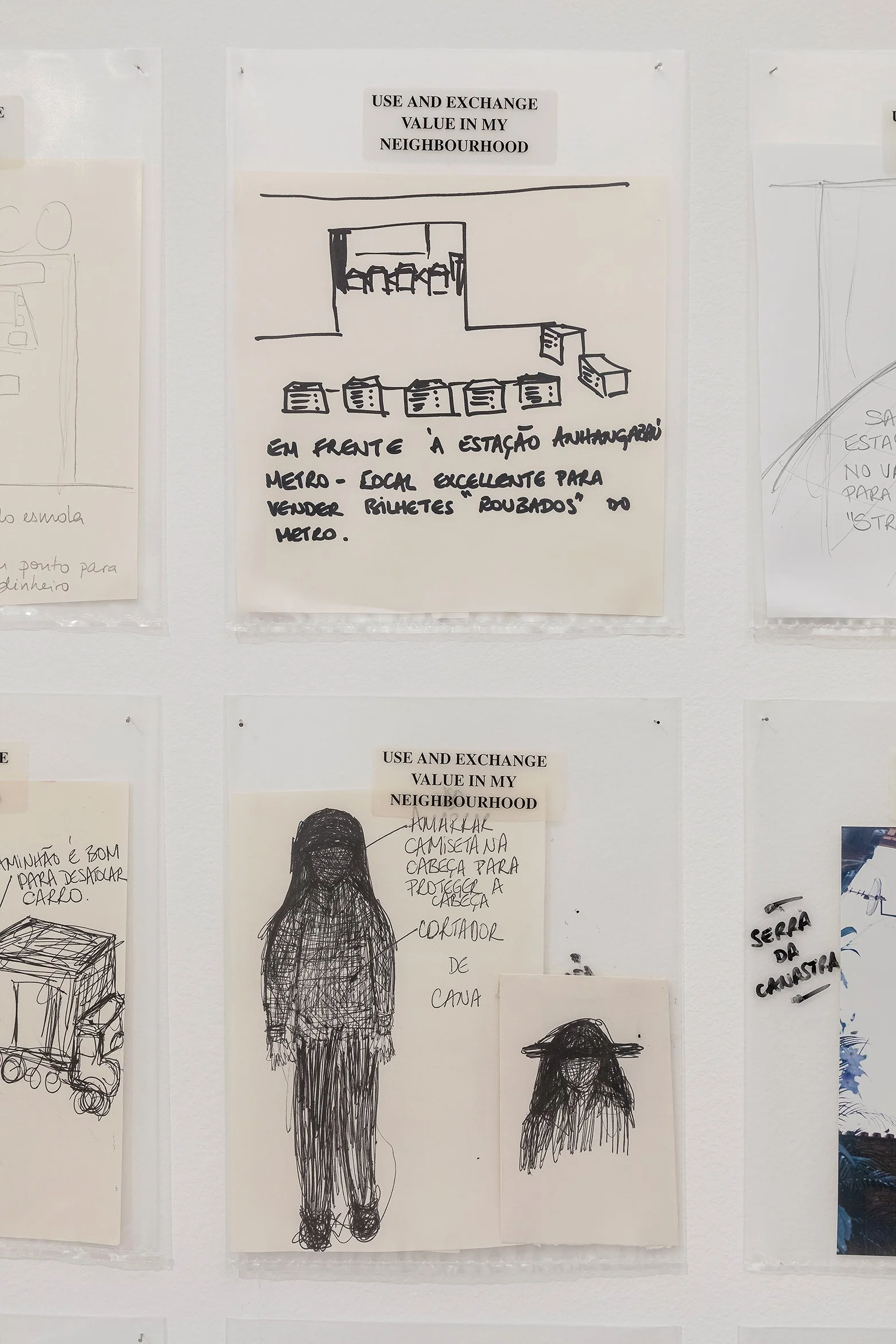
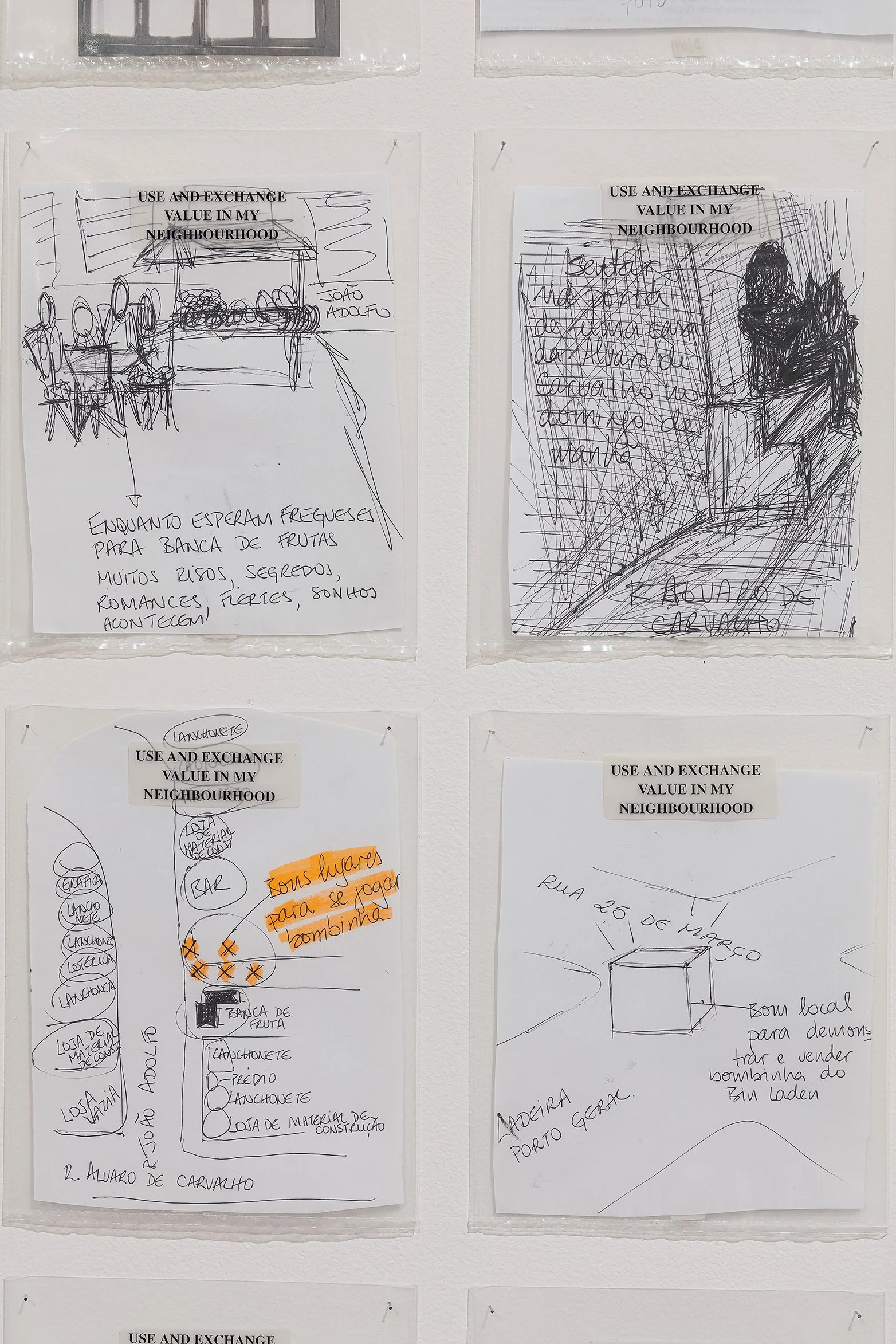
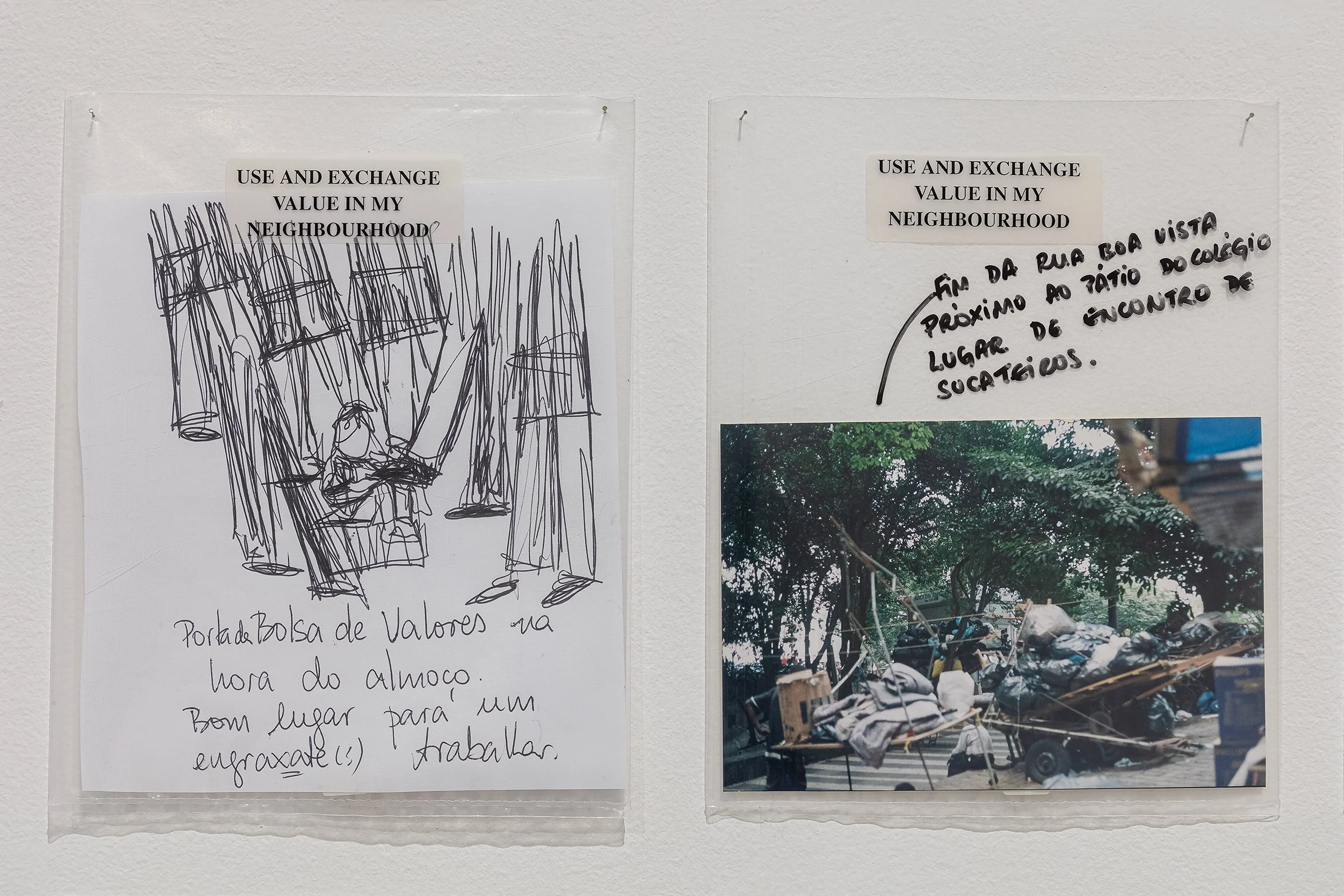
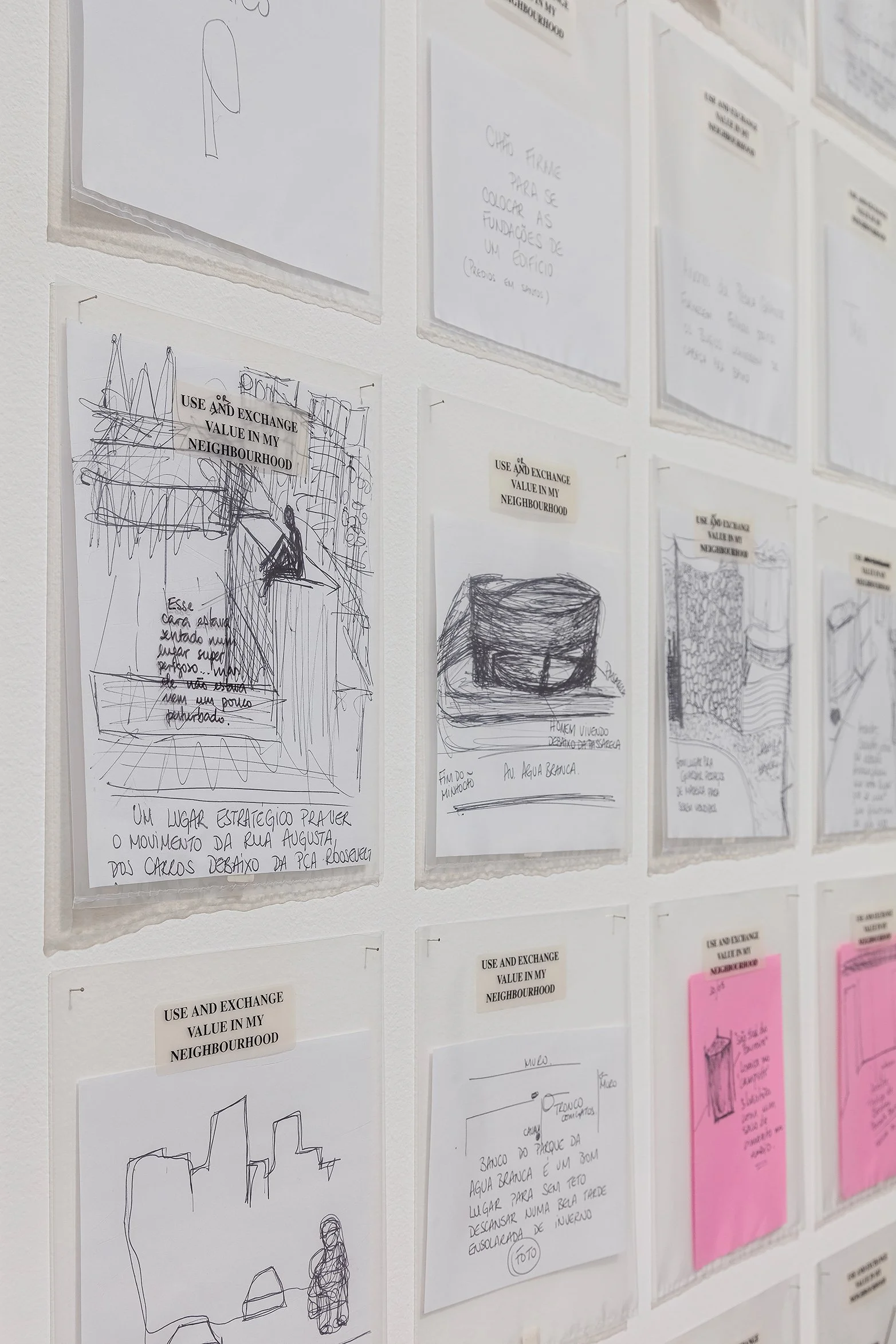
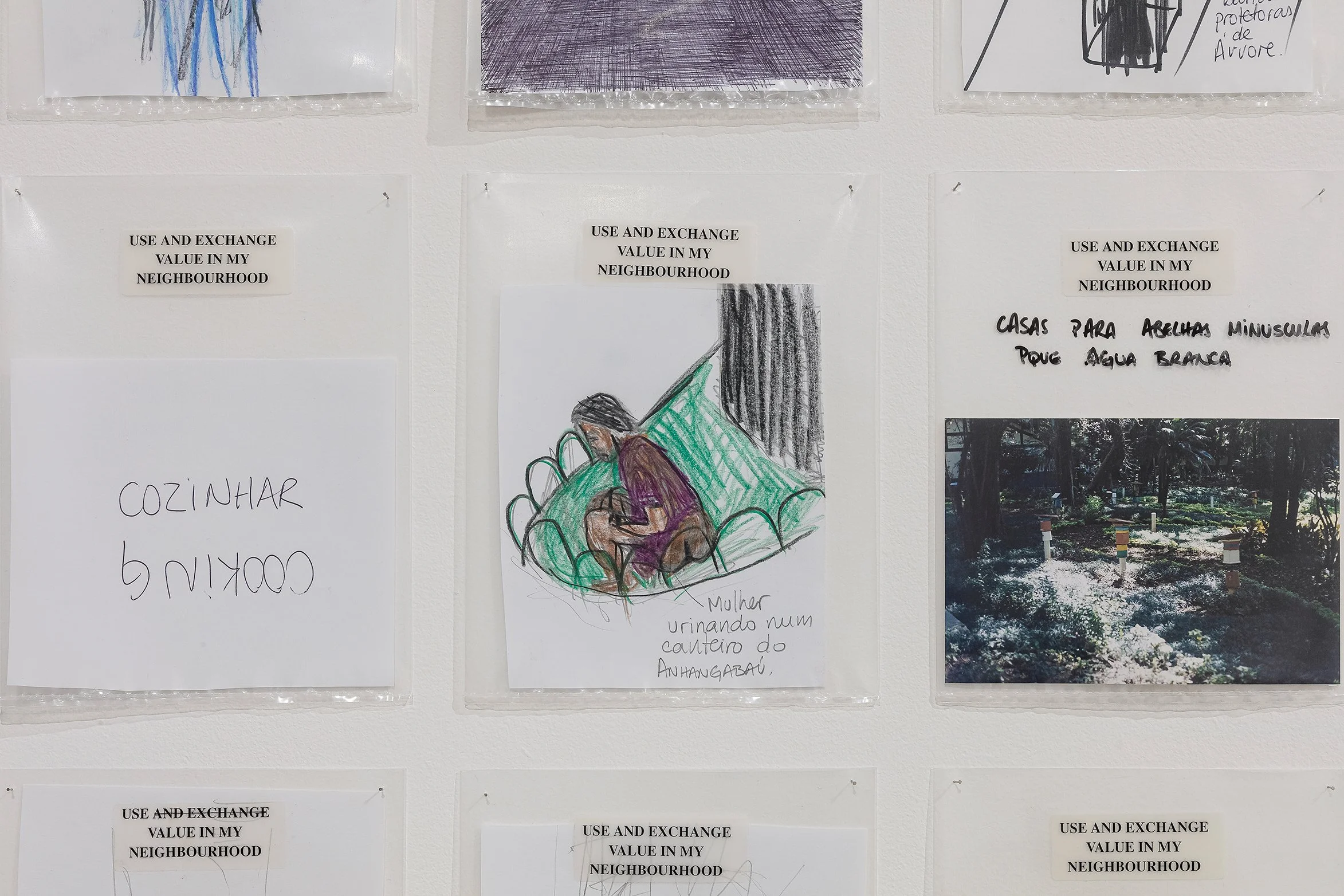
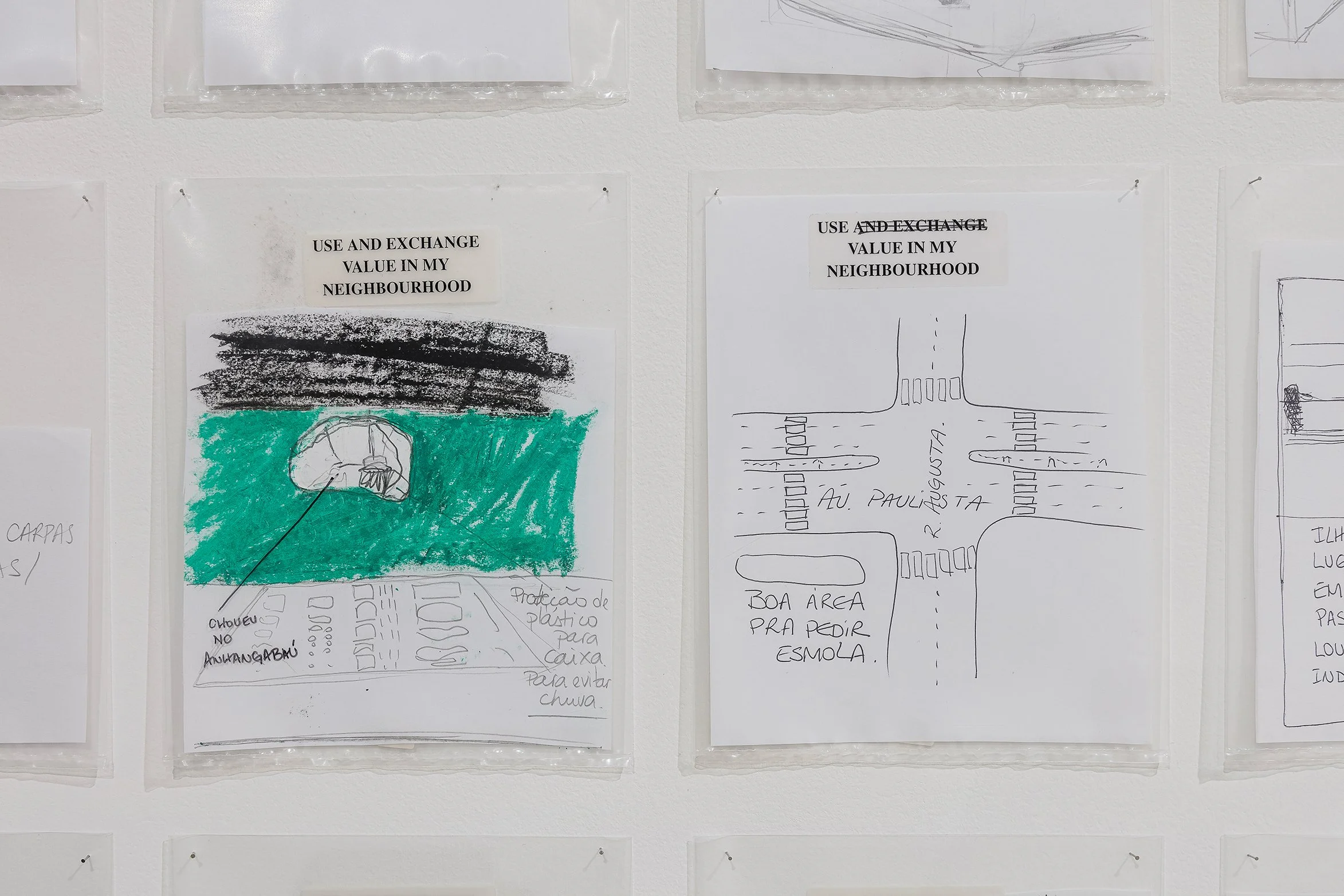
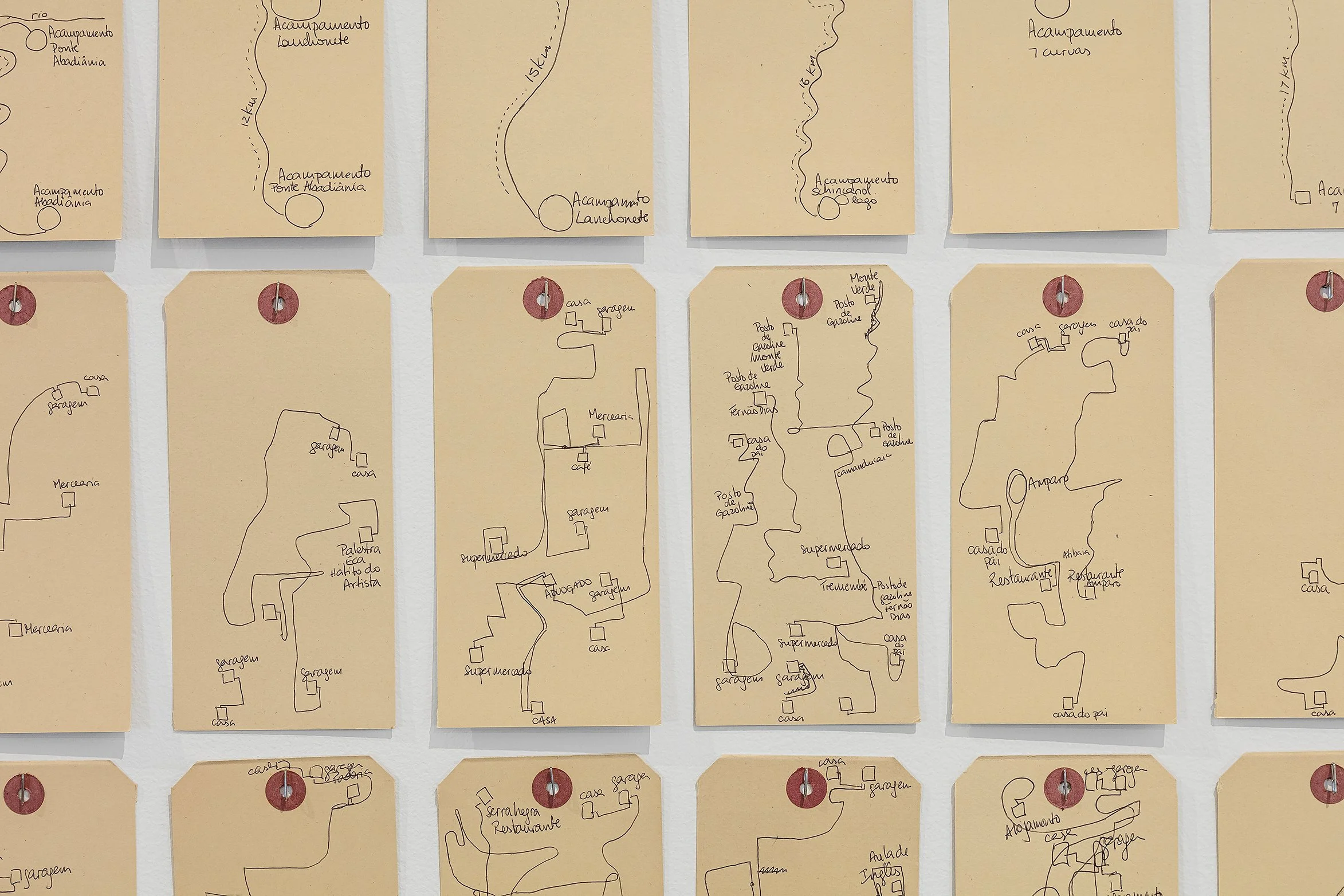
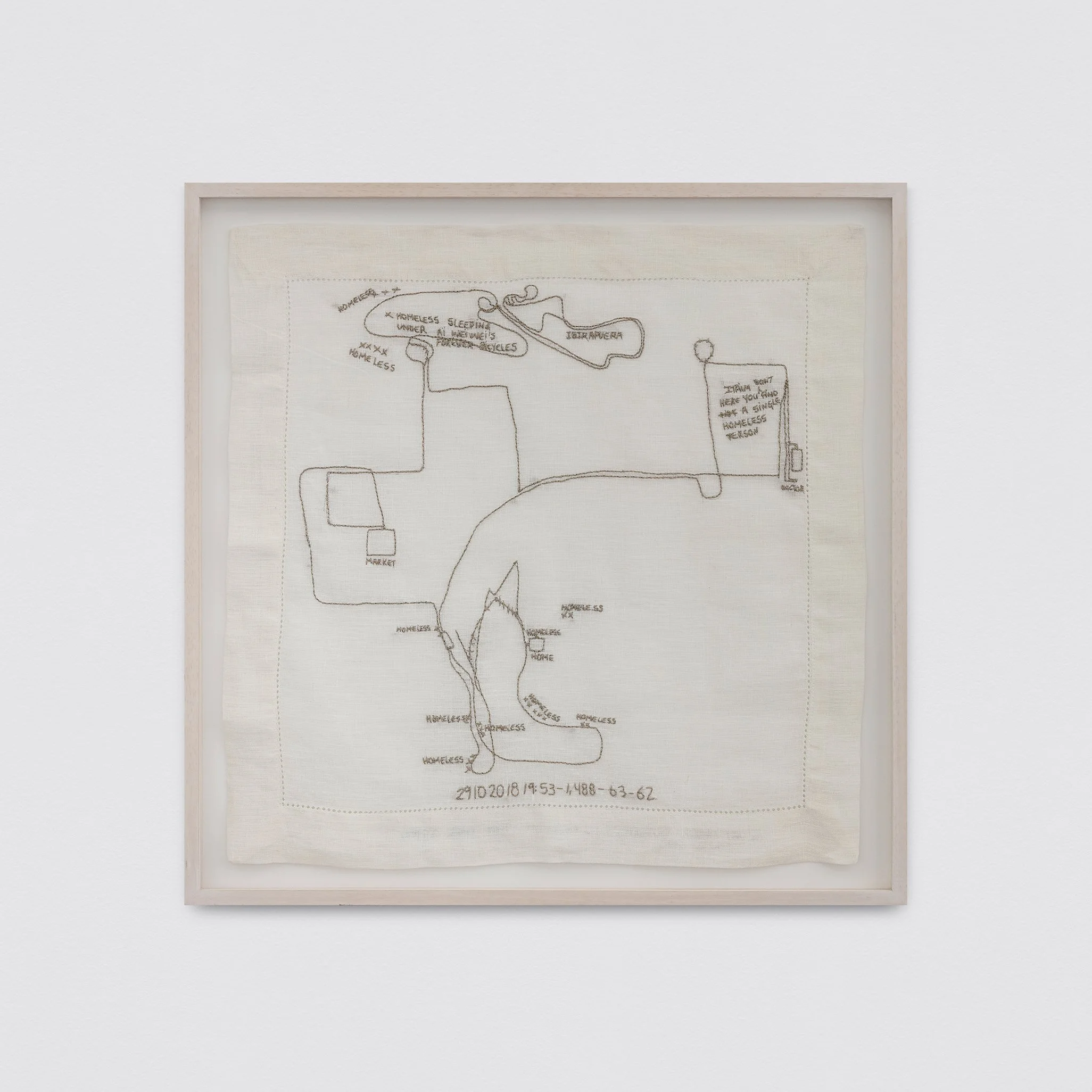
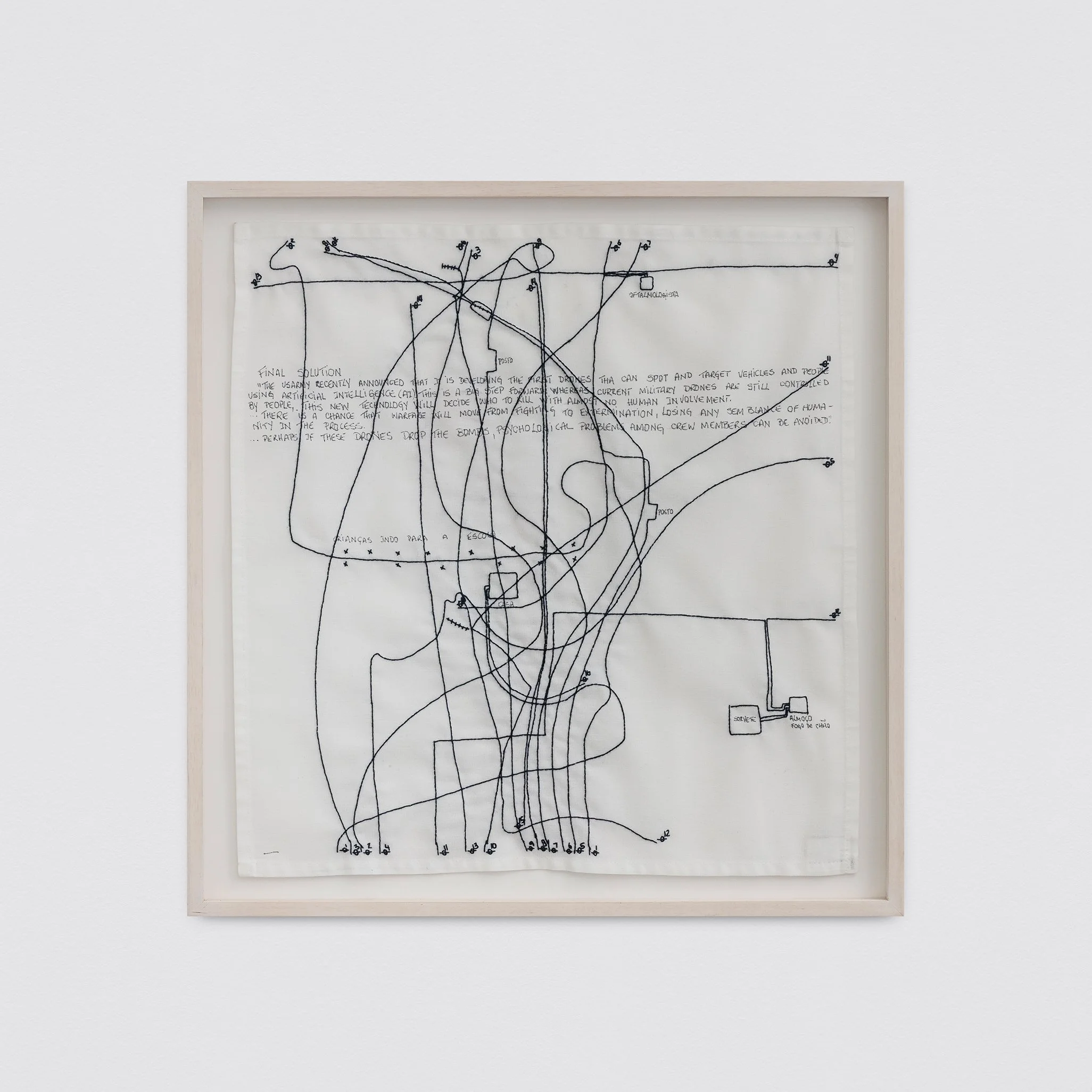
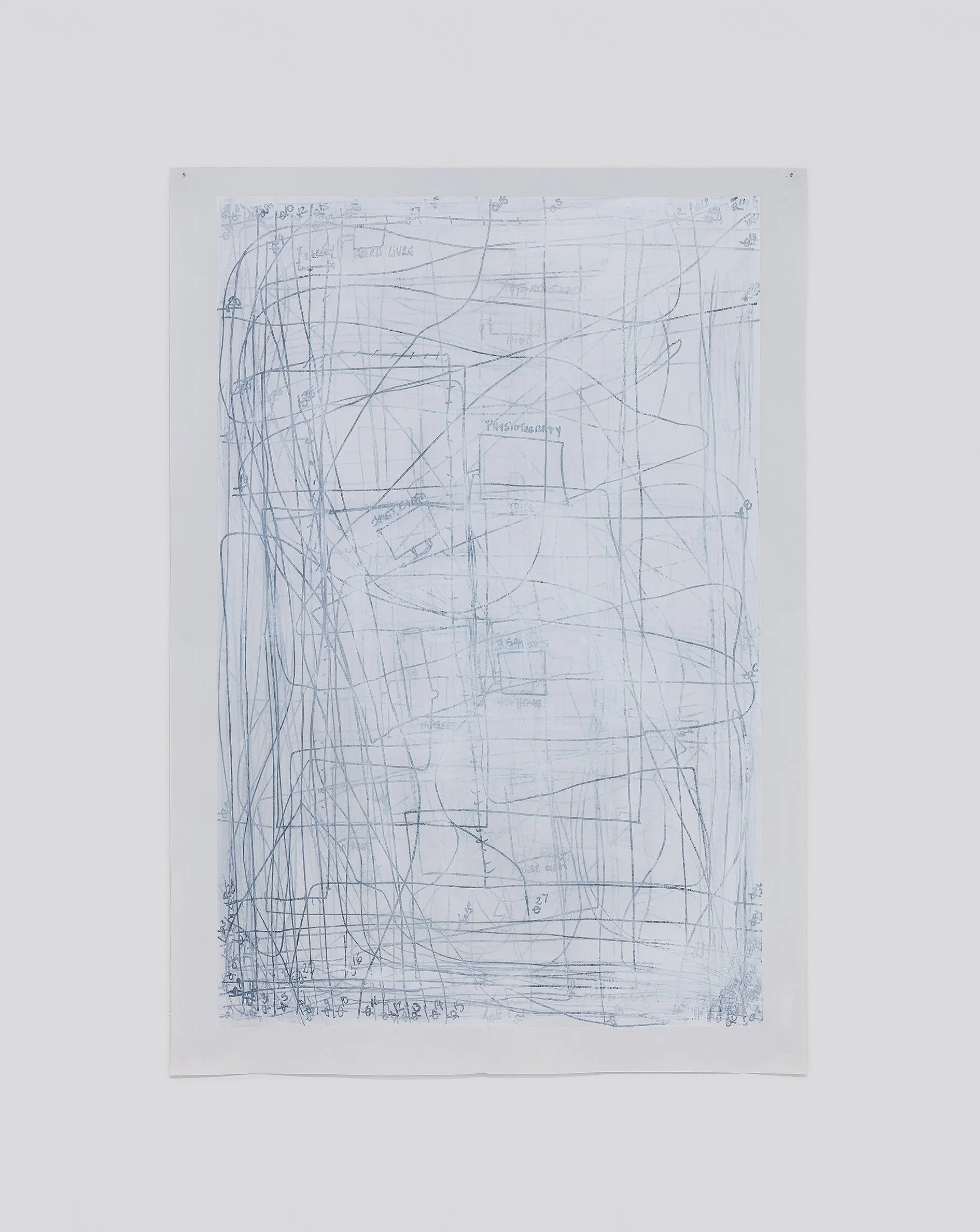
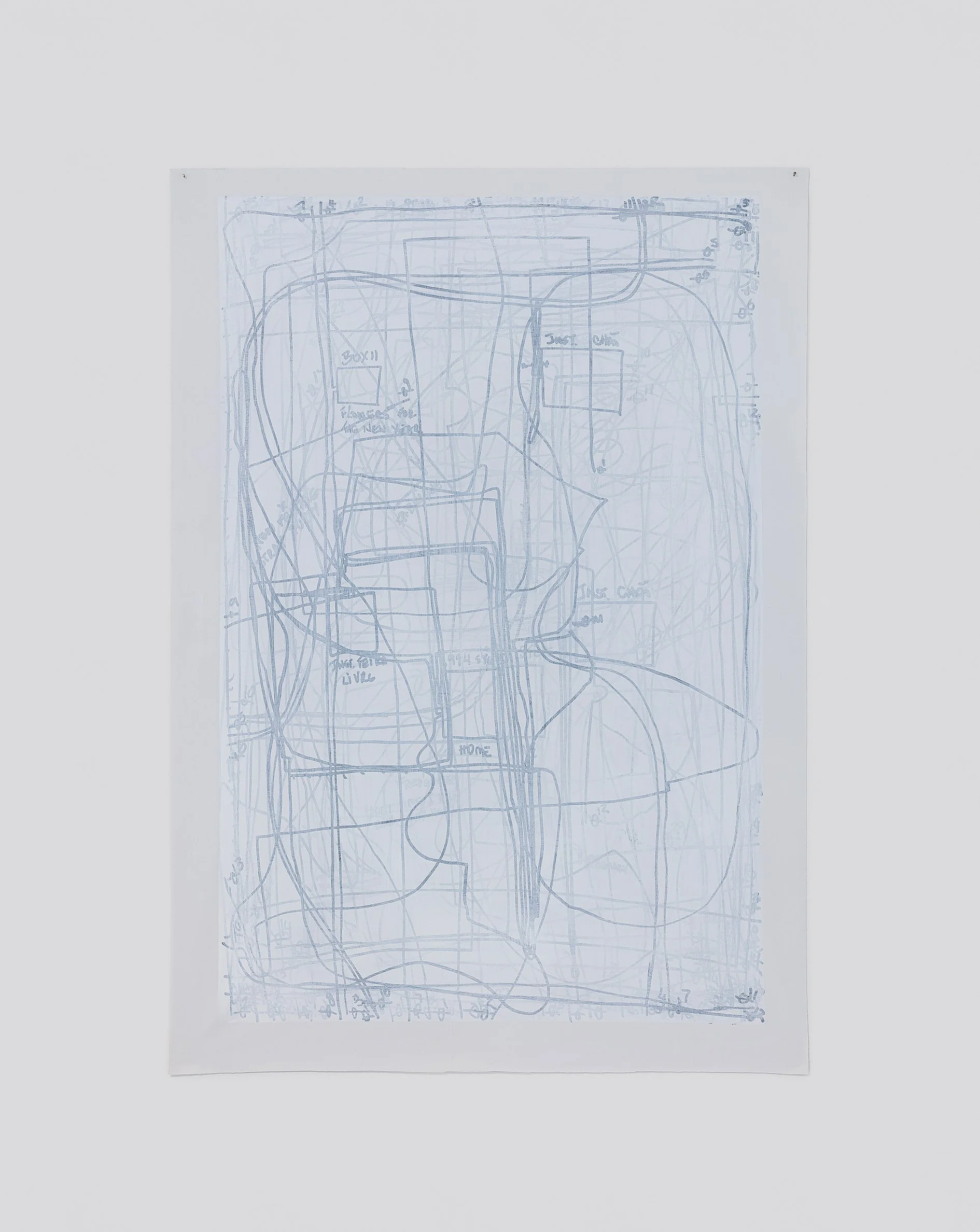
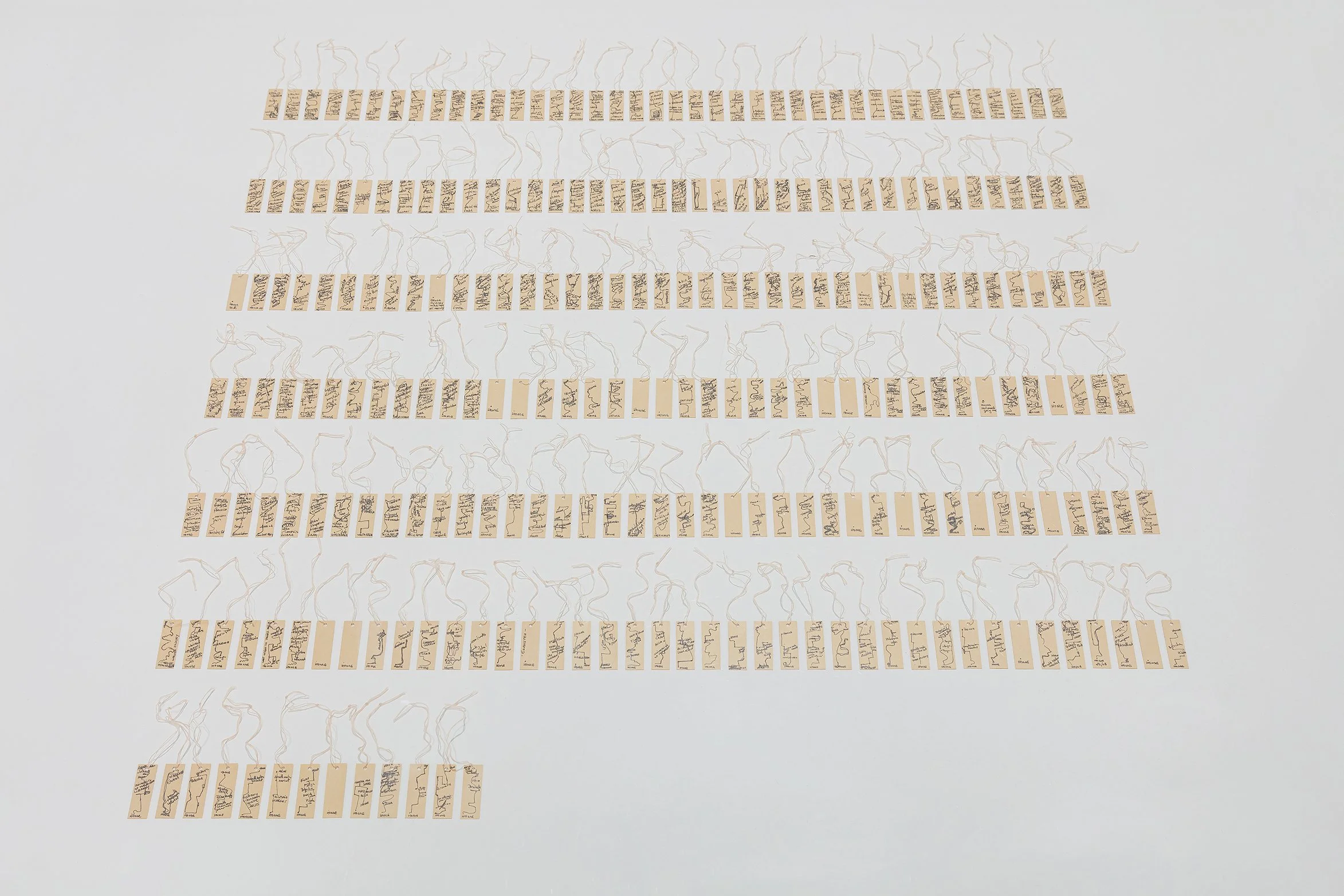
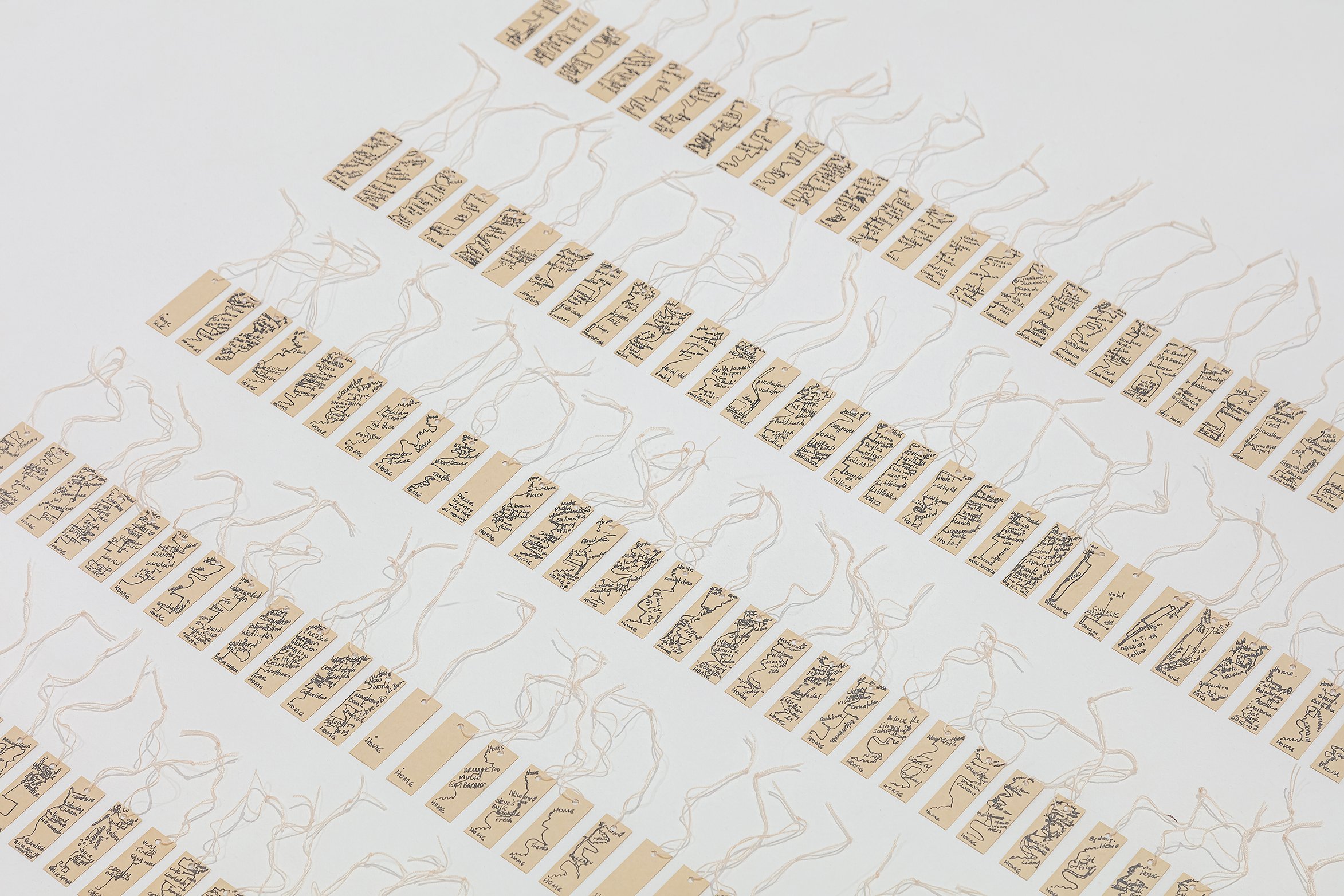
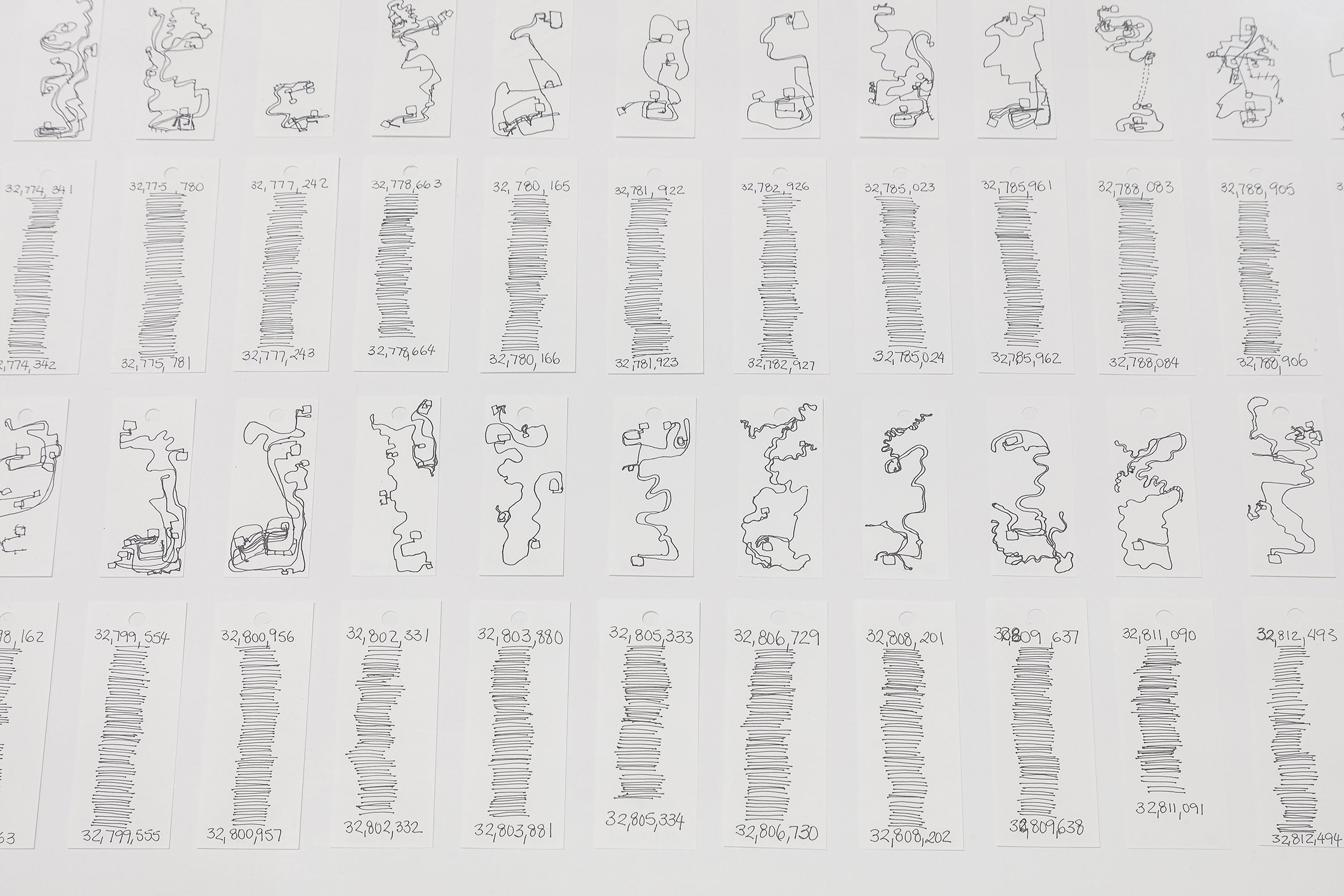
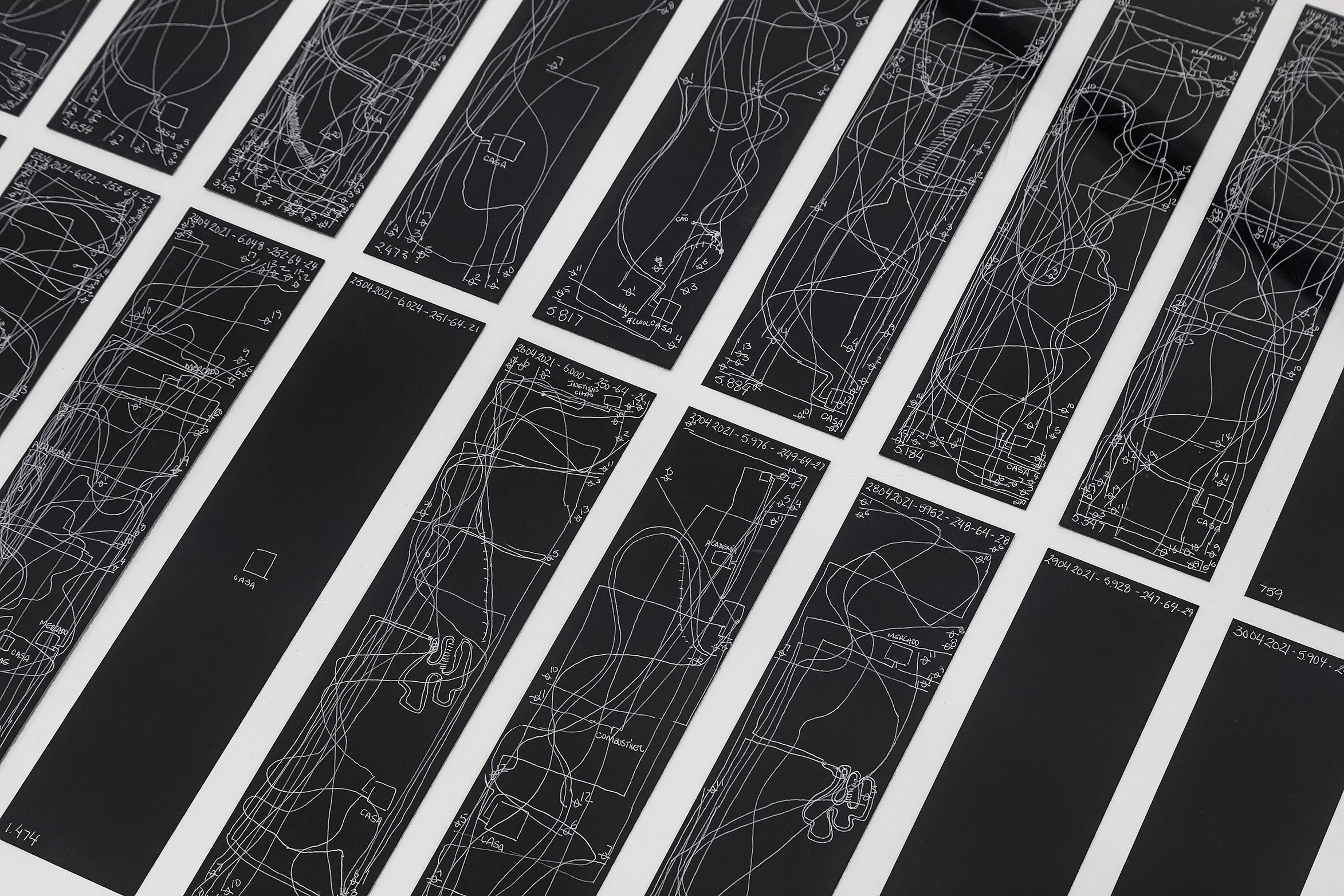
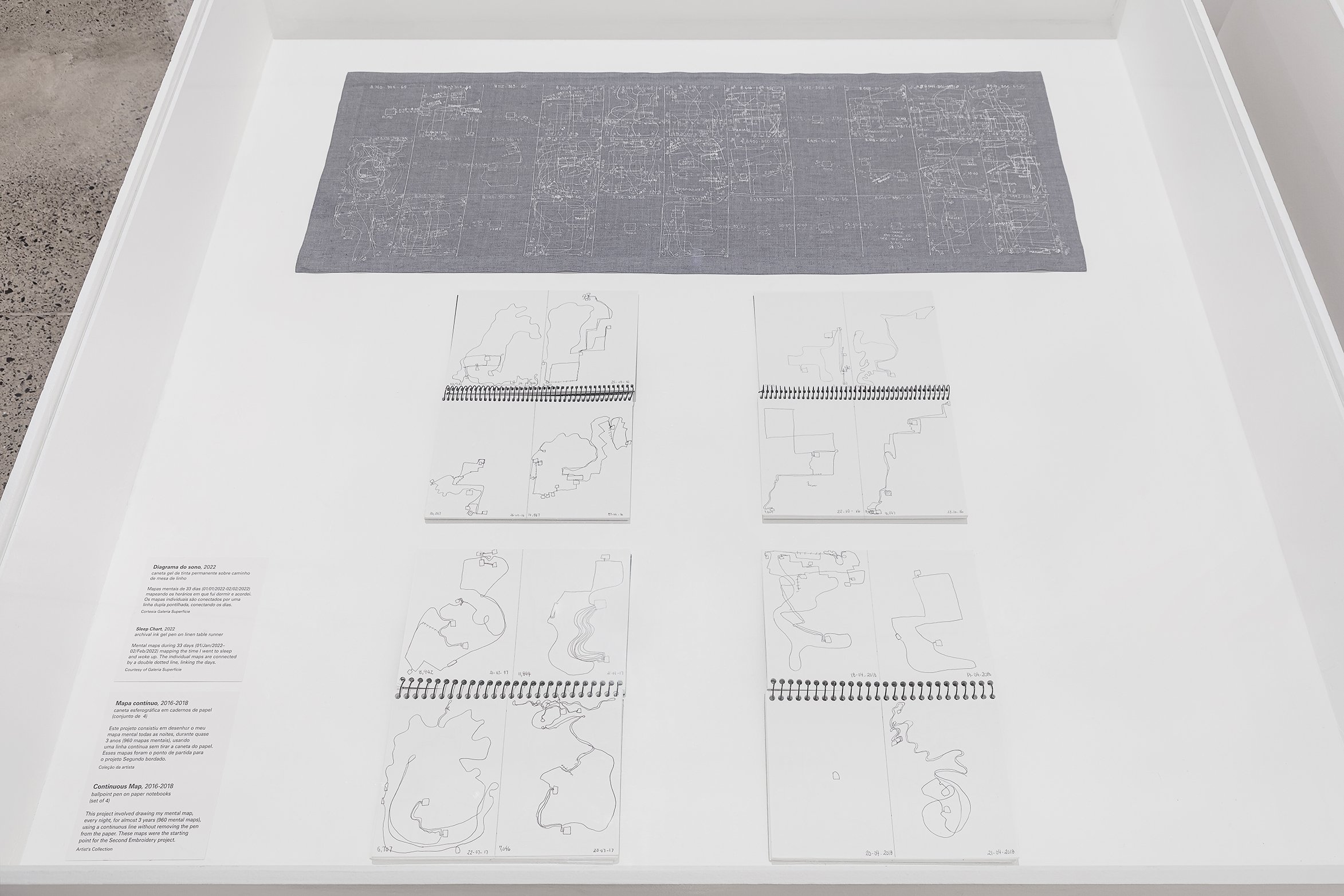
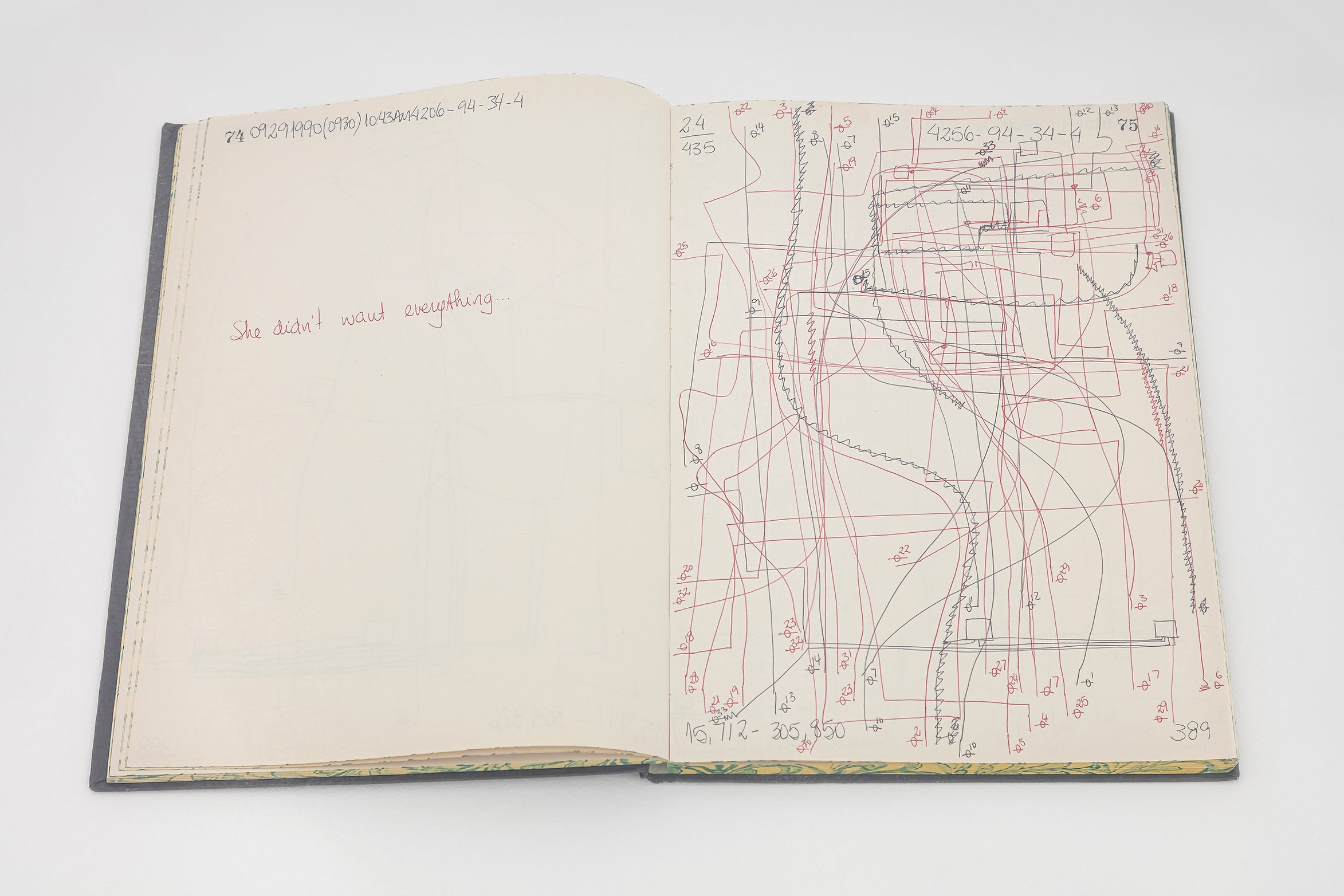
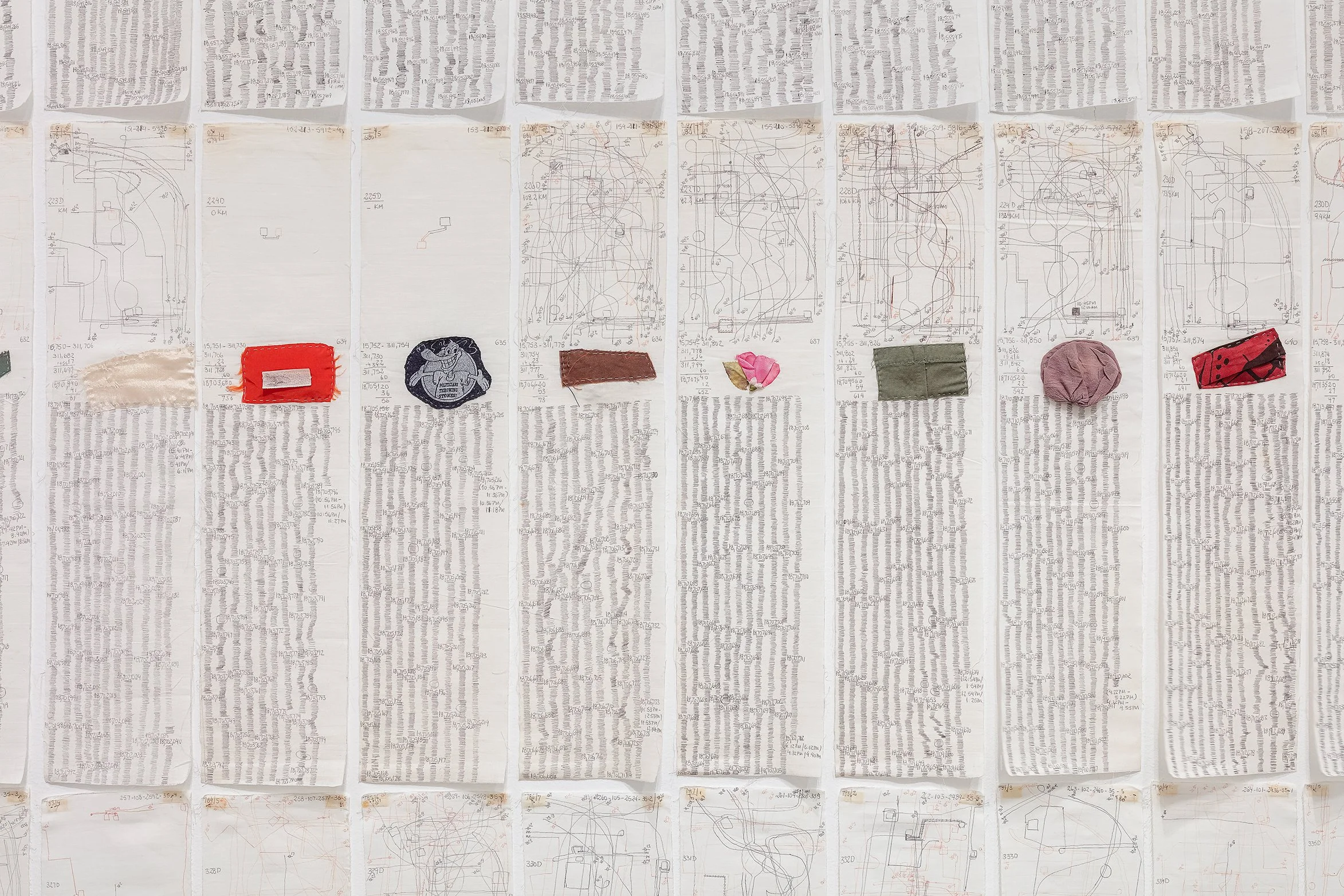
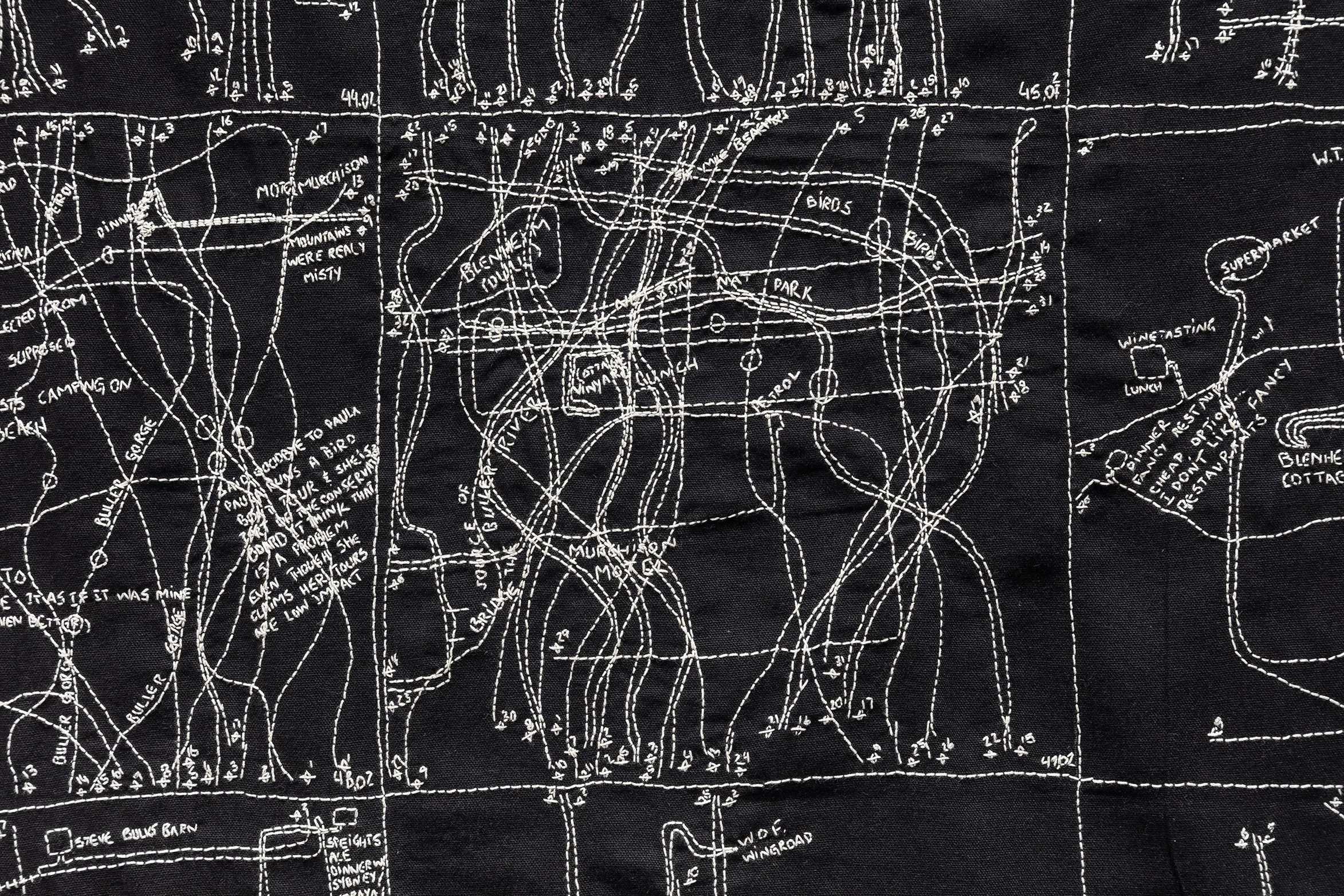
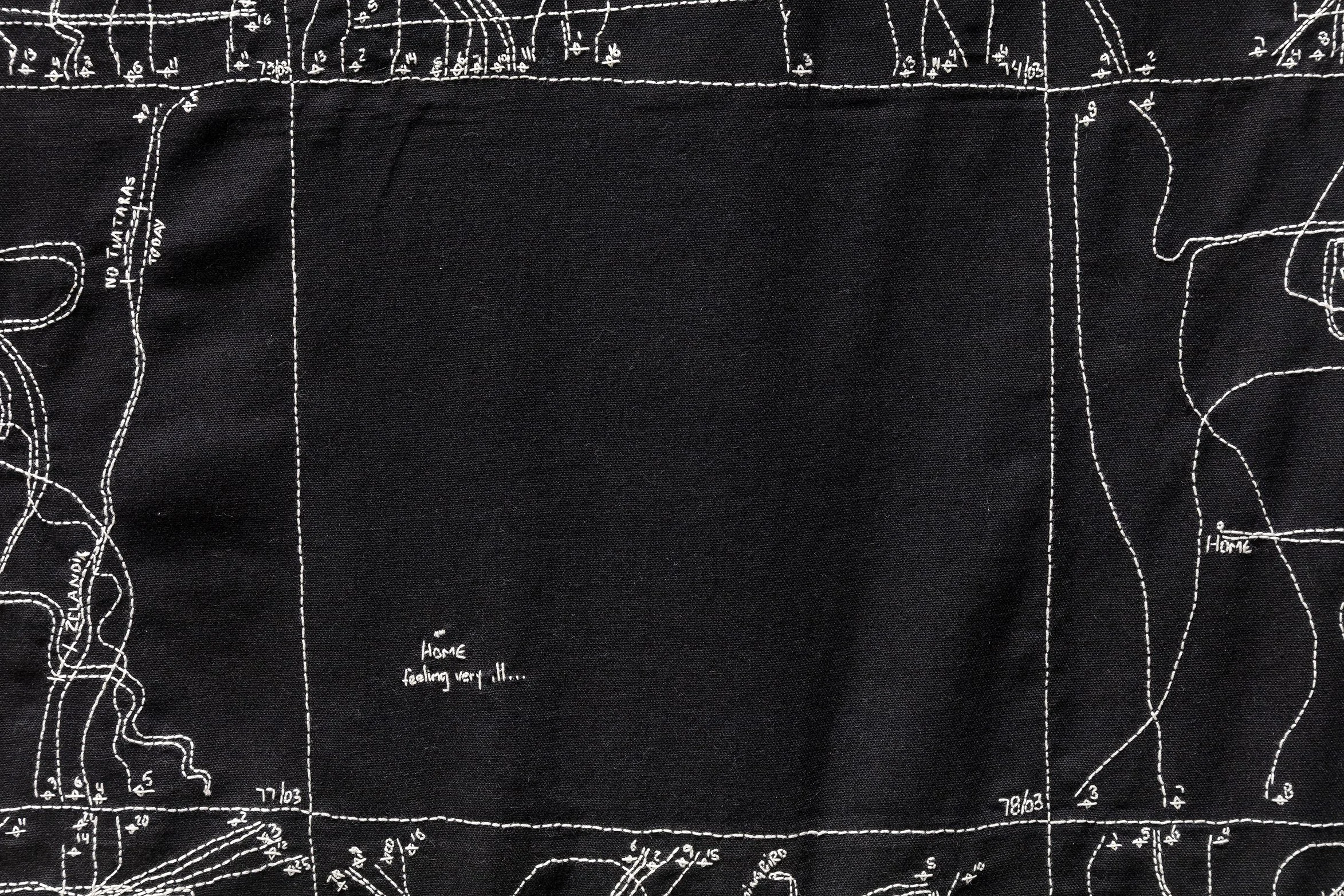
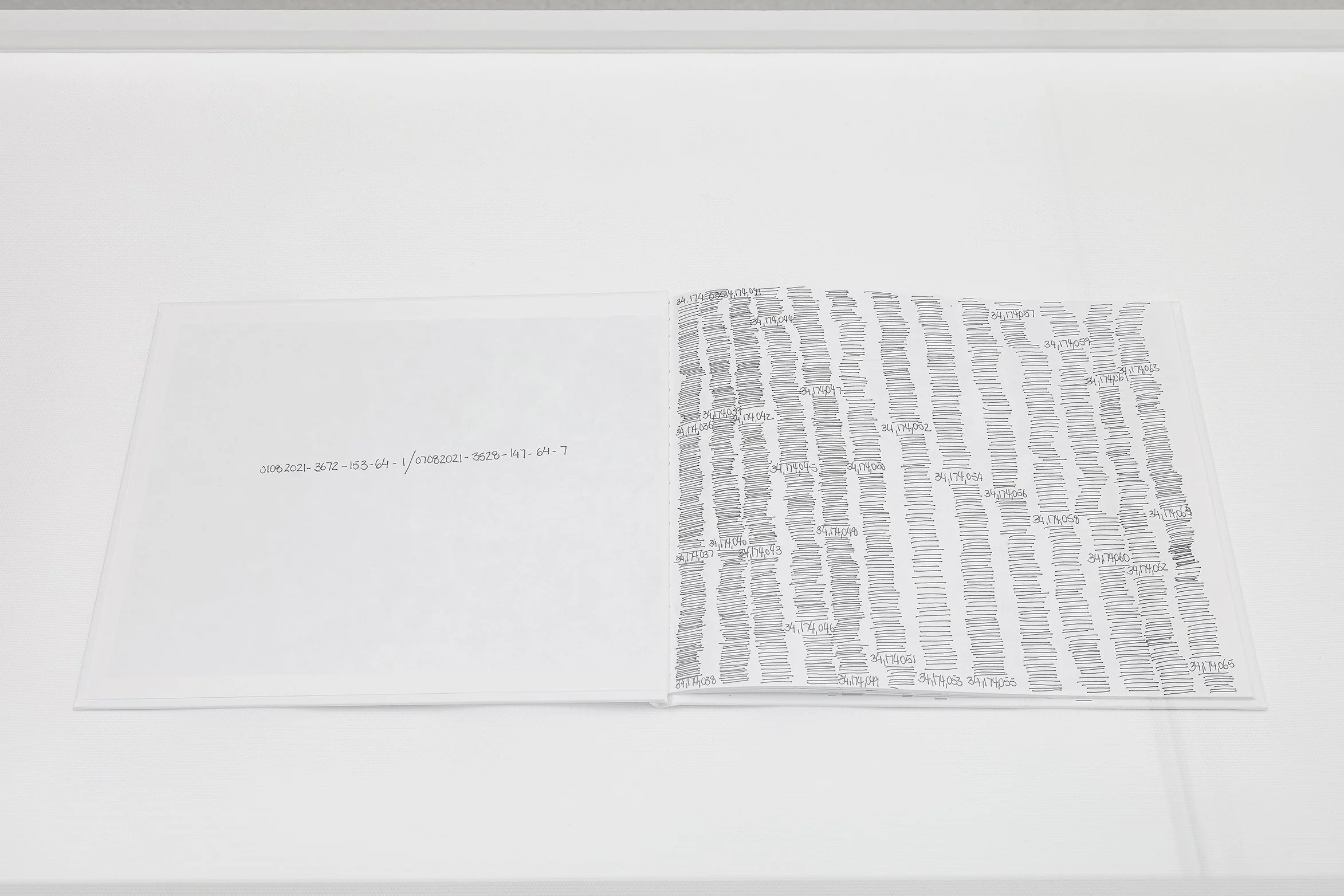
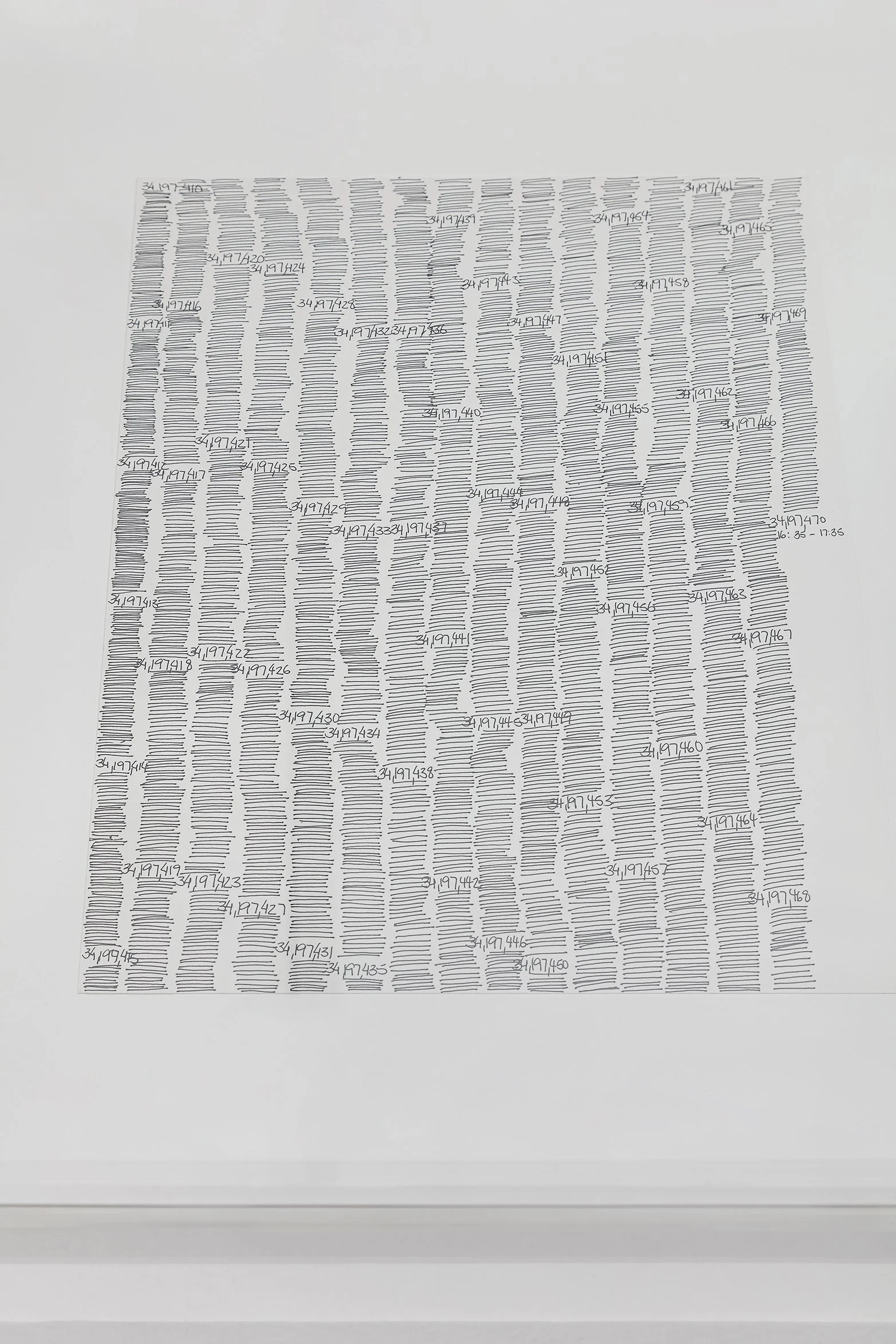
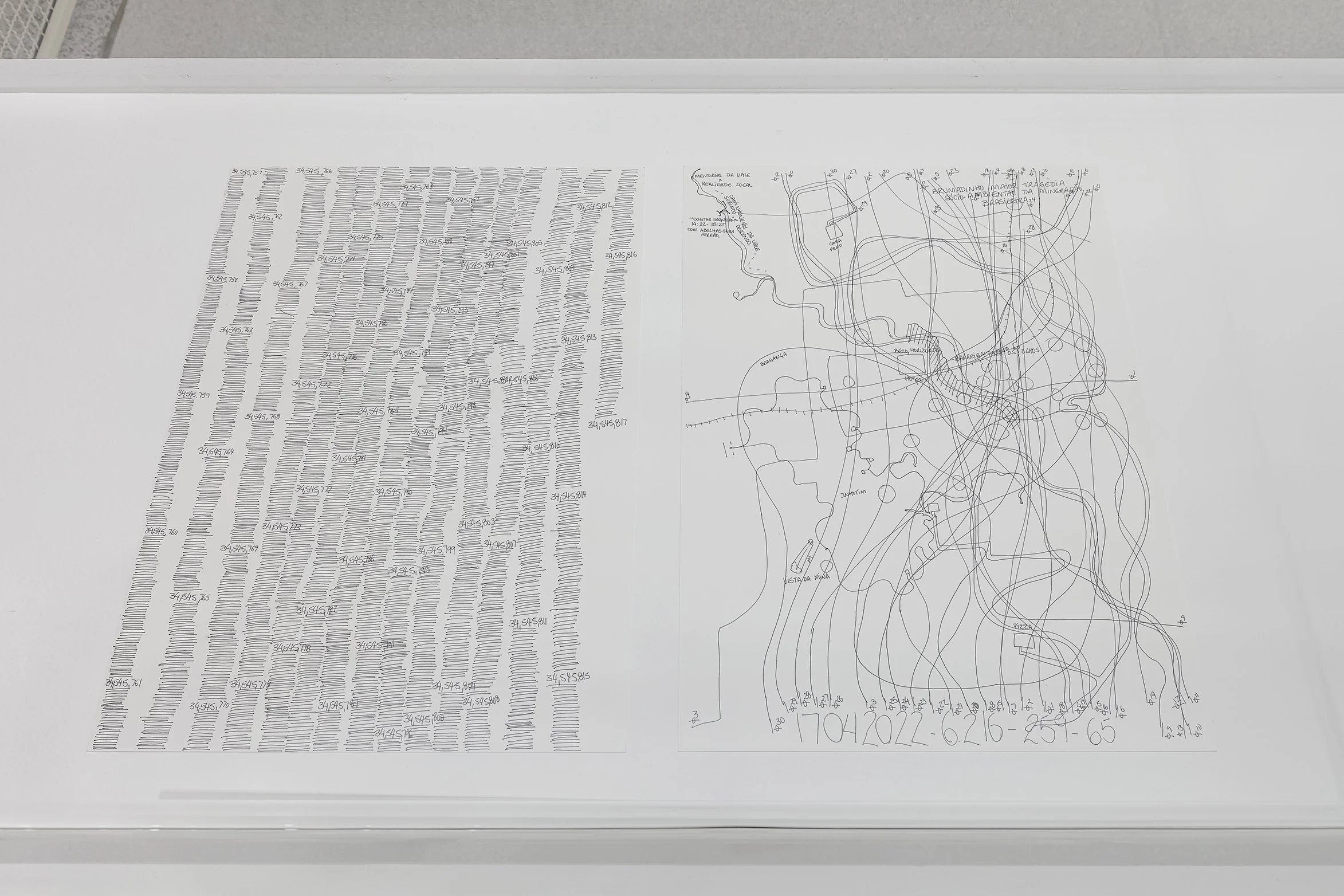
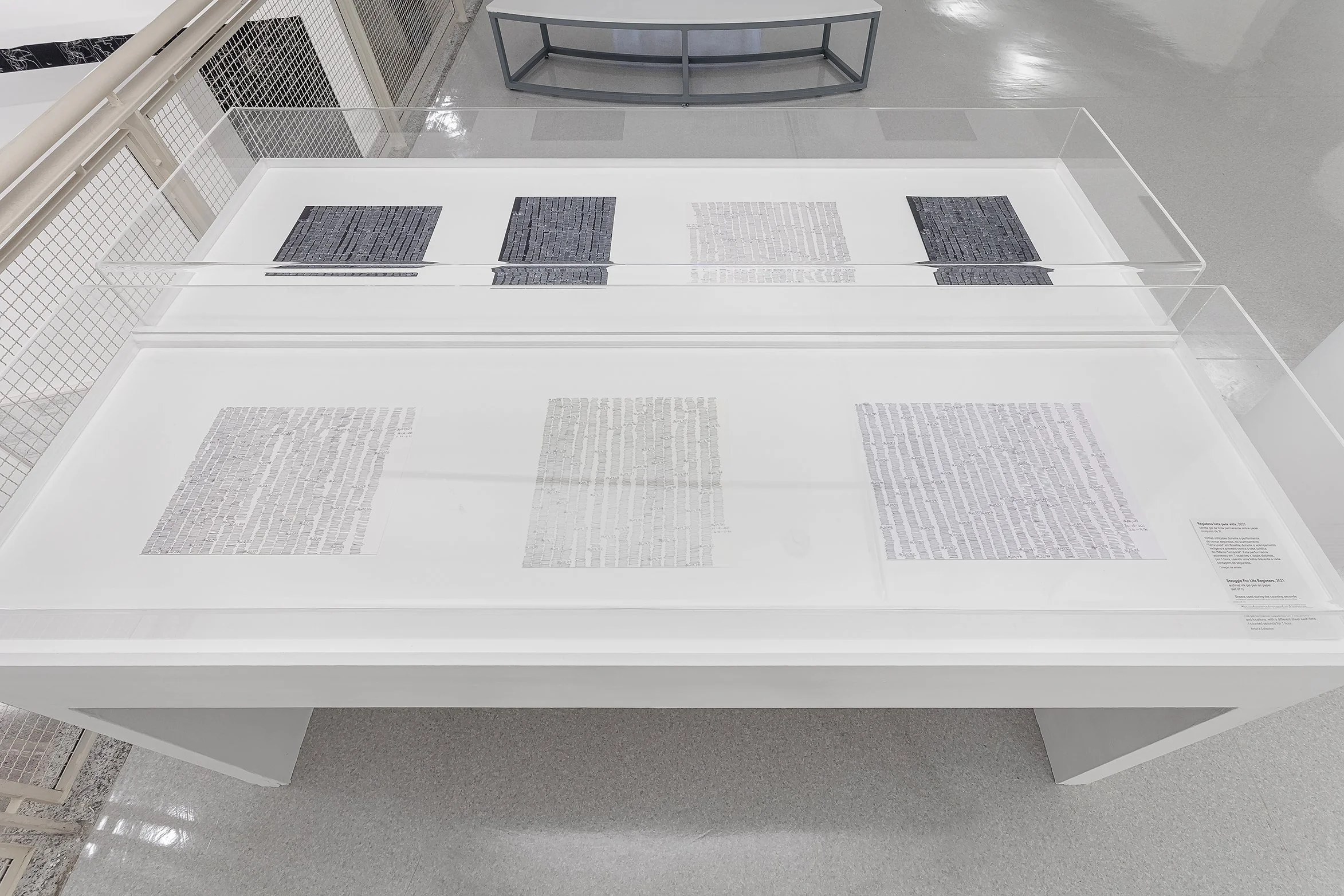
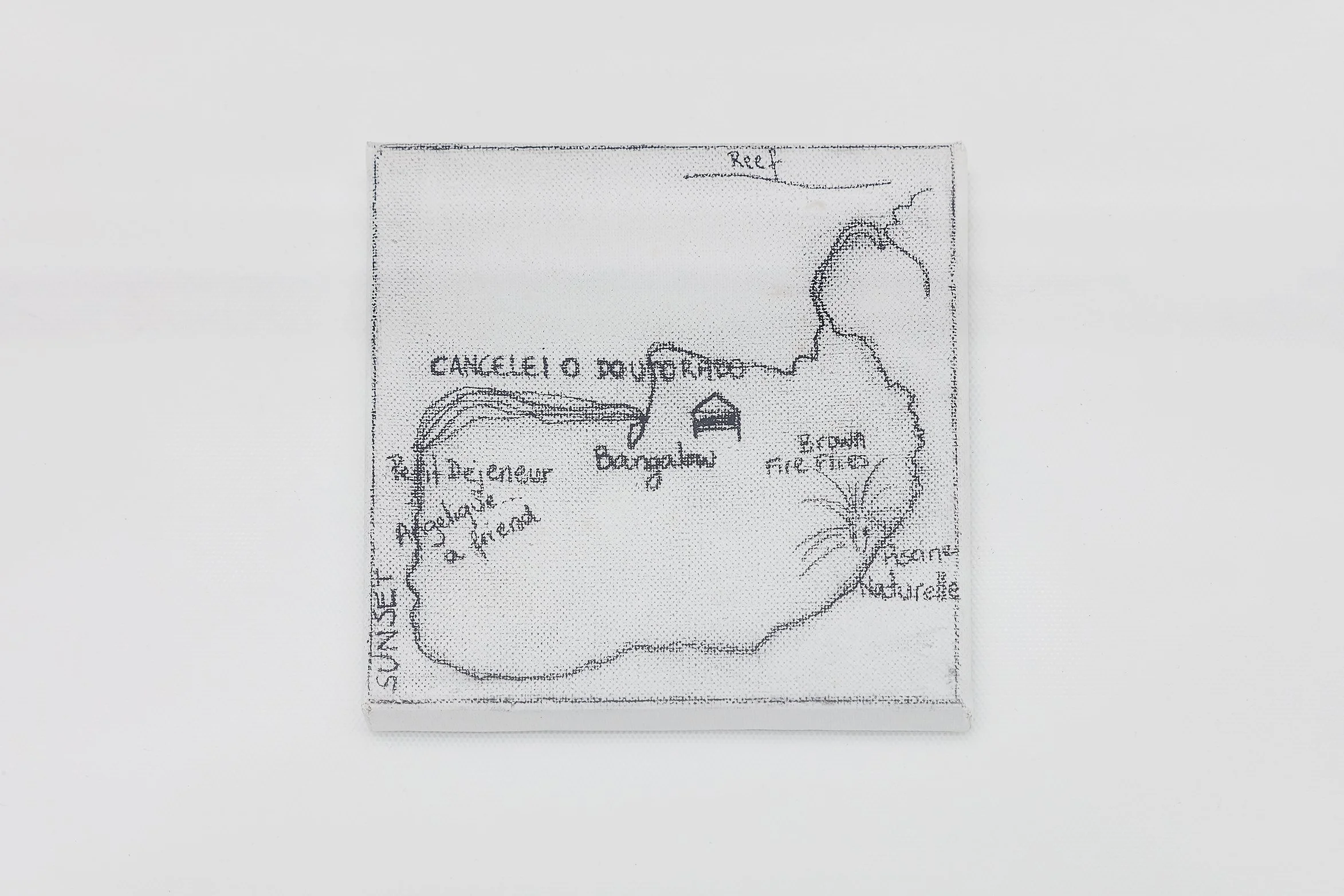
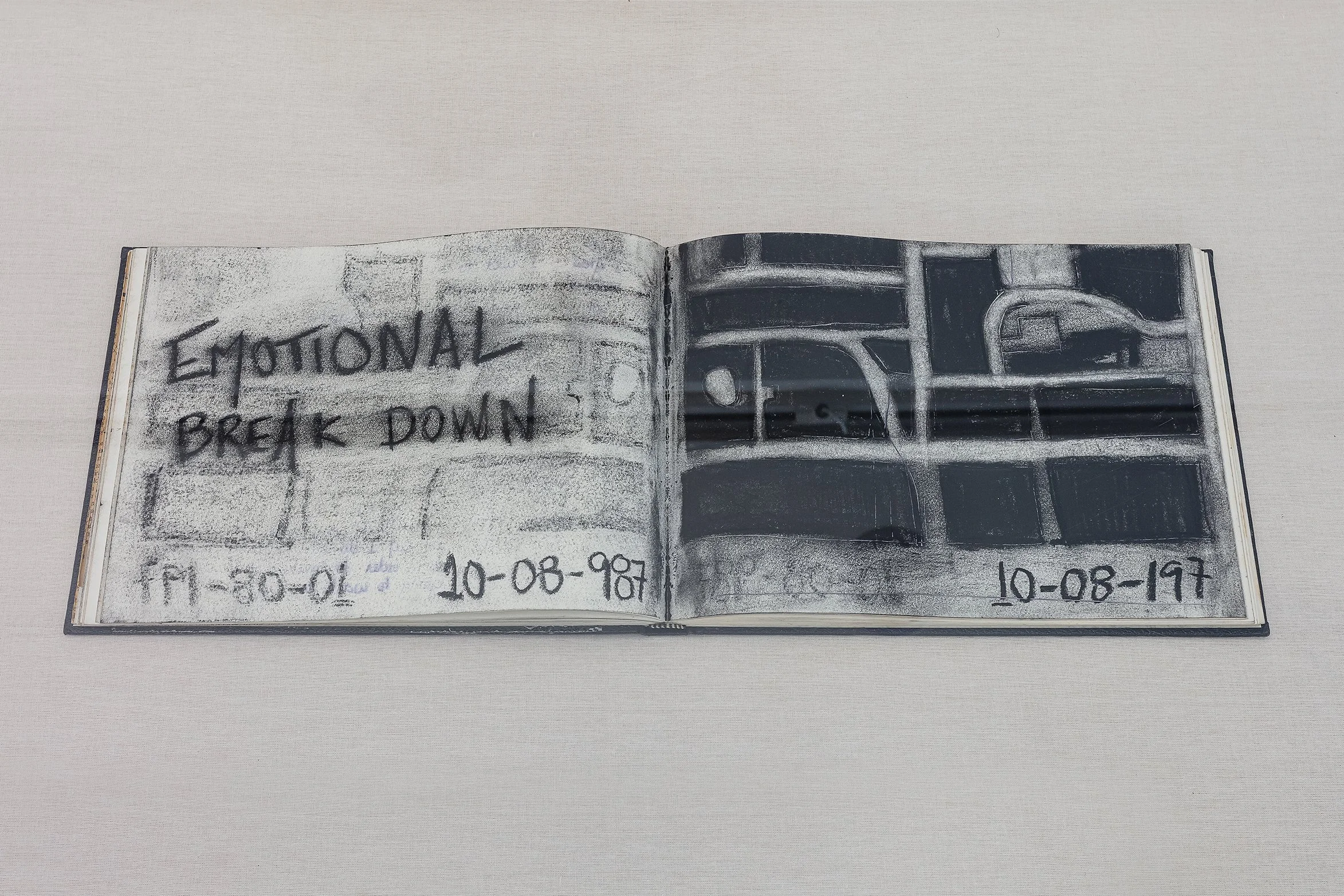
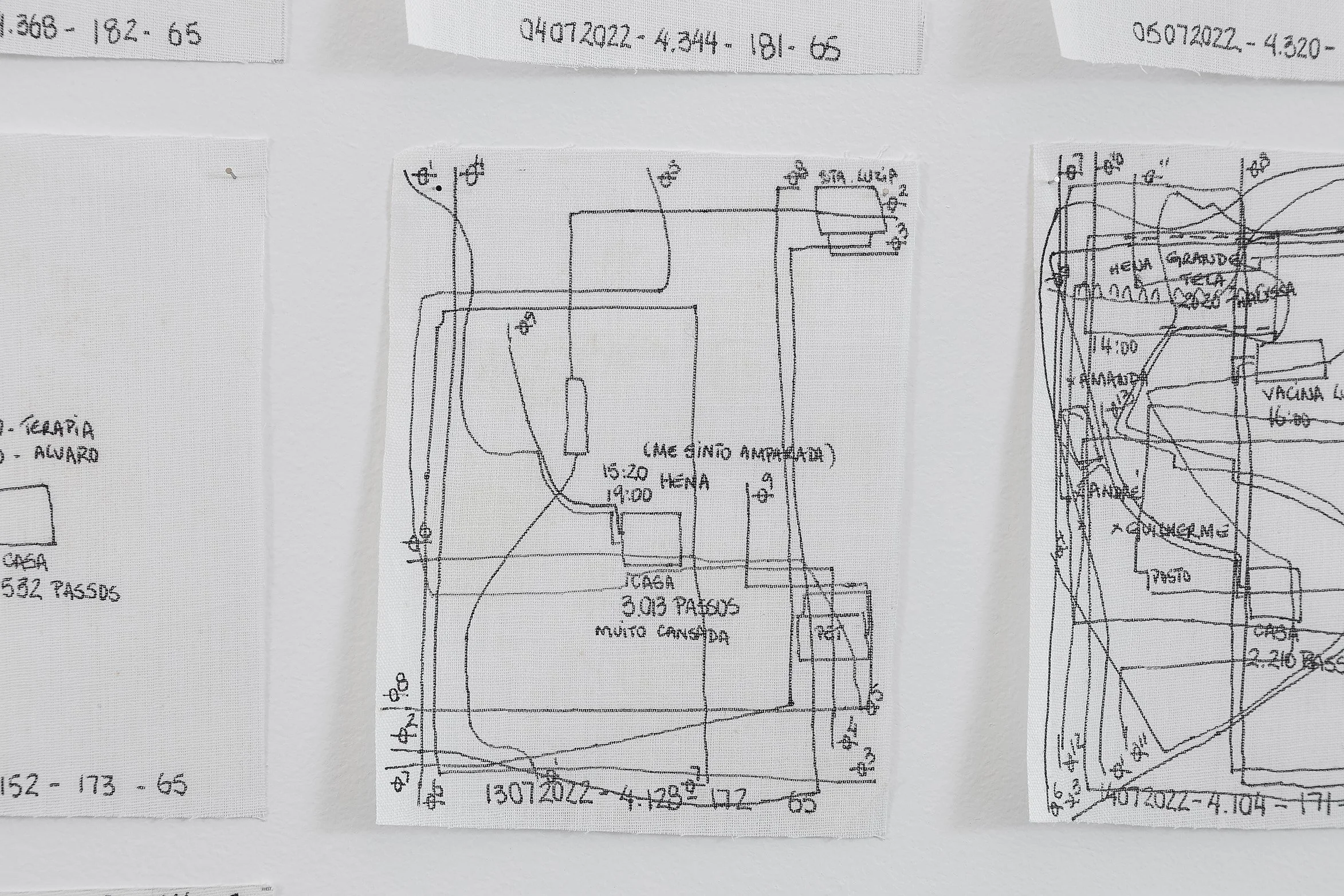
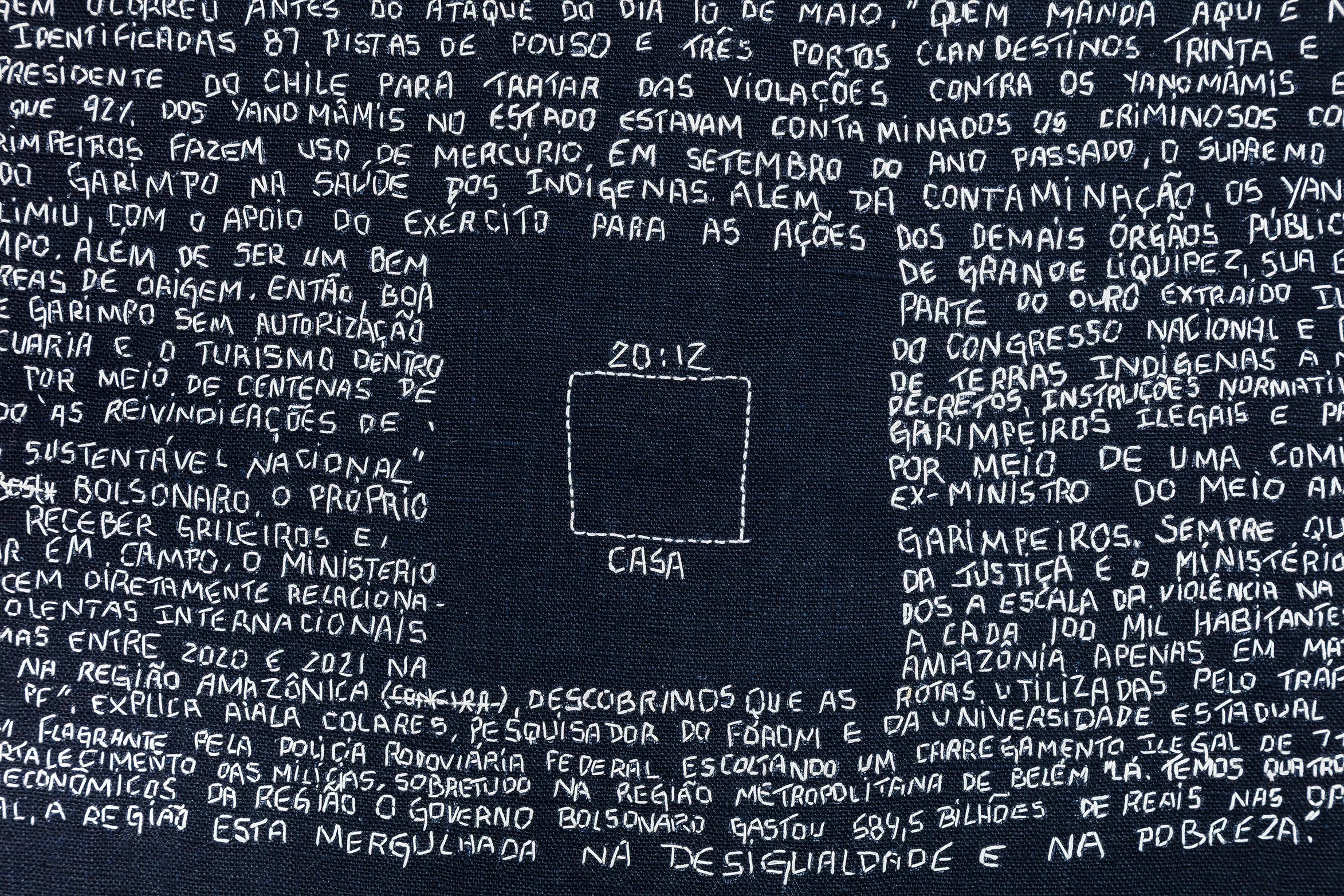
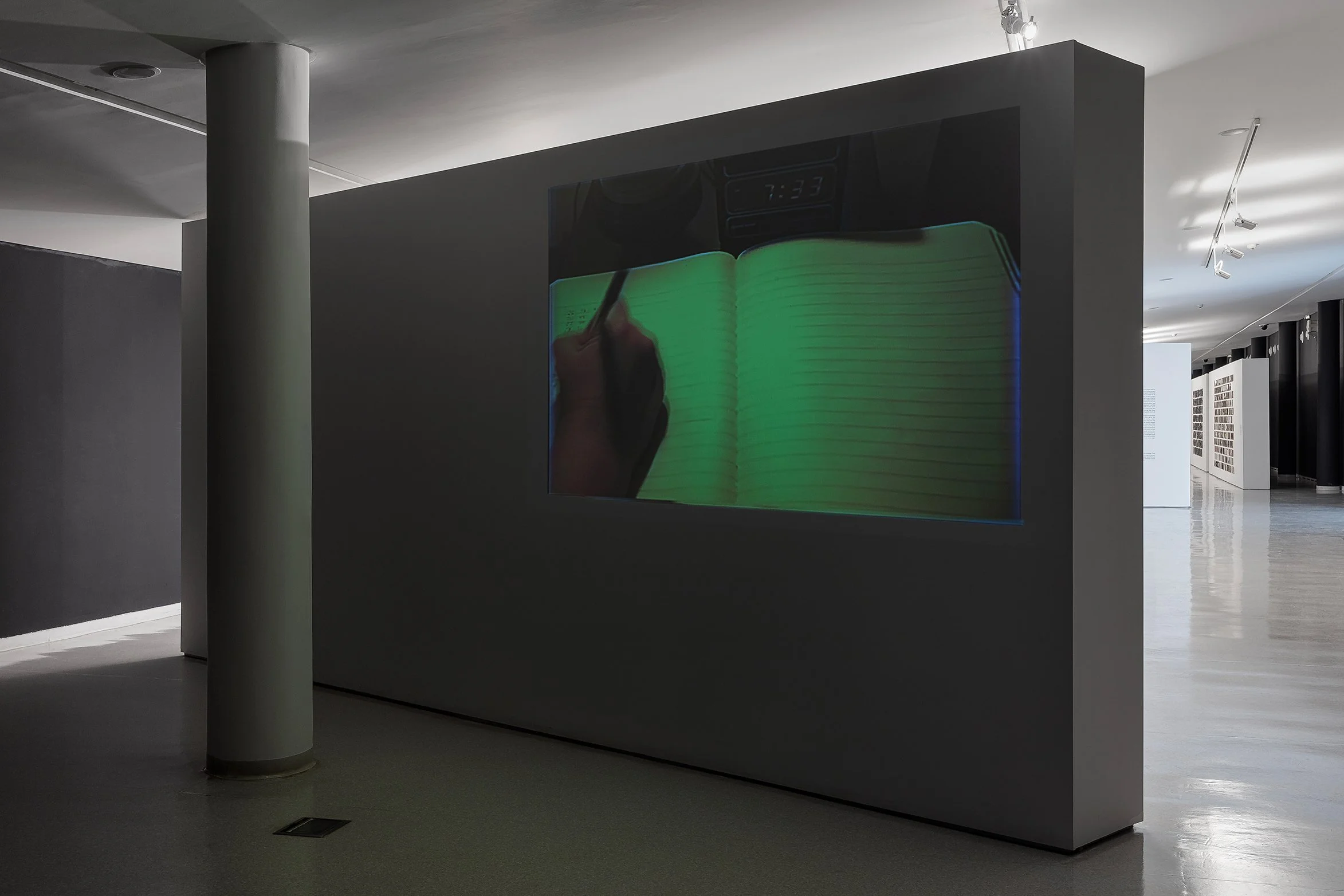
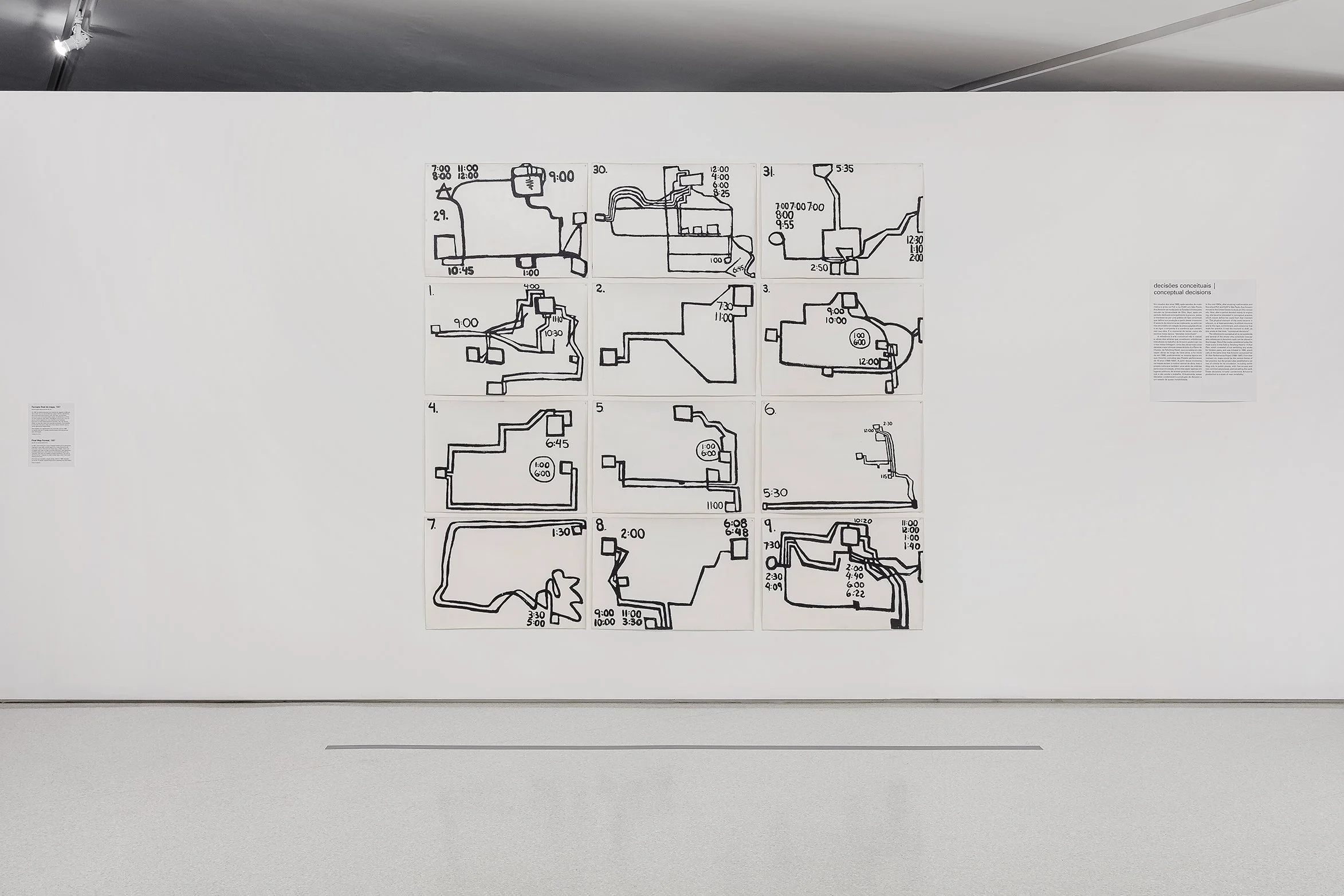
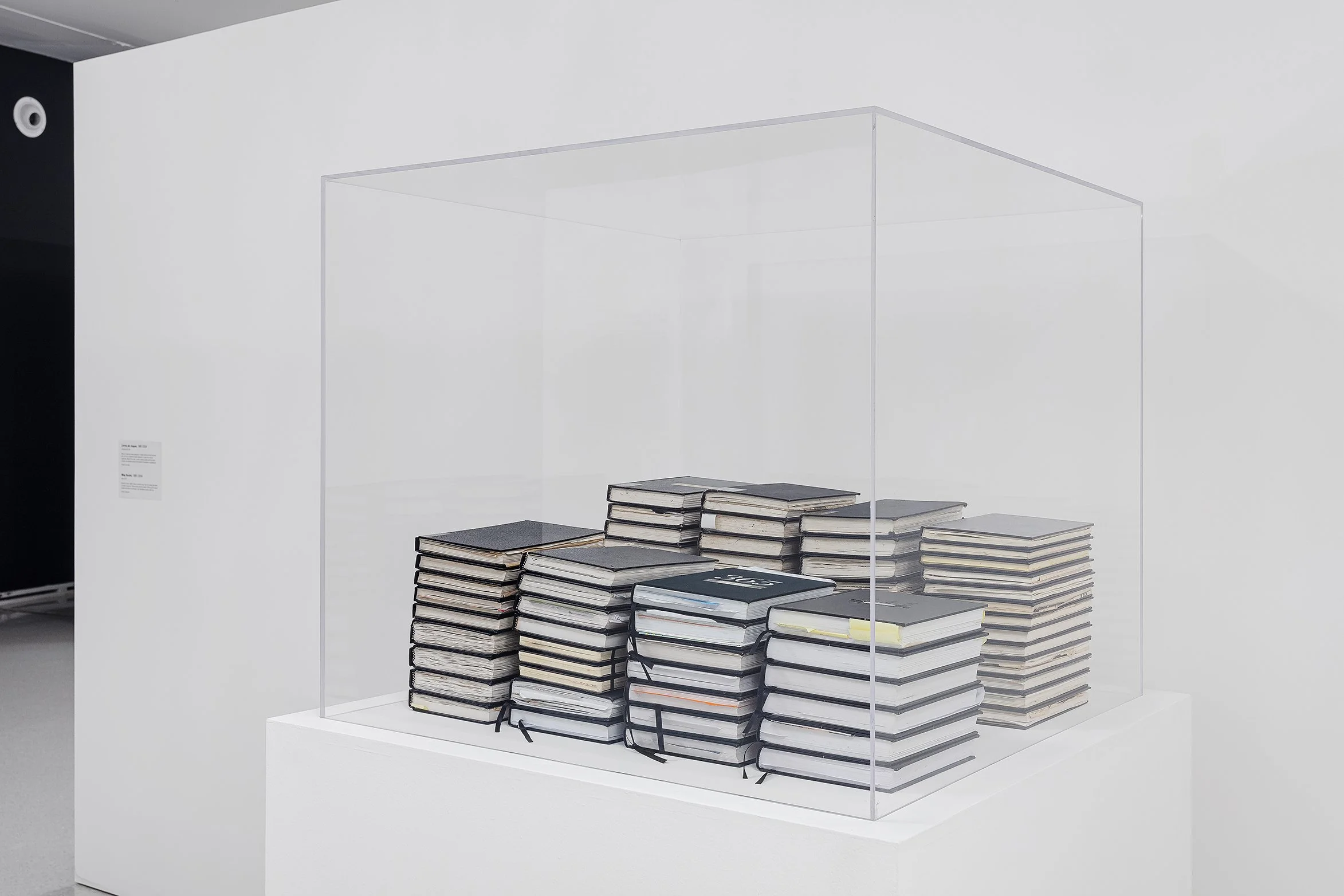
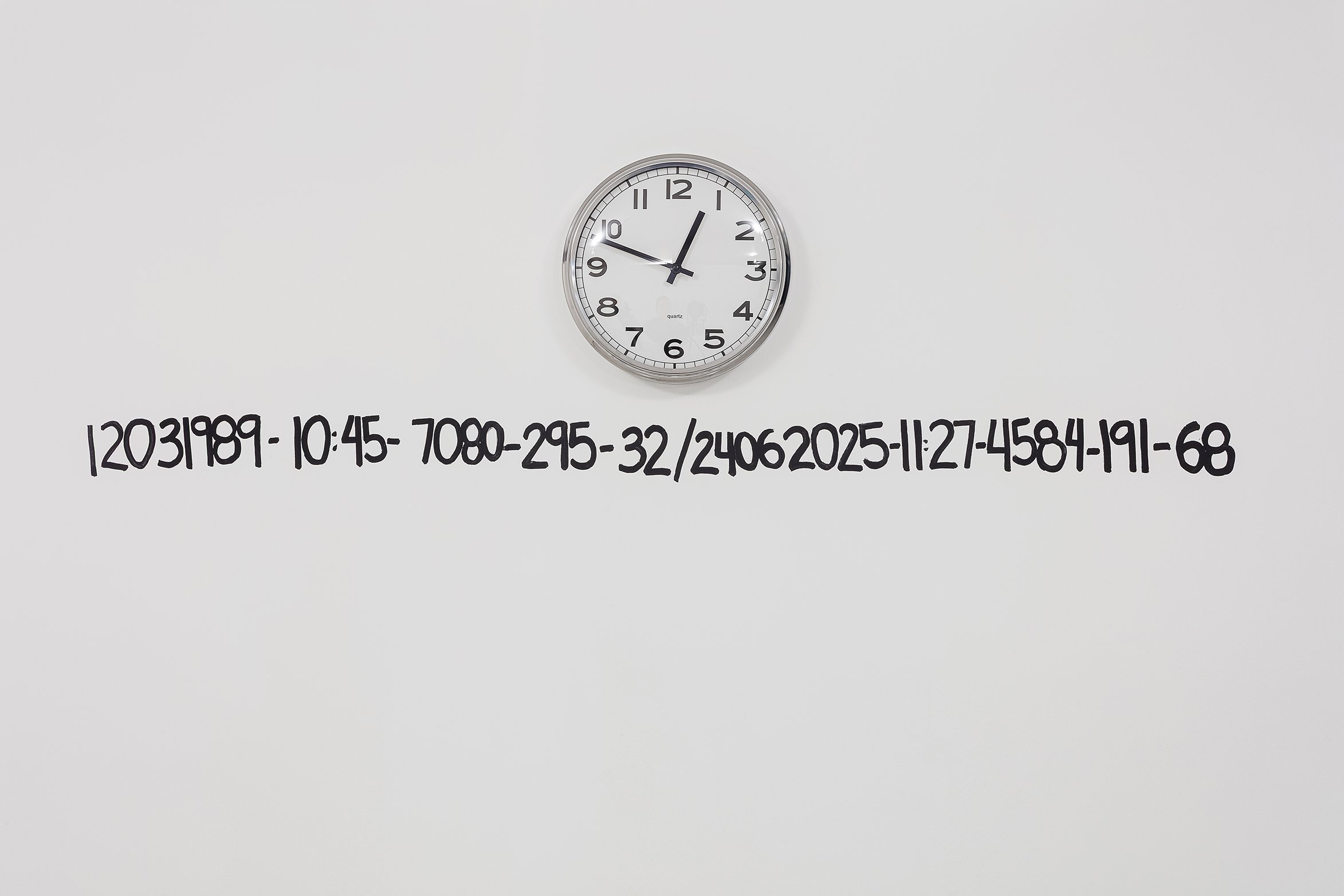
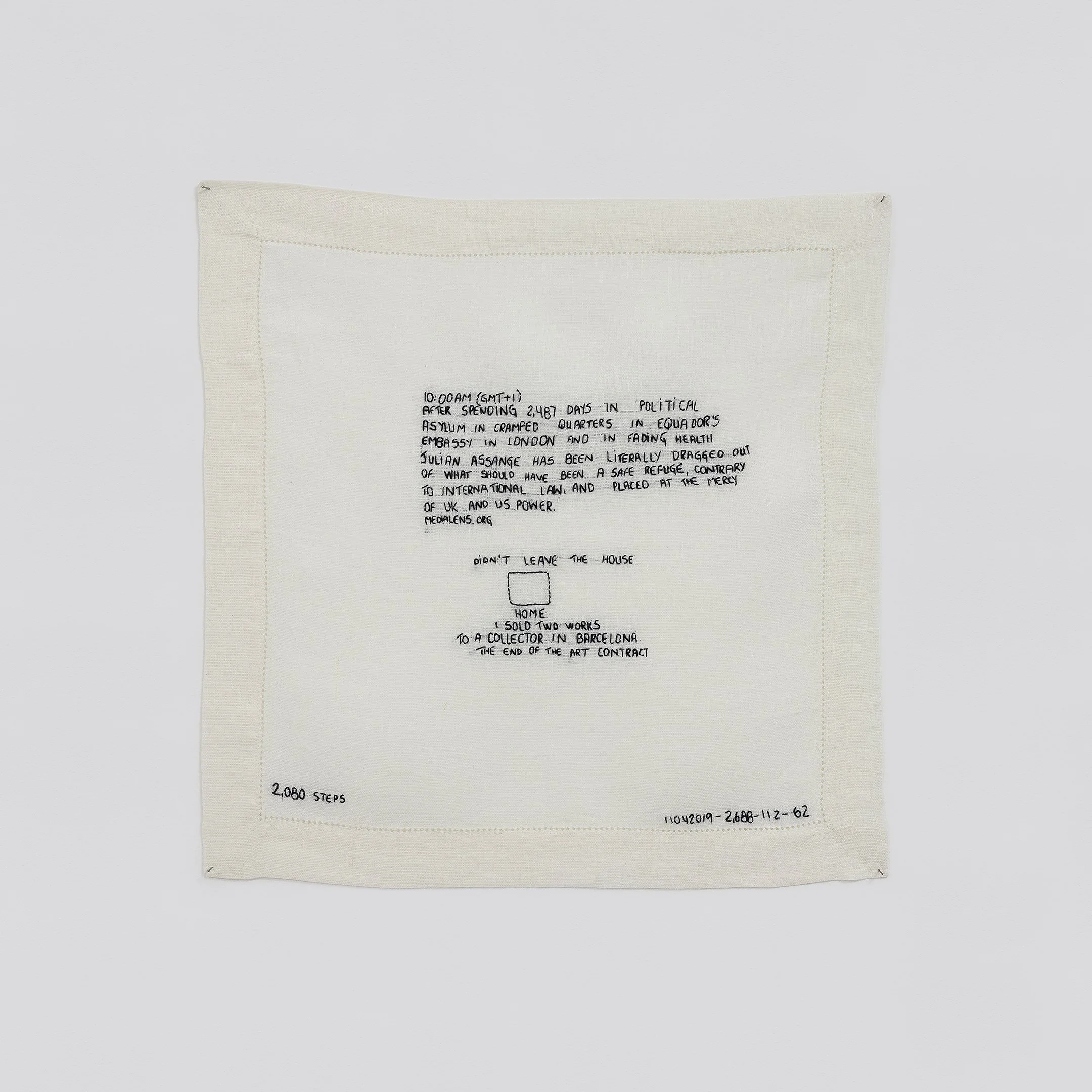
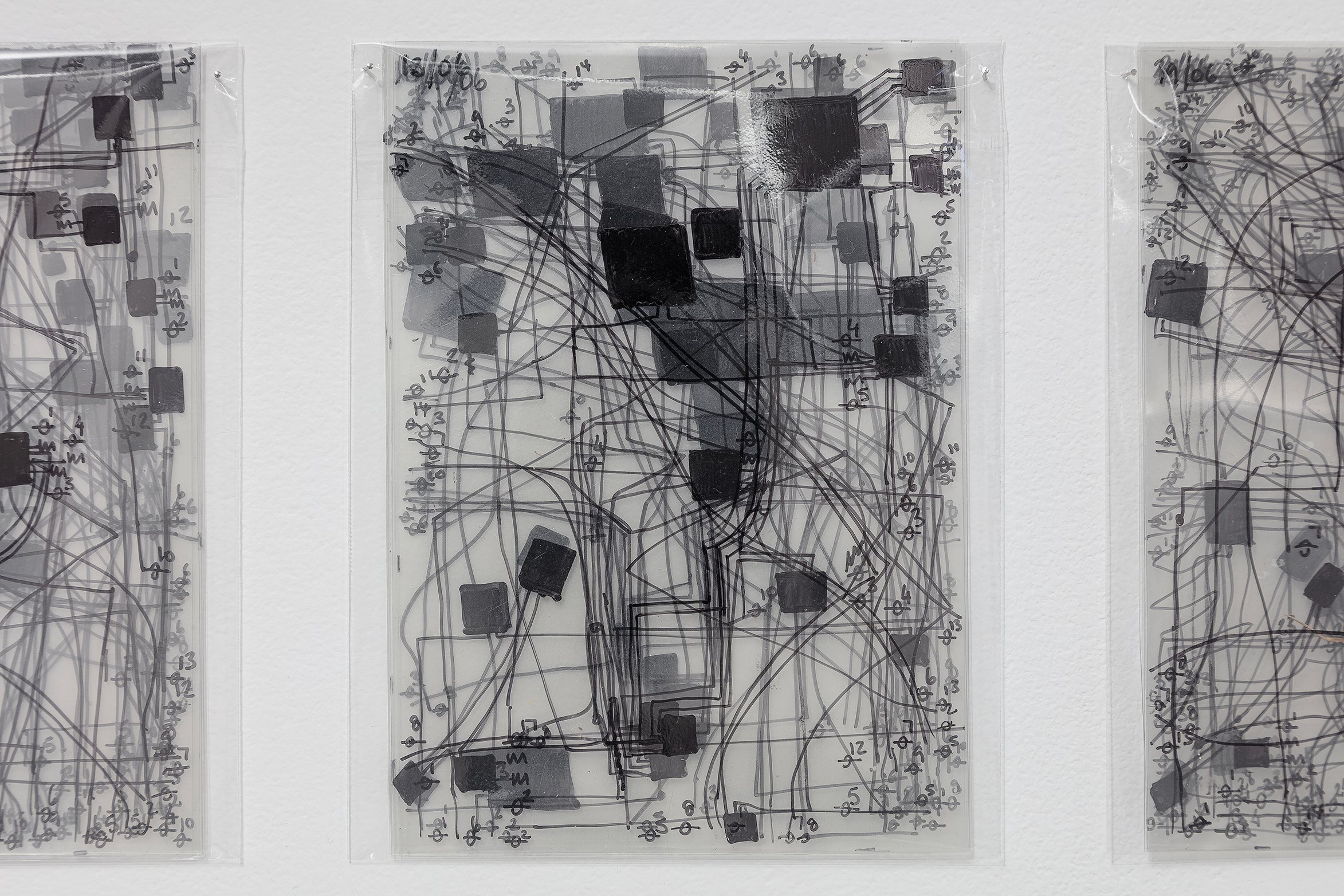
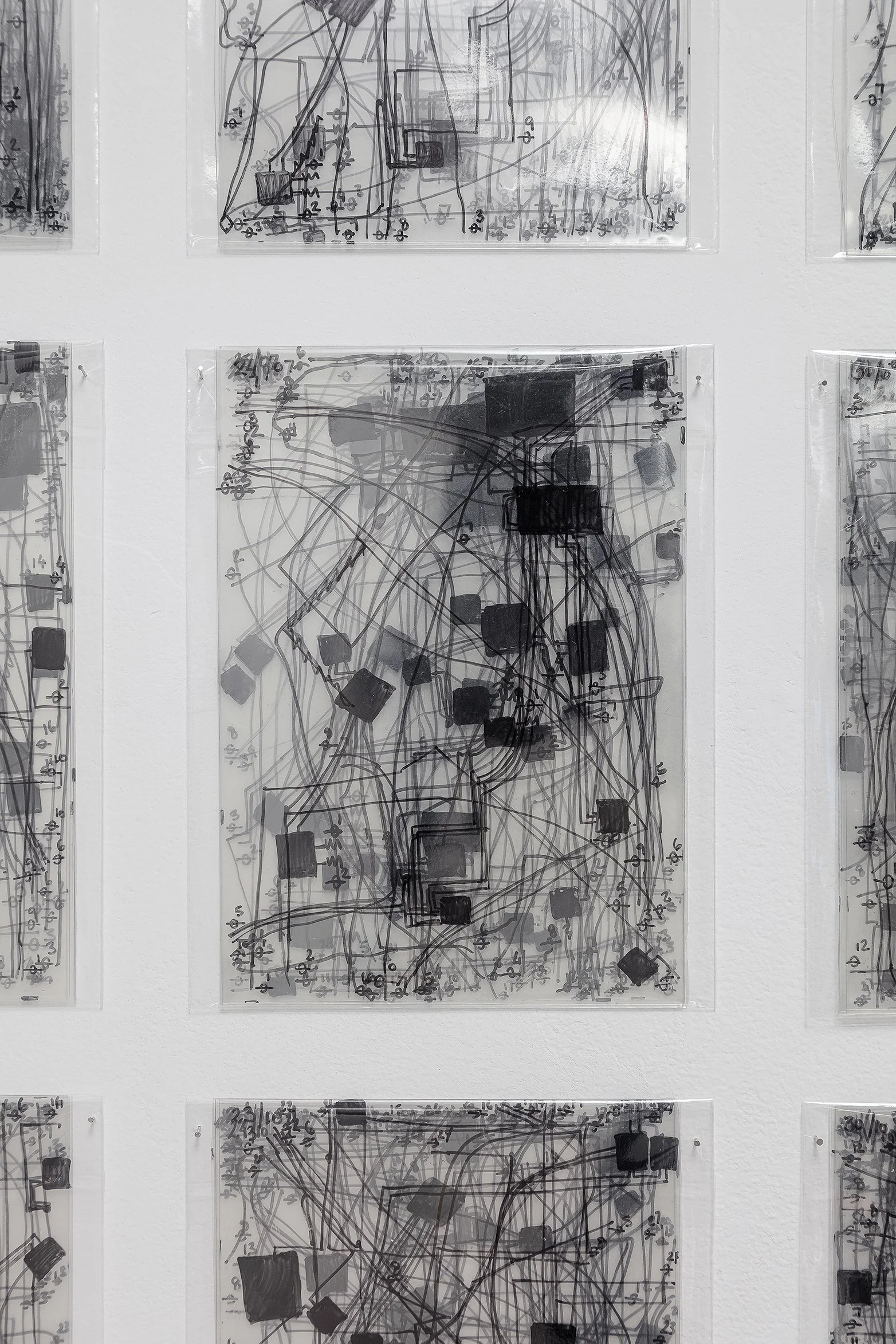
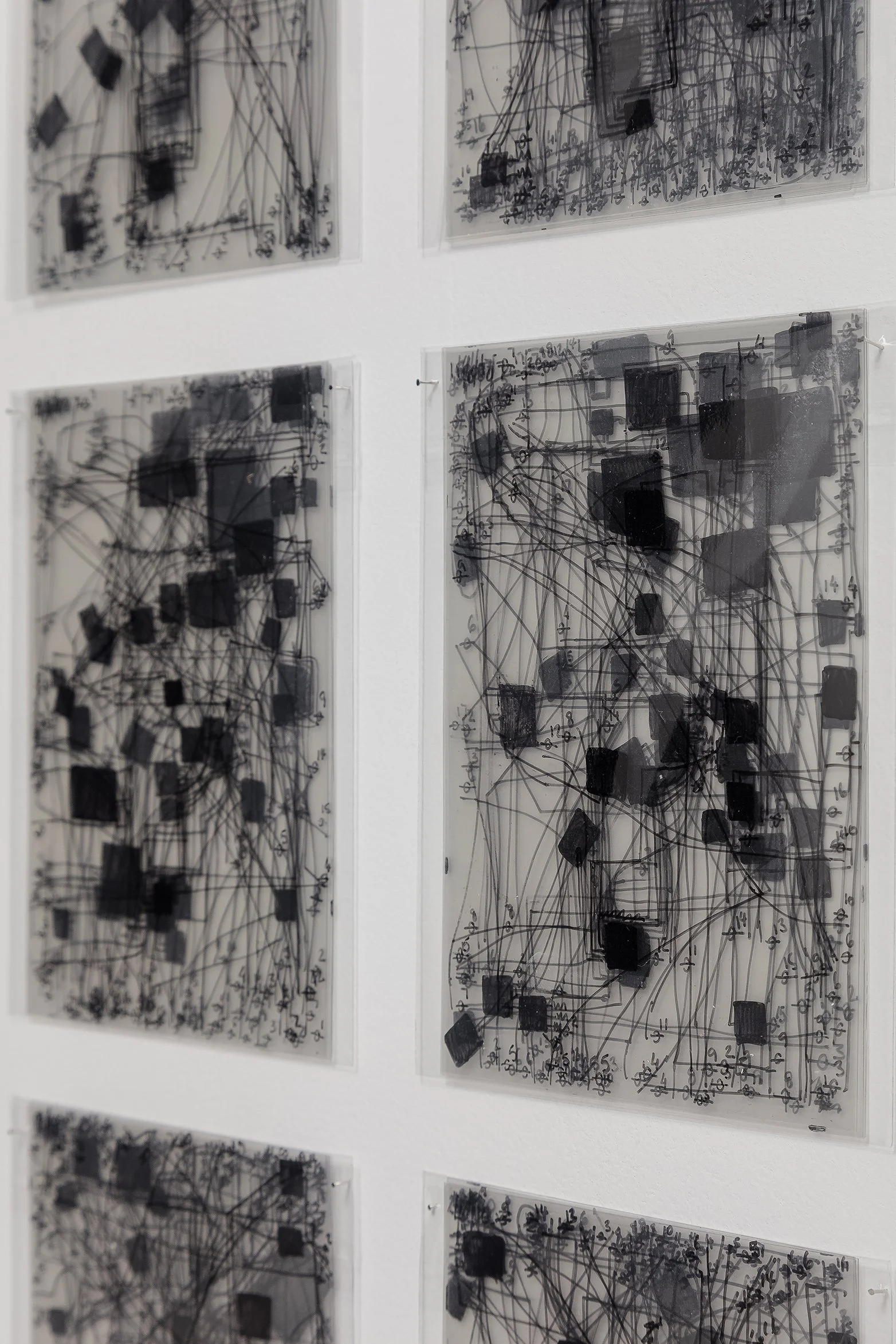
The time that passes for the artist is the same time that passes for each one of us. Her work is deeply personal, depicting in simple maps her movements throughout a day, every day of her life. But these movements, and the seconds that she has also been silently counting for decades, are the same movements that we make, the same identical seconds that we live. There is no difference, there are no hierarchies, the artist's time is no more or less important than the time of each one of us. Ana Amorim's work is deeply democratic, collective and inclusive, even when the subject seems to be just a square representing the house she did not leave that day. She spent the day embroidering, or perhaps organizing her notebooks, each page with its map and its date. She may have also cooked something, done some laundry, read the newspapers to be stunned, once again, by the absurdities of the world. A day like so many others.
Her entire body of work is a portrait of that day.
Jacopo Crivelli Visconti